Trump Disconnects from Wacky Marjorie Taylor Greene: A Shocking Split in the MAGA World!
Summary
The split between former President Donald Trump and Representative Marjorie Taylor Greene represents a notable and unprecedented fracture within the MAGA (Make America Great Again) movement. Once close allies, Greene emerged as a prominent and controversial figure in the movement, known for her incendiary rhetoric, promotion of conspiracy theories, and staunch support for Trump. However, by 2025, ideological and strategic differences—particularly Greene’s criticism of Trump’s emphasis on foreign policy over pressing domestic economic issues—led to a dramatic public break, with Trump formally withdrawing his endorsement and branding Greene “Far Left.”
This rupture exposed deeper tensions within the MAGA coalition and the broader Republican Party, highlighting a shift from the previously unified front built around Trump’s leadership. Greene’s growing independence included vocal critiques of party leadership, skepticism toward U.S. involvement in foreign conflicts such as the Gaza war, and advocacy for policies addressing economic affordability and healthcare reforms. Her willingness to challenge Trump on issues like the Jeffrey Epstein investigation further strained their relationship and underscored her departure from the movement’s earlier dynamics.
The fallout from their split has reverberated throughout the MAGA base and conservative media, igniting debate about the future direction of the movement and the limits of loyalty to Trump. While some commentators supported Trump’s decision to withdraw backing, others viewed Greene’s critiques as reflective of broader dissatisfaction with Republican leadership and policy priorities. Greene’s attempts to recalibrate her political identity by moderating her tone and expanding her appeal beyond Trump loyalists illustrate the evolving nature of intra-party alliances in the post-Trump era.
Overall, the Trump-Greene split marks a significant realignment within the MAGA movement, revealing ideological divides and challenging the cohesion of a political coalition that has been a dominant force in American conservatism. Its implications extend into the 2026 election cycle and the future trajectory of Republican politics, as the MAGA brand no longer signifies unreserved support for Trump alone.
Background
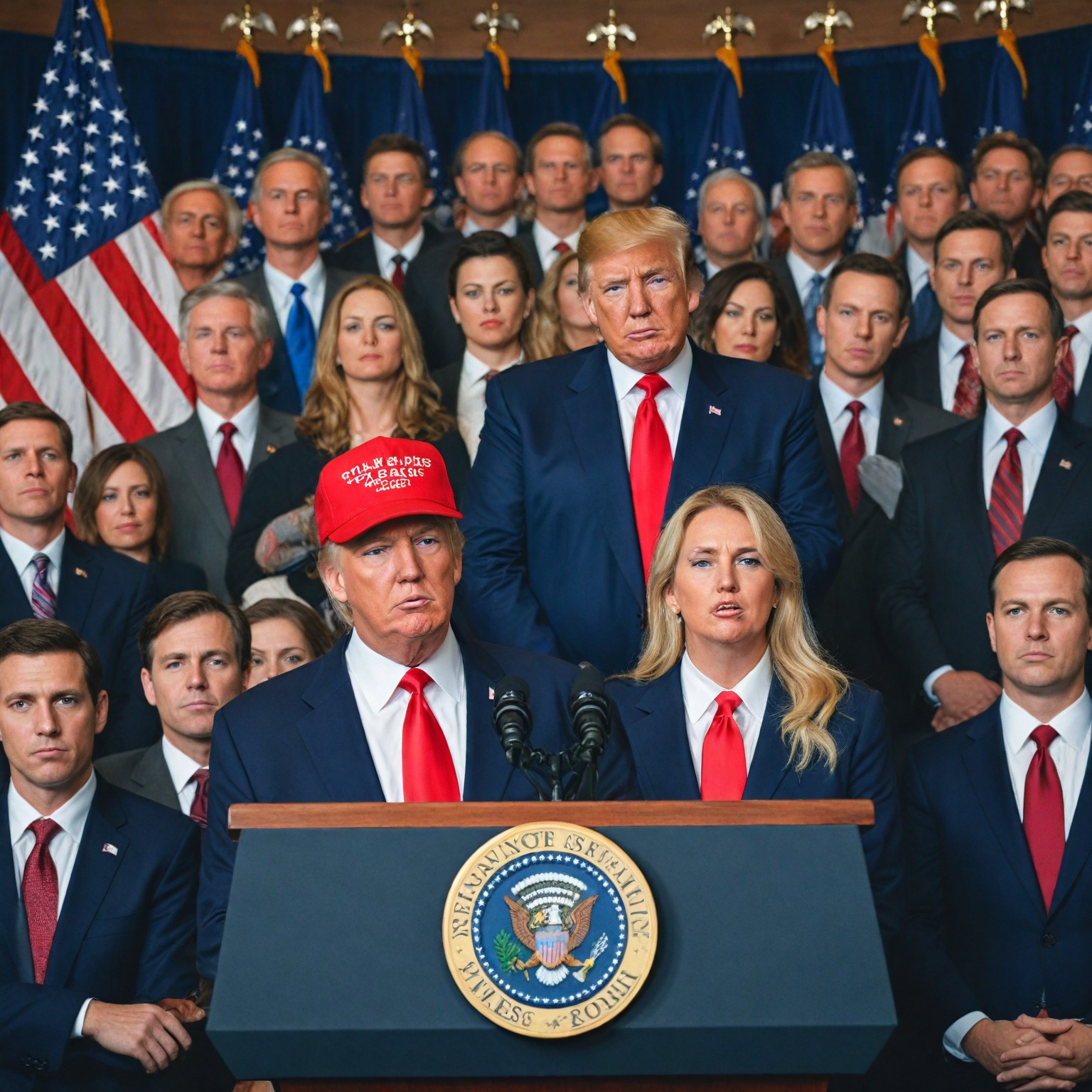
Marjorie Taylor Greene emerged as a prominent and controversial figure within the MAGA movement, becoming instantly recognizable for her signature red “Make America Great Again” cap and her outspoken support for former President Donald Trump. Early in her political career, Greene was known for promoting conspiracy theories, including the baseless notion of Jewish space lasers, making racist statements, and advocating extreme measures such as executing Democrats. Her rise coincided with a surge in her social media presence, which began around 2017, transforming her into an avid MAGA activist who frequently attended rallies and protests targeting the federal government, American Muslims, and transgender individuals.
Despite her initial staunch alignment with Trump, tensions grew between the two as Greene began to moderate her political profile and publicly criticize Trump on various issues, including economic policies, foreign affairs, and his handling of the Jeffrey Epstein case. This ideological divergence culminated in a dramatic political split, with Trump formally breaking ties with Greene in late 2025, marking a significant fissure within the once unified MAGA coalition.
Greene’s role within the Republican Party also evolved, as she began expressing dissatisfaction with party leadership, notably criticizing House Speaker Mike Johnson for his reluctance to call Republicans back to Washington and his failure to propose a healthcare plan. Observers noted this shift as a departure from the radical persona that initially defined her, with some commentators describing her as a “completely different Marjorie Taylor Greene”.
In parallel to her political activities, Greene maintained business ties, serving as vice president of Taylor Commercial Inc., a general contracting company based in Alpharetta, Georgia. She also engaged with other right-wing figures and conspiracy theorists, attending events with individuals such as Laura Loomer, Roger Stone, and Mike Cernovich, further embedding herself within far-right networks.
Amidst these developments, Greene continued her legislative efforts, sponsoring bills such as the Clear Skies Act in the 119th Congress, which was introduced in July 2025 and referred to the House Committee on Energy and Commerce. However, the growing discord between Greene and Trump symbolized a broader realignment within the MAGA movement, indicating that by late 2025, MAGA and Donald Trump were no longer synonymous.
The Split
A significant rupture emerged within the MAGA coalition in 2025 when former President Donald Trump officially withdrew his endorsement of Representative Marjorie Taylor Greene, marking a dramatic intensification of a simmering dispute between the two once-close allies. Greene, who had been an ardent and outspoken supporter of Trump since her arrival in Congress in 2021, began publicly criticizing his agenda, focusing particularly on his emphasis on foreign policy at the expense of domestic issues central to the “America First” platform.
The conflict reportedly escalated after Greene questioned Trump’s priorities, accusing him of neglecting the high cost of living and other pressing domestic concerns while boasting of his successes in ending foreign wars. This divergence became especially apparent in Greene’s media appearances, where she urged the Republican Party to pivot towards policies that address economic affordability for Americans rather than continuing to focus on foreign affairs.
A key catalyst in the split was the controversy surrounding the release of Jeffrey Epstein investigation files. Greene had been vocally demanding transparency and criticized Trump for attempting to intimidate other Republicans ahead of a crucial vote on the matter, which Trump viewed as a direct challenge to his influence within the party. According to Greene, Trump’s aggressive response was aimed at setting an example to deter dissent among Republicans.
The personal dimension of the split included a breakdown in communication, with Trump accusing Greene of incessant complaining and labeling her a “ranting lunatic,” while also suggesting he might endorse a primary challenger against her if a suitable candidate emerged. Trump’s withdrawal of support was publicly announced on social media, where he declared his refusal to continue backing Greene, whom he now described as “Far Left,” signaling a sharp departure from their previous alliance.
This fallout highlighted deeper fissures within the MAGA movement, revealing tensions between maintaining strict party loyalty and addressing substantive policy disagreements. The split not only underscored Greene’s shift towards a more independent and critical stance but also demonstrated the challenges Trump faces in maintaining cohesion among his political allies amid evolving intra-party debates.
Ideological and Policy Differences
Marjorie Taylor Greene and former President Donald Trump, once closely allied figures within the MAGA movement, have experienced significant ideological and policy divergences that culminated in a public split. Central to their differences is the focus of the MAGA agenda: Greene criticizes Trump for prioritizing foreign policy over domestic issues, particularly economic concerns such as the high cost of living and affordability. While Trump has repeatedly highlighted his efforts to end multiple wars abroad as key achievements of his presidency, Greene contends that the economy and an “America First” domestic agenda should take precedence.
Greene has openly expressed frustration with Trump’s emphasis on foreign conflicts, including the wars in Ukraine and the Gaza Strip, arguing that his focus detracts from addressing urgent economic challenges facing Americans. She has called on the Republican Party to prioritize economic recovery and domestic policy reforms to ensure electoral success in future elections. This stance reflects a broader debate within the GOP and MAGA coalition over strategic priorities, with many Republicans—both MAGA-aligned and otherwise—still approving of Trump’s foreign policy but increasingly concerned about domestic issues.
The fissure between Greene and Trump deepened when Trump withdrew his endorsement of her following her persistent criticism, publicly condemning her for what he described as incessant complaints despite the country being the “‘HOTTEST’ Country anywhere in the World.” Despite this break, Greene has maintained a degree of loyalty toward Trump, carefully balancing her critiques without launching the type of personal attacks that have ended the careers of other Republicans in Trump’s orbit.
Greene’s ideological stance also includes support for a range of far-right and populist positions that at times diverge from the Trump White House’s messaging. For instance, she has taken a firm stance against ongoing U.S. involvement in foreign conflicts and expressed skepticism about military funding, particularly regarding the Gaza war. Moreover, Greene’s rhetoric has included spreading conspiracy theories and controversial statements, which have both bolstered her MAGA credentials and alienated establishment Republicans.
Her recent media appearances and critiques of GOP leadership, including her sharp rebuke of House Speaker Mike Johnson for inaction on healthcare, illustrate her efforts to appeal to a broader Republican base disillusioned with party leadership and seeking tangible policy outcomes. However, some observers attribute her increasingly outspoken positions to personal political frustrations, including perceived obstructions to her ambitions within the party, rather than a fundamental ideological shift.
Impact on the MAGA Movement
The public split between Donald Trump and Representative Marjorie Taylor Greene has highlighted a significant rift within the MAGA movement, which had previously been largely defined by unwavering loyalty to Trump. Greene, once an emblematic figure of the MAGA coalition, known for her incendiary rhetoric and staunch support of Trump, has increasingly expressed disillusionment with both the former president and her Republican colleagues on several key issues, signaling a fracturing of the once monolithic base.
Greene’s critiques focus heavily on priorities such as the economy and domestic issues, contrasting with Trump’s continued emphasis on foreign policy and international engagements. She has publicly denounced Trump’s meetings with foreign leaders, including Argentina’s Javier Milei and Ukraine’s Volodymyr Zelenskyy, characterizing these encounters as distractions from pressing domestic challenges like economic insecurity affecting vulnerable populations and young Americans. This divergence has underscored a broader debate within MAGA circles about the movement’s focus and direction.
The fallout from the split has not only impacted political alliances but has also stirred debate among MAGA supporters and conservative commentators. While figures like right-wing host Mark Levin have sided with Trump’s decision to withdraw his endorsement of Greene and support a primary challenger, others within the movement remain conflicted, reflecting a growing ideological and strategic complexity inside the Republican Party. Greene’s occasional alignment with Democrats on issues such as the Jeffrey Epstein files and her sharp criticism of Republican leadership further complicate her standing within the GOP and the MAGA faction.
Analysis
The split between Donald Trump and Marjorie Taylor Greene represents a significant and rare fissure within the MAGA movement, which has traditionally been characterized by unwavering loyalty to Trump. Greene, once the embodiment of the “Make America Great Again” ethos and a prominent surrogate amplifying Trump’s message, has increasingly distanced herself from the former president. This distancing culminated in her dismissal from a key role related to Biden’s 2024 State of the Union address, signaling a final break in a dispute that had been simmering for months.
This political rupture underscores emerging ideological and strategic disagreements within the Republican Party and the MAGA base. Greene’s growing criticism of fellow Republicans on various issues—including the Gaza war, the Epstein files, and the government shutdown—highlights her shift towards a more independent, and at times oppositional, stance within the party. Her emphasis on prioritizing the economy over foreign policy contrasts with Trump’s campaign promises, which, despite some skepticism from MAGA critics, remain broadly popular among Republican voters according to recent polls.
The fallout from this split could weaken Trump’s influence over a crucial faction of his supporters, potentially scrambling alliances ahead of the 2026 election cycle and reflecting a broader fracturing in the conservative grassroots movement. Greene’s legislative efforts, such as sponsoring the “Making American Elections Great Again Act” in 2025, further demonstrate her willingness to pursue an agenda that does not always align perfectly with Trump’s priorities, reinforcing the idea of a strategic realignment within MAGA circles.
Aftermath
The fallout from the public split between former President Donald Trump and Marjorie Taylor Greene marked a rare and significant rupture within the MAGA coalition. Once staunch allies, their growing disagreements exposed deeper ideological and strategic divisions within the Republican Party and the broader hard-right base that has long revolved around loyalty to Trump. Greene, who had been a prominent surrogate for Trump and a key amplifier of his message, began to distance herself from some party lines, taking positions that occasionally contradicted mainstream MAGA priorities, such as her stances on the release of Epstein files, Israel’s war in Gaza, and the government shutdown fight.
Trump’s public denunciation of Greene was a dramatic intensification of tensions simmering for months, culminating in a series of harsh posts on Truth Social that labeled her a “cheap political football” and a “sellout,” declaring that her “political future just ended”. This outburst not only signaled a personal and political break but also illustrated the fragility of the alliances that had propelled Trump’s rise and sustained his agenda.
In response, Greene appeared to moderate her political profile, attempting a charm offensive aimed at a broader audience beyond the hardcore Trump base. She engaged in media appearances, including interviews on Bill Maher’s HBO show and ABC’s “The View,” and publicly criticized Republican House Speaker Mike Johnson for his leadership shortcomings. Her more measured tone and willingness to critique Republican leadership suggested an effort to recalibrate her political identity amid the rupture.
The split has significant implications for the MAGA movement and the 2026 electoral landscape. Greene’s departure from Trump’s inner circle may weaken his influence over a key faction of supporters and scramble existing alliances within the Republican Party. It highlights the evolving dynamics of MAGA politics, where unflagging loyalty is no longer guaranteed, and internal fractures may reshape the coalition’s future direction.
The content is provided by Avery Redwood, Know Heaven