CoreWeave CEO Champions AI Circular Deals as a Path to Collaboration | TechCrunch
Summary
CoreWeave Inc. is a cloud computing company specializing in high-performance infrastructure tailored for artificial intelligence (AI) workloads, particularly large-scale model training and deployment. Since Michael Intrator became CEO in 2017, CoreWeave has positioned itself as a key player in the AI ecosystem by developing Kubernetes-native platforms and operating some of the fastest AI supercomputers globally, including a $1.6 billion data center in Texas featuring thousands of Nvidia GPUs. The company’s focus on advanced hardware, innovative cooling technologies, and AI-optimized storage solutions supports the increasing computational demands of generative AI and machine learning applications.
A notable aspect of CoreWeave’s strategy under Intrator’s leadership is its active participation in “circular” business deals—a model in which major AI companies, including Nvidia, OpenAI, AMD, and Broadcom, engage in intertwined investments, supply agreements, and customer relationships. Intrator champions these arrangements as pragmatic collaborations essential for addressing supply-demand imbalances in AI compute capacity and accelerating infrastructure growth. He argues that such interconnected partnerships promote supply chain resilience and technological integration, distinguishing them from mere financial engineering or revenue inflation schemes.However, the prevalence of circular deals has attracted scrutiny and controversy. Critics caution that the reciprocal nature of investments and procurement can obscure financial transparency, potentially inflating revenues without corresponding profit growth and raising systemic risks within the AI industry. Regulatory bodies such as the Federal Trade Commission and Department of Justice have begun examining these arrangements to ensure fair competition and market stability. Despite these concerns, CoreWeave continues to leverage circular deals to secure long-term hardware commitments, support its expansion through acquisitions, and build a comprehensive AI infrastructure ecosystem.
As AI infrastructure demands escalate, with industry giants investing tens of billions annually, CoreWeave’s role exemplifies the evolving dynamics of AI financing and collaboration. The company’s integrated approach—combining cutting-edge technology, strategic partnerships, and innovative financing models—positions it as a significant contributor to the AI sector’s rapid growth, while also highlighting the complex balance between cooperation and competition in this emerging market.
Background
Michael Intrator is a co-founder of CoreWeave Inc. and has served as the company’s Chairman, Chief Executive Officer, and President since September 2017. Prior to his leadership at CoreWeave, Intrator was the co-founder and CEO of Hudson Ridge Asset Management LLC, a natural gas hedge fund, from January 2013 to January 2018. He holds a degree from Columbia University’s School of International and Public Affairs and is based in Brooklyn.
Under Intrator’s guidance, CoreWeave has emerged as a cloud computing company specializing in Kubernetes-native developer experiences, featuring advanced bare-metal infrastructure, automated provisioning, and support for leading workload orchestration frameworks. The company focuses heavily on providing specialized infrastructure necessary for training and deploying large-scale artificial intelligence models—a domain that has grown rapidly in recent years.
Intrator has become a vocal advocate for the AI industry’s unique financial and operational structures, particularly the so-called “circular” business deals in which major players such as Nvidia, OpenAI, AMD, Broadcom, and CoreWeave engage in intertwined investment and supply arrangements. He argues that these interlocking relationships represent pragmatic cooperation needed to address the unprecedented supply and demand challenges in AI computing capacity, rather than financial engineering designed to obscure economic realities.
Since its initial public offering, CoreWeave has continued to expand its business, with Intrator emphasizing the importance of building AI infrastructure domestically in the United States and collaborating closely with industry partners to accelerate capacity online.
AI Circular Deals
Circular deals in the artificial intelligence (AI) industry involve companies repeatedly investing in each other, creating a network of intertwined financial agreements. Such arrangements have become increasingly common among leading AI firms, including CoreWeave, and are often promoted as strategic collaborations aimed at fostering innovation and co-development of technologies.
Proponents, such as CoreWeave’s CEO Michael Intrator, argue that these deals enable close cooperation between hardware and software developers, which is essential in AI development where chipmaking and programming must be tightly integrated. By designing components to work seamlessly together from the outset, these partnerships may increase the likelihood of technological success and drive the next generation of AI advancements.
However, this practice has also raised concerns regarding potential risks. Critics point out that circular deals might artificially inflate company revenues, misleading investors and potentially resulting in overvaluation or excessive lending. Another significant concern is the systemic risk introduced by intertwining the financial fortunes of multiple AI companies, which could lead to broader instability if one participant faces difficulties.
Despite these concerns, companies like CoreWeave view such collaborations as calculated strategic moves that, when managed carefully, can offer long-term benefits. Stakeholders are advised to consider both the potential gains and the volatility associated with these arrangements when evaluating the companies involved.
CoreWeave’s Infrastructure Supporting AI Circular Deals
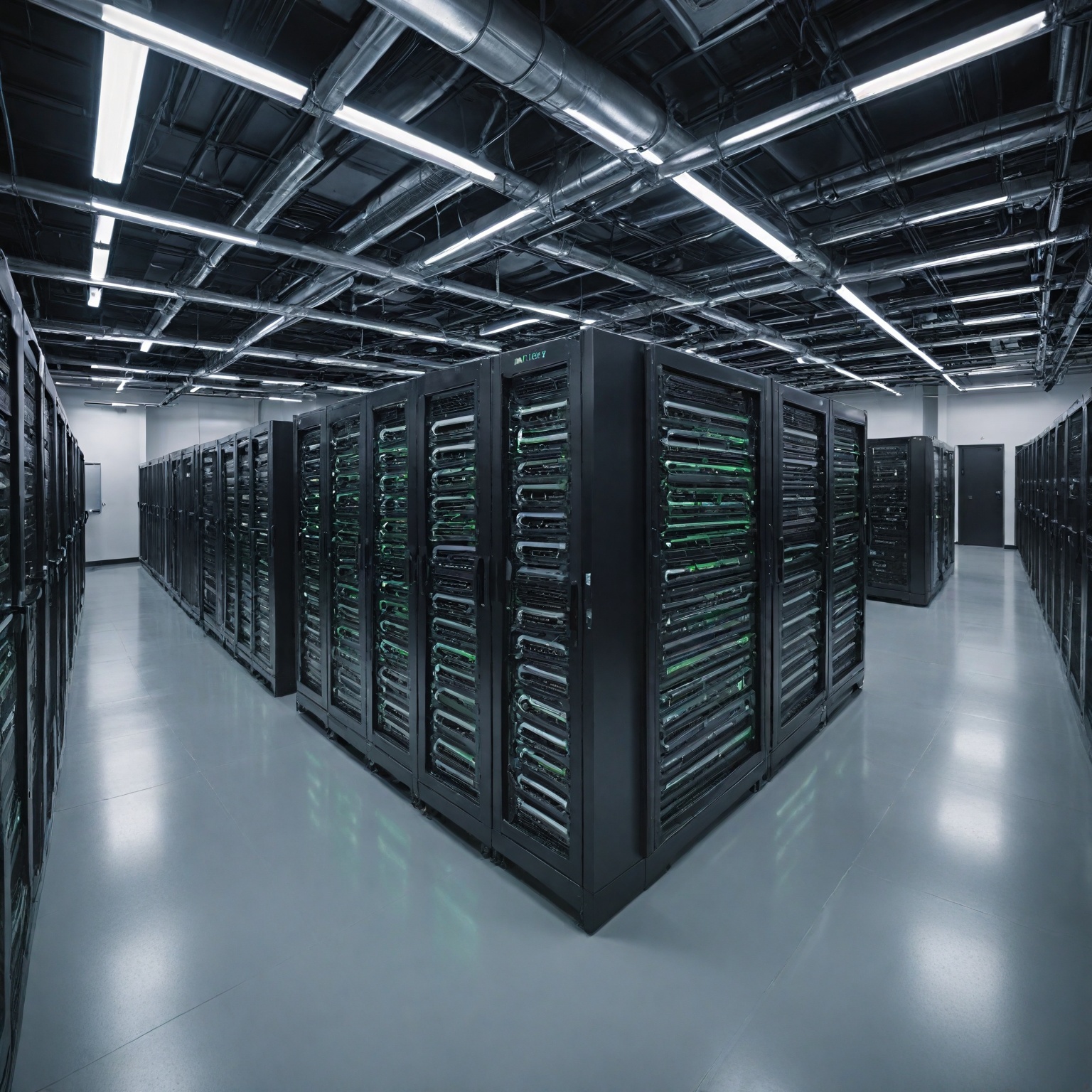
CoreWeave’s infrastructure is strategically designed to support AI circular deals by providing specialized, high-performance cloud and data center capabilities tailored for artificial intelligence workloads. Its data centers, located in the United States and Europe, combine dedicated and multi-tenant environments to meet diverse customer needs. Notably, CoreWeave’s $1.6 billion supercomputer data center in Plano, Texas, housing over 3,500 Nvidia H100 GPUs, exemplifies the company’s commitment to building some of the fastest AI supercomputers globally.
The company’s cloud platform is purpose-built for scaling and accelerating generative AI (GenAI) applications, managing complex growth challenges while making supercomputing accessible to a broad range of users. CoreWeave data centers feature advanced infrastructure solutions including NVIDIA Quantum-2 InfiniBand networking and innovative cooling technologies optimized for AI workloads. Beginning in 2025, all data centers will integrate liquid cooling capabilities to enhance performance, reduce costs, and improve energy efficiency, addressing the increasing thermal demands of future AI hardware such as NVIDIA GB200 NVL72 GPU clusters.
CoreWeave’s financing model also aligns with AI circular deals by investing heavily in Nvidia GPU fleets, leveraging the hardware as collateral, and securing long-term customer commitments. This approach contrasts traditional cloud providers and fosters sustained collaboration and resource sharing across the AI ecosystem. Despite the challenges of AI’s substantial energy consumption, CoreWeave has mitigated environmental impact through advanced cooling techniques that can reduce data center energy use by up to 60 percent, even as overall demand continues to escalate.
The platform’s AI-native design ensures high reliability and efficiency, enabling customers to achieve up to 96% goodput with resilient infrastructure, detailed node lifecycle management, and 24/7 engineering support. These features reduce interruptions and maximize cluster utilization, which are crucial for the dynamic resource allocation inherent in circular AI collaborations. Additionally, CoreWeave AI Object Storage offers a high-performance, S3-compatible storage solution specifically optimized for AI/ML workloads. Utilizing Local Object Transfer Accelerator (LOTA™) technology, it delivers local-like data access speeds up to 2 GB/s per GPU and supports rapid scaling of inference clusters, further enhancing resource efficiency and responsiveness.
Through this combination of cutting-edge hardware, innovative cooling, strategic financing, and specialized storage solutions, CoreWeave’s infrastructure forms a robust foundation for AI circular deals that emphasize collaboration, resource sharing, and sustainable scaling of AI capabilities.
Promotion and Implementation of AI Circular Deals at CoreWeave
CoreWeave CEO Michael Intrator has been a prominent advocate for the use of “circular” business deals within the AI industry, positioning them as strategic collaborations rather than mere financial engineering. Circular deals involve a small group of powerful AI companies investing in one another, often intertwining roles as both investors and customers. Intrator defends this approach as a pragmatic response to the unprecedented supply and demand shocks experienced in the AI compute market, emphasizing cooperation as essential to navigating this “violent change” and accelerating infrastructure capacity online.
At CoreWeave, circular deals are not only promoted philosophically but have been actively implemented as part of the company’s growth strategy. The firm’s partnerships often involve reciprocal investments and commitments, such as the arrangement with Nvidia, CoreWeave’s major GPU supplier and investor. In this agreement, Nvidia has secured the right to purchase CoreWeave’s residual unsold GPU capacity through April 2032, effectively guaranteeing utilization and providing stability in an otherwise volatile market. This kind of circular financing ensures that hardware makers like Nvidia can plan production with greater certainty while enabling CoreWeave to scale its infrastructure with reduced financial risk.
Intrator further highlights that these circular arrangements create systemic benefits beyond capital flow. They promote supply chain resilience by ensuring the availability of critical resources such as top-tier GPUs, power capacity, and skilled operational talent—factors crucial for meeting the ambitious scale promised by AI providers. CoreWeave’s cloud infrastructure, specifically designed for AI workloads and supported by its Kubernetes-native developer tools and Mission Control software, exemplifies how the company integrates these collaborations into practical service offerings.
Despite criticism and concerns from some market analysts who view circular deals as potential round-tripping or artificially inflated revenue schemes, Intrator maintains that these partnerships represent a fundamental infrastructure buildout necessary for the AI industry’s rapid expansion. Transparency in reporting related-party revenues and contractual backlogs, as well as regulatory scrutiny from agencies like the FTC and DOJ, are acknowledged as important measures to reassure markets that growth driven by circular deals is substantive and sustainable.
Partnerships and Collaborations Enabled by AI Circular Deals
CoreWeave’s CEO has championed AI circular deals as a strategic means to foster collaboration within the rapidly evolving artificial intelligence ecosystem. These arrangements typically involve companies investing in one another while simultaneously entering into supply and purchase agreements, creating interconnected loops of capital and capacity that bind suppliers, investors, and customers together.
One prominent example includes Nvidia’s multifaceted role as a supplier, investor, and partner across various AI infrastructure players. Nvidia not only supplies CoreWeave with GPUs but is also contractually obligated to purchase any residual unsold capacity from CoreWeave through 2032. This deal exemplifies the circular nature of investments and procurement, where capital and products flow reciprocally, effectively creating a strategic infrastructure buildout rather than a simple transactional relationship.
OpenAI has emerged as another key participant in these circular collaborations. The company has forged substantial partnerships with major chipmakers such as Nvidia, AMD, and Broadcom, integrating hardware design and infrastructure commitments deeply into its AI development strategy. For instance, Nvidia’s potential $100 billion investment in OpenAI is directly tied to OpenAI’s commitment to purchasing and deploying Nvidia chips, illustrating the bidirectional flow of capital and resources characteristic of circular deals. Similarly, OpenAI’s collaboration with Broadcom aims to co-develop custom AI accelerators, embedding hardware considerations into its core software planning and enhancing performance through tighter integration.
These partnerships allow AI companies like OpenAI and CoreWeave to secure critical compute power and long-term hardware supply commitments, which are essential for scaling AI workloads efficiently. At the same time, hardware suppliers benefit from predictable demand, enabling them to optimize production and innovation pipelines. Moreover, circular deals can potentially lower unit costs and increase reliability for AI developers by fostering cooperative arrangements across the supply chain.
However, this model also introduces complexity in transparency and financial reporting, as overlapping investments and procurement contracts can obscure the extent to which growth is organic versus financially engineered. Regulatory bodies such as the Federal Trade Commission (FTC), Department of Justice (DOJ), and the UK’s Competition and Markets Authority (CMA) have begun scrutinizing these arrangements, which could lead to new guidelines on strategic investments and exclusivity agreements within the AI sector.
CoreWeave has leveraged these partnerships to accelerate its expansion efforts. Beyond its infrastructure deals, the company has acquired several AI-focused startups—including Weights & Biases, OpenPipe, Marimo, and Monolith—to broaden its capabilities and market reach. It has also expanded its cloud collaboration with OpenAI and announced intentions to enter the federal market to provide AI cloud infrastructure services. These moves reflect how circular deals are not only fostering strategic alliances but also enabling companies like CoreWeave to build a comprehensive AI ecosystem through a combination of investment, acquisition, and partnership.
Industry Impact and Ecosystem Effects
The emergence of circular deals within the AI infrastructure sector has begun to significantly reshape the industry landscape and its broader ecosystem. These agreements—characterized by overlapping commitments among suppliers, investors, and customers—have generated roughly $1 trillion in combined capital and capacity, signaling a profound transformation in how AI compute resources are funded, delivered, and scaled. This model enables companies like OpenAI to secure massive infrastructure without solely depending on external funding, while hardware manufacturers such as Nvidia and AMD benefit from predictable long-term demand, allowing for more precise production planning.
However, this tightly interwoven network of partnerships is fostering a shift away from traditional open competition toward a more selective participation model, potentially limiting access to compute, chips, and cloud capacity for entities outside the core investment loop. The ecosystem effects extend beyond hardware, with speculation that similar approaches may influence software, edge computing, and AI data platforms, and even introduce incentives tied to energy efficiency metrics. Such integration promises enhanced performance and efficiency, as evidenced by collaborations like that between Broadcom and OpenAI which deepen software-hardware synergy.
Despite these advantages, the circular deal structure introduces complexity and risks. It can obscure the distinction between organic growth and growth driven by financial engineering, complicating transparency around company performance. Critics warn that these arrangements may resemble “round-tripping,” where reciprocal investments and purchases inflate revenues without real profit increases, raising concerns about financial health and potential regulatory violations. Within the AI industry, there are growing fears that this insular growth model contributes to a speculative bubble lacking genuine consumer demand, with a possibility of a dramatic market correction.
From an operational standpoint, the industry is witnessing advancements in infrastructure reliability and efficiency driven by these partnerships. High-performance AI clusters now offer up to 96% goodput through resilient node management and 24/7 engineering support, enabling teams to maintain productivity and focus on innovation. Network infrastructure improvements such as private interconnects, direct cloud peering, and high-capacity ports ensure data integrity and consistent GPU performance worldwide, mitigating issues like data sprawl and heavy replication. Moreover, resource sharing technologies like SUNK, which integrates Slurm and Kubernetes, allow simultaneous training and inference workloads on managed clusters, facilitating flexible scaling aligned with customer demand.
The scale and financial commitment to AI infrastructure are underscored by major industry players: Microsoft plans to invest approximately $80 billion in AI infrastructure and data centers for fiscal year 2025, Meta has allocated around $68 billion for similar expansion, and Google has launched Gemini, a flagship AI chat tool signaling its stake in the AI arms race. This competition fuels not only infrastructure build-out but also an escalating battle for top AI talent, with compensation packages rivaling those of elite athletes.
Controversies and Market Concerns
CoreWeave’s rise in the AI compute market has not been without scrutiny, as concerns around circular financing and related-party transactions have emerged within the industry. Circular deals, sometimes described as a “financial ouroboros,” involve the same stock of money cycling repeatedly between AI companies, potentially inflating reported revenues without generating actual profit growth. This form of round-tripping, where companies agree to buy from or invest in each other to artificially boost financial statements, raises red flags about the true financial health and sustainability of these firms.
Experts, including accounting professionals and credit analysts from major rating agencies, have called for increased transparency around these strategic deals, especially regarding the quality of backlogs and the durability of cash flows they produce. Such scrutiny reflects broader worries that the AI sector may be developing an insular market bubble, characterized by speculative investments disconnected from real consumer demand.
Industry observers and investment groups have highlighted these circular deals as a troubling indicator of self-referential financial behavior within the AI space. For example, the Nvidia-OpenAI transaction was cited as a “troubling signal” demonstrating how intertwined and potentially
Future Outlook
The future of AI infrastructure and funding is poised to evolve toward more selective participation, potentially limiting compute, chips, and cloud capacity to an “inner loop” of key players. This trend may extend beyond hardware into software, edge computing, and AI data platforms, with possible integration of energy metrics and carbon efficiency incentives into future deals. Companies driving AI innovation, such as CoreWeave, are not only shaping technology but also redefining the mechanisms for financing, delivering, and scaling AI solutions.
CoreWeave positions itself as a strategic partner focused on managing the complexities of AI growth by providing a cloud platform purpose-built for scaling and accelerating generative AI workloads. Their approach aims to make supercomputing more accessible and push the boundaries of what AI can achieve. The company’s CEO, Michael Intrator, highlights the importance of long-term commitment and bold strategies in building the next generation of AI.
Financially, CoreWeave has experienced a remarkable surge in valuation, with its stock increasing over 200% since its Wall Street debut. This growth is driven largely by its significant role as a major supplier to OpenAI, with a recently expanded contract valued at $22.4 billion. Such large-scale agreements underscore the escalating investment and infrastructure demands in the AI sector.
A notable aspect of the evolving AI ecosystem is the rise of circular financing—where AI companies invest in each other, creating “round-trip” transactions. While these deals accelerate innovation and secure revenue streams, they also raise concerns about distinguishing genuine market demand from artificially generated growth supported by companies controlling core infrastructure. This phenomenon reflects the intertwined nature of AI supply chains, involving chipmakers, cloud providers, and AI developers in mutually dependent relationships.
Looking ahead, the AI industry faces enormous infrastructure and energy challenges. Studies estimate that by 2030, AI companies will require around $2 trillion in annual revenue to sustain the necessary data centers and electricity consumption. Major tech firms such as Microsoft, Meta, and Google are already committing tens of billions of dollars toward AI infrastructure and talent acquisition, intensifying the competitive landscape and accelerating the AI arms race. CoreWeave’s strategic positioning within this dynamic environment suggests it will continue to play a pivotal role in shaping how AI is funded, scaled, and delivered in the coming years.
The content is provided by Blake Sterling, Know Heaven