Pro-Democracy Leader Jimmy Lai Found Guilty of Sedition and Collusion in Landmark Hong Kong Ruling
Summary
Jimmy Lai, a prominent Hong Kong media tycoon and pro-democracy activist, was found guilty in December 2025 of conspiracy to publish seditious materials and conspiracy to collude with foreign forces under Hong Kong’s National Security Law (NSL) and revived colonial sedition laws. The landmark verdict marks one of the highest-profile applications of Beijing’s NSL since its imposition in 2020, signaling a severe crackdown on dissent and independent media in the city. Lai, founder of the now-defunct Apple Daily newspaper, was convicted for using his media platform to incite hatred against the Chinese and Hong Kong governments and for lobbying foreign governments to impose sanctions on Beijing, charges that carry penalties ranging from several years to life imprisonment.
Lai’s conviction came amid the broader context of the 2019 pro-democracy protests and the subsequent implementation of the NSL, which Beijing introduced to curb what it describes as threats to national security, including secession, subversion, and collusion with foreign forces. The trial relied heavily on extensive evidence including hundreds of Apple Daily publications, social media posts, and documented contacts with foreign politicians during the protests, which the court interpreted as an attempt to destabilize the Chinese Communist Party (CCP). Lai has denied all charges, but the verdict has been upheld by government-appointed judges who characterized him as a “mastermind” behind conspiracies undermining state sovereignty.
The ruling has drawn sharp international criticism, with human rights organizations and foreign governments condemning the trial as politically motivated and emblematic of the erosion of Hong Kong’s freedoms and judicial independence. Groups such as Amnesty International, Human Rights Watch, and the Committee to Protect Journalists described the conviction as a travesty of justice and a targeted attack on press freedom. Conversely, Hong Kong government officials praised the judgment as a necessary measure to uphold national security and the rule of law.
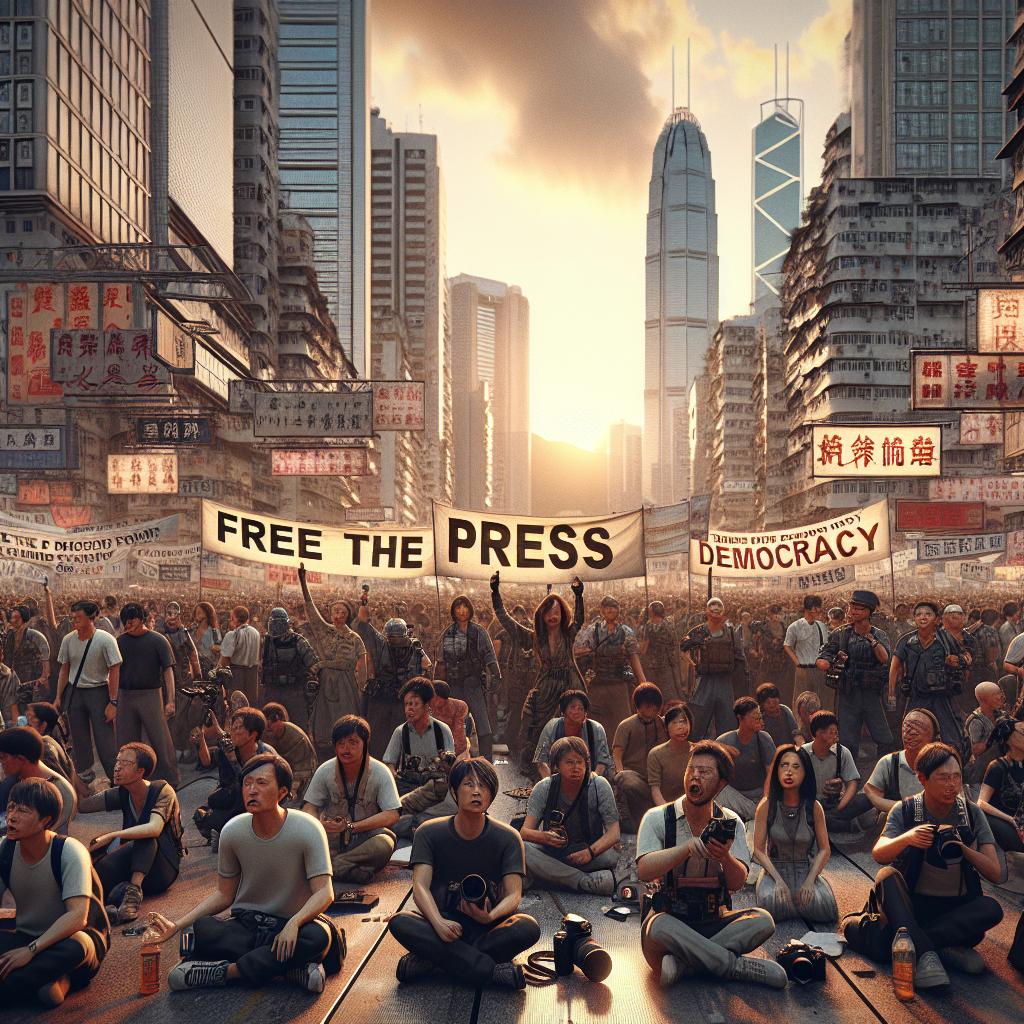
Jimmy Lai’s case has become a symbol of the broader struggle over democratic freedoms in Hong Kong following Beijing’s tightening control since the 2019 protests. His conviction illustrates the intensified use of legal tools to silence dissent and curtail independent media, raising profound concerns about the future of civil liberties and political opposition in the city. Despite imprisonment and mounting legal challenges, Lai remains a potent figure representing resistance against authoritarian encroachment in Hong Kong.
Background
Jimmy Lai, a prominent media tycoon and pro-democracy activist in Hong Kong, has been a central figure in the city’s political landscape for decades. He founded Apple Daily in 1995, a fiercely pro-democracy tabloid known for its critical stance against the Chinese Communist Party and its vocal support of Hong Kong’s democratic movements until its forced closure in 2021. Lai’s career and activism have mirrored the broader trajectory of Hong Kong’s struggle for democracy, with his media outlets consistently supporting major protest movements, including the 2003 opposition to a proposed national security law, the 2014 Occupy Central movement, and the 2019 protests against the extradition bill, which later evolved into a larger pro-democracy movement.
The imposition of the national security law by Beijing in 2020 marked a turning point in Hong Kong’s political environment. This law criminalized a broad range of political activities, including collusion with “foreign forces” deemed to threaten national security. The authorities swiftly moved to enforce the law by arresting Lai and raiding Apple Daily’s offices, signaling a crackdown on dissenting voices and independent media. Under this law and related local legislation, open dissent has been severely restricted, leading to convictions of numerous pro-democracy figures and journalists accused of sedition and subversion.
Lai’s legal troubles escalated following his arrest in February 2021, linked to allegations that he aided activists in fleeing Hong Kong to Taiwan. He has faced multiple charges, including sedition and fraud, resulting in several sentences amounting to nearly ten years in prison by late 2025. The courts described him as a “mastermind” behind conspiracies aimed at destabilizing the Chinese government, citing his use of Apple Daily to publish seditious articles intended to incite hatred against Hong Kong and Chinese authorities. Despite his pleas of not guilty, Lai’s conviction has drawn widespread condemnation from supporters, international leaders, and press freedom organizations, highlighting concerns over the erosion of democratic freedoms in Hong Kong.
2019 Hong Kong Protests and Political Context
The 2019–2020 Hong Kong protests were a series of large-scale demonstrations triggered by the Hong Kong government’s proposed amendments to the Fugitive Offenders Ordinance, which would have allowed extraditions to mainland China. These protests are noted as the largest in the city’s history and involved a broad cross-section of Hong Kong society voicing their opposition to the bill and broader concerns about Beijing’s increasing influence over Hong Kong.
On 9 June 2019, a massive protest march organized by the Civil Human Rights Front drew over a million participants according to organizers, although police estimates were significantly lower at 240,000. The peaceful march from Victoria Park to the Admiralty District ended with violent clashes outside the Legislative Council building, marking a turning point toward escalating confrontations between protesters and the police. These protests evolved into a wider pro-democracy movement that challenged both the Hong Kong government and Beijing’s policies.
The political environment surrounding the protests was heavily influenced by restrictions on freedoms and democratic expression. New laws, such as the National Security Law enacted by Beijing, have curtailed public discourse and media freedom, often under the justification of maintaining national security. Activists and pro-democracy figures, including media tycoon Jimmy Lai, became prominent targets under these laws. Lai had previously supported mass protests through his media outlets and faced multiple attacks, including raids by anti-corruption police and physical assaults.
International reactions to the crackdown on pro-democracy activists have been critical, with countries such as the United States and Britain condemning the trials of activists as politically motivated. The U.S. President at the time, Donald Trump, raised concerns about Jimmy Lai’s case directly with Chinese leadership and pledged efforts to support his release. Human rights experts have also expressed concerns that the National Security Law violates international legal obligations and have called for its repeal, highlighting the erosion of Hong Kong’s judicial independence and democratic freedoms.
Legal Framework
The legal framework underpinning the conviction of Jimmy Lai is rooted primarily in Hong Kong’s National Security Law (NSL), enacted in 2020, alongside a renewed application of a British colonial-era sedition law. The NSL criminalizes acts such as secession, subversion, terrorism, and collusion with foreign forces, with penalties ranging from three years to life imprisonment depending on the severity and nature of the offence. The sedition law, dormant for approximately 50 years until recent years, criminalizes seditious acts, words, or publications intended to incite hatred, contempt, or disaffection against the Chinese or Hong Kong governments, carrying maximum sentences of up to seven years in prison.
Article 23 of Hong Kong’s Basic Law mandates the city to enact legislation prohibiting national security offences related to sovereignty, such as sedition, but the introduction of such laws had long been delayed until the NSL was imposed by Beijing. This law applies extraterritorially, meaning foreign nationals can be prosecuted for crimes committed within Hong Kong, and it has been criticized for its broad and vague definitions which could encompass a wide range of activities, including possession of seditious publications like books or articles.
The NSL’s implementation has resulted in numerous arrests of pro-democracy activists and journalists, marking a significant shift in Hong Kong’s political landscape. Jimmy Lai was charged with conspiracy to publish seditious publications under the colonial sedition law, and conspiracy to collude with foreign forces under the NSL. Prosecutors alleged that Lai used his media outlet, Apple Daily, and his international connections to lobby foreign governments to impose sanctions and other punitive measures on Chinese and Hong Kong authorities.
Legal experts and international human rights advocates have voiced concerns that the NSL contravenes international legal obligations and undermines freedoms in Hong Kong. They emphasize that the law’s vague scope risks criminalizing legitimate dissent, cooperation with overseas institutions, and freedom of expression. The trial of Jimmy Lai represents the second major prosecution under the NSL after the case involving 47 pro-democracy activists arrested in 2020, reflecting the broad and stringent application of the law in curbing political opposition.
Charges and Indictment
Jimmy Lai was charged with multiple offenses under both the city’s national security law and a British colonial-era sedition law. Specifically, he faced one count of conspiracy to publish seditious publications and two counts of conspiracy to collude with foreign forces. These charges were brought under the Hong Kong national security law (NSL), imposed by Beijing in 2020, alongside the revival of colonial sedition laws that have seen renewed application in recent years.
The prosecution accused Lai of using his media outlet, Apple Daily, as a platform to publish seditious materials intended to incite hatred or disaffection against the Chinese and Hong Kong governments. Evidence presented in court included 161 publications from Apple Daily, social media posts, and text messages that allegedly demonstrated a conspiracy to disseminate seditious content. Under the sedition law, any publication deemed to have the intent of undermining the government can be criminalized, even if there is no incitement to violence.
In addition to sedition, Lai was charged with collusion with foreign forces under the national security law, accused of lobbying foreign governments to impose sanctions and other punitive measures on Chinese and Hong Kong authorities. The prosecution highlighted Lai’s meetings with prominent US politicians during the 2019 protests, including then-Vice President Mike Pence and then-Secretary of State Mike Pompeo, as evidence of his attempts to solicit foreign interference. The court noted that Lai’s “only intent … was to seek the downfall of the [Chinese Communist Party],” a motive central to the collusion charges, which carry a maximum penalty of life imprisonment under the NSL.
Moreover, Lai faced additional allegations related to fraud, specifically concerning alleged breaches of lease conditions for his company’s office premises, further complicating his legal situation. Three business entities affiliated with Apple Daily were also found guilty of conspiracy to collude with foreign forces alongside Lai.
Lai pleaded not guilty to all charges, but the court’s extensive 855-page judgment described the evidence as “clear,” affirming the government-appointed judges’ findings in this landmark case. This case forms part of a broader crackdown on pro-democracy figures and media in Hong Kong, illustrating the intensified use of both the national security and sedition laws to suppress dissent.
Trial Proceedings
Jimmy Lai’s trial, which began in December 2023, marked the highest-profile application of Beijing’s national security law in Hong Kong since the city’s 1997 handover to Chinese rule. The trial drew intense media attention, with reporters queuing early outside the West Kowloon Magistrates Court to secure places in the courtroom as the verdict approached in December 2025. Lai faced charges of conspiracy to collude with foreign forces and conspiracy to publish seditious materials.
Prosecutors presented extensive evidence, including 161 publications from Apple Daily, social media posts, and text messages, to demonstrate Lai’s alleged conspiracy to publish seditious content. The prosecution emphasized Lai’s meetings with U.S. politicians such as former Vice President Mike Pence and former Secretary of State Mike Pompeo during the 2019 protests, portraying these interactions as attempts to solicit foreign interference, which under the national security law constitutes collusion and is punishable by life imprisonment. Despite much of this lobbying occurring before the national security law’s enactment, the court considered Lai’s intent to seek the downfall of the Chinese Communist Party (CCP) as central to the charges.
During the trial, Lai denied all charges against him. The court’s 855-page verdict detailed the evidence against Lai and related business entities, including Apple Daily Limited, Apple Daily Printing Limited, and AD Internet Limited, which were found guilty on foreign collusion charges. Judges highlighted Lai’s longstanding resentment towards the Chinese government and determined that his actions demonstrated an intent to undermine the CCP, even at the expense of Hong Kong and mainland China’s people. The court maintained strict order during the verdict reading, underscoring the gravity of the proceedings.
Lai was also convicted on a separate count of conspiracy to publish seditious material through Apple Daily. The trial, seen as part of a broader crackdown on pro-democracy activism following the 2019 protests, stands alongside other significant cases involving journalists and activists charged under the national security law. Lai’s supporters condemned the trial as politically motivated and a weaponization of the legal system to suppress dissent, with international figures including former U.S. President Donald Trump raising concerns and calling for Lai’s release.
Following the verdict, sentencing was scheduled for a later date, with Lai facing the possibility of a life sentence alongside other protest-related convictions amounting to nearly ten years in prison. Hong Kong’s government officials expressed confidence in the judiciary’s independence and its role in safeguarding national security. Meanwhile, human rights organizations and international observers criticized the trial as a travesty of justice and a further erosion of Hong Kong’s autonomy and press freedom.
Verdict and Sentencing
On Monday, a Hong Kong court delivered a guilty verdict in the high-profile national security trial of Jimmy Lai. Lai was found guilty on two counts of conspiracy to collude with foreign forces and one count of conspiracy to publish seditious material, marking a significant moment in the city’s shrinking tolerance for dissent. The court’s decision was detailed in an extensive 855-page verdict that cited 161 publications, including articles from Lai’s newspaper Apple Daily, as evidence of seditious conspiracy. Additional evidence included social media posts and text messages. Alongside Lai, three business entities affiliated with Apple Daily—Apple Daily Limited, Apple Daily Printing Limited, and AD Internet Limited—were also convicted on charges of foreign collusion.
Lai appeared composed as the verdict was announced, quietly acknowledging his family before being escorted from the courtroom by guards. Under Hong Kong’s sweeping national security law, the conspiracy to collude charge carries a potential sentence ranging from three years to life imprisonment, contingent on the specifics of the offense and Lai’s role. The sedition charge carries a maximum penalty of two years in prison. Lai is currently serving multiple protest-related sentences amounting to nearly ten years, and today’s convictions raise the possibility of a life sentence. Sentencing has been scheduled for a later date, with a four-day mitigation hearing set to begin on 12 January, during which Lai will have the opportunity to argue for a reduced sentence.
Reactions to the verdict have been sharply divided. Hong Kong’s Chief Executive John Lee and national security police chief Steve Li publicly welcomed the ruling, asserting that the judiciary remains confident and unyielding in its duty to safeguard national security. Conversely, international organizations and human rights advocates have condemned the verdict as a severe blow to press freedom and justice. The International Press Institute described the conviction as evidence of the courts being weaponized against independent journalism. Amnesty International’s China director, Sarah Brooks, expressed dismay at the verdict’s predictability, while Human Rights Watch’s Asia director, Elaine Pearson, called it cruel and a travesty of justice, highlighting the broader intent to silence dissent against the Communist Party. Beh Lih Yi, Asia-Pacific director of the Committee to Protect Journalists, denounced the conviction as a “sham” and “disgraceful act of persecution,” emphasizing that Lai’s sole offense was operating a newspaper and defending democracy.
Reactions
The conviction of pro-democracy leader Jimmy Lai elicited widespread condemnation from international human rights organizations, foreign governments, and activists, highlighting concerns over the erosion of freedoms and judicial independence in Hong Kong. Rights groups characterized the verdict as a politically motivated attack on press freedom and democracy. The Committee to Protect Journalists denounced the ruling as a “sham conviction” and a “disgraceful act of persecution,” emphasizing that Lai’s only “crime” was running a newspaper and defending democracy. Amnesty International’s China director, Sarah Brooks, described the outcome
Significance and Impact
The conviction of Jimmy Lai marks a pivotal moment in Hong Kong’s ongoing struggle over political freedoms and the rule of law under the shadow of Beijing’s tightening control. As the second high-profile trial under the controversial National Security Law (NSL), following the case of 47 pro-democracy activists awaiting verdicts, Lai’s sentencing underscores the government’s intensified crackdown on dissent and its broader implications for civil liberties in the city.
Observers and human rights organizations have condemned the verdict as a severe blow to media freedom and political expression. Amnesty International’s China director described the predictable verdict as nonetheless “dismaying,” while Human Rights Watch characterized Lai’s conviction as a “cruel” miscarriage of justice aimed at silencing critics of the Chinese Communist Party (CCP). The court judgment explicitly portrayed Lai’s actions as driven by longstanding animosity toward the People’s Republic of China, interpreting his efforts as intended to bring about the CCP’s downfall at the expense of both mainland and Hong Kong residents.
The trial and conviction have further highlighted the deterioration of Hong Kong’s political climate since Beijing’s imposition of the NSL in mid-2020. The law introduced new offenses including sedition and collusion with foreign forces, applying a stringent legal framework that extends beyond Hong Kong itself. Following the NSL’s enactment, over a hundred activists were arrested, and a broader crackdown on civil society and the media has ensued, fueling a wave of emigration and a chilling effect on public dissent.
Media freedom, in particular, has faced significant challenges. Lai’s media outlets were central to the pro-democracy movement’s voice, and his conviction exemplifies the pressures faced by journalists and publishers. Senior editors at prominent news organizations have reportedly altered content to reflect pro-government perspectives, while some outlets have resorted to self-censorship to avoid political repercussions. The authorities have maintained that media freedom is not absolute, signaling ongoing restrictions on journalistic independence and freedom of speech.
The verdict has also drawn sharp political reactions. China’s national security office in Hong Kong denounced Lai as a “pawn of external anti-China forces” seeking to foment a “colour revolution” in the city, condemning what it described as Western political manipulation under the guise of human rights advocacy. This framing aligns with Beijing’s narrative that equates pro-democracy activism with foreign interference and threats to sovereignty.
Jimmy Lai’s personal story has become emblematic of Hong Kong’s broader democratic aspirations and subsequent repression. His life trajectory has been described as mirroring the city’s own political journey, reflecting the hopes for democratic reform that have been increasingly curtailed in recent years. The ongoing debate surrounding the NSL, and Lai’s case specifically, continues to draw international attention to Hong Kong’s contested status and the erosion of rights guaranteed under the Basic Law and international commitments.
In sum, the conviction of Jimmy Lai represents not only a landmark legal decision but also a symbol of the shrinking space for political dissent and media freedom in Hong Kong. It underscores the escalating tensions between Beijing’s sovereignty claims and the city’s democratic movements, with significant implications for the future of civil liberties and governance in the territory.
Jimmy Lai’s Legacy and Continuing Influence
Jimmy Lai is widely regarded as a symbol of resistance and a staunch advocate for democracy and freedom of speech in Hong Kong. His legacy is deeply intertwined with his unwavering commitment to human rights activism, particularly following the Tiananmen Square Massacre, which profoundly shaped his life’s mission. In 1995, Lai founded the Apple Daily, a pro-democracy newspaper known for its outspoken criticism of the Chinese Communist Party (CCP) and its dedication to independent journalism.
Throughout his career, Lai’s media outlets have played a crucial role in supporting major pro-democracy movements in Hong Kong. His newspapers backed the 2003 protests against a proposed national security law, the 2014 Occupy Central movement—which Lai himself actively participated in—and the 2019 protests opposing the extradition bill that evolved into a larger pro-democracy campaign. Despite facing personal attacks, including physical assaults and police raids on his home and those of his associates, Lai continued to champion democratic causes with resilience.
The enactment of the National Security Law in 2020 marked a turning point in Hong Kong’s political landscape, severely restricting freedom of expression and political activism. Lai became a prominent victim of these legal changes, with his arrest and the raid on Apple Daily offices demonstrating the law’s harsh application against dissenters. His subsequent trial and conviction for sedition and collusion under the National Security Law have been met with international condemnation and concern for the erosion of Hong Kong’s judicial independence and freedoms.
Despite these challenges, Lai’s influence endures both locally and internationally. His case has drawn attention from global leaders and human rights organizations, including direct appeals from U.S. President Donald Trump and statements from groups like Reporters Without Borders, emphasizing Lai’s role as a defender of independent media and democratic values. Critics of the Hong Kong government view Lai not merely as a symbol, but as a principled individual who refused to let power dictate what could be said or published.
Lai’s legacy continues to inspire activists and advocates fighting for democracy and human rights in Hong Kong. His dedication to speaking out against authoritarianism, even under intense pressure and personal risk, solidifies his standing as a key figure in the ongoing struggle for political freedom in the region.
The content is provided by Sierra Knightley, Know Heaven