
Summary
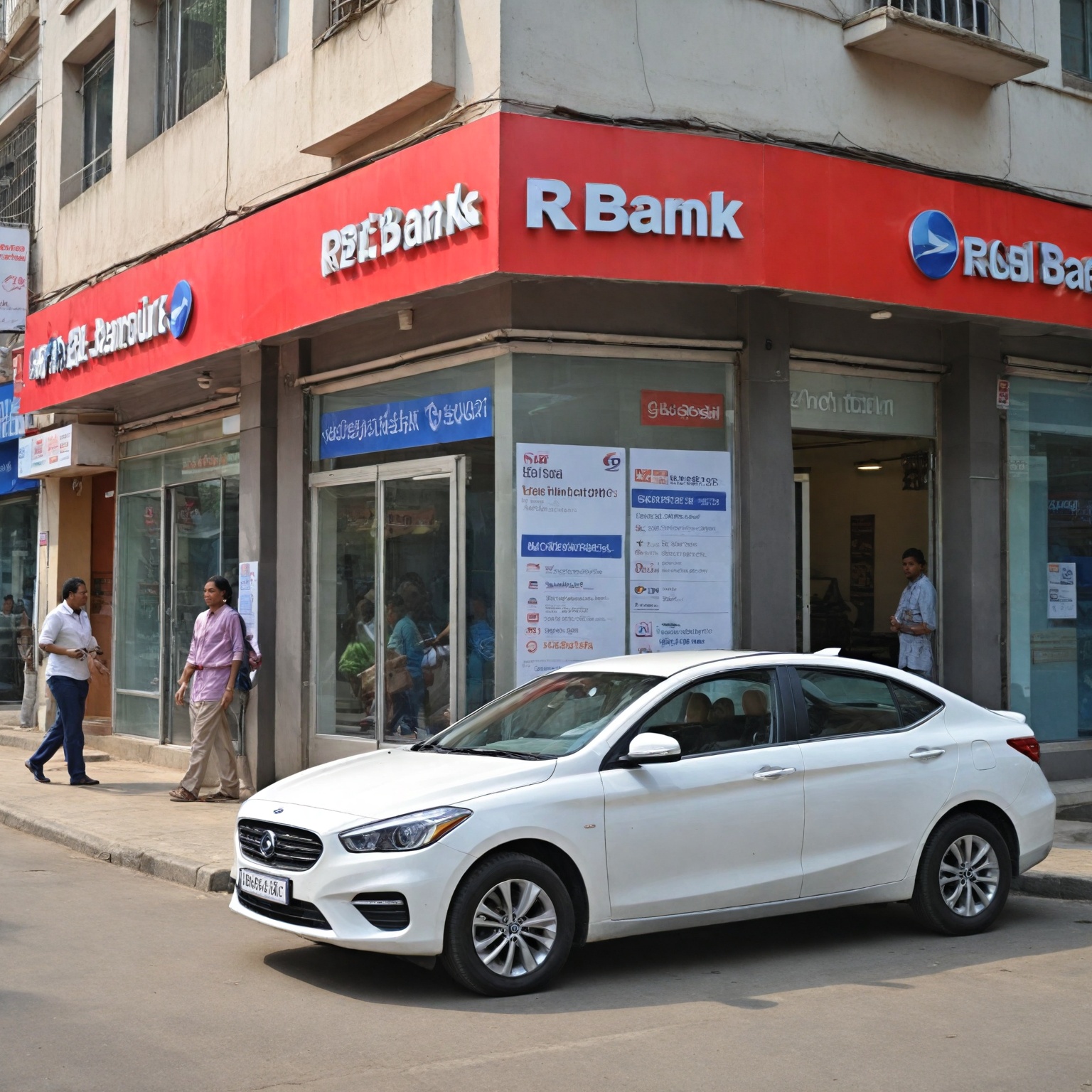
RBL Bank Limited, one of India’s oldest private sector banks, has recently launched an ambitious initiative to expand its retail lending portfolio by introducing new car and used car loan products. Headquartered in Maharashtra and operating across multiple Indian states, RBL Bank aims to leverage its extensive branch and business correspondent network to deepen its presence in tier-II and tier-III cities. This strategic move is designed to capture a larger share of the growing vehicle financing market while targeting a notable net interest margin (NIM) of 5.1%, reflecting the bank’s focus on sustainable profitability and market differentiation.
The new loan products cater to a broad customer base, offering flexible loan amounts from Rs. 50,000 to Rs. 30 lakhs, tenures ranging from 12 to 60 months, and competitive interest rates aligned with the Marginal Cost of Funds based Lending Rate (MCLR) system. RBL Bank’s streamlined application process emphasizes convenience and quick approvals, with options available both online and through physical branches. By providing financing for new and pre-owned vehicles, the bank aims to enhance car ownership accessibility, particularly in underserved segments.
RBL Bank’s broader retail strategy complements its efforts to diversify its loan portfolio beyond traditional corporate banking. The bank is investing heavily in digital underwriting technologies and cost control measures to improve turnaround times and operational efficiency. This approach, coupled with a robust risk management framework and a focus on niche lending sectors like agricultural and development banking, positions RBL Bank as a challenger institution seeking to disrupt established lending markets.
Despite its growth ambitions, RBL Bank’s expansion into competitive vehicle financing markets presents challenges, including maintaining asset quality and managing regulatory compliance amid evolving tax and lending guidelines. The bank continues to prioritize transparency and customer-centric policies, such as clear fee structures and adherence to Reserve Bank of India norms, to mitigate risks and foster trust among borrowers.
Background
RBL Bank Limited, formerly known as The Ratnakar Bank Limited, is one of the oldest private sector banks in India, established in August 1943. Headquartered in the Kolhapur region of Maharashtra, the bank operates as a scheduled commercial bank offering a comprehensive range of banking products and services across five verticals: Corporate & Institutional Banking, Retail Banking, Commercial Banking, Financial Markets, and Agri & Development Banking. Over the years, RBL Bank has earned recognition as India’s Best Bank in terms of growth among mid-sized banks for three consecutive years, according to the Business Today-KPMG study, underscoring its strong market presence and trustworthiness within this segment.
The bank has a widespread network with over 183 branches across 13 Indian states and has experienced significant growth in its Corporate & Institutional Banking segment, with loans growing at a compound annual growth rate (CAGR) of 44% between FY13 and FY16, accounting for 39% of its total loan portfolio. RBL Bank’s risk management function has also evolved substantially since FY11, reflecting its commitment to maintaining financial stability and robust operational frameworks.
In line with Reserve Bank of India guidelines, RBL Bank calculates interest on a half-yearly basis, with reinvestment deposits compounding every six months (180 days). The bank follows the Marginal Cost of Funds based Lending Rate (MCLR) system, which is periodically updated to reflect changing market conditions.
RBL Bank is recognized for offering attractive car loan products, extending financial assistance for various types of vehicles including small cars, compact cars, and SUVs. Customers can select flexible tenure periods ranging from 12 to 60 months, making car ownership more accessible. Alongside retail products, the bank also provides personalized loan solutions for businesses, featuring competitive interest rates and flexible terms tailored to meet specific financial needs.
New Loan Products
RBL Bank has introduced new car loan products aimed at catering to a wide range of customers, from those purchasing small and compact cars to buyers of super-premium vehicles, SUVs, MUVs, compact sedans, and hatchbacks. The loan amounts range from Rs. 50,000 up to Rs. 30 lakhs for salaried individuals, providing significant financial assistance for new car purchases. The bank offers flexible tenure options ranging from 12 to 60 months, with loan-to-value ratios of up to 90% of the car’s value, making car ownership more accessible.
The eligibility criteria require applicants to be between 25 and 65 years of age at the time of loan maturity, with the final approval subject to the bank’s discretion based on income level, age, and other factors. While the primary focus is on new cars, loans for pre-owned vehicles may also be considered depending on the applicant’s profile.
RBL Bank’s car loan offerings feature competitive interest rates structured according to the Marginal Cost of Funds based Lending Rate (MCLR) guidelines effective from June 22, 2025. Interest is calculated on a half-yearly basis in accordance with Reserve Bank of India regulations. The processing charges are approximately 1% of the loan amount, while foreclosure charges stand at about 3.5% of the outstanding principal, ensuring transparency in the cost structure for borrowers.
The bank emphasizes a hassle-free and streamlined loan process with minimal documentation, facilitating quick approvals and easy disbursal. Customers are encouraged to update any changes in their residence, contact information, or employment status within 30 days of any such update to keep their records current. Applications can be initiated online or by visiting the nearest RBL Bank branch, providing convenience and flexibility to prospective borrowers.
With these new loan products, RBL Bank aims to unlock business potential by offering personalized loan solutions featuring competitive rates and flexible terms tailored to meet diverse financial needs. This strategic initiative is part of the bank’s broader ambition to expand its lending portfolio while maintaining a strong interest margin target.
Financial Targets and Performance
RBL Bank has outlined ambitious financial targets centered on enhancing its net interest margin (NIM) by strategically shifting its portfolio towards higher-yielding retail assets. A senior official highlighted the bank’s focus on deepening its presence in tier-II and tier-III cities through an extensive distribution network comprising 550 branches and over 1,500 business correspondent touchpoints. This expansion supports quicker turnaround times in credit delivery across various retail segments, including tractor finance, gold loans, home loans, business loans, and the emerging commercial vehicle financing sector.
The bank aims to widen its interest margin by catering to niche customer segments whose financial needs remain underserved by traditional lenders. To achieve this, RBL Bank leverages digital technologies for loan underwriting, maintains stringent cost controls, and emphasizes speed in credit processing, positioning itself as a challenger bank in the competitive retail lending space. These efforts are expected to create sustainable profit pools and improve overall profitability in the retail credit segment.
In addition to portfolio realignment, RBL Bank offers competitive and flexible loan products, such as car loans that can finance up to 90% of the vehicle’s value, supporting its goal to capture a larger share of retail financing markets. The bank also adheres to regulatory guidelines by pricing loans based on the Marginal Cost of Funds based Lending Rate (MCLR), effective June 22, 2025, ensuring transparency and compliance in its lending practices.
The corporate and commercial banking segments continue to contribute significantly to RBL’s growth, with corporate and investment banking loans growing at a compound annual growth rate (CAGR) of 44% from FY13 to FY16 and accounting for 39% of the loan portfolio.
Market Positioning and Competitive Advantage
RBL Bank positions itself strategically as a challenger bank in the retail lending space, focusing on deepening its presence in tier-II and III cities where it maintains a robust distribution network of 550 branches and over 1,500 business correspondent touchpoints. This extensive reach allows the bank to tailor its product offerings based on a thorough understanding of local customer needs, particularly in high-demand credit segments such as tractor finance, gold loans, home loans, business loans, and emerging business categories.
To compete effectively against established players, RBL Bank emphasizes quick turnaround times for credit delivery, leveraging digital inputs extensively in loan underwriting to enhance efficiency and reduce costs. This digital-centric approach facilitates faster decision-making and helps the bank maintain better control over operational expenses, thereby supporting higher net interest margins (NIMs).
Moreover, RBL Bank adopts a differentiated approach in its risk management architecture and product development, focusing on sectors like Development Banking & Financial Inclusion (DB&FI) and Agri Banking (AB), which serve as key drivers of growth. The bank’s strategy includes forging partnerships with business correspondents, acquiring stakes in microfinance institutions and small finance banks, and collaborating with consumer brands and e-commerce companies to extend its reach beyond traditional branch networks. This multi-pronged expansion tactic enables RBL to create sustainable profit pools and cross-sell high-yielding loan products efficiently.
Customer Experience and Benefits
RBL Bank offers personalized loan solutions designed to unlock the potential of both individual and business customers by providing competitive interest rates and flexible terms tailored to specific financial needs. The loan application process is streamlined and hassle-free, requiring minimal documentation to ensure a smooth and quick experience, particularly for home buying and vehicle financing. Customers can apply easily through online platforms or by visiting the nearest RBL Bank branch, enabling quick approval and access to the best loan offers available.
In addition to loan services, RBL Bank enhances customer convenience by allowing management of recurring merchant payments directly on their Credit and Debit Cards, simplifying routine transactions and improving overall user experience. This integration reflects the bank’s focus on cross-selling and leveraging partnerships with various brands to extend services beyond traditional banking channels, thereby expanding their reach and providing customers with a more comprehensive financial ecosystem.
Regulatory and Compliance Framework
RBL Bank’s car loan offerings operate within a stringent regulatory and compliance framework to ensure transparency and adherence to statutory requirements. The bank adheres to the latest guidelines concerning Tax Deducted at Source (TDS) and Tax Collected at Source (TCS), which are scheduled to be revised effective April 1, 2025. Customers and stakeholders are advised to consult RBL Bank branches or official channels for detailed updates on these changes.
Additionally, RBL Bank facilitates compliance with government mandates by enabling services such as linking PAN with Aadhaar, a deadline for which was set for June 30, 2023. This measure helps prevent PAN cards from becoming inoperative, ensuring uninterrupted financial transactions for loan applicants.
In line with enhancing financial transparency and ease of transaction, RBL Bank has integrated its operations with the Goods and Services Tax (GST) portal, allowing customers to make GST payments directly through the bank’s platform. This integration supports compliance with tax regulations and streamlines the financial processes associated with car loan disbursements and repayments.
Future Plans and Rollout Strategy
RBL Bank plans to deepen its presence in tier-II and tier-III cities by leveraging its extensive distribution network, which includes 550 branches and over 1,500 business correspondent touchpoints. This strategic focus aims to tap into underserved markets by tailoring the product mix to meet specific customer needs, particularly in the retail asset segment.
The bank intends to introduce new car and used car loan products as part of its broader retail credit offerings, which also include tractor finance, gold loans, home loans, and business loans. To compete effectively as a challenger bank in these segments, RBL Bank will emphasize quicker turnaround times for loan approvals and disbursements. The approach will heavily rely on digital inputs for loan underwriting to enhance efficiency and reduce costs. By targeting niche customer segments with unmet needs and maintaining tight control over operational expenses, the bank aims to deliver higher net interest margins (NIMs), with an ambitious target of 5.1%.
Additionally, the bank’s revamped risk management architecture supports this growth strategy by focusing on key drivers such as Development Banking and Financial Inclusion (DB&FI) and Agri Banking. These initiatives are expected to create sustainable profit pools while mitigating risks associated with rapid expansion.
The content is provided by Avery Redwood, Know Heaven