
Summary
Bharat Petroleum Corporation Limited (BPCL), one of India’s leading public sector oil and gas companies, is undertaking a landmark greenfield refinery-cum-petrochemical complex project near Ramayapatnam Port in Andhra Pradesh. Valued at approximately ₹95,000 crore (around $11.2 billion), this project represents one of the largest integrated energy infrastructure investments on India’s east coast and is widely regarded as the country’s last major greenfield refinery initiative. The complex is designed to significantly expand BPCL’s refining capacity—targeted at about 9 million tonnes per annum—and enhance its petrochemical production portfolio, reflecting a strategic response to growing domestic fuel demand and the rising consumption of petrochemical products in southern India.
The project is notable not only for its scale but also for its expected economic impact, including the creation of over 5,000 direct jobs and nearly 100,000 additional employment opportunities during construction, thereby providing a major boost to regional development in Andhra Pradesh. The refinery’s proximity to the developing Ramayapatnam Port is expected to enhance logistical efficiencies, positioning the region as a strategic industrial hub with improved access to domestic and international markets. Moreover, the project fulfills commitments under the Andhra Pradesh Reorganisation Act of 2014, underscoring its regulatory and political significance, with strong support from state leadership.
BPCL’s project also emphasizes environmental sustainability, incorporating comprehensive environmental impact assessments and advanced pollution control technologies in line with evolving regulations such as the U.S. EPA’s National Emission Standards for Hazardous Air Pollutants (NESHAP) and New Source Performance Standards (NSPS). The company’s broader vision aligns with its target of achieving net zero carbon emissions by 2040, integrating cleaner energy solutions including green hydrogen and renewables alongside traditional refining operations.
Despite its promising prospects, the project faces challenges related to land acquisition, environmental compliance, and the complexity of integrating large-scale petrochemical processes with stringent sustainability goals. The successful execution of this ₹95,000 crore investment will be critical not only for BPCL’s strategic expansion but also for supporting India’s long-term energy security and industrial growth ambitions.
Background
Bharat Petroleum Corporation Limited (BPCL) is a prominent Indian public sector oil and gas company headquartered in Mumbai. It operates under the Ministry of Petroleum and Natural Gas and is recognized as India’s second-largest government-owned downstream oil producer. BPCL manages three major refineries located in Mumbai, Kochi, and Bina, which play a critical role in meeting the country’s energy demands. The company has also earned significant recognition internationally, being ranked 309th on the Fortune Global 500 list in 2020 and 1052nd on the Forbes Global 2000 list in 2023.
BPCL has been actively pursuing growth through capacity expansion and diversification into petrochemicals and renewable energy, aligning with India’s broader energy transition goals. The company’s strategic emphasis on adding new refining capacity is exemplified by its interest in greenfield projects and potential partnerships to enhance its portfolio. Furthermore, BPCL’s financial stability, with a healthy balance sheet and zero net debt at the standalone level, supports a substantial planned capital expenditure of around Rs 1.70 lakh crore over five years, aimed at creating long-term stakeholder value while ensuring environmental sustainability.
One significant development is the proposed refinery and petrochemical complex in Andhra Pradesh, a project committed under the Andhra Pradesh Reorganisation Act of 2014. The initiative has garnered considerable attention from regional political leadership, notably Andhra Pradesh Chief Minister N. Chandrababu Naidu, who advocated for the project following his party’s electoral victory. Early pre-project activities have included initial studies, land identification and acquisition, preparation of feasibility reports, environmental impact assessments, and front-end engineering design, indicating serious advancement toward implementation.
This planned investment in Andhra Pradesh is part of a broader phased investment strategy totaling approximately Rs 95,000 crore ($11.2 billion), reflecting BPCL’s ambition to significantly enhance its refining capacity and petrochemical capabilities. While detailed plans have yet to be fully disclosed by BPCL, the project is viewed as a strategic move that could transform energy infrastructure in the region and bolster the company’s role in the national energy sector.
Project Overview
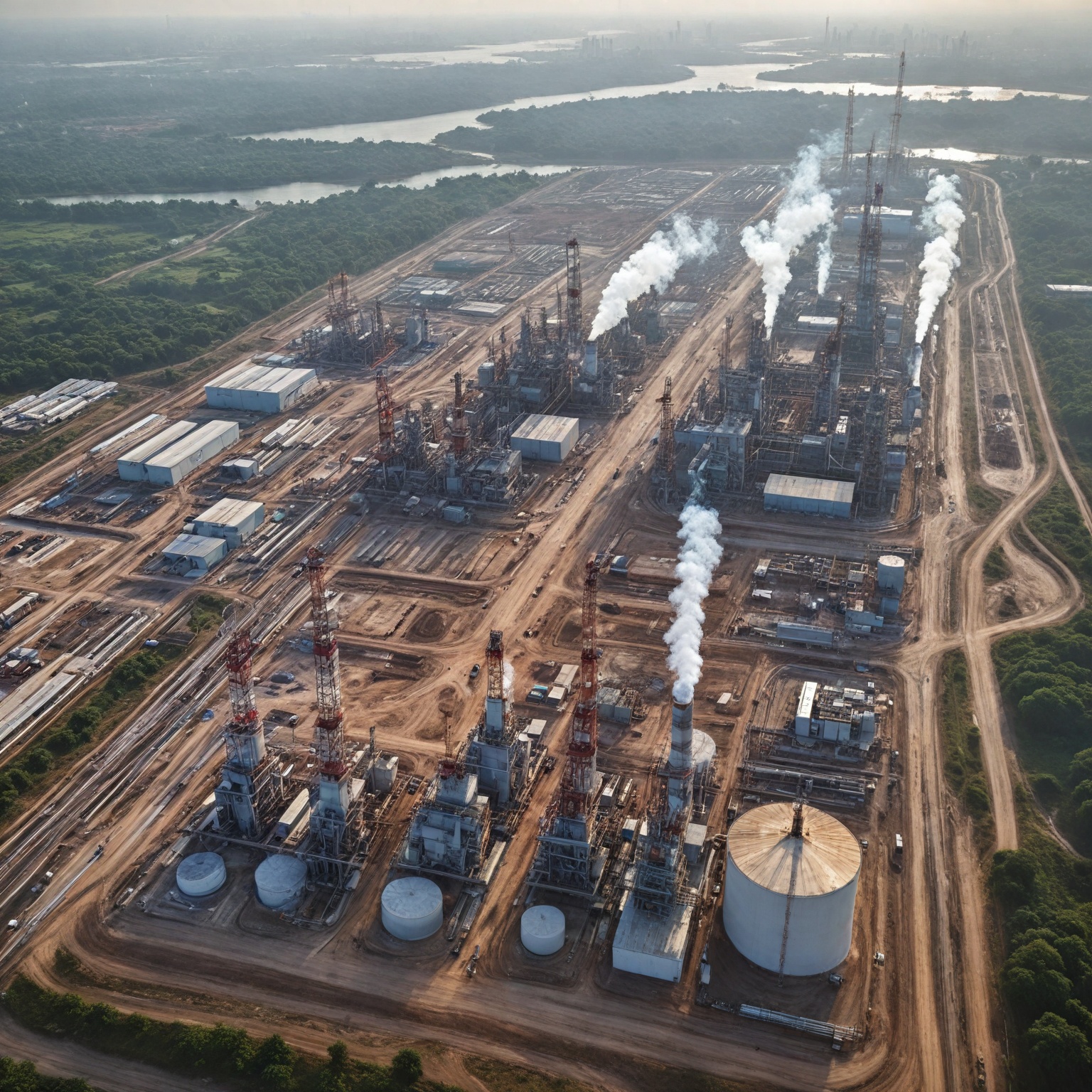
Bharat Petroleum Corporation Limited (BPCL) has embarked on an ambitious project to establish a greenfield refinery-cum-petrochemical complex near Ramayapatnam Port in Andhra Pradesh, marking a significant step in expanding its refining and petrochemical capacities. The project, estimated to cost around ₹95,000 crore, is poised to be one of India’s largest integrated energy infrastructure investments and is regarded as the country’s last greenfield refinery project.
The initiative received formal Board approval to commence pre-project activities, which include initial studies, land identification and acquisition, preparation of a detailed feasibility report, environmental impact assessment, basic design engineering package, and front-end engineering design. These preparatory measures underscore BPCL’s strategic focus on augmenting its refining capacity and strengthening its petrochemical portfolio in response to growing energy demands.
Spanning approximately 5,000 acres near Ramayapatnam Port, the project is expected to generate over 5,000 direct jobs and create an additional 100,000 employment opportunities during its construction phase, contributing significantly to regional economic development. The Andhra Pradesh government has facilitated progress by issuing declarations for land acquisition and proposing the development of a nearby industrial hub to leverage the port’s logistics advantages.
Designed with an annual processing capacity of about 9 million tonnes, the refinery-cum-petrochemical complex aims to produce a range of fuels and petrochemical products, thereby enhancing BPCL’s production capabilities and supporting India’s energy transition goals. The project also aligns with BPCL’s broader vision encapsulated in ‘Project Aspire,’ which focuses on sustainability and future-ready energy solutions, including renewables and green hydrogen, while maintaining a strong financial position with zero net-debt at the standalone level.
Technical Specifications
The proposed facility is expected to have a refining capacity of at least 9 million metric tons per year (MTPA), positioning it among the largest refineries on the east coast of India, alongside the 15 MTPA Paradip refinery of Indian Oil Corporation and the expanded 15 MTPA Visakhapatnam refinery of Hindustan Petroleum Corporation.
The project aims to integrate refinery operations with petrochemical production, targeting a petrochemicals portfolio share of at least 15% of total product sales. Approximately 80% of the output is planned to cater to the southern Indian market, which hosts a significant base of petrochemical developers and automobile manufacturers.
The pre-project activities, budgeted at around ₹6,100 crore, encompass comprehensive initial studies including land identification and acquisition, preparation of a detailed feasibility report, environmental impact assessment, basic design engineering package, and front-end engineering design. These foundational steps are aligned with BPCL’s commitment under the Andhra Pradesh Reorganisation Act 2014.
The refinery complex is expected to feature an ethylene cracker unit alongside the refining facilities, enabling production of essential petrochemicals such as ethylene and propylene. While detailed capacity figures for these petrochemical units have yet to be fully disclosed, comparable projects by BPCL, such as the Bina expansion, indicate ethylene production capacities in the range of over 1 million tonnes per year. The total project cost is estimated to be around ₹95,000 crore, reflecting the scale and complexity of the integrated refinery-petrochemical facility.
BPCL’s strategic focus on petrochemical integration reflects the growing demand for petrochemical products driven by rising per capita consumption and expanding manufacturing in India. The company is also emphasizing sustainable operations alongside this project, consistent with its net-zero carbon emissions target by 2040 and ongoing investments in green energy and green hydrogen initiatives.
Economic Impact
The BPCL refinery and petrochemical complex in Andhra Pradesh is poised to become a significant economic driver for the region and beyond. Valued at Rs 95,000 crore and spread over 5,000 acres near Ramayapatnam Port, the project is expected to generate substantial employment opportunities. It will create over 5,000 direct jobs and approximately 100,000 additional jobs during the construction phase, providing a major boost to local employment and contributing to the NDA government’s target of creating 20 lakh jobs for unemployed youth in Andhra Pradesh over the next five years.
Beyond direct employment, the project is expected to catalyze the establishment of 15 ancillary industrial units in Nellore district, further stimulating economic activity and infrastructure development in the area. The strategic location near Ramayapatnam Port is anticipated to enhance logistics efficiency, making the region a prime hub for industries reliant on both domestic and international trade.
The refinery’s output, largely aimed at southern India, will support the region’s growing petrochemical and automobile sectors, which are set to benefit from increased manufacturing and per capita consumption. The project’s scale and investment are aligned with India’s broader ambition to become a developed nation by 2047, targeting a GDP increase to $30 trillion from the current $3.8 trillion.
Environmental Considerations
BPCL’s refinery and petrochemical expansion project places significant emphasis on addressing environmental impacts through comprehensive pre-project assessments and the integration of advanced pollution control technologies. The initial phases of the project involve detailed environmental impact assessments alongside feasibility studies and engineering design preparations to ensure sustainable development practices are embedded from the outset.
Given the complexity of emissions generated by petroleum refining processes, BPCL is expected to implement state-of-the-art air pollution control solutions. Among these, multi-stage direct fired thermal oxidizers (MS-DFTO) have been recognized for their efficacy in treating halogenated and chlorinated waste streams, which are known to corrode conventional pollution control equipment. These oxidizers offer a reliable means to destruct hazardous air toxins, particularly from refinery tank vents, by handling inert, low flow, and high concentration process gases that challenge standard abatement methods.
Furthermore, the project is set within the broader regulatory framework governed by the U.S. Environmental Protection Agency’s (EPA) National Emission Standards for Hazardous Air Pollutants (NESHAP) and New Source Performance Standards (NSPS) for petroleum refineries. These regulations mandate stringent emissions controls, enhanced monitoring, and compliance reporting to mitigate environmental risks associated with catalytic cracking units, catalytic reforming units, and sulfur recovery units. BPCL’s adherence to such evolving regulatory standards will be critical in minimizing its environmental footprint.
In addition, BPCL’s commitment to achieving net zero emissions by 2040 underscores the company’s long-term environmental objectives, aligning with global trends toward sustainable energy production and reduced carbon intensity in refinery operations. The integration of modern technology licensing, such as proprietary ethylene production and hydrogenation processes, also supports cleaner and more efficient petrochemical production.
Strategic Importance
Bharat Petroleum Corporation Limited’s (BPCL) planned Rs 95,000 crore ($11.2 billion) refinery and petrochemical complex in Andhra Pradesh holds significant strategic value for both the company and the region. This development aligns with BPCL’s broader objective to enhance refining capacity and expand its petrochemicals portfolio, reflecting a continuous effort to explore new projects and partnerships for sustainable growth.
For Andhra Pradesh, the project is a milestone in industrial development, especially with the Ramayapatnam Port being developed as a major export gateway. The proximity to this port is expected to boost the efficiency of logistics for domestic and international trade, positioning the region as a prime industrial hub. The refinery and petrochemical complex will further catalyze economic growth and development in Nellore and its surrounding areas.
Strategically, the proposed complex is expected to contribute significantly to meeting India’s fuel demand until at least 2040, complementing other expansion units such as the new Barmer refinery. This is crucial given India’s simultaneous pursuit of clean energy initiatives, including green hydrogen and electric vehicles, aiming for net-zero carbon emissions by 2070. BPCL’s investment plans, totaling around ₹1.7 lakh crore, underscore its dual focus on expanding traditional oil refining while advancing clean energy ventures.
Moreover, about 80% of the output from the Andhra Pradesh complex is projected to serve the southern Indian market, which hosts a concentration of petrochemical developers and automobile manufacturers. This geographic targeting supports the anticipated rise in per capita consumption driven by increased manufacturing activity across India. BPCL’s strategy also includes exploring joint ventures, such as a refinery project with Oil and Natural Gas Corporation (ONGC) in northern Uttar Pradesh, reflecting a comprehensive approach to refining capacity expansion and energy transition goals.
Challenges and Risks
The ambitious refinery-petrochemical project by BPCL in Andhra Pradesh faces several challenges and risks that need careful management to ensure successful implementation. One major area of concern relates to environmental compliance and pollution control. The U.S. Environmental Protection Agency (EPA) has previously set stringent regulations, such as the Petroleum Refinery Sector Residual Risk and Technology Review (RTR) and New Source Performance Standards (NSPS), which underscore the necessity of addressing residual risks and emission controls in refinery operations. Additionally, the handling of halogenated and chlorinated process streams, which are known to corrode existing pollution control systems, demands advanced combustion and oxidizer technologies to efficiently mitigate toxic air emissions.
Land acquisition and site readiness also pose logistical challenges. Surveys and inspections conducted by government officials in the Nellore district, including visits to potential industrial sites near Ramayapatnam Port, have highlighted the complexity of balancing agricultural land availability and irrigation capacity with industrial development needs. Securing appropriate land parcels without disrupting existing land use or local livelihoods will be critical to project timelines.
Financial risks are mitigated by BPCL’s strong balance sheet and zero net-debt position at the standalone level, allowing the company to pursue its planned capex outlay of Rs 1.70 lakh crore over five years. However, the scale of investment, approximately Rs 95,000 crore, demands sustained fiscal discipline and successful project execution to avoid cost overruns or delays that could impact long-term value creation.
Moreover, BPCL’s commitment to achieving net zero emissions by 2040 adds pressure to incorporate green technologies and sustainable practices from the outset, which could entail higher upfront costs and technological uncertainties. The company’s ongoing projects at Bina and Kochi, with a combined capital investment of Rs 54,000 crore, serve as test cases for managing large-scale petrochemical expansions while adhering to environmental targets.
Lastly, the project’s significance to regional economic development adds political and social dimensions to its risk profile. The support from Andhra Pradesh’s state leadership underscores the strategic importance of the refinery-petrochemical complex, but also increases scrutiny from stakeholders and the public. Ensuring transparent communication and stakeholder engagement will be vital to mitigate opposition and align project outcomes with community expectations.
Current Status and Future Prospects
Bharat Petroleum Corporation Limited (BPCL) is actively progressing on its ambitious greenfield refinery and petrochemical complex project on the east coast of Andhra Pradesh. The company’s board has approved the commencement of pre-project activities, which include initial studies, land identification and acquisition, preparation of detailed feasibility reports, environmental impact assessments, and engineering design packages. These preparatory steps are essential for laying the groundwork of the complex, estimated to cost approximately ₹6,100 crore for this phase alone.
The project, with a total planned investment of around ₹95,000 crore, is set to be developed over an expansive 5,000-acre site near Ramayapatnam Port, which is being developed as a major export gateway. This strategic location is expected to boost logistics efficiency, enhancing the region’s attractiveness as an industrial hub and fostering domestic and international trade. The refinery-petrochemical complex aims to generate over 5,000 direct jobs along with an additional 100,000 jobs during its construction phase, thus providing a significant economic stimulus to the Nellore district and Andhra Pradesh at large.
BPCL has outlined a phased investment approach, with the initial ₹6,100 crore pre-project phase expected to span two years. This phase includes efforts to produce approximately 400 million units of clean energy annually, projecting an annual revenue of around ₹100 crore from renewable energy initiatives. Such milestones underscore BPCL’s commitment to advancing renewable energy alongside its core refining and
The content is provided by Sierra Knightley, Know Heaven