
Summary
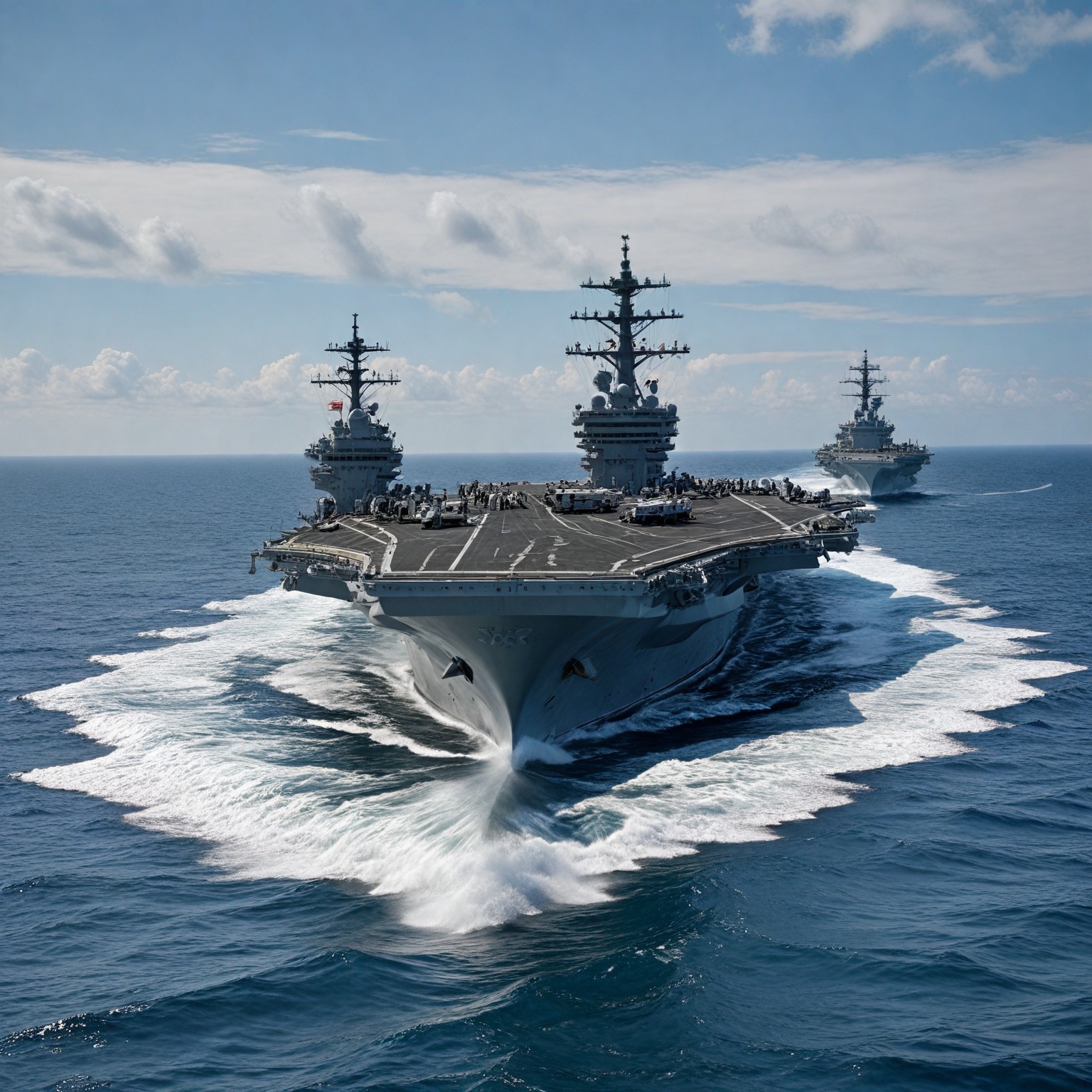
The United States has significantly expanded its military footprint in South America and the Caribbean through the deployment of the USS Gerald R. Ford Carrier Strike Group to the U.S. Southern Command (USSOUTHCOM) area of responsibility. This deployment, involving the Navy’s newest and most advanced aircraft carrier alongside multiple warships and air assets, represents one of the largest naval buildups in the region in recent years. The move aims primarily to strengthen counter-narcotics operations, disrupt transnational criminal organizations, and bolster regional security amid growing geopolitical competition from external actors such as China, Russia, and Iran.
USSOUTHCOM, responsible for military operations across Central and South America and the Caribbean, has increasingly prioritized addressing illicit drug trafficking, regional criminal networks, and the influence of authoritarian governments like Venezuela’s. The carrier strike group’s deployment enhances the United States’ capacity to monitor and interdict illicit activities, supporting broader strategic objectives including safeguarding access to critical resources such as oil and maintaining U.S. influence in the Western Hemisphere.
However, the deployment has sparked significant controversy and regional backlash. Critics argue that the military buildup exceeds stated counter-narcotics goals, reflecting longstanding U.S. interventionist policies aimed at political influence and regime change, particularly in Venezuela. Concerns have been raised about the erosion of democratic institutions, the militarization of law enforcement across Latin America, and the potential destabilization of the region. Key regional actors like Brazil have expressed apprehension about U.S. military activities, underscoring fears of interference and heightened tensions.
The presence of the USS Gerald R. Ford Carrier Strike Group in South America highlights the complex interplay between U.S. strategic interests, regional sovereignty, and international diplomacy. While the United States emphasizes countering illicit trafficking and external geopolitical influences, debates continue over the balance between military engagement and investment in civilian-led initiatives to address the underlying social and political challenges in the region.
Background
The United States Southern Command (USSOUTHCOM) is one of the eleven unified combatant commands within the U.S. Department of Defense, tasked with overseeing contingency planning, operations, and security cooperation across Central and South America, the Caribbean (excluding U.S. territories), and their surrounding waters. Established in its current form on June 6, 1963, by President John F. Kennedy and Secretary of Defense Robert McNamara, USSOUTHCOM has since focused on addressing regional security challenges primarily in Central and South America.
USSOUTHCOM’s operational responsibilities include countering drug trafficking, combating regional and transnational criminal networks, and managing disaster response efforts. The command supports multiple interagency task forces, such as the Joint Task Force Guantanamo (JTF-GTMO), which handles detention and interrogation operations related to the War on Terrorism, and the Joint Interagency Task Force South (JIATF South), which coordinates counter-narcotics operations throughout the Caribbean Sea, Gulf of Mexico, and eastern Pacific. Additionally, USSOUTHCOM plays a role in managing mass migration operations and supports law enforcement and military commission activities.
In recent years, the strategic landscape within USSOUTHCOM’s area of responsibility has been influenced by the increasing presence and activity of China, Russia, and Iran. These nations’ growing involvement in the region presents challenges to the principles of nonaggression, rule of law, and respect for human rights, prompting the United States to strengthen partnerships and security cooperation with regional governments. The command also emphasizes safeguarding access to strategic resources such as oil, while addressing social and political issues including immigration and narcotics trafficking.
The deployment of advanced military assets, including the USS Gerald R. Ford—the Navy’s newest and most sophisticated aircraft carrier commissioned in 2017—reflects an enhanced U.S. force presence aimed at bolstering the capacity to detect, monitor, and disrupt illicit activities that threaten regional and homeland security. This build-up integrates various U.S. Air Force and Marine Corps assets, such as B-52 and B-1 bombers, F-35 fighter jets, and military drones, positioning them strategically within the region to support counter-narcotics operations and maintain U.S. influence in the Western Hemisphere.
Deployment Overview
The United States has significantly escalated its military presence in South America and the Caribbean with the deployment of the USS Gerald R. Ford Carrier Strike Group to the U.S. Southern Command (USSOUTHCOM) area of responsibility. This deployment marks one of the largest naval buildups in the region in recent years, aimed primarily at countering drug-trafficking organizations and enhancing regional security.
The USS Gerald R. Ford, the Navy’s newest and most advanced aircraft carrier, features a nuclear reactor and can carry more than 75 military aircraft, including F/A-18 Super Hornet fighter jets and E-2 Hawkeye early warning aircraft. The carrier is equipped with sophisticated radar systems and an arsenal of missiles, such as the Evolved Sea Sparrow Missile, a medium-range surface-to-air missile designed to counter drones and hostile aircraft. Accompanying the Ford are several destroyers, including the USS Bainbridge, USS Mahan, and USS Winston Churchill, which provide protective roles such as defense against enemy ships, aircraft, submarines, and missile threats, as well as search and rescue capabilities for carrier-based aviators.
The Carrier Strike Group 12, which includes Carrier Air Wing 8, represents a highly capable and heavily armed formation within the U.S. Navy. Its deployment to the Caribbean and South American waters complements an existing force of at least eight warships, a nuclear submarine, F-35 fighter aircraft, maritime patrol planes, and MQ-9 Reaper drones already operating in the region. The full strike group’s arrival could bring nearly 4,500 additional sailors and nine squadrons of aircraft, significantly increasing U.S. military capacity in the Western Hemisphere.
Operational control of the strike group will fall under USSOUTHCOM, the unified combatant command responsible for military activities in Central and South America and the Caribbean. USSOUTHCOM’s mission includes contingency planning, operations, and security cooperation to safeguard U.S. interests, disrupt narcotics trafficking, and address transnational threats in the region. This military buildup aligns with broader U.S. strategic goals, including countering illicit drug networks and supporting regional stability amid ongoing political tensions, particularly with Venezuela.
The deployment has been described as a significant escalation in the region’s military posture, with the Pentagon emphasizing its role in augmenting capabilities to dismantle transnational criminal organizations. However, it has also drawn criticism and warnings from regional actors, reflecting the complex geopolitical environment in which the deployment occurs.
Strategic Objectives and Operational Goals
The deployment of a new aircraft carrier group by the United States in South America reflects a broader strategic effort to pursue specific regional objectives through a demonstrable military presence. The U.S. Southern Command (USSOUTHCOM) has articulated these objectives, which include countering the influence of countries such as Cuba, Venezuela, and Bolivia, combating drug trafficking and transnational criminal networks, and addressing the increasing presence of global actors like China, Russia, and Iran in Latin America and the Caribbean. This military posture is also linked to disaster response capabilities, exemplified by previous U.S. aid to Haiti following the earthquake, and emphasizes the role of security forces in maintaining internal, regional, and international order.
Operationally, the enhanced U.S. force presence in the USSOUTHCOM area of responsibility aims to bolster existing capabilities to disrupt narcotics trafficking and dismantle transnational criminal organizations. This escalation includes the deployment of an aircraft carrier group in addition to eight warships, a nuclear submarine, and F-35 aircraft already stationed in the region. These measures are designed to address heightened tensions, particularly with Venezuela, whose government has been accused by Washington of facilitating drug trafficking and undermining democratic institutions.
USSOUTHCOM’s 2017-2027 Theater Strategy identifies potential future challenges such as transregional and transnational threat networks (T3Ns), which comprise traditional criminal groups alongside extremist organizations like ISIL and Hezbollah exploiting institutional weaknesses in Caribbean and Latin American countries. The command recognizes border security as an existential threat, although past budget constraints have limited its ability to respond fully to illicit trafficking events.
An increasing trend in the region involves the militarization of law enforcement roles, with 23 of 31 countries in the command’s area having directed their armed forces to support law enforcement efforts against organized crime by 2015. This shift has accelerated in countries like Mexico, where the military has assumed numerous civilian duties. However, such civil-military relations raise concerns about authoritarian tendencies and the internal use of military forces against populations labeled as “hybrid threats,” underscoring the need for greater U.S. support for civil society actors to prevent democratic backsliding.
Beyond direct military objectives, USSOUTHCOM’s strategy underscores U.S. interests in securing access to strategic resources, notably oil, and addressing social and political issues such as immigration and narcotics trafficking. Critics argue that a more balanced approach might involve redirecting resources from military bases to civilian agencies and nongovernmental organizations capable of tackling these underlying problems. Nonetheless, the U.S. maintains its position as the preeminent global military power, with a widespread network of bases and forces designed to safeguard its territorial defense and national interests.
Military Operations and Activities
In a significant escalation of military presence in the Caribbean and South America, the United States deployed the aircraft carrier USS Gerald R. Ford (CVN-78) and its accompanying strike group to the region under the directive of Defense Secretary Pete Hegseth. This deployment, aimed at enhancing surveillance and interdiction capabilities, supports U.S. Southern Command’s (SouthCom) intensified counter-narcotics operations and regional security efforts.
Alongside the carrier deployment, the U.S. Air Force has increased its aerial presence with B-52 and B-1 bombers conducting flights near Venezuela, while Marine Corps F-35 fighter jets and multiple military drones have been stationed in Puerto Rico. These forces are being organized into a joint task force overseen by the II Marine Expeditionary Force to strengthen coordinated counter-narcotics and security operations in the region.
Since September, the tempo of U.S. military strikes targeting narcotics trafficking has accelerated markedly. Initially occurring once every few weeks, recent operations have increased to multiple strikes weekly, resulting in at least 43 fatalities. Notably, two recent strikes were conducted in the eastern Pacific Ocean, an area critical to the smuggling routes of cocaine from major South American producers.
This military buildup reflects broader strategic concerns articulated in SouthCom briefings, emphasizing the protection of access to vital resources, especially oil, as well as addressing complex social and political challenges such as immigration and narcotics trafficking. These concerns have prompted debate over the allocation of resources between military and civilian agencies tasked with regional stability and development.
Regional and International Reactions
The deployment of the USS Gerald R. Ford Carrier Strike Group (CSG) to the U.S. Southern Command’s (SOUTHCOM) Area of Responsibility, which encompasses Central and South America as well as the Caribbean, has elicited significant responses across the region and internationally. This move is widely perceived as a substantial escalation of the United States’ military presence in the hemisphere, intertwining counter-narcotics efforts with broader strategic objectives.
In Venezuela, the deployment has intensified existing tensions and concerns over U.S. intentions. The Venezuelan government and its supporters view the increased U.S. military activity as part of a broader campaign aimed at undermining President Nicolás Maduro’s administration and facilitating regime change. Critics argue that Washington’s strategy includes applying military pressure and economic sanctions to induce dissatisfaction among Venezuelan citizens and military personnel, with hopes of provoking a coup. This perception is compounded by the U.S. refusal to recognize Maduro as Venezuela’s legitimate leader following the widely disputed 2024 elections.
Brazil, the regional powerhouse, has publicly expressed apprehension regarding U.S. military actions, particularly the prospect of intervention in Venezuela. Brazilian officials have stated that any military intervention would be unacceptable and could destabilize the entire South American continent, highlighting regional concerns over sovereignty and the potential for broader conflict.
Argentina, another key player in South America, has experienced a complex history of military relations with the United States. While ties were strained during the late 1970s due to human rights concerns and arms embargoes, recent engagements indicate a renewed collaboration. In 2023, SOUTHCOM Commander Alvin Holsey conducted a state visit to Argentina, meeting with President Javier Milei and military officials to discuss future military cooperation and support for modernizing Argentina’s defense capabilities.
The broader Latin American region has witnessed an increasing militarization of internal security, with many countries authorizing their armed forces to support law enforcement in combating transnational organized crime. This trend has raised alarms about civil-military relations and the potential erosion of democratic norms. The U.S. military presence, including approximately 76 bases in South America and the Caribbean, often operates with limited transparency or oversight by host countries’ civil societies, further fueling skepticism and mistrust among local populations.
On the international front, the growing influence of external actors such as China, Russia, and Iran in Latin America and the Caribbean is frequently cited by U.S. officials as a challenge to regional stability and the international order. SOUTHCOM’s strategy emphasizes countering these influences as part of its mission to uphold nonaggression, the rule of law, and human rights. This geopolitical contestation has been used to justify deeper security partnerships between the United States and several Latin American governments, including through the State Partnership Program, which currently encompasses 22 state partnerships.
Geopolitical and Diplomatic Implications
The deployment of the U.S. aircraft carrier group to South America reflects broader geopolitical and diplomatic dynamics in the region, highlighting both strategic interests and regional reactions. The U.S. Southern Command (SOUTHCOM) has outlined several key concerns influencing this move, including the struggle against drug trafficking, the presence of transnational criminal networks, and the growing influence of China, Russia, and Iran in Latin America and the Caribbean. These external powers are perceived by the U.S. as challenging the principles of nonaggression, rule of law, and respect for human rights, prompting increased military engagement and partnerships with regional governments.
The military presence also underscores U.S. interests in securing access to strategic resources, such as oil, while addressing social and political issues like immigration and narcotics trafficking. However, this approach has sparked debate about the balance between military deployment and investment in civilian agencies or regional organizations better equipped to handle the root causes of these challenges. The U.S. maintains 22 state partnerships under the State Partnership Program (SPP), aiming to strengthen ties and cooperation with countries in the region as part of its strategic response.
From a regional perspective, the U.S. military activities have elicited mixed reactions. Countries such as Brazil have expressed strong opposition to potential military interventions in Venezuela, citing concerns over destabilization and the broader impact on South American stability. Moreover, the historical context of U.S. military presence, including the longstanding extraterritorial base at Guantanamo Bay established after the Spanish-American War, continues to fuel debates over national sovereignty versus mutual security benefits.
While the focus of U.S. national security has shifted somewhat towards securing the Western Hemisphere, as evidenced by recent deployments, the broader implications involve a complex interplay of power projection, regional diplomacy, and the contestation of influence among global powers in Latin America. This dynamic contributes to ongoing discussions regarding the role of the U.S. military in the region and its impact on internal, regional, and international order.
Criticism and Controversies
The increased U.S. military presence in South America, particularly highlighted by the deployment of the Gerald Ford aircraft carrier group, has drawn significant regional and international criticism. Experts and local leaders have questioned the legality and underlying motives of these actions, suggesting that the military buildup far exceeds the stated objectives such as counter-narcotics operations.
Critics argue that U
Future Prospects and Developments
The deployment of a new U.S. aircraft carrier strike group to South America signals an intensification of American military presence in the region, reflecting broader strategic priorities outlined by U.S. Southern Command (SOUTHCOM). This move comes amid growing concerns over regional security challenges such as drug trafficking, transnational criminal networks, and the influence of external actors including China, Russia, and Iran. Although aircraft carriers are limited in number and carefully scheduled, the inclusion of a nuclear-powered carrier capable of deploying over 75 aircraft demonstrates a significant augmentation of U.S. operational capabilities in the area.
Looking ahead, SOUTHCOM’s strategic focus will likely continue to address threats ranging from hybrid warfare tactics employed by authoritarian-leaning governments to the ongoing fight against organized crime and narcotics trafficking. The recent U.S. military strike in the Caribbean targeting alleged drug traffickers, followed by their rescue and repatriation, illustrates a proactive and complex engagement approach in regional counter-narcotics efforts. These operations underscore a nuanced balance between direct military action and diplomatic considerations.
Moreover, the increasing presence of rival powers such as China, Iran, and Russia presents a geopolitical challenge that the United States aims to counter through strengthened partnerships and cooperation with regional governments. SOUTHCOM’s existing network of 22 state partnerships under the State Partnership Program (SPP) may expand or evolve to support this objective, emphasizing collaboration on shared security concerns while promoting principles of nonaggression and respect for human rights.
Nonetheless, some analysts argue for a strategic recalibration that would shift emphasis away from a purely military approach toward enhanced support for civilian institutions and civil society organizations. This perspective suggests that addressing root causes of instability—such as social and political issues, immigration, and narcotics—may be more effectively managed through investment in nongovernmental organizations and regional governmental agencies rather than military assets alone. Such a reorientation could mitigate risks associated with militarization, including the internal use of armed forces against civilian populations in certain countries.
The content is provided by Harper Eastwood, Know Heaven