
Summary
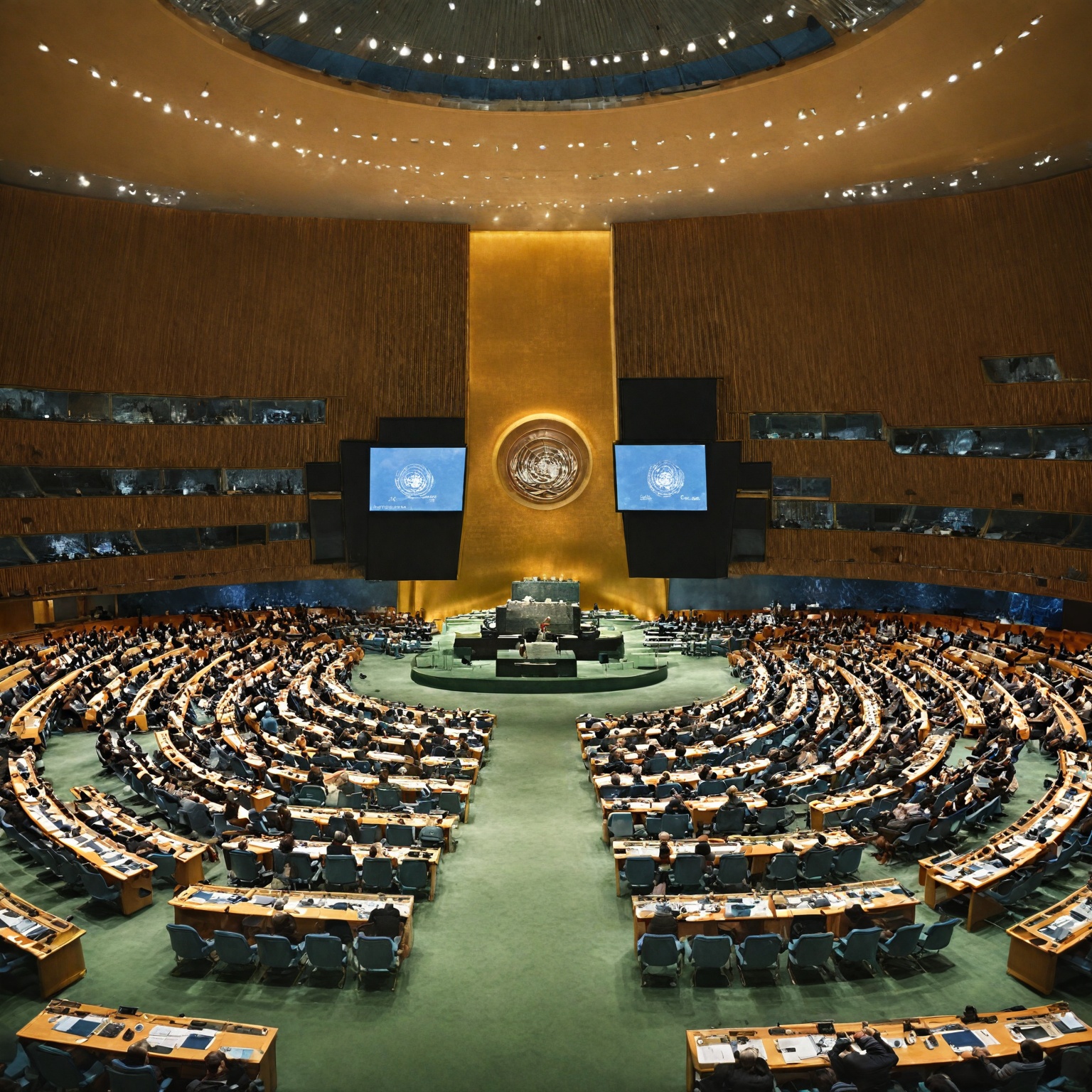
The United Nations General Assembly’s overwhelming endorsement of a two-state solution for the Israeli–Palestinian conflict on September 12, 2025, marked a significant moment in international efforts to resolve one of the world’s longest-standing and most complex disputes. The resolution, supported by 142 countries with 10 opposing and 12 abstentions, called for “tangible, timebound, and irreversible steps” toward the establishment of two sovereign states—Israel and Palestine—coexisting peacefully and securely. Emerging from a conference hosted by Saudi Arabia and France, this declaration reinforced the broad global consensus favoring a negotiated two-state framework despite longstanding political, territorial, and security challenges.
The resolution outlined specific measures including an immediate ceasefire in Gaza, the disarmament of Hamas, the cessation of Israeli settlement activity in occupied territories, and the establishment of effective Palestinian governance. It also paved the way for a forthcoming UN conference aimed at garnering further international recognition of Palestinian statehood by several Western countries. Nevertheless, the vote exposed sharp divisions: Israel and the United States vehemently opposed the resolution, criticizing it as one-sided and counterproductive to direct negotiations, while some European nations remained cautious about the timing and implications of such international initiatives.
The General Assembly’s action must be understood within the broader historical and legal context of the Israeli–Palestinian conflict, which has seen repeated UN efforts to promote peace since the 1947 partition plan and subsequent resolutions addressing refugee rights, territorial disputes, and state sovereignty. While General Assembly resolutions are non-binding, this vote carries substantial political and symbolic weight, reaffirming the two-state solution as the prevailing international norm and pressing for urgent humanitarian and diplomatic progress amid ongoing violence and stalemates.
Despite the enthusiastic international backing, the path to implementation remains fraught with entrenched political divisions, regional instability, and skepticism over the feasibility of the two-state model. The resolution’s adoption thus represents both a hopeful reaffirmation of peace efforts and a stark reminder of the complex realities on the ground, underscoring the necessity for renewed dialogue, practical cooperation, and sustained international engagement to transform diplomatic consensus into lasting peace.
Background
The Israeli–Palestinian conflict traces its origins to the intercommunal tensions in Mandatory Palestine between Jewish and Arab populations prior to the establishment of the State of Israel in 1948. Following the end of the British Mandate in Palestine, the United Nations proposed a partition plan in 1947 to create two independent states, one Jewish and one Arab, with Jerusalem designated as an international city. This plan was adopted as UN General Assembly Resolution 181 (II), aiming to resolve competing national aspirations by partitioning the territory accordingly. However, the partition plan was rejected by the Arab Higher Committee and much of the Arab world, which opposed any division of Palestine, viewing it as a violation of the principles of national self-determination. The ensuing 1948 Arab-Israeli War resulted in the establishment of Israel over 77 percent of the mandate territory, while Jordan and Egypt controlled the West Bank and Gaza Strip respectively. This war precipitated a significant Palestinian refugee crisis, known as the Nakba, during which approximately 700,000 Palestinians were displaced from their homes.
Subsequent conflicts, notably the 1967 Six-Day War, led to Israel’s occupation of additional territories including the West Bank, Gaza Strip, and East Jerusalem. The United Nations Security Council responded with Resolution 242, emphasizing the principles of withdrawal from occupied territories, just settlement of refugee issues, and the termination of belligerency states to achieve lasting peace.
Over the decades, the two-state solution has emerged as the predominant international framework for resolving the conflict by establishing two sovereign states within the borders of the former Mandatory Palestine. This proposal contrasts with the one-state solution, which envisions a single state with equal rights for all inhabitants. The two-state approach has garnered support from the Palestinian Authority, many countries, and multiple UN resolutions, although its implementation has been repeatedly challenged by political divisions, security concerns, and territorial disputes.
The United Nations and various international actors have repeatedly reaffirmed the principle of self-determination and equal rights for both peoples as essential to peace. Despite numerous peace initiatives, including the 2007 Annapolis Conference where Israel, the Palestinian Liberation Organization, and the United States agreed on the two-state framework, a final agreement has remained elusive. The complex history of territorial claims, refugee rights, and political sovereignty continues to shape the ongoing quest for a just and lasting resolution to the Israeli–Palestinian conflict.
The Vote
On September 12, 2025, the United Nations General Assembly overwhelmingly endorsed a declaration outlining “tangible, timebound, and irreversible steps” towards a two-state solution between Israel and the Palestinians. The declaration, a seven-page document resulting from an international conference hosted by Saudi Arabia and France in July, received the support of 142 countries, with 10 voting against and 12 abstentions. The United States and Israel notably boycotted the event and voted against the resolution, joined by nine other countries including Argentina, Hungary, Micronesia, and Paraguay.
The vote was widely seen as a significant political gesture paving the way for a one-day UN conference on the two-state solution, scheduled to take place in New York immediately before the UN General Assembly high-level week, where several Western countries—including Britain, France, Canada, Australia, and Belgium—were expected to formally recognize a Palestinian state. This move reflected growing international support for a peaceful resolution to the decades-long conflict, even as major European powers like Germany and Italy remained divided on the issue.
Israel’s Foreign Ministry criticized the vote as detached from reality, highlighting the resolution’s failure to designate Hamas as a terrorist organization. Similarly, the United States expressed concerns that one-sided resolutions would not advance a durable peace nor foster direct negotiations between the two parties, emphasizing the need for stabilization and accountability rather than divisive measures. Despite these objections, the vote demonstrated a broad international consensus urging concrete action towards achieving a two-state solution, marking a notable moment in ongoing diplomatic efforts.
Content of the Resolution
The resolution adopted by the United Nations General Assembly outlines a comprehensive framework aimed at advancing a two-state solution to the Israeli–Palestinian conflict. Central to the resolution is the call for “tangible, timebound, and irreversible steps” toward establishing two independent and sovereign states—Israel and Palestine—living side-by-side in peace and security. It emphasizes the immediate necessity of a ceasefire in Gaza, the release of all hostages, and the establishment of a viable Palestinian state with effective governance.
The resolution also insists on the disarmament of Hamas and its exclusion from governance in Gaza, while encouraging normalization of relations between Israel and Arab countries alongside collective security guarantees. It reiterates the importance of Israel’s security alongside Palestinian self-determination, urging the creation of a strong Palestinian Authority in both the West Bank and Gaza to ensure stable governance despite existing challenges.
Additionally, the resolution calls on Israel to cease all settlement activities in the Occupied Palestinian Territories, a provision reinforced by United Nations Security Council Resolution 2334, which is regularly monitored through reports to the Security Council. The Secretary-General is requested to submit periodic updates every three months on the implementation of these provisions, noting ongoing concerns over continued settlement expansion despite the resolution’s demands.
The declaration received overwhelming support in the General Assembly and is intended to pave the way for a dedicated UN conference on the two-state solution, where numerous states, including France, the UK, Canada, and Australia, plan to formally recognize the State of Palestine. While some parties, such as Israel’s government, have expressed opposition—particularly rejecting the establishment of a Palestinian state—the resolution marks a significant international consensus that peace and security in the region depend on a negotiated two-state outcome.
Reactions
The United Nations General Assembly’s resolution endorsing the two-state solution between Israel and Palestine elicited a wide range of responses from the international community, reflecting the deep divisions over the Israeli-Palestinian conflict.
Many countries expressed strong support for the resolution, which passed with 142 votes in favor, 10 against, and 12 abstentions. All Gulf Arab states voted in favor, demonstrating a unified regional backing for the initiative. The endorsement was welcomed as a reaffirmation of the international community’s commitment to a peaceful resolution based on the establishment of two sovereign states.
Conversely, Israel and the United States were among the most vocal opponents of the resolution. The United States criticized the vote as “yet another misguided and ill-timed publicity stunt” that they argued undermined serious diplomatic efforts to resolve the conflict. U.S. diplomat Morgan Ortagus condemned the resolution as a “gift to Hamas,” claiming it emboldened the militant group and damaged prospects for peace both in the short and long term. Israel’s government, which has consistently opposed international attempts to impose solutions without direct bilateral negotiations, rejected the resolution and reaffirmed its stance against the establishment of a Palestinian state under the current circumstances.
Other countries voting against the resolution included Argentina, Hungary, Micronesia, Nauru, Palau, Papua New Guinea, Paraguay, and Tonga, illustrating that opposition was not limited to Israel and the U.S.. Twelve countries abstained, reflecting either diplomatic caution or divergent views on the resolution’s implications.
Within Israel, political reactions mirrored the official government position. In July 2024, the Knesset passed a resolution rejecting the establishment of a Palestinian state with significant support from Prime Minister Benjamin Netanyahu’s coalition, which includes far-right parties. Netanyahu has consistently opposed a two-state solution, reaffirming this stance following the recent conflict that erupted after Hamas’s attacks in October 2023. However, some former Israeli leaders, including Ehud Barak and Ehud Olmert, have expressed support for the two-state solution as late as 2023, indicating ongoing internal debates within Israel’s political landscape.
The Palestinian Authority and many international observers viewed the General Assembly vote as a significant step toward renewed efforts to achieve peace and end decades of conflict. The resolution condemned the attacks by Hamas in October 2023, which triggered the war in Gaza, yet affirmed the necessity of a political solution through the two-state framework. The endorsement has energized plans for several countries—including Britain, France, Canada, Australia, and Belgium—to formally recognize a Palestinian state during the high-level UN General Assembly meeting later in September 2025.
Legal and Political Analysis
The legal status of United Nations General Assembly resolutions, such as those supporting the two-state solution for Israel and Palestine, remains a complex and nuanced issue in international law. While General Assembly resolutions are generally considered non-binding and recommendatory in nature, they often reflect emerging norms and can exert considerable influence on the development of customary international law and international relations. The incorporation of the International Court of Justice (ICJ) Statute into the UN Charter further situates General Assembly actions within a broader framework of international legal principles, though the Assembly itself does not possess enforcement powers akin to the Security Council.
The political significance of resolutions endorsing a two-state solution is underscored by their near-unanimous support within the international community, signaling a broad consensus on the path toward resolving the Israeli-Palestinian conflict. For instance, United Nations Security Council Resolution 2334, adopted in 2016 with a 14–0 vote, condemned Israeli settlements in occupied Palestinian territories and reinforced international commitment to a negotiated settlement, reflecting a widely shared viewpoint beyond just the Security Council members. This consensus is echoed by various states, including New Zealand and Canada, whose representatives have emphasized that such resolutions mirror global opinion and are not fringe or divisive positions.
Despite widespread endorsement, political divisions persist, especially from countries directly involved or allied with Israel. The United States, for example, has repeatedly criticized such resolutions as counterproductive, asserting that they impede peace efforts and inadvertently empower groups like Hamas. Similarly, the United Kingdom has expressed reservations about the clarity and effectiveness of these resolutions in achieving a secure and negotiated two-state outcome. These dissenting views highlight the ongoing geopolitical tensions that complicate the translation of General Assembly resolutions into practical policy outcomes.
Moreover, voices from the international community, including China and Switzerland, have reinforced the importance of supporting Palestinian statehood and the two-state solution as essential for lasting peace in the Middle East. These endorsements demonstrate the broad diplomatic support underpinning the resolutions and the political will to pursue peaceful coexistence between Israel and Palestine.
Impact and Significance
The United Nations General Assembly’s backing of a two-State solution for the Israel-Palestine conflict represents a significant reaffirmation of the international community’s commitment to resolving one of the most protracted and complex disputes in modern history. By emphasizing that a two-State solution remains the “only path to lasting peace” in the Middle East, the General Assembly underscored the principle that peaceful coexistence between Israel and a sovereign Palestinian state is essential for regional stability and security.
This resolution and the accompanying debates highlighted the urgency of a ceasefire in Gaza and the necessity of humanitarian access, reflecting the widespread concern over the severe human toll of ongoing hostilities. The call for Israel to permit food and aid deliveries into the Gaza Strip ahead of the cold winter months was particularly emphasized, marking the Assembly’s role in addressing immediate humanitarian crises alongside longer-term political solutions.
The vote also revealed the deep divisions among member states regarding the best path forward. While the resolution received broad support, the United States opposed it, describing the vote as a “misguided and ill-timed publicity stunt” that could embolden Hamas and undermine diplomatic efforts to end the conflict. This opposition highlighted concerns that one-sided resolutions might perpetuate divisions rather than foster the direct negotiations necessary for a durable peace.
Historically, the Assembly’s role in peace efforts has been both symbolic and practical. Its resolutions, while often non-binding, serve as hortatory evidence of emerging international norms and contribute to the development of international law on statehood and conflict resolution. Previous resolutions, such as Resolution 194 establishing a Conciliation Commission and calling for the return and compensation of Palestinian refugees, laid foundational principles that continue to influence diplomatic discussions.
The backing of a two-State solution aligns with longstanding international agendas dating back to the early concepts predating the UN’s founding in 1945 and subsequent landmark negotiations such as the 1993 Oslo Accords. Although substantive agreements have been elusive since Oslo, the General Assembly’s recent vote reiterates the international community’s aspiration to revive negotiations and establish a framework for peaceful coexistence between Jewish and Palestinian populations.
In sum, the General Assembly’s endorsement has significant symbolic weight, reinforcing the legitimacy of the two-State solution and maintaining international focus on achieving peace. However, the path forward remains fraught with political challenges, requiring not only international support but also meaningful engagement from the parties involved to translate resolutions into tangible outcomes on the ground.
Subsequent Developments
Following the General Assembly’s resounding endorsement of the two-State solution for Israel and Palestine, several significant developments have shaped the ongoing peace process and international response. The resolution was supported by a wide majority of UN Member States, with 142 countries voting in favor, signaling broad international consensus on the issue. This endorsement has been accompanied by calls from the United Nations Secretary-General António Guterres and other international leaders emphasizing that two independent, sovereign, and democratic states living side-by-side in peace and security remain the central objective for lasting Middle East peace.
Despite the strong international backing, tangible progress on the ground has been limited. The Palestinian Authority’s efforts to build state institutions have received wide international support, but political negotiations have repeatedly stalled, notably after the expiration of the Israeli settlement moratorium in 2010. The Security Council has remained actively engaged, requesting regular reports on the implementation of resolutions concerning settlement activity and other related measures. However, these reports have frequently highlighted continued settlement expansion and the lack of substantive steps toward peace, underscoring the challenges facing the two-State solution.
International conferences have continued to reaffirm the near-universal support for the two-State framework. A 2024 conference convened at UN Headquarters under the auspices of
The content is provided by Avery Redwood, Know Heaven