
Summary
The exclusive meeting between Ukrainian President Volodymyr Zelenskyy and former U.S. President Donald Trump took place shortly after the high-profile summit between Trump and Russian President Vladimir Putin, which failed to secure a ceasefire in the ongoing Russia-Ukraine war. Held at the White House’s Oval Office, Zelenskyy’s visit aimed to advance diplomatic efforts toward ending the conflict, seeking stronger security guarantees and support from the United States amid escalating hostilities following Russia’s full-scale invasion of Ukraine in February 2022. The meeting garnered significant international attention due to its timing, the complex geopolitical context, and the polarized responses it elicited.
The conflict itself is rooted in longstanding tensions between Russia and Ukraine, with Russian leadership disputing Ukraine’s sovereignty and Western nations backing Kyiv’s defense. Prior to the meeting, Zelenskyy faced both domestic pressures—including accusations of political centralization—and external demands for a durable ceasefire and political settlement. Despite multiple diplomatic efforts involving various international actors, including a trilateral summit in Alaska between Trump and Putin, attempts to secure a ceasefire remained unsuccessful, underscoring the deep divisions over the terms and conditions necessary for peace.
During the Oval Office meeting, Zelenskyy expressed gratitude for U.S. support, while discussions revealed sharp disagreements over the approach to ceasefire negotiations. The talks ended without a formal agreement, and the atmosphere reportedly grew tense, marked by public criticism from Trump and his advisers toward Zelenskyy. The aftermath saw mixed international reactions: Western allies largely supported Zelenskyy and criticized Trump’s confrontational style, while Russian officials praised the meeting and blamed Ukraine for the impasse. The United States briefly suspended military aid to Ukraine, later resuming it following Zelenskyy’s conditional agreement to a proposed 30-day ceasefire, which Russia ultimately rejected.
The meeting’s failure to produce a ceasefire or comprehensive peace agreement highlighted the complex challenges in reconciling immediate conflict de-escalation with broader geopolitical and security concerns. Analysts emphasized Ukraine’s insistence on robust security guarantees as a precondition for any lasting peace, while cautioning that premature ceasefires might advantage Russia by allowing it to regroup militarily. The episode underscored enduring obstacles in diplomatic efforts to resolve the war and illustrated the contentious dynamics between key international stakeholders involved in the conflict.
Background
The meeting between Ukrainian President Volodymyr Zelenskyy and U.S. President Donald Trump occurred against the complex and ongoing backdrop of the Russo-Ukrainian War, which escalated significantly with Russia’s full-scale invasion of Ukraine on 24 February 2022. Russian President Vladimir Putin has publicly challenged the legitimacy of Ukraine as a separate nation, asserting a historical unity between Russians and Ukrainians and denying the concept of a distinct Ukrainian identity. The conflict has been marked by deep geopolitical tensions, with Western nations providing support to Ukraine, while Russia demands security guarantees and opposes NATO expansion.
Prior to the meeting, Zelenskyy’s administration faced both internal and external challenges. Domestically, concerns were raised about political centralization and suppression of opposition, with some critics accusing Zelenskyy of consolidating power ahead of the 2024 presidential election and exerting pressure on independent media outlets. Internationally, Zelenskyy sought robust security guarantees and broader support from Western allies to bolster Ukraine’s defense and political standing. His popularity was shaped in part by his rise from a former television star and political outsider disillusioned with the corruption and oligarchic influence seen under previous administrations.
Diplomatic efforts to secure a ceasefire and peace agreement had been ongoing but remained fraught with difficulty. Russian officials, including Putin, indicated support for ceasefire proposals in principle but insisted on resolving critical conditions before any pause in fighting could be implemented. Analysts highlighted the challenges of balancing immediate peace measures—such as humanitarian corridors and troop withdrawals—with longer-term geopolitical security concerns, including border recognition and disarmament. Various international actors, including China, also proposed plans involving ceasefires and security guarantees, while attributing some responsibility for the conflict’s persistence to Western military aid to Ukraine.
The Trump administration’s stance was viewed with skepticism by many of Ukraine’s European partners, who perceived an alignment between Trump and Putin and criticized the confrontational tone of Trump’s interactions with Zelenskyy. Despite this, the meeting between the two leaders was conducted publicly and drew significant international attention, with U.S. allies expressing support for Zelenskyy and urging continued dialogue involving him in any peace negotiations. The failure of earlier talks, including those between Trump and Putin, to produce a ceasefire underscored the complexities facing diplomatic efforts and heightened the stakes of Zelenskyy’s engagement with Trump.
The Exclusive Meeting
Following the high-profile summit between U.S. President Donald Trump and Russian President Vladimir Putin in Anchorage, Alaska, Ukrainian President Volodymyr Zelenskyy held an exclusive meeting with Trump at the White House. This meeting occurred shortly after the Trump-Putin talks, which were held at Joint Base Elmendorf-Richardson and focused on ending the ongoing war in Ukraine. Despite multiple discussions involving various diplomatic formats, including bilateral and trilateral options, the Alaska summit did not include Zelenskyy, who later met separately with Trump.
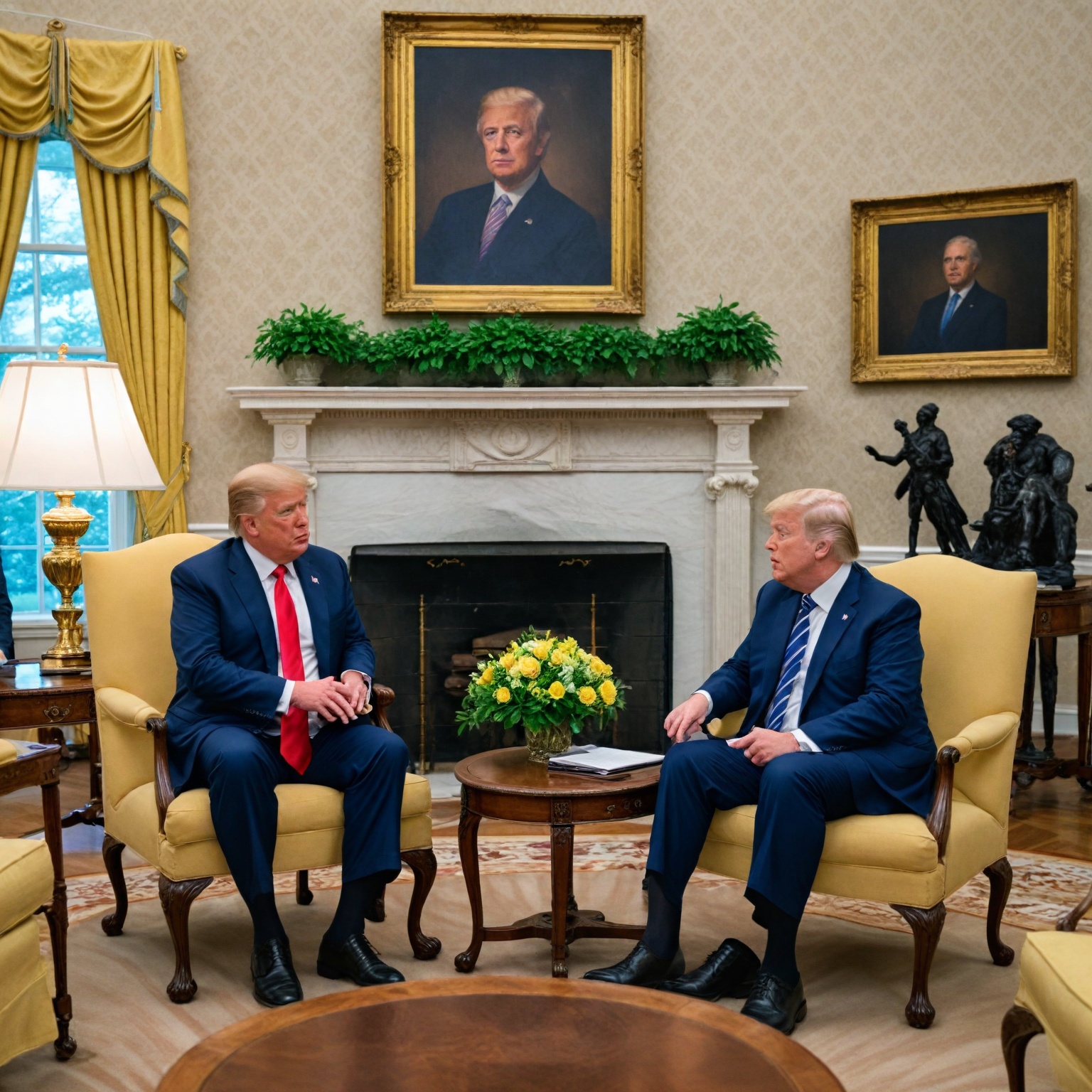
The exclusive meeting took place in the Oval Office and was conducted in full view of the media, emphasizing its significance amid international scrutiny. Zelenskyy arrived from his hotel and was greeted personally by Trump at the West Wing entrance before the formal discussions began. During their conversation, Zelenskyy expressed gratitude toward the United States for its ongoing support, repeatedly thanking President Trump both during and after the meeting. The interaction, however, followed a prior history of tense exchanges between the two leaders, including a chaotic Oval Office meeting earlier in the year.
Global reactions to the meeting were mixed. While many U.S. allies and international figures publicly backed Zelenskyy and criticized Trump’s confrontational stance, Russian officials praised the encounter and directed their criticism toward the Ukrainian president. Within the United States, responses largely divided along partisan lines, reflecting the polarized nature of U.S. politics regarding the conflict and diplomatic approach. Zelenskyy described the meeting as constructive and suggested leveraging a 30-day ceasefire as a platform to negotiate a broader peace deal, although no immediate ceasefire resulted from the discussions.
In the days following, Trump promised a “Peace Agreement” to end the war, seemingly softening his prior insistence on an immediate ceasefire and raising concerns that his position might be aligning more closely with Putin’s terms. Trump also maintained communication with Zelenskyy and European leaders, highlighting the complex and evolving diplomatic efforts to resolve the conflict. Despite these ongoing talks, concrete agreements on ceasefire or peace remained elusive, with Russia formalizing terms seen as unacceptable by Ukraine and its allies.
Detailed Discussions and Negotiations
Following President Donald Trump’s summit with Russian President Vladimir Putin in Alaska, intense discussions unfolded regarding a possible ceasefire and broader peace agreement in the ongoing Russia-Ukraine conflict. Although Trump had initially promised a “Peace Agreement” to end the war, he dropped the immediate demand for a ceasefire after the meeting, sparking concerns that he might be aligning closer to Putin’s stance. The U.S. and Ukraine had proposed a 30-day ceasefire, which Ukraine’s President Volodymyr Zelenskyy welcomed as a potential step toward negotiating a broader peace deal. However, Putin expressed skepticism about the feasibility of a ceasefire, citing ongoing Ukrainian advances and the difficulty of holding fire while under attack.
Zelenskyy traveled to Washington for talks with Trump shortly after the Alaska summit. The Ukrainian president aimed to finalize agreements on ceasefire terms and diplomacy, while seeking stronger security guarantees from Western partners to ensure Ukraine’s sovereignty and defense. Despite a “long and meaningful conversation” between the two leaders, the talks ended without a formal agreement. The planned joint press conference and lunch were abruptly canceled after a heated and contentious Oval Office discussion, during which Trump and Zelenskyy clashed over the approach to ceasefire and peace negotiations.
During the meeting, Trump and his allies, including Rudy Giuliani and special envoy John Vance, criticized Zelenskyy for what they perceived as reluctance to accept a ceasefire deal without more immediate gains, suggesting Zelenskyy should be more grateful for U.S. support. Zelenskyy, however, insisted on the necessity of security guarantees from the U.S. and European countries as prerequisites for any ceasefire or peace accord, warning that an agreement without such guarantees could lead to further Russian aggression and occupation. Ukrainian officials and analysts highlighted the complexities of reconciling geopolitical security concerns with immediate peace efforts, noting the divergent positions of key stakeholders and the influence of recent military developments on negotiation stances.
In the wake of the talks, Trump indicated his willingness to facilitate a meeting between Putin and Zelenskyy, stating that he would attend as well, underscoring his intent to broker a comprehensive peace deal involving all parties. Nevertheless, Russia formalized stringent ceasefire terms that Ukraine deemed unacceptable, further complicating the path to an immediate truce. The diplomatic exchanges revealed deep divisions over the conditions and timing of peace efforts, with Zelenskyy advocating for a durable and secure settlement while Trump pursued a broader agreement that could potentially sideline some of Ukraine’s core security demands.
Immediate Aftermath and Reactions
The meeting between Ukrainian President Volodymyr Zelenskyy and U.S. President Donald Trump concluded abruptly without a clear resolution, notably failing to result in the anticipated signing of the Ukraine–United States Mineral Resources Agreement. During the final minutes, the atmosphere became notably tense and confrontational, with Trump and U.S. official Vance openly criticizing Zelenskyy, at times overpowering his voice. Media outlets described the exchange as an unprecedented public confrontation between an American president and a foreign head of state, marking a stark departure from typical diplomatic decorum.
In the immediate aftermath, reactions sharply diverged along geopolitical and partisan lines. Nearly all U.S. allies and various international leaders quickly expressed support for Zelenskyy, often implicitly condemning Trump’s confrontational approach. European officials, including EU High Representative for Foreign Affairs and Security Policy Kaja Kallas, criticized Trump’s handling of the meeting, emphasizing the need for renewed global leadership in support of Ukraine amidst ongoing Russian aggression. Ursula von der Leyen followed by proposing the ReArm Europe initiative, a significant plan to bolster defense spending within the EU by up to €800 billion, including €150 billion in loans to member states. NATO Secretary General Mark Rutte described the outcome as “very unfortunate,” while urging Zelenskyy to work toward restoring his relationship with the Trump administration.
Within the United States, reactions split largely along party lines, reflecting broader domestic political divisions. Shortly after the meeting, the Trump administration suspended intelligence and military aid to Ukraine for approximately one week. This suspension was lifted after Zelenskyy agreed to an unconditional 30-day ceasefire, contingent on Russian approval; however, the ceasefire did not materialize as Russia rejected the proposal. The resumption of U.S. arms deliveries to Ukraine signaled continued support despite the political tensions.
Russian officials reacted positively to the meeting’s outcome, praising the interaction and directing criticism toward Zelenskyy, while Russian media expressed shock at the public nature of the confrontation. The Kremlin remained cautious regarding the ceasefire proposal, with spokesperson Dmitry Peskov stating the importance of not “getting ahead” of decisions on Russia’s response.
The broader geopolitical context highlighted underlying challenges in achieving peace. Analysts noted that a lack of consensus on security guarantees for Ukraine, disagreements over territorial borders, and differing approaches to ceasefire and humanitarian issues complicated the peace process. Some critics argued that Western partners’ reluctance to provide firm security guarantees and an overambitious focus on geopolitical issues, rather than immediate peace measures such as ceasefires and military withdrawals, hindered progress. At the United Nations, China proposed a ceasefire plan emphasizing dialogue, security guarantees for Russia, and the protection of civilians, while also criticizing Western military support for Ukraine.
In sum, the immediate aftermath of the Zelenskyy-Trump meeting was marked by diplomatic tensions, a brief suspension and subsequent resumption of U.S. military aid, strong international support for Ukraine’s president, and ongoing complexities in negotiating a ceasefire with Russia.
Impact on Diplomatic and Military Strategies
The talks involving Ukrainian President Volodymyr Zelenskyy, former U.S. President Donald Trump, and Russian President Vladimir Putin had significant repercussions on the diplomatic and military approaches toward the Russia-Ukraine conflict. Following the failed summit between Trump and Putin, Trump announced intentions to work toward a comprehensive peace agreement rather than a mere ceasefire, signaling a shift toward long-term conflict resolution efforts. He also indicated plans to facilitate a future meeting between Putin and Zelenskyy, with his participation, aiming to foster direct dialogue between the conflicting parties.
Despite these diplomatic overtures, Ukraine maintained a cautious stance, countering the Trump administration’s peace plan by proposing its own framework. This plan emphasized the deployment of a European peacekeeping force, supported by the United States as a backup, reflecting Ukraine’s preference for a robust international security presence to ensure its sovereignty and safety. Zelenskyy also expressed a desire for a “lasting” peace but remained critical of any negotiations that exclude Ukraine’s full participation or impose solutions without Ukrainian consent.
On the military front, the Trump administration resumed all military aid and intelligence sharing with Ukraine, reinforcing Kyiv’s defensive capabilities even as diplomatic efforts advanced. U.S. Secretary of State Marco Rubio confirmed Washington’s intent to engage Russia through multiple channels to explore the possibility of negotiations, though details remained undisclosed. However, the provision of continued Western military support complicated Russia’s strategic calculations and posed challenges to Moscow’s war aims, potentially hardening Russian resistance to peace proposals backed by the U.S..
Russian officials asserted adherence to ceasefire orders issued by President Putin in mid-March, but Ukraine disputed the timing and completeness of these ceasefires, highlighting ongoing hostilities and strikes affecting energy infrastructure and Black Sea operations. This discrepancy underscored the difficulties in establishing trust and verification mechanisms essential for any sustainable ceasefire or peace agreement.
The interplay of diplomatic and military strategies was further influenced by broader geopolitical considerations. Analysts pointed to factors such as Ukraine’s Western partners’ reluctance to provide explicit security guarantees, Ukrainian public outrage over wartime atrocities, and Zelenskyy’s increased confidence in a military solution following Russia’s failed attempt to capture Kyiv. Moreover, some experts argued that attempts to resolve broad geopolitical security issues without first addressing immediate peace process elements—like humanitarian corridors, ceasefire enforcement, and troop withdrawals—were overly ambitious and hindered progress. Criticism also arose over narratives accepted in negotiations, with some diplomats cautioning against conceding to Russian perspectives without reciprocal concessions.
At the international level, China proposed a peace plan emphasizing a ceasefire, dialogue, security guarantees for Russia, civilian protection, and respect for territorial integrity. However, China also criticized Western nations for exacerbating the conflict by arming Ukraine, reflecting divergent views on the conflict’s root causes and resolution strategies.
Analysis and Expert Commentary
Experts and analysts have offered varied perspectives on the outcomes and implications of Zelenskyy’s meeting with Trump following the talks between Trump and Putin, which ultimately failed to yield a ceasefire. Eric Ciaramella, a Russia and Eurasia expert at the Carnegie Endowment for International Peace, suggested that Zelenskyy should adopt a strategic approach by appointing an envoy respected in Washington, rather than relying solely on his current senior team, to reinvigorate diplomatic efforts. Ciaramella warned that without such an approach, there was a risk that Moscow and Washington might reach an agreement “over the heads of Ukrainians,” sidelining Ukraine’s direct interests.
The broader diplomatic context reflected caution and skepticism. The Kremlin, while noting the willingness of American and Ukrainian officials to enforce a 30-day ceasefire, remained wary of premature commitments, signaling that it awaited direct communication from Washington regarding further discussions between the presidents. Kremlin officials also clarified that although ideas of trilateral meetings involving Putin, Trump, and Zelenskyy had been raised, the upcoming summit was limited to just the Russian and U.S. presidents. This limitation underscored ongoing challenges in achieving a fully inclusive peace dialogue.
International reactions to
Timeline of Events
The timeline of events surrounding the Zelenskyy meeting with Trump and the preceding talks with Putin unfolded over several critical days. Initial arrangements for a Trump-Putin meeting were confirmed by the Kremlin, indicating it would take place “in the coming days,” although the specific venue remained undisclosed at the time. The meeting was later scheduled for Friday in Alaska, with only Presidents Trump and Putin present, excluding Ukrainian President Zelenskyy from the negotiations.
On the day of the Trump-Putin talks, the leaders appeared briefly before the media before beginning discussions at 11:00 local time (20:00 BST). Prior to these talks, diplomatic efforts had involved multiple stakeholders, including U.S. Secretary of State Marco Rubio, who joined a call between Trump and Putin while traveling back from Europe. During this period, various ceasefire proposals were put forward: Ukrainian President Zelenskyy advocated for a 30-day ceasefire to facilitate broader peace negotiations, while the head of the Russian delegation, Vladimir Medinsky, suggested a more limited ceasefire lasting two to three days in certain frontline sections to allow for the collection of fallen soldiers’ bodies.
The negotiations came against a backdrop of mounting international pressure. European leaders had met virtually with President Trump, urging him to secure a ceasefire and security guarantees for Ukraine before peace talks could commence. Meanwhile, China’s deputy ambassador to the UN proposed a ceasefire plan emphasizing dialogue, security guarantees for Russia, civilian protection, and respect for territorial integrity, while criticizing Western arms supplies to Ukraine as exacerbating the conflict.
In the context of these high-level talks, Trump had set a deadline initially at 50 days from July 14, later shortened to 10 days as of July 29, demanding Putin agree to a ceasefire or face tariffs on Russian oil and gas imports from countries such as China, India, Brazil, and Turkey. Despite these efforts, the Trump-Putin meeting did not yield a ceasefire agreement, and Ukraine’s Zelenskyy continued to insist on a ceasefire before engaging in direct talks, suggesting ongoing negotiations about potential pauses in fighting.
Following these developments, on December 21, 2022, President Zelenskyy made his first foreign trip since the war began, visiting the United States to meet with President Joe Biden and address Congress. This visit resulted in the U.S. announcing the supply of Patriot missile systems to Ukraine as requested. Subsequently, military developments included the Battle of Soledar, which concluded by December 31, and the Russian forces securing control of the town by January 16, 2023.
Amid the stalemate in negotiations, experts suggested that Zelenskyy might appoint a respected envoy in Washington, distinct from his current senior team, to help revive diplomatic efforts in the weeks ahead. Without such a move, there were concerns that Moscow and Washington could reach a deal bypassing Ukraine’s interests.
The content is provided by Blake Sterling, Know Heaven