Summary
During the 80th session of the United Nations General Assembly held on September 23, 2025, then-President Donald Trump experienced a series of technical difficulties during his arrival and speech that he publicly alleged were deliberate acts of sabotage. The incidents included the sudden stoppage of an escalator carrying Trump and First Lady Melania Trump to the podium, a teleprompter malfunction forcing him to read from paper, and audio issues affecting the sound system in the General Assembly Hall. These events, collectively termed by Trump as “triple sabotage,” attracted widespread media attention and sparked controversy regarding their cause and intent.
Investigations conducted by the United Nations concluded that the escalator stoppage was triggered unintentionally by a White House videographer who likely activated a safety mechanism while filming the arrival. UN officials also clarified that the teleprompter was operated by the U.S. delegation and that the audio system’s design—providing simultaneous translation via earpieces—explained the perceived sound problems. Despite these findings, Trump and members of his administration maintained that the technical failures were intentional attempts to undermine his speech, demanding formal inquiries and accountability from the United Nations.
The incident unfolded against a backdrop of heightened diplomatic tensions and complex debates on issues such as Palestinian state recognition and peacekeeping operations in Gaza, which dominated the General Assembly’s agenda. Trump’s allegations intensified scrutiny on the UN’s operational reliability and fueled a broader discourse on institutional challenges facing the organization. Reactions from diplomats, media, and the public ranged from skepticism and calls for calm to criticism of the UN’s management and the political polarization surrounding the events.
The controversy, sometimes referred to in the media as “escalatorgate,” underscored the intersection of high-profile international diplomacy, technological failures, and political theater. It highlighted the sensitivities inherent in global forums like the United Nations, where technical mishaps can rapidly become symbolic flashpoints in ongoing geopolitical rivalries.
Background
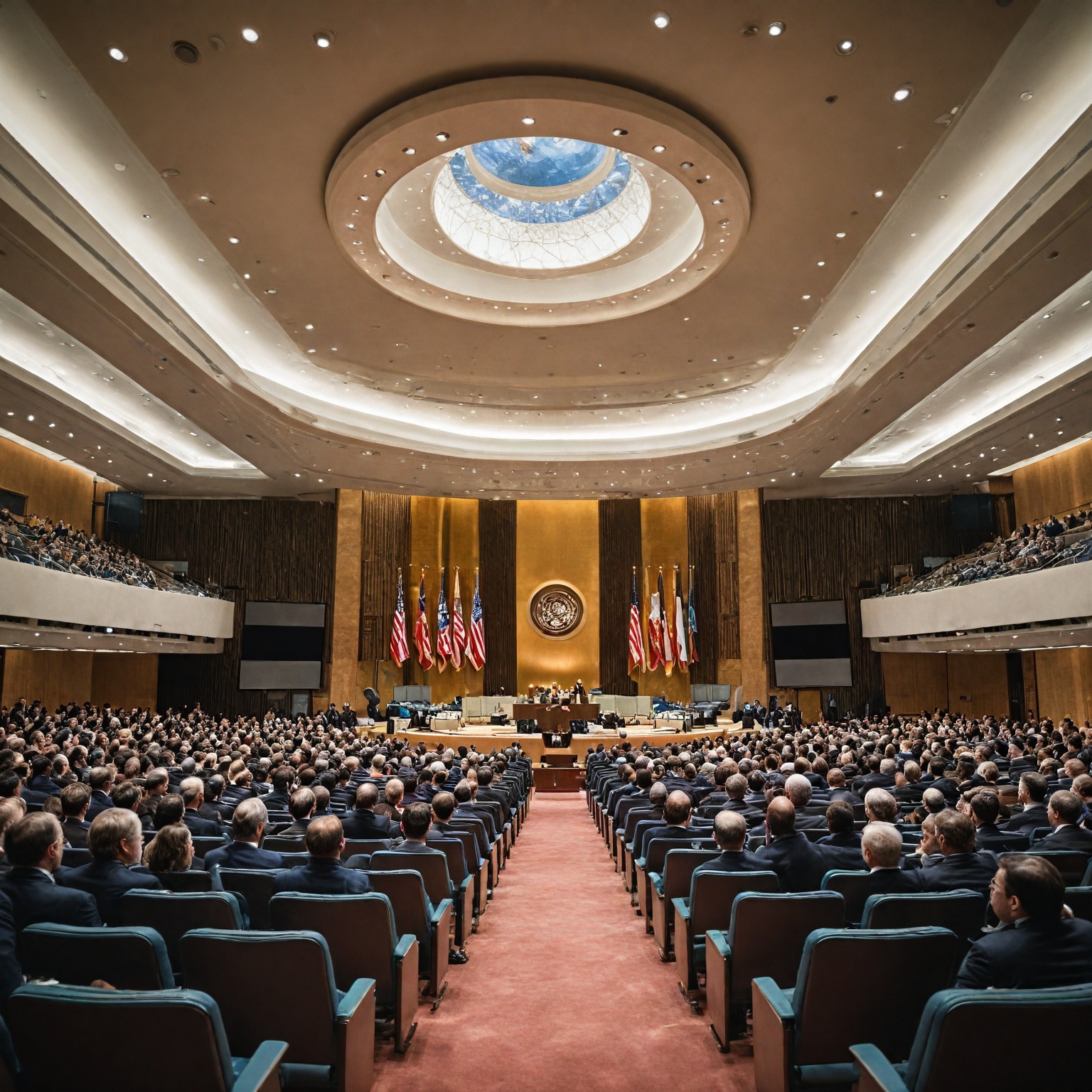
During the 80th session of the United Nations General Assembly held in New York City on September 23, 2025, President Donald Trump experienced a series of technical difficulties that he later alleged were acts of sabotage. As he was riding the escalator up to the podium, the escalator suddenly came to a halt, and simultaneously, the teleprompter malfunctioned, forcing Trump to deliver his speech without the aid of his prepared text. Trump remarked that these unexpected events “probably made the speech more interesting than it would have been otherwise”. Photographs shared on the official White House social media accounts showed Trump inspecting a newly installed “Presidential Walk of Fame” in the West Wing colonnade, featuring framed photographs of 44 of the 45 U.S. presidents, which was highlighted by his special assistant Margo Martin. While these visual updates circulated, members of the U.S. delegation, including energy secretary Chris Wright and secretary of state Marco Rubio, were observed listening attentively during the speech. Rubio later praised the speech on social media, calling it “incredible,” despite Trump’s claim that there was no audio in the hall where he was seated before his address. Further investigation suggested that a videographer filming the U.S. delegation’s arrival might have inadvertently triggered the escalator’s safety mechanism, causing the halt. The escalator was reset and quickly returned to operation after this incident. These technical glitches added to an atmosphere of confusion at the summit, which also saw microphone issues affecting other speakers, such as Canadian Prime Minister Mark Carney during his address on Palestine. The broader context of the assembly included discussions on sensitive topics such as recognition of Palestine, Gaza peacekeepers, and proposals for United Nations transitional authority in Gaza. Various press conferences and analyses from UN officials and experts highlighted the complexity and urgency of these issues. Within this environment, Trump’s allegations of sabotage regarding the escalator, teleprompter, and microphone disruptions underscored tensions present at the event.
Alleged Sabotage Incidents
During President Donald Trump’s visit to the United Nations General Assembly, a series of technical difficulties sparked allegations of deliberate sabotage from the President and his administration. The incidents involved an escalator malfunction, teleprompter failure, and audio issues during his speech, which Trump characterized as “triple sabotage”.
Escalator Incident
As President Trump and First Lady Melania Trump attempted to use an escalator at the UN, it abruptly stopped, forcing them to walk up the remaining steps. Trump asserted that the stoppage was “absolutely sabotage,” citing reports from The Sunday Times that UN staff had joked about turning off escalators to humiliate him. However, UN officials explained that a built-in safety mechanism was triggered, likely by a White House videographer traveling backwards on the escalator who inadvertently hit the stop lever. The escalator was promptly reset and resumed operation. Despite the UN’s findings, Trump demanded a formal investigation into the incident and called for those responsible to be held accountable.
Teleprompter Malfunction
Compounding the escalator issue, Trump’s teleprompter did not function properly for the first 15 minutes of his speech, forcing him to read from paper. The White House and UN officials disputed responsibility for the teleprompter failure, with the UN stating that the President’s teleprompter was operated by the US delegation, while the White House suggested UN equipment was at fault. Trump criticized the failure publicly, linking it to the overall pattern of technical sabotage at the UN.
Audio Problems
In addition to the escalator and teleprompter problems, Trump claimed the sound system in the General Assembly Hall was “completely off,” and that world leaders could only hear his speech through interpreter earpieces. UN officials clarified that the sound system was designed to provide simultaneous translation via earpieces, and that the issue was not a system-wide failure but related to the nature of the translation service. Nevertheless, Trump described the audio difficulties as further evidence of a coordinated attempt to undermine his address.
Response and Reactions
The US ambassador to the UN echoed the President’s calls for swift investigation and decisive action, condemning the technical lapses as “unacceptable” and indicative of institutional problems posing safety and security risks. The UN maintained that the escalator stoppage was accidental and that the teleprompter and audio issues had explanations grounded in normal operations and delegation responsibilities. Despite these official responses, President Trump and his administration insisted that the incidents were intentional and demanded accountability for what they labeled as deliberate acts of sabotage.
Timeline of Events
On the day of President Donald Trump’s speech at the United Nations General Assembly, a series of technical difficulties occurred that the President later described as a “triple sabotage.” The incidents began as Trump arrived at the UN headquarters, where the escalator he was using suddenly stopped. A UN spokesperson explained that the escalator’s safety function might have been triggered inadvertently by a videographer who was filming the President while standing backward on the escalator, causing it to reset and soon resume operation. During his address, Trump experienced teleprompter problems, with the device not functioning properly for the first 15 minutes. The teleprompter was reportedly operated by the U.S. delegation, and the UN indicated that this equipment issue was linked to the delegation itself rather than the venue. Following the speech, Trump claimed that the auditorium’s sound system was “completely off,” asserting that world leaders could not hear the speech unless they used interpreter earpieces. A UN official responded by clarifying that the sound system was designed to deliver translated speeches through earpieces to attendees, which may have contributed to the perception of an audio failure. Reports also noted that multiple microphone failures had occurred during speeches by other world leaders on the same day. Reacting to these incidents, Trump took to social media to demand an investigation, describing the sequence of events as deliberate attempts to undermine him. He labeled the situation a “REAL DISGRACE” and a “very sinister” series of events involving the escalator, teleprompter, and audio system.
Responses and Reactions
The incident at the United Nations involving the escalator stoppage, teleprompter failure, and audio issues during President Donald Trump’s address prompted a range of responses from various stakeholders. President Trump himself characterized the events as a “triple sabotage” and demanded an immediate investigation, asserting on social media that these technical failures were deliberate acts aimed at undermining him. He called for the preservation of security tapes related to the escalator and involved the U.S. Secret Service in the inquiry. The White House echoed these concerns, with press secretary Karoline Leavitt labeling the incidents as intentional attempts to humiliate the President, urging swift accountability within the UN. Conservative media figures also expressed alarm, highlighting potential safety risks posed by the abrupt escalator stop, with commentators such as Jesse Watters describing the situation as a deliberate sabotage that endangered both the President and First Lady. In contrast, the United Nations issued a statement suggesting the escalator stoppage was triggered unintentionally by a safety feature, activated when a U.S. videographer was seen standing backward on the escalator while filming the President’s arrival. UN spokesperson Stéphane Dujarric explained that the safety mechanism likely engaged to prevent accidents, and the escalator was quickly reset and resumed normal operation. Regarding the teleprompter and microphone failures, UN officials indicated there was no evidence of intentional disruption, and noted that similar audio issues had occurred during speeches by other world leaders. Public and media reactions captured a mix of skepticism and intrigue. Footage of the incident showed audience members reacting with laughter when President Trump quipped about the “bad escalator and a bad teleprompter,” highlighting a lighter reception to the technical difficulties. Meanwhile, diplomats and analysts viewed the situation within a broader context of ongoing challenges facing the United Nations, emphasizing the need for institutional reassessment rather than attributing malice to isolated incidents.
Investigations and Findings
The United Nations conducted a one-day investigation into the incident involving the halting of President Donald Trump’s escalator during his arrival at the U.N. General Assembly. The investigation concluded that the escalator stoppage was caused unintentionally by a White House videographer who likely triggered a safety mechanism while filming the U.S. delegation’s arrival. U.N. spokesperson Stéphane Dujarric confirmed that the escalator was reset and resumed operation shortly after the incident. In addition to the escalator issue, multiple technical failures occurred during the event, including microphone malfunctions affecting speeches by several world leaders such as those from Canada and Indonesia. U.N. officials stated there was no indication that these issues were deliberate. Nevertheless, President Trump called for a thorough investigation and arrests related to the technical failures. United States Ambassador to the United Nations Mike Waltz echoed these demands, emphasizing the involvement of the U.S. Secret Service to look into the matter. The U.S. ambassador criticized these lapses as symptomatic of broader institutional problems within the United Nations, describing them as serious safety and security risks. The requests from the U.S. side included the results of the U.N. internal investigation on the escalator stoppage—specifically who or what caused it and whether sabotage was involved—as well as explanations for the issues with language interpretation and teleprompters.
Impact and Aftermath
The incident involving the escalator stoppage during the US delegation’s arrival at the United Nations sparked significant controversy and allegations of sabotage. A UN statement suggested that a videographer filming the delegation “may have inadvertently triggered the safety function,” leading to the escalator’s temporary halt. The escalator was subsequently reset and resumed operation shortly thereafter. However, this explanation did little to quell the growing tensions. The United States government, reflecting the tone of then-President Trump, expressed strong condemnation of the events. The US ambassador publicly declared that the United States “will not tolerate threats to our security or dignity at international forums” and called for “swift cooperation and decisive action” from the UN. These remarks underscored the American perception that the incident, alongside other technical issues such as language interpretation and teleprompter malfunctions, were indicative of a “broken institution” posing “serious safety and security risks”. President Trump himself addressed the episode during his UN speech, describing his arrival experience and highlighting the escalator stoppage as emblematic of broader organizational dysfunction. He characterized the stoppage as “triple sabotage,” suggesting intentional disruption and castigating the UN for what he perceived as deliberate mistreatment. This combative rhetoric amplified the incident’s political resonance and drew international media attention. In response to the escalating tensions, the UN faced calls for transparency and accountability, with demands for an internal investigation into the cause of the escalator stoppage, including whether it was an act of intentional sabotage. The incident also contributed to wider discussions about the efficacy and future of United Nations peace operations and administrative capabilities. Diplomats based in New York emphasized the need for reassessment of UN mission structures, and ongoing efforts were noted towards a comprehensive review ahead of the 2025 UN Peacekeeping Ministerial pledging conference.
Comparative Incidents at the United Nations
During President Donald Trump’s 2023 visit to the United Nations General Assembly, a series of technical issues occurred, including a halted escalator, a malfunctioning teleprompter, and audio interruptions during his speech. These incidents collectively prompted Trump to allege “triple sabotage” at the UN, claiming the events were deliberate attempts to undermine him. The escalator stoppage, which happened as Trump arrived at the podium, was later attributed to a White House videographer who inadvertently triggered a safety mechanism by standing backward on the escalator while filming. The United Nations clarified that the escalator’s safety feature caused the halt and the device was quickly reset, dismissing any intentional interference. Similarly, the teleprompter malfunction was acknowledged as a technical fault by both Trump and UN officials. Trump himself suggested that the broken teleprompter, combined with the escalator incident, made the speech more interesting. In addition to these events, audio disruptions were reported during Trump’s address. UN officials and other world leaders, including those from Canada and Indonesia, experienced microphone failures during the General Assembly sessions. The United Nations told media outlets there was no indication the audio issues were deliberate. Nevertheless, Trump and United States Ambassador to the UN Mike Waltz stated that the Secret Service would investigate the technical problems further. These incidents, while unusual, were not isolated to Trump’s speech and appear to reflect broader technical challenges faced during the event rather than targeted sabotage. The combination of these malfunctions has since been colloquially dubbed “escalatorgate,” underscoring the unusual nature of the occurrences and the attention they received.
The content is provided by Blake Sterling, Know Heaven