Game-Changer Alert: US Company Seals $500 Million Deal with Pakistan to Tap into Gold and Antimony Resources!
Summary
Game-Changer Alert: US Company Seals $500 Million Deal with Pakistan to Tap into Gold and Antimony Resources is a landmark investment agreement that underscores the growing strategic importance of Pakistan’s mineral sector in global supply chains. Signed between U.S. Strategic Metals (USSM) and the Government of Pakistan, the $500 million deal focuses on developing critical minerals including gold, antimony, copper, tungsten, and rare earth elements. These minerals are essential for advanced manufacturing, clean energy technologies, and defense industries, aligning with U.S. priorities to diversify supply chains away from dominant producers such as China.
Pakistan’s mineral wealth, concentrated largely in the southwestern province of Balochistan, is among the largest untapped reserves of critical minerals worldwide. However, the sector has faced persistent challenges including insurgency, separatist opposition, and complex regulatory frameworks that have hindered foreign investment and sustainable development. The partnership with USSM aims to establish a poly-metallic refinery in Pakistan, enhance mineral processing capabilities, and increase mineral exports, marking a significant shift towards value-added production and international cooperation in the region.
The deal has sparked mixed reactions. While it promises economic growth and stronger U.S.-Pakistan ties through expanded trade and technology transfer, it also raises concerns among local Baloch communities and nationalist groups who view resource extraction as exploitative and fear exacerbation of regional tensions. Security issues remain critical, with U.S. designations of Baloch separatist groups as terrorist organizations adding complexity to the operational environment. Additionally, environmental and social governance gaps persist in Pakistan’s mining sector, highlighting the need for conflict-sensitive and sustainable approaches to resource development.
Overall, this agreement represents a pivotal moment in Pakistan’s efforts to harness its mineral potential and integrate into global critical mineral markets. It reflects broader geopolitical dynamics involving U.S. strategies to secure vital resources, as well as Pakistan’s ambitions to attract foreign investment and modernize its mining industry despite enduring socio-political and security challenges.
Background
Pakistan is strategically located in South Asia and serves as a gateway to Central Asia, boasting a diverse geological landscape rich in mineral deposits such as copper, gold, lithium, antimony, and other critical minerals essential for advanced manufacturing and energy production technologies. The country’s mineral wealth is predominantly found in the southwestern province of Balochistan, an area plagued by insurgency and separatist opposition to resource extraction by both Pakistani and foreign companies. Other significant deposits have been identified in Sindh, Punjab, and Khyber Pakhtunkhwa provinces, the latter bordering Afghanistan.
The potential of Pakistan’s mineral sector has attracted several international firms. Notably, the Canadian company Barrick Gold holds a 50% stake in the Reko Diq copper-gold mine in Balochistan, one of the largest undeveloped copper and gold deposits in the world. The entry of U.S. Strategic Metals into the mining sector underscores the growing interest of American companies in Pakistan’s critical minerals, aligning with U.S. Department of Energy priorities for producing and recycling minerals vital to modern technologies and energy infrastructure.
Despite these opportunities, the mining industry faces significant challenges. The insurgency in Balochistan has intensified with the U.S. State Department designating the Balochistan National Army and its armed wing, the Majeed Brigade, as foreign terrorist organizations in August 2023, complicating operations and security for mining ventures in the region. Furthermore, current mining practices have been criticized for exacerbating social and environmental issues in mining areas, highlighting the need for improved policy frameworks and sustainable development approaches within Pakistan’s mineral sector.
Efforts to reform and develop the mining sector have been supported by international institutions such as the World Bank, which in 2009 provided a $45 million technical assistance loan as part of a broader strategy to unlock mineral potential in Balochistan. The ongoing transformation of Pakistan’s mining industry could play a pivotal role in global supply chains, especially given the increasing demand for strategic minerals like lithium for electric vehicles, rare earth elements for semiconductors, and copper for renewable energy infrastructure—resources critical to U.S. industrial agendas such as the “Buy American” policy.
This backdrop sets the stage for recent significant investment agreements, including a landmark $500 million deal between a U.S. company and Pakistan to develop gold and antimony resources, signaling a major shift in the dynamics of mineral extraction and international cooperation in the region.
The Deal
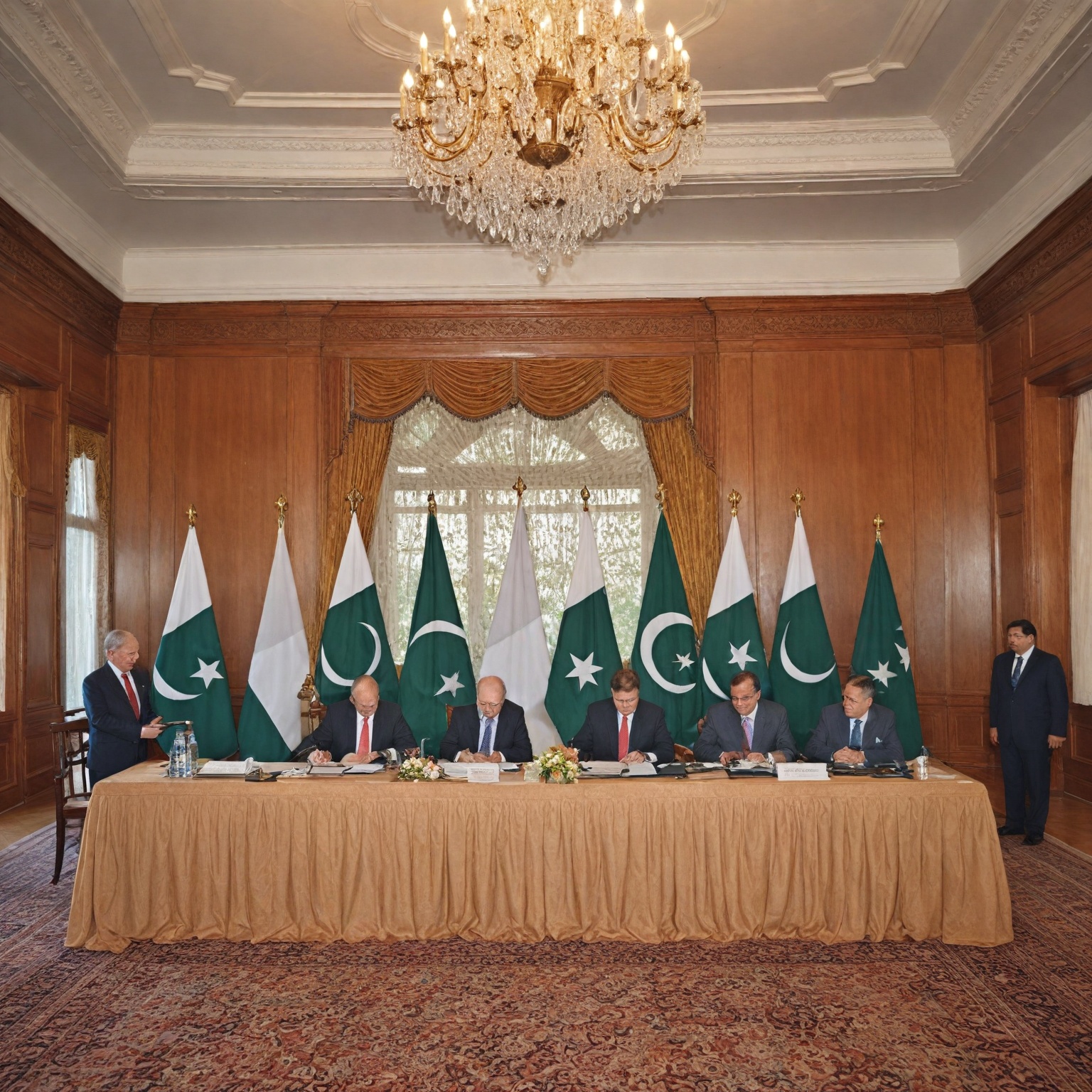
In a significant move to enhance bilateral cooperation, U.S. Strategic Metals signed a $500 million investment agreement with Pakistan to develop the country’s critical mineral sector, focusing on resources such as gold, antimony, copper, tungsten, and rare earth elements. The agreement was formalized at the Prime Minister’s House in Islamabad, marking a key step in advancing Pakistan’s mineral extraction and refining capabilities.
The deal establishes a collaborative framework between U.S. Strategic Metals and Pakistan’s Frontier Works Organization (FWO), the nation’s largest miner of critical minerals, with plans to set up a poly-metallic refinery within Pakistan. This refinery aims to process a variety of essential minerals that are crucial for defense, aerospace, and advanced manufacturing industries.
This investment follows a recently reached trade agreement between Washington and Islamabad, which aimed to attract American investment into Pakistan’s minerals and oil reserves. The partnership is expected to commence immediately with the export of readily available minerals from Pakistan, bolstering the country’s mineral export profile and enhancing economic ties between the two nations.
In addition to the deal with U.S. Strategic Metals, Pakistan also signed a separate agreement with Mota-Engil Group, a Portuguese engineering and construction firm, through the National Logistics Corp of Pakistan. This move signals a broader interest in infrastructure and mineral resource development in the country.
U.S. officials, including representatives from the Trump administration, have emphasized the strategic importance of such agreements, highlighting the critical role of mineral resources in American security and prosperity. They anticipate more collaborations in Pakistan’s critical minerals and mining sectors in the near future.
Mining and Resource Extraction
Pakistan’s mining sector is currently undergoing significant transformation, driven by the discovery and development of critical minerals including gold, antimony, copper, tungsten, and rare earth elements. This shift is poised to redefine global supply chains and bolster the country’s position in the international minerals market.
A landmark agreement was signed between a U.S. metals company and Pakistan, involving an investment of approximately $500 million to establish a proprietary, highly flexible poly-metallic refinery within Pakistan. This facility will focus on producing intermediate and finished mineral products to meet the rapidly growing demand of the U.S. market. The partnership immediately began with the export of readily available minerals such as antimony, copper, gold, tungsten, and rare earth elements, reflecting a strategic collaboration aimed at enhancing mineral processing capacity and value-added production in Pakistan.
Despite this promising development, current mining practices in Pakistan have been criticized for exacerbating social and environmental challenges in mining areas. There is a notable absence of effective mechanisms to monitor mine closure and land reclamation, and companies are rarely held accountable for implementing these plans. Security and political risks remain high; however, these can be mitigated by adopting conflict-sensitive business practices that ensure benefits are shared with local communities.
Technologically, the extraction and refining of antimony and gold are receiving focused attention. Pyrometallurgical methods are primarily employed for processing sulfide-antimony ores with low arsenic content, where gold is often recovered as a valuable byproduct. Recent developments include a comprehensive technological flowchart for the initial processing of gold–antimony concentrates, incorporating alkaline sulfide leaching and electrolytic antimony extraction, which highlights advancements in refining efficiencies. Pakistan is also exploring collaboration with Oman to leverage its advanced refining facilities for antimony, aiming to optimize processing capabilities.
Globally, the antimony market has been influenced by China’s dominance, which previously suppressed prices and led to the closure of many antimony mines in the U.S., Canada, and elsewhere. The new U.S.-Pakistan partnership and investments reflect efforts to diversify supply chains and revitalize antimony production outside China.
Implementation Timeline and Project Phases
The cooperation between the U.S. company and Pakistan to develop the critical minerals sector is structured in multiple phases, with an initial investment of approximately $500 million planned for the first phase. This phase focuses on establishing a foundation for a proprietary, highly flexible poly-metallic refinery in Pakistan that will produce intermediate and finished products aimed at meeting the rapidly growing demand of the U.S. market.
Following this initial investment, the next steps involve forming dedicated teams tasked with exploring the full potential of Pakistan’s vast resource base. These teams will identify critical minerals suitable for immediate export and work toward building a long-term partnership in exploration, extraction, and processing. The partnership will begin immediately with the export of readily available minerals such as antimony, copper, gold, tungsten, and rare earth elements, reflecting a swift move towards operationalization of mineral exports.
Preparations are also underway for conducting remote sensing and geological surveys, particularly focusing on Balochistan’s newly discovered antimony reserves. These surveys aim to provide a comprehensive analysis to better understand the scope and scale of these resources, which are expected to play a crucial role in boosting Pakistan’s mining industry and economy.
Parallel to these efforts, opportunities are being presented to private-sector mining equipment and service providers to participate in operations such as the first-of-its-kind major Reko Diq copper and gold mine project in Balochistan. This engagement includes mineral exploration, extraction, offtake, processing, and investment activities, highlighting the inclusive approach towards project development.
Impact and Significance
The agreement between the U.S. company and Pakistan to develop gold and antimony resources is poised to significantly enhance the investment climate in Pakistan’s mineral sector, particularly in the mineral-rich but insurgency-affected province of Balochistan. This partnership is expected to improve regulations surrounding mining investment, licensing, and revenue sharing, thereby fostering a more attractive and stable environment for both foreign and domestic investors.
From a strategic perspective, the deal aligns with broader U.S. interests in securing critical minerals essential for advanced manufacturing and clean energy technologies, such as antimony, copper, gold, tungsten, and rare earth elements. The U.S. Department of Energy identifies these minerals as vital for a range of technologies, and the partnership will enable immediate exports of these resources from Pakistan. This cooperation supports U.S. efforts to diversify supply chains for critical materials, complementing other diplomatic and commercial initiatives globally.
The deal also reinforces ongoing diplomatic engagement between the United States and Pakistan, emphasizing pragmatic collaboration despite complex geopolitical dynamics. High-level discussions have underscored the mutual benefits of responsible and transparent development of Pakistan’s vast mineral potential, with both countries seeking to deepen economic ties and technical cooperation in the sector. Furthermore, U.S. officials have highlighted the importance of expanding people-to-people and educational connections alongside economic partnerships to strengthen bilateral relations.
However, the agreement’s success will depend on addressing local challenges, including insurgent opposition in Balochistan, where separatist groups have historically resisted foreign mining operations. Additionally, Pakistan’s mixed legal, policy, and regulatory frameworks currently pose obstacles to rapid infrastructure and sectoral development. The collaboration with the U.S. company, coupled with initiatives like building U.S. consular presence in the region, aims to provide the necessary diplomatic and security support to overcome these challenges.
Reactions and Responses
The $500 million deal between the U.S. company and Pakistan to develop gold and antimony resources has elicited mixed reactions domestically and internationally. On one hand, the agreement is seen as a strategic move to tap into Pakistan’s vast mineral wealth, particularly in critical minerals such as lithium, rare earth elements, copper, gold, and antimony, which align with global supply chain demands and the U.S. “Buy American” agenda. The U.S. and Pakistan have engaged in ongoing diplomatic discussions aimed at fostering military and economic cooperation through mineral sector development, highlighting the deal as part of broader pragmatic engagement despite underlying trust issues. Experts note that the agreement may improve the investment climate in Pakistan’s mineral sector, especially in the resource-rich but underdeveloped province of Balochistan, by refining mining investment rules, licensing, and revenue sharing frameworks.
However, the deal has also sparked significant criticism and concern, particularly from Balochistan’s local population and separatist groups. The southwestern province, home to most of Pakistan’s mineral wealth, has experienced decades of insurgency fueled by perceptions of exploitation and marginalization. Previous projects, such as the Saindak copper-gold operation and the Reko Diq mine, have left local communities feeling dispossessed, as benefits predominantly flowed to central authorities and foreign investors rather than to the local populace. Baloch nationalist factions view the deal as exacerbating longstanding grievances over resource control and sovereignty, warning that it may inflame tensions in a region already beset by violence and military presence. The U.S. State Department’s designation of Baloch separatist groups as terrorist organizations further complicates the political landscape surrounding mineral exploitation in the area.
Additionally, the deal occurs amid Pakistan’s complex regulatory environment and economic challenges. Since the 18th constitutional amendment in 2010, provincial governments have gained authority over mineral policies, though coordination with federal agencies remains critical. The current mixed legal and policy framework poses hurdles for attracting and managing foreign investment effectively. Despite these challenges, Pakistan’s government has recognized its geostrategic position and is actively seeking international investment to boost infrastructure development and stabilize its economy.
Internationally, the deal fits within broader U.S. efforts to diversify critical mineral supply chains and reduce reliance on China, which has historically dominated antimony production and driven global prices down, causing mine closures elsewhere. The partnership with Pakistan is viewed as a potential solution to these supply constraints, supported by government-backed funding for companies like Perpetua Resources engaged in antimony mining in the U.S.
Controversies and Challenges
The mining sector in Pakistan, particularly in the mineral-rich province of Balochistan, faces significant controversies and challenges stemming from political, social, and security issues. The region holds some of the world’s largest untapped reserves of critical minerals such as copper, gold, lithium, and antimony, which are essential for modern technologies and defense applications. However, ongoing insurgency and separatist movements, notably the Baloch struggle for self-determination, have created a fraught environment for mineral extraction and foreign investment.
Local Baloch communities have persistently opposed resource extraction by both Pakistani and foreign companies, criticizing the lack of tangible benefits and infrastructure improvements despite decades of mining activity. Projects like the Saindak copper-gold mine and the Reko Diq deposit have been sources of major contention due to disputes over revenue-sharing and perceived exploitation by central authorities and external stakeholders. This has fostered feelings of dispossession and betrayal among the local population.
Security concerns further complicate investment in the sector. The U.S. State Department has designated Baloch separatist groups such as the Balochistan National Army and its armed wing, the Majeed Brigade, as foreign terrorist organizations, highlighting the ongoing violence and instability in the region. The risks of political violence and militant attacks, including bombings linked to resistance against projects like the China-Pakistan Economic Corridor, underscore the fragile security situation.
Moreover, while mine closure and land reclamation plans are mandated, there are currently no effective mechanisms to monitor compliance or hold companies accountable for environmental restoration. The absence of robust regulatory frameworks and enforcement exacerbates social and environmental challenges associated with mining operations. Experts have warned that prioritizing geopolitical rivalry—especially in the context of U.S.-China competition over critical minerals—may lead to increased repression and militarization in Balochistan, risking further escalation of conflict and undermining local rights
Government Role and Policy Framework
Since the enactment of the 18th constitutional amendment in 2010, provincial governments in Pakistan have been empowered to design and implement their own mineral policies, with the exception of oil, gas, and nuclear minerals which remain under federal jurisdiction. This decentralization has granted provinces, such as Balochistan, increased authority to regulate mineral resources, although they still seek guidance from the Ministry of Petroleum and Natural Resources at the national level.
In May 2014, both the Government of Pakistan (GOP) and the Government of Balochistan (GOB) requested technical assistance from the Asian Development Bank (ADB) through a small-scale policy and advisory technical assistance (S-PATA) program. The goal was to improve the investment climate in Pakistan’s mineral sector, particularly focusing on Balochistan. Although S-PATA was not part of the Country Operations Business Plan 2014–2016, it aligned with the broader Country Partnership Strategy (CPS) 2009–2013, which supports reforms aimed at enhancing the investment environment and private sector development at the provincial level.
Despite these efforts, current mining practices have often exacerbated social and environmental issues in mining regions, indicating gaps in the existing policy and regulatory frameworks. Moreover, there is a noted lack of rigorous research on the formulation of mining and minerals guidelines within Pakistan’s policy and institutional contexts, especially in the context of low- and middle-income countries.
Recognizing the importance of its geo-strategic position and mineral potential, Pakistan’s government is actively seeking foreign investment to develop infrastructure and unlock the value of its mineral resources. However, economic challenges remain, partly due to the complex and mixed legal, policy, and regulatory structures that govern the sector. The U.S. government has identified strategic minerals in Pakistan—such as lithium, rare earth elements (REEs), and copper—as crucial to its “Buy American” agenda and global supply chain security, fostering collaboration that includes tariff relief incentives and access to funding through institutions like the U.S. International Development Finance Corporation.
Recent diplomatic engagements between Pakistan and the United States highlight promising steps toward economic collaboration, with a focus on attracting U.S. investment and diversifying international trade. This cooperation is expected to promote sustainable economic growth and integrate Pakistan more effectively into the global critical minerals sector.
Future Prospects
Pakistan’s mining sector is poised for significant transformation, driven by its strategic mineral resources such as lithium, rare earth elements (REEs), copper, gold, and antimony. These minerals are critical to emerging technologies and renewable energy infrastructure, aligning closely with the U.S. “Buy American” agenda and global supply chain realignments. The recent $500 million deal between a U.S. company and Pakistan to develop gold and antimony resources underscores the potential for bilateral cooperation in unlocking these strategic minerals.
The Government of Pakistan is actively seeking to attract foreign investment to modernize and expand its mining operations. Federal Minister of Energy (Petroleum), Ali Pervaiz Malik, has highlighted opportunities for U.S. firms to contribute to mineral exploration and development, signaling a commitment to enhancing the sector’s capacity. Moreover, initiatives such as the Small-Scale Policy and Advisory Technical Assistance (S-PATA), supported by the Asian Development Bank, aim to improve the investment climate particularly in mineral-rich regions like Balochistan by reforming licensing, investment regulations, and revenue sharing mechanisms.
Despite these positive developments, challenges remain. Current mining practices have been criticized for exacerbating environmental degradation and social issues in mining areas, partly due to the fragmented legal and regulatory frameworks in Pakistan. There is also a lack of effective mechanisms to enforce mine closure and land reclamation plans, which raises concerns about long-term sustainability and community impact.
Nevertheless, the growing recognition of Pakistan’s geo-strategic importance and its mineral wealth is expected to drive infrastructure development and policy reforms. This will likely facilitate increased foreign direct investment and technology transfer, especially in critical mineral production and recycling technologies championed by U.S. companies such as USSM, which prioritize securing essential materials for advanced manufacturing and energy sectors. Overall, these efforts position Pakistan’s mining sector as a potential game-changer in global critical mineral supply chains, fostering economic growth and international partnerships in the near future.
The content is provided by Sierra Knightley, Know Heaven