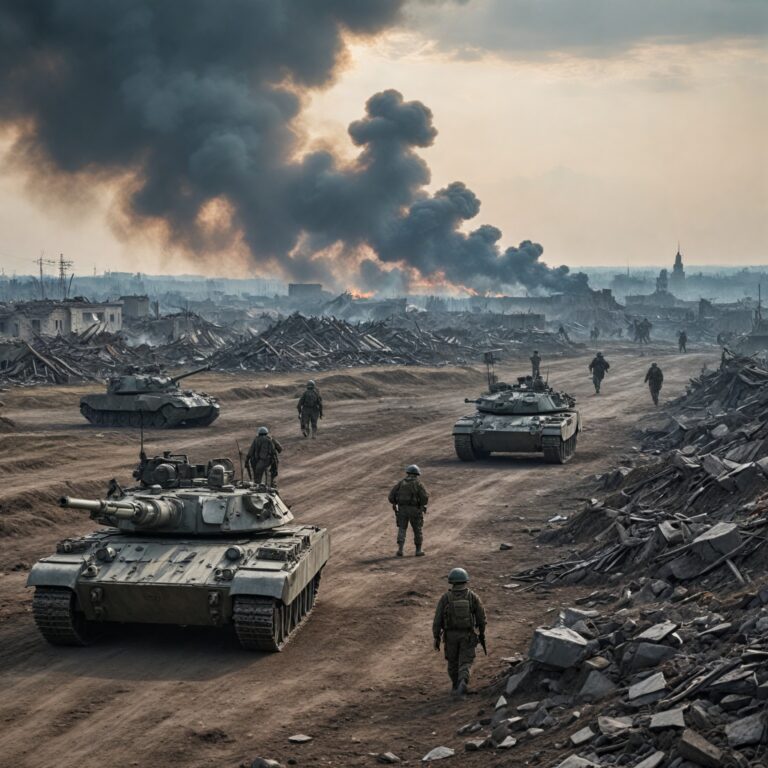
Poland Takes Action Against Russian Drones Amid Ukraines Warning: Is Putin Testing the West?
Summary
Poland Takes Action Against Russian Drones Amid Ukraine’s Warning: Is Putin Testing the West? refers to a significant security incident in September 2025 when multiple Russian drones violated Polish airspace amid the ongoing Russia-Ukraine conflict. The incursions involved at least 19 to 24 unmanned aerial vehicles, including kamikaze drones based on Iranian Shahed designs, targeting areas near the Poland-Ukraine border. Poland’s military responded by deploying advanced air defense systems to neutralize the threats, shooting down several drones within its territory. This marked one of the most serious escalations of cross-border hostilities in the region since World War II and prompted heightened military alertness and diplomatic activity within NATO and the European Union.
The drone violations prompted Poland to invoke Article 4 of the NATO treaty, a rare procedural step allowing member states to seek consultations when perceiving threats to their sovereignty or security. NATO officials condemned the incursions as reckless and dangerous provocations, emphasizing the alliance’s collective defense commitments. European leaders expressed strong solidarity with Poland, while Moscow denied involvement, attributing the flights to Ukrainian forces—a claim widely disputed by Western governments. The incident underscored growing concerns that Russia may be deliberately testing NATO’s response mechanisms and resolve amid stalled peace negotiations over Ukraine.
Poland’s response combined immediate military defense with technological and strategic measures. The country employed sophisticated radar detection systems and automated counter-drone weaponry to intercept the drones effectively, while conducting debris recovery operations to gather intelligence on the incursions. The heightened threat led to temporary airport closures and increased coordination among NATO allies, including the deployment of F-35 fighter jets from the Netherlands to bolster Polish air defenses. The crisis also triggered broader discussions on European security and accelerated efforts to develop advanced counter-drone technologies.
This episode represents a critical moment in the Russia-Ukraine conflict’s spillover risks, illustrating the potential for escalation beyond Ukraine’s borders. It has intensified debates about Western deterrence strategies and the need for enhanced collective defense capabilities within NATO and the EU. The incident continues to influence regional security policies and diplomatic relations, reflecting the complexities of confronting evolving hybrid threats in an increasingly contested European security environment.
Background
In the context of the ongoing conflict between Russia and Ukraine, Russia has increasingly employed large-scale drone and missile attacks targeting Ukrainian cities and infrastructure. These assaults often involve kamikaze drones based on Iranian designs, commonly referred to as “Shaheds,” with recent attacks involving hundreds of drones and missiles launched overnight, primarily targeting western Ukraine. Despite international efforts to secure ceasefire agreements, such as those attempted by former U.S. President Donald Trump, the aerial assaults have intensified, posing a significant threat to regional security.
Poland, a NATO member sharing a border with Ukraine, has experienced violations of its airspace by Russian drones amid these attacks. The Polish military confirmed that it had neutralized more than ten aerial objects, some of which were shot down after entering Polish territory. These incursions have prompted strong reactions from Polish leadership and other NATO members, emphasizing the gravity of the situation. Polish President Karol Nawrocki underscored the country’s readiness to repel such attacks, reaffirming that national security remains a top priority. The incident marks a notable escalation, with Polish Prime Minister Donald Tusk stating that the nation is closer to open conflict than at any point since World War II.
The response to these incursions has been supported across Europe and within NATO. Leaders from Sweden, Lithuania, Finland, and the European Union have condemned Russia’s actions as deliberate aggression threatening the security of the entire continent. NATO has expressed solidarity with Poland, highlighting the alliance’s commitment to collective defense principles, where an attack on one member is considered an attack on all. The use of advanced radar and drone tracking technologies, such as the IRIS radar system capable of detecting and classifying drones at high speeds, has been instrumental in monitoring and countering these threats effectively.
Incident Description
In September 2025, Poland experienced an unprecedented incursion of Russian drones violating its airspace amid the ongoing conflict between Russia and Ukraine. According to the Polish military, at least 19 to 24 Russian drones entered Polish territory overnight, some of which were tracked by both Polish and NATO radar and aircraft stationed in the country. These drones were reportedly approaching targets in Poland as well as Ukraine, marking a significant escalation in cross-border hostilities.
The Polish Armed Forces responded by deploying armaments to neutralize the intruding drones, successfully shooting several down. The operation to collect debris from the downed drones was underway the following morning, with constant communication maintained between Polish military leadership and government officials, including the president and the minister of defence. Polish Prime Minister Donald Tusk publicly thanked the Polish Operational Command and NATO pilots for their swift and effective response.
This large-scale drone violation was described by NATO officials as “absolutely reckless” and “dangerous,” though a full assessment of the incident was still pending. The incursion prompted condemnation from various international leaders: Ukrainian President Volodymyr Zelenskyy dismissed any suggestion that the incursion was accidental, while Italy’s Prime Minister Giorgia Meloni expressed full solidarity with Poland over what she termed a “serious and unacceptable violation” of its airspace. Belarus also reported intercepting Russian drones that had strayed into their territory during the same period.
The incident reflects a heightened risk of spillover from the war in Ukraine into neighboring countries, with Poland remaining on high alert following previous incidents such as the stray Ukrainian air defence missile that killed two people in Poland in 2022. The scale and coordination of the drone incursions suggest a possible testing of NATO’s responses and a demonstration of military capabilities by Russia, raising concerns about regional security and prompting increased vigilance among NATO allies.
Images captured during the incident showed remnants of the unmanned aerial vehicles in southeastern Poland, along with security forces patrolling affected areas. The event also caused disruptions such as delayed flights at Warsaw’s international airport and drew attention from foreign political leaders, including UK Prime Minister Keir Starmer, who mentioned the drone incursions in parliamentary discussions.
Warnings and Intelligence
In the lead-up to the drone incursions into Polish airspace, Ukraine issued multiple warnings about potential threats from Russian drones, prompting Poland to heighten its military readiness. This included scrambling its own and NATO warplanes, placing air defenses and radar systems on high alert, and temporarily closing some airports to ensure security. The heightened state of alert was evident as Warsaw’s Chopin Airport suspended flight operations while remaining open for other activities, reflecting the serious nature of the threat.
Poland’s military continuously monitored the situation, maintaining full alert status for both Polish and allied forces and assets during the incursions. The detection of these drones was facilitated by advanced identification technologies, including networks of spatially-distributed heterogeneous sensors such as cameras, radars, and microphones, which collect and process various types of data about aerial targets. Additionally, radio frequency detection systems played a crucial role in identifying communication links between drones and their controllers. Some of these high-end systems can pinpoint the location of both the drone and its operator by triangulating signals from multiple radio units. This capability is especially important for legal and defensive measures, as it helps prove the presence and activity of specific drones and controllers at given times and locations.
The severity of the situation led to the invocation of Article 4 of NATO’s founding treaty by Poland, which allows member states to request consultations when they perceive threats to their territorial integrity or security. Historically rare, this invocation underscores Warsaw’s grave concern regarding the Russian drone incursions. NATO officials condemned the actions, describing them as reckless and dangerous, regardless of intent. The international community, including European leaders such as Finnish Prime Minister Petteri Orpo and European Council President António Costa, expressed full solidarity with Poland and highlighted that these incidents emphasize the collective security risks posed by Russian aggression in the region.
Detection and Defense Systems
Poland has implemented a range of advanced detection and defense systems to counter the increasing threat posed by Russian drones violating its airspace amid the ongoing conflict in Ukraine. Central to these efforts are radar technologies and hard-kill countermeasures designed specifically for small drone interception.
The primary detection tools include sophisticated radar systems such as the TUGA radar, which, despite its compact size and low power, is capable of detecting small drones up to 5 kilometers away and has an overall detection range extending to 50 kilometers. This radar was developed through a collaboration between Pit-Radwar, the Military University of Technology, and Mesko, with funding support from Poland’s National Centre for Research and Development. Additionally, other drone detection radars in use provide broad coverage with high accuracy, often integrating into full Counter-Unmanned Aerial Systems (CUAS) frameworks to cue other sensors for threat verification. These radars typically employ frequency modulated continuous wave (FMCW) technology, valued for its low cost, long-distance detection capability, and robustness in varying weather and lighting conditions.
On the defense side, Poland has deployed automated hard-kill weapon systems capable of engaging drones autonomously once an operator authorizes engagement. These systems can receive target data from independent surveillance radars with ranges up to 15 kilometers, allowing flexible deployment to protect fixed sites effectively. In addition to such systems, Poland has introduced the SA-35MM counter-drone air defense system, which utilizes programmable ammunition to enhance effectiveness against unmanned threats.
Further developments include a low-cost anti-drone missile system unveiled by the Wojskowy Instytut Techniczny Uzbrojenia, designed to intercept drones like the Shahed class used extensively in the Russia-Ukraine conflict. This missile boasts an interception range of 0.5 to 15 kilometers and a maximum altitude capability of 1,500 meters. Although its guidance system remains unspecified, it may employ reflected laser beam guidance, a technique already applied in other Polish missile complexes such as JACK-S and Pirat.
Collectively, these detection and defense solutions have played a crucial role in responding to multiple drone incursions over Polish airspace, enabling early warning, accurate tracking, and timely engagement of threats to national security and NATO interests. The integration of these systems reflects Poland’s commitment to adapting its air defense capabilities to counter evolving unmanned aerial threats effectively.
Poland’s Military and Government Response
In response to multiple violations of its airspace by Russian drones amid the ongoing conflict in Ukraine, Poland’s military undertook immediate and robust defensive measures. The Polish armed forces activated their air defense systems and used armaments to neutralize more than ten unidentified aerial objects, some of which were shot down within Polish territory during the early hours of the incident. Concurrently, Territorial Defense forces were mobilized to search for debris and downed drones, with the public urged to report any findings of military equipment fragments to the authorities for investigative and prosecution purposes.
The Polish military described the situation as “unprecedented,” emphasizing the seriousness of these incursions, which represented a significant escalation and threat to national and regional security. The military also expressed gratitude toward NATO, specifically acknowledging the Netherlands for deploying F-35 fighter jets to bolster Poland’s defensive operations overnight, alongside coordinated support from NATO’s Air Command and other member states.
On the political front, Poland’s leadership maintained close coordination and communication throughout the crisis. The President and the Minister of Defence were kept informed continuously by the operational commander overseeing the military response. Polish officials underscored the priority of national security and readiness to repel such attacks, with public reassurances aimed at maintaining calm and vigilance among the population.
Significantly, Poland invoked Article 4 of the NATO treaty, which allows a member state to request consultations when perceiving a threat to its territorial integrity or security. This invocation, rare since NATO’s founding and previously used by Poland in 2014 following Russia’s annexation of Crimea, highlighted Warsaw’s perception of the drone incursions as a serious security threat. The move underscored the potential implications of these events for collective defense and regional stability within the alliance framework.
The Polish government also engaged diplomatically, receiving widespread international solidarity from European leaders, including Finland, France, and the European Council president, who condemned the violations and reaffirmed support for Poland’s sovereignty and security. Meanwhile, Polish officials continued to monitor the situation closely, ensuring efforts to locate and collect drone debris proceeded as part of ongoing security and investigative operations.
Diplomatic and Political Reactions
The drone incursions into Polish airspace triggered a swift and unified response from numerous European and NATO leaders, highlighting widespread condemnation of Russia’s actions and reinforcing commitments to collective defense. Polish officials described the violation as a serious breach of sovereignty, with President Karol Nawrocki emphasizing that “the security of our homeland is our highest priority” and declaring that Poland was “ready to repel” such attacks. NATO Secretary-General Mark Rutte condemned Moscow’s aggression, warning Russian President Vladimir Putin that the alliance was prepared to respond to further incursions.
Several European leaders voiced solidarity with Poland and denounced Russia’s expanded aerial attacks as reckless and provocative. French President Emmanuel Macron described the attack as “simply unacceptable” and called on Russia to end what he termed a “reckless escalation”. Similarly, Lithuanian President Gitanas Nauseda and Swedish Prime Minister Ulf Kristersson characterized the drone flights as a deliberate extension of Russian aggression threatening all of Europe. Finnish Prime Minister Petteri Orpo expressed Finland’s full support for Poland, recognizing the need for exceptional defensive measures to protect airspace. The European Council’s president, António Costa, stressed that “the security of one is the security of all,” urging greater European investment in defense to counter the threats posed by Russian actions.
Conversely, Moscow denied responsibility for the drone incursions, with a senior Russian diplomat in Poland attributing the attacks to Ukrainian forces, while the Kremlin declined to comment directly on the incident. This denial did little to sway Western perceptions, as many officials viewed the violations as further evidence that Russia was not serious about peace negotiations and was instead seeking to test NATO’s resolve. U.S. Senator Dick Durbin warned that repeated breaches of NATO airspace by Russian drones served as “fair warning” of Putin’s intentions to challenge the alliance’s commitment to defend its members.
The diplomatic fallout also revealed some divergences within the EU, with Hungarian Prime Minister Viktor Orbán calling the airspace violation “unacceptable” while maintaining closer ties to Moscow compared to other European leaders. Nonetheless, the overall political consensus emphasized that Russia’s aggression not only endangered Ukraine but posed a direct threat to the security of Europe as a whole. The incident intensified pressure on the United States and its allies to strengthen sanctions on Russia and enhance military support for Kyiv amid stalled peace negotiations.
Analysis and Interpretation
The recent violations of Polish airspace by Russian drones and the subsequent military response highlight a significant escalation in regional security tensions. Poland’s use of armaments to counter the incursions and the ongoing operation to collect drone debris demonstrate the seriousness with which Warsaw is treating these provocations. The Polish military’s deployment of “automatic” weapon systems, noted for their effectiveness against small drones and their adaptability in defending fixed sites, underscores the country’s preparedness to repel such attacks while maintaining operational flexibility.
This incident has also triggered Poland’s invocation of Article 4 of the NATO treaty, allowing members to seek consultations over threats to their territorial integrity or security. Historically, this article has been invoked sparingly, with Poland itself previously invoking it in 2014 following Russia’s annexation of Crimea. The current invocation signals Warsaw’s perception of these drone incursions as a direct and serious threat, reinforcing the gravity of the situation within the alliance.
The reactions from European leaders further illustrate the broader geopolitical implications. High-profile statements from figures such as Finnish Prime Minister Petteri Orpo, European Council President António Costa, and French President Emmanuel Macron express solidarity with Poland and condemn Russia’s actions as reckless and unacceptable. These responses emphasize the principle of collective security within the European Union and NATO frameworks, underscoring that an attack on one member is regarded as a threat to all.
Ukrainian officials interpret these developments as part of a wider pattern of Russian aggression and testing of Western resolve. President Volodymyr Zelensky characterized
Aftermath and Policy Developments
Following the drone incursions into Polish airspace amid the ongoing Russia-Ukraine conflict, Poland’s response highlighted both immediate military actions and broader policy implications. The Polish military successfully neutralized more than ten drones and other potentially threatening objects during the early hours of the attacks, with some drones reportedly shot down using armaments specifically deployed for the operation. The government initiated debris collection efforts to analyze the downed drones, enhancing situational awareness and aiding potential prosecutions by establishing precise activity timelines and locations of the drones and their controllers.
In the wake of these violations, Poland invoked Article 4 of the NATO treaty, a provision allowing member states to request consultations when facing threats to their territorial integrity or security. This invocation underscored the gravity with which Warsaw viewed the drone incursions and marked one of only a few such instances since NATO’s founding in 1949. The Polish government also took exceptional defensive measures, including closing its eastern border with Belarus due to joint Russian-Belarusian military exercises, further emphasizing the heightened security posture.
The incident drew significant international attention and solidarity. European and NATO leaders expressed full support for Poland, condemning Russia’s airspace violations as direct threats to European security and critical infrastructure. Statements from figures such as UK Prime Minister Keir Starmer, Finnish Prime Minister Petteri Orpo, and European Council President António Costa emphasized the shared security responsibilities within the alliance and the necessity of collective defense. Ukraine’s President Volodymyr Zelensky also highlighted the seriousness of the threat, warning of the dangerous precedent set by targeting a NATO member state with Shahed drones.
In response to the evolving threat posed by Shahed-class drones, Poland is pursuing advanced technological solutions to strengthen its air defense capabilities. This includes the development of interceptor systems integrating laser-guided technology, which promises enhanced accuracy and cost-effectiveness. Such advancements aim to provide a strategic advantage in protecting Polish territory from hostile drone incursions, leveraging modern surveillance networks composed of spatially distributed sensors like frequency modulated continuous wave (FMCW) radar for reliable detection and classification under varied conditions.
The content is provided by Blake Sterling, Know Heaven