
Mark Your Calendars: Farmers Groups Announce Nationwide Protest on August 13 with Determination
Summary
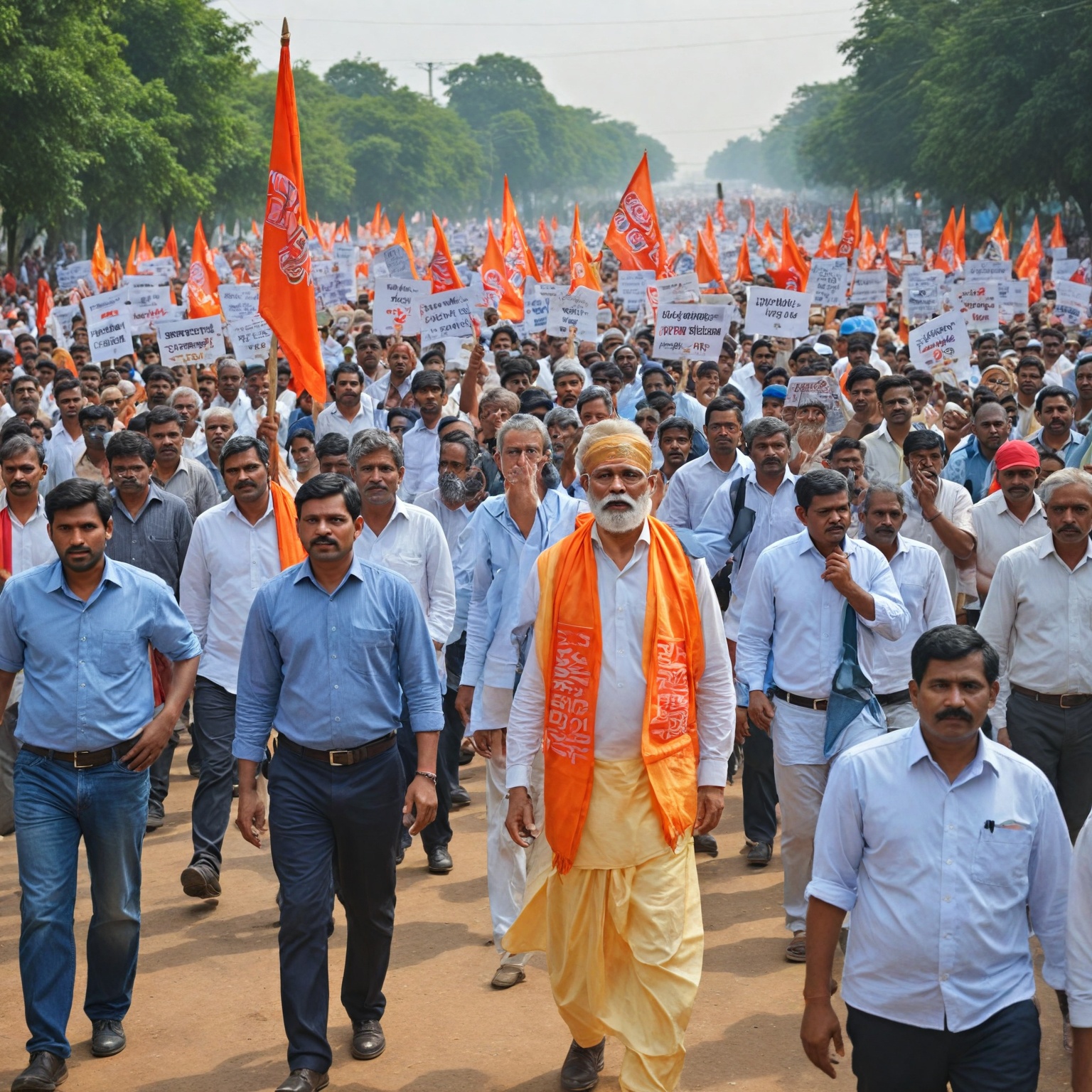
The nationwide protest announced for August 13, 2025, marks a significant mobilization by Indian farmers’ groups and allied trade unions opposing recent international trade agreements and continuing domestic agricultural grievances. Organized primarily under the Samyukt Kisan Morcha (SKM) in coalition with ten central trade unions, the protest challenges policies such as the India-UK Comprehensive Economic and Trade Agreement (CETA) and US tariff threats, which the organizers argue threaten India’s economic sovereignty and the livelihoods of farmers and workers across the country. This large-scale action continues the legacy of India’s extensive farmer movements, which have drawn national and international attention for their scale, persistence, and impact.
The roots of the protest lie in longstanding concerns over the corporatization of agriculture, the potential erosion of government protections like the Minimum Support Price (MSP), and opposition to the controversial farm laws enacted in 2020 and later repealed in 2021 after massive resistance. Beyond domestic policy, the movement increasingly critiques global trade dynamics, viewing recent tariff impositions and trade deals as forms of economic coercion that jeopardize food security and farmers’ rights. The protest calls for legal guarantees on MSP, withdrawal of cases against protesters, and accountability for violent incidents during previous demonstrations, including the 2021 Lakhimpur Kheri incident.
The August 13 protest exemplifies the broad coalition-building and strategic coordination that have characterized India’s recent agrarian activism. SKM and allied unions have mobilized farmers, workers, students, and citizens nationwide, employing tactics such as tractor and motorcycle rallies, demonstrations, and public gatherings to voice their demands. The protest also underscores tensions between grassroots movements and government authorities, with law enforcement preparing for potential unrest and ongoing debates about inclusivity, transparency, and the future direction of agricultural policy.
This movement is notable not only for its scale and persistence but also for its place within a global context of resistance against neoliberal trade policies and corporate influence in agriculture. It reflects deep-rooted structural challenges within India’s agrarian sector and demonstrates the continuing political agency of farmers in shaping national discourse on sovereignty, economic justice, and rural livelihoods.
Background
The farmers’ protests in India have been a significant movement marked by widespread demonstrations primarily in the northern states of Punjab, Haryana, and Uttar Pradesh, where agriculture plays a crucial role in the economy. The unrest began in response to three agricultural reform bills passed by the Indian Parliament in September 2020, collectively known as the farm laws. These laws aimed to deregulate the agriculture sector and were promoted by Prime Minister Narendra Modi as a means to “liberate” farmers from middlemen and enhance private sector participation. However, many farmers feared that the reforms would undermine government protections and leave them vulnerable to large agricultural corporations, potentially benefiting corporate interests more than the farmers themselves.
The protests escalated into one of the largest mass movements in recent decades, with farmers organizing road blockades, rallies, and other forms of direct action, including the occupation of highway toll plazas in Haryana and bullock-cart rallies by marginal farmers. The movement saw sustained engagement over months, during which several rounds of inconclusive talks were held between the government and farmers’ union leaders. The Supreme Court of India recognized the farmers’ determination and hardships, including deaths during the protests, highlighting the seriousness of their resistance.
A pivotal moment in the protests was the Lakhimpur Kheri incident on 9 October 2021, which farmers’ unions condemned as an “act of terror” and compared to the historical Jallianwala Bagh massacre, intensifying calls for the dismissal and arrest of Union Minister Ajay Mishra Teni and his son. This event galvanized further protests and heightened tensions between the unions and government.
After nearly a year of persistent demonstrations, the Indian Prime Minister announced in November 2021 the repeal of the three farm laws, acknowledging the farmers’ unwavering opposition. Despite this, the structural issues within the Indian agricultural sector remain unresolved, and farmers have continued to express concerns about their livelihoods and government policies.
In early 2024, a new wave of protests emerged, particularly in Punjab and Haryana, starting from February 13 at Punjab’s Shambhu border. These protests have renewed demands for legal safeguards and government intervention to protect farmers’ interests amid fears that reducing government involvement could expose farmers to risks posed by private sector dominance. The continued activism reflects the deep-seated nature of the grievances within the farming community and their determination to seek lasting solutions.
Organizers and Leadership
The nationwide protest announced for August 13 is organized under the leadership and coordination of several prominent farmer unions and allied organizations. Central to the movement is the Samyukt Kisan Morcha (SKM), which serves as the primary representative body coordinating over 500 national farm and workers’ unions. These unions include the Bharatiya Kisan Union factions from Ugrahan, Sidhupur, Rajewal, Chaduni, and Dakaunda, among others, and extend to allied transport bodies like the All India Motor Transport Congress (AIMTC).
SKM’s leadership is characterized by ideological diversity but united by a shared commitment to a peaceful andolan (movement) with a focused agenda: the repeal of the three farm laws and the institution of a legal guarantee for minimum support price (MSP) for 23 crops. The Morcha acts as the negotiating entity with the government, issues statements on behalf of the protesting unions, and coordinates strategic actions and tactics among the disparate groups.
The leadership’s approach has been inclusive and strategic, demonstrated by the widespread participation of over 100 farmer and labor unions in the “Delhi Chalo” call organized by the Sangharsh Committee after earlier negotiation attempts failed. SKM’s coordination has enabled protests across many Indian states, including Punjab, Haryana, Uttar Pradesh, Maharashtra, Rajasthan, Gujarat, Karnataka, Andhra Pradesh, Telangana, Tamil Nadu, Kerala, Assam, and Manipur.
In addition to SKM, the All India Kisan Sangharsh Coordination Committee plays a significant role in aligning various unions and ensuring unified action. Farmer leaders also engage with governmental authorities on issues impacting the movement, as seen in meetings convened by officials such as the Horticulture Minister to discuss related legal matters.
Statements from SKM and allied Central Trade Unions (CTUs) emphasize mass participation in the planned protest actions on August 13, calling upon farmers, workers, students, and patriotic citizens nationwide to join in tractor and motorcycle rallies, demonstrations, public gatherings, and other forms of protest. This leadership’s capacity to build a cohesive front has been crucial in sustaining the movement’s momentum and mobilizing large-scale participation.
Causes and Demands of the Nationwide Protest
The nationwide protest announced for August 13 by the Samyukt Kisan Morcha (SKM) along with ten central trade unions was driven by multiple grievances primarily related to India’s trade policies and agricultural sector. The protest was called in response to the proposed 25 percent US tariff threat and the recently signed India-UK Comprehensive Economic and Trade Agreement (CETA), which the protesting groups viewed as acts of economic coercion undermining India’s sovereignty and freedom. The CTUs-SKM criticized these developments for favoring foreign corporate interests at the expense of Indian farmers, workers, and economic independence, comparing the situation to colonial-era exploitation through trade.
One of the central causes of the protest was opposition to the United States’ economic policies that were perceived as hypocritical—demanding open markets for American corporations while simultaneously using tariffs to pressure sovereign nations. The protesting groups highlighted the threat posed by potential future trade deals, including an India-US agreement that could grant unrestricted access to American agribusinesses like Cargill, endangering the livelihoods of Indian farmers and food security nationwide.
In addition to trade-related concerns, the farmers’ demands centered on key issues affecting their livelihoods. A primary demand was the establishment of a legal guarantee for Minimum Support Price (MSP) for all crops to ensure fair pricing and reduce their dependency on middlemen. The farmers argued that without government protections, they would become vulnerable to exploitation by private companies, fearing the corporatization of agriculture. They also sought the withdrawal of police cases registered against protestors and justice for victims of violent incidents such as the Lakhimpur Kheri massacre, emphasizing the need for accountability and protection of farmers’ rights.
Further, the farmers opposed the three controversial farm laws—the Farmers’ Produce Trade and Commerce (Promotion and Facilitation) Act, the Essential Commodities (Amendment) Act, and the Farmers (Empowerment and Protection) Agreement on Price Assurance and Farm Services Act—arguing that these laws would dismantle existing structures like the Agricultural Produce Market Committee (APMC) mandis, threaten the MSP regime, and dissolve traditional support networks provided by commission agents who offer financial and logistical assistance. The farmers feared that these laws would lead to increased commercialization and corporatization of agriculture, ultimately disadvantaging small-scale farmers.
The protest movement also criticized the government’s approach as lacking inclusiveness and transparency, calling for an end to secret negotiations regarding trade agreements and demanding widespread mobilization to resist policies perceived as detrimental to India’s economic sovereignty and the farming community. These combined economic, social, and political concerns formed the core causes and demands of the August 13 nationwide protest.
Announcement and Scope of the Protest
CTUs-SKM, a joint platform comprising ten Central Trade Unions and the Samyukt Kisan Morcha, announced a nationwide protest scheduled for August 13, 2025. The protest aims to oppose US President Donald Trump’s tariff threats against India and the India-UK Comprehensive Economic Trade Agreement (CETA). The platform strongly condemned the recent threats by the US administration to impose 25 percent tariffs on Indian goods and punitive taxes related to India’s oil trade deal with Russia, characterizing these actions as economic coercion attempting to dictate India’s trade policies.
The call to action urged all farmers, workers, students, and patriotic citizens to participate in various mass actions, including tractor and motorcycle rallies, protest demonstrations, public gatherings, and other forms of protest as determined by different platforms and partner organizations. The protest seeks to defend India’s sovereignty and freedom against external economic pressures and protect the country’s right to trade freely with all nations, including Russia.
Transport bodies such as the All India Motor Transport Congress (AIMTC), representing about 9.5 million truckers and 5 million bus and taxi drivers, also expressed their support by threatening to halt the movement of supplies in northern states, with the possibility of extending this action nationwide if the government does not address farmers’ issues. This broad coalition underscores the protest’s extensive reach across various sectors connected to agriculture and transport.
Given that agriculture is the primary livelihood for a significant portion of India’s population—employing 43 percent of the labor force and contributing over 20 percent to the country’s Gross Value Added—the protest holds considerable socio-economic significance. The movement thus represents a unified stance by farmers, workers, and allied groups against policies perceived to threaten their economic stability and sovereignty.
Preparation and Mobilization
The nationwide protest scheduled for August 13, 2025, was marked by extensive preparation and mobilization efforts led primarily by farmers’ unions and allied groups. The Samyukta Kisan Morcha (SKM), acting as the principal coordinating body, played a central role in uniting over 100 farmer and labor unions under a common platform to ensure a consolidated front for the demonstrations. The Morcha not only represented these unions in negotiations with the government but also coordinated strategies and communication across diverse groups to maintain cohesion and resolve.
Following earlier failed negotiation attempts with the central government, the Sangharsh Committee issued the “Delhi Chalo” call, which significantly galvanized participation. This call was supported by a wide range of unions and activist organizations, including faith-based groups such as Khalsa Aid, as well as the involvement of Non-Resident Indians who contributed donations and digital advocacy through platforms like the YouTube channel of the digital wing of the Samyukta Kisan Morcha. The movement successfully constructed a causal framework that portrayed the farmers’ grievances as a deliberate injustice, which helped mobilize angry and frustrated farmers to join the streets en masse.
In the lead-up to the protest, the Coordination of Trade Unions-Samyukta Kisan Morcha (CTUs-SKM) issued calls to farmers, workers, students, and patriotic citizens to participate actively in various forms of protest. These included tractor and motorcycle rallies, public gatherings, and demonstrations organized by different partner organizations across the country. The unions particularly focused their efforts in states where agriculture plays a vital economic role, such as Punjab, Haryana, and Uttar Pradesh, ensuring localized engagement alongside the nationwide mobilization.
Despite several rounds of inconclusive talks with the government, including a notable meeting on January 4 attended by three Union Ministers—Narendra Singh Tomar, Piyush Goyal, and Som Parkash—the farmers’ demands to repeal the contentious farm laws remained unmet. Although partial agreements were reached on specific issues like power tariffs and stubble burning penalties, the overarching grievances fueling the protests persisted, intensifying the resolve and preparation for the August 13 demonstration.
Events of August 13 Protest
On August 13, 2025, a nationwide day of resistance was organized by a coalition of ten central trade unions and the Samyukt Kisan Morcha (CTUs-SKM) to protest against several issues including the US tariff threats and the India-UK Comprehensive Economic Trade Agreement (CETA). The call for action urged farmers, workers, students, and patriotic citizens across India to participate in various mass actions such as tractor and motorcycle rallies, protest demonstrations, and public gatherings. These events were coordinated by different platforms and partner organizations to maximize participation and impact.
In Himachal Pradesh, apple growers’ associations held a high-level meeting with the state’s Horticulture Minister Jagat Singh Negi to discuss pressing concerns within the horticulture sector, including land rights, the effects of fungal diseases on crops, and market instability caused by premature harvesting. Following this meeting, farmer leaders confirmed that a massive statewide protest would be organized on August 13, also highlighting demands related to the adverse effects of US tariff impositions on Indian apples.
The protests were part of a broader movement addressing pending demands such as the enactment of a Minimum Support Price (MSP) law, debt waiver, pension schemes, comprehensive insurance, the removal of Union Minister of State for Home Ajay Mishra, and the withdrawal of cases filed against farmers. Demonstrations and agitations were planned in all states between May 26 and 31 leading up to the nationwide protest, showing the sustained momentum behind the movement.
The authorities prepared for potential unrest by deploying police forces and law enforcement agencies across various states. Measures included the use of water cannons, batons, and tear gas to prevent protesters from entering sensitive areas like Haryana and Delhi. The government’s response was informed by prior events such as the nationwide general strike in November 2020, when thousands of farmers converged at border points around Delhi in support of their cause. Despite these challenges, the protests on August 13 saw widespread participation and demonstrated the continued determination of the farmers and allied groups.
Government and Public Response
The government’s response to the ongoing farmers’ protests, particularly the nationwide protest called for August 13, has been mixed and marked by both engagement and criticism. After two failed negotiation attempts with the protesting unions, over 100 farmer and labour unions rallied under the “Delhi Chalo” call, coordinated by bodies such as the Samyukt Kisan Morcha and the All India Kisan Sangharsh Coordination Committee, indicating significant organized opposition to the government’s policies. The government has promised to form a committee to address demands like the minimum support price (MSP), which would include representatives from federal and state governments, agricultural scientists, and farmer groups. However, many protesters accuse the government of failing to fulfill the promises made during 2020–2021 and of not taking sufficient measures to double farmers’ incomes.
Public response has also included criticism of the government’s trade policies. Various farmer and worker organizations have condemned recent trade agreements, such as
Aftermath and Continuing Movement
The farmers’ protest against the farm laws marked a significant moment in India’s recent history of social movements, drawing support from over a hundred farmer and labour unions across various states, primarily Punjab, Haryana, and Uttar Pradesh. Following several failed negotiation attempts with the central government, coordinated bodies such as the Samyukt Kisan Morcha and the All India Kisan Sangharsh Coordination Committee became the main representatives of the movement, organizing large-scale actions including highway toll plaza takeovers and bullock-cart rallies. The protests received widespread attention due to the scale and determination of the participants, with estimates of 150,000 to 300,000 farmers blocking Delhi’s border roads during peak demonstrations.
Despite ongoing clashes and the government’s refusal to immediately repeal the farm laws during talks held in early January 2021, the movement sustained its momentum. The three Union Ministers attending the meeting—Agriculture Minister Narendra Singh Tomar and Commerce Ministers Piyush Goyal and Som Parkash—declined demands for the complete scrapping of the laws, citing the need for further consultations. However, limited agreements were reached on issues such as power tariff increases and penalties related to stubble burning.
The movement’s persistence culminated in a landmark announcement on 19 November 2021, when Prime Minister Narendra Modi declared the repeal of the three contentious farm laws, a decision viewed as a rare governmental concession after nearly a year of sustained protests. This development underscored the deep structural issues within India’s agricultural sector that fueled widespread dissatisfaction.
Following the repeal announcement, farmer unions continued to mobilize to ensure their broader demands were addressed and to resist policies perceived as threats to agricultural sovereignty. On 13 August 2025, the Combined Trade Unions and Samyukt Kisan Morcha (CTUs-SKM) called for a nationwide day of resistance involving farmers, workers, students, and patriotic citizens. Planned activities included tractor and motorcycle rallies, protest demonstrations, and public gatherings, aiming to defend India’s sovereignty and freedom against economic pressures and trade agreements viewed as favoring foreign corporations over domestic interests. The unions criticized secret negotiations and highlighted concerns over agreements like CETA and proposed deals with the United States, which they claimed sought to coerce India economically and dictate its trade policies, particularly regarding Russia.
The continuing movement reflects a long tradition of direct action by Indian farmers, although the scale and duration seen in these protests are unprecedented in recent decades. The persistence of these groups signals ongoing vigilance against reforms perceived as detrimental to farmers’ rights and livelihoods, with the broader movement expanding to include allied labor groups and civil society actors across the country. This sustained activism demonstrates the depth of farmer and worker solidarity in India’s evolving political landscape and their determination to shape the future of the nation’s agricultural policies.
Comparison with Previous Farmers’ Protests
The nationwide protest announced for August 13, 2025, by the central trade unions and the Samyukt Kisan Morcha (CTUs-SKM) marks a continuation of a longstanding tradition of farmers’ mobilizations in India. This movement shares several characteristics with previous large-scale protests, particularly the significant demonstrations that occurred in 2020–2021 and the renewed actions beginning in 2024.
The 2020–2021 farmers’ protests were sparked by the Indian government’s introduction of three farm laws aimed at reforming agricultural markets. These laws were met with widespread resistance, especially in the northern states of Punjab, Haryana, and Uttar Pradesh, where agriculture forms a crucial part of the economy. Over 200 farmers’ organizations united to oppose the reforms, organizing mass sit-ins, road blockades, and rallies such as the “Delhi Chalo” march, which drew extensive support across the country. The protests garnered significant public sympathy and saw farmers enduring harsh conditions, including freezing temperatures, which the Supreme Court acknowledged during its review of the situation.
Following months of stalemate and negotiations deemed inconclusive by both sides, the government repealed the controversial farm laws in November 2021. Nonetheless, the underlying issues related to farmers’ rights, trade policies, and legal protections remained unresolved, leading to a resurgence of protests beginning in early 2024. The second wave continued the strategy of mass mobilization, including highway toll plaza takeovers that allowed free passage, bullock-cart rallies by marginal farmers, and sustained road blockades primarily concentrated at Punjab’s Shambhu border.
The upcoming nationwide protest planned for August 13, 2025, echoes the methods and demands of earlier movements, involving tractor and motorcycle rallies, demonstrations, and public gatherings. This event also broadens participation by calling on workers, students, and patriotic citizens alongside farmers, highlighting a coalition-building approach that reflects previous alliances formed during the earlier protests.
Comparatively, while the 2020–2021 protests were predominantly reactive to specific legislative changes, the ongoing and forthcoming movements exhibit a wider critique of India’s trade policies and seek more comprehensive reforms. The sustained involvement of multiple farmer unions and coordinated action across states illustrate a maturation of protest tactics and organizational networks established during the previous phases. This evolution underscores the persistent resolve within the agrarian community to address grievances and seek justice through continued collective action.
Significance and Legacy
The nationwide protest announced by farmers’ groups on August 13 holds significant importance in the context of India’s ongoing struggle for agricultural sovereignty and workers’ rights. This protest represents a collective resistance against policies perceived to undermine the interests of farmers, workers, and India’s economic independence, particularly highlighting opposition to agreements like the India-UK Comprehensive Economic Trade Agreement (CETA), which critics argue prioritizes foreign corporate profits over domestic welfare.
The movement draws strength from a broader historical context where social movements successfully mobilize public anger by framing grievances as deliberate injustices inflicted by identifiable agents. In the case of the anti-farm laws protests, over 100 farmer and labor unions united under umbrella bodies such as the Samyukt Kisan Morcha and the All India Kisan Sangharsh Coordination Committee. These organizations coordinated efforts including digital outreach through platforms like YouTube, and support from faith-based and diaspora groups, reflecting a diverse coalition grounded in India’s vast agrarian population, which accounts for about 43% of the country’s labor force and contributes over 20% to the national Gross Value Added.
The protests against the three farm laws passed in September 2020 culminated in one of the largest and longest-lasting farmer mobilizations in decades. The laws were eventually repealed in November 2021 following sustained resistance, demonstrating the power of collective action in addressing deep-rooted structural issues in Indian agriculture. Key concerns included fears of corporatization of agriculture and erosion of farmers’ rights, especially among farmers from major agricultural states such as Punjab and Haryana. The protests also underscored the inadequacies in the government’s approach to inclusivity and highlighted the resilience of the agrarian community, including the sacrifices of farmers who faced harsh conditions and, in some cases, death.
Furthermore, the August 13 protest sends a clear message against economic coercion perceived as interfering with India’s sovereign trade decisions, including its relations with countries like Russia. It also fits within a global pattern of grassroots activism where social movements sustain momentum through coordinated narratives of injustice and broad-based coalition-building. The legacy of this protest and the broader movement lies in its reinforcement of democratic expression by farmers, its impact on national policy decisions, and its contribution to ongoing debates about the modernization and commercialization of Indian agriculture within a framework that safeguards farmers’ welfare.
The content is provided by Avery Redwood, Know Heaven