Summary
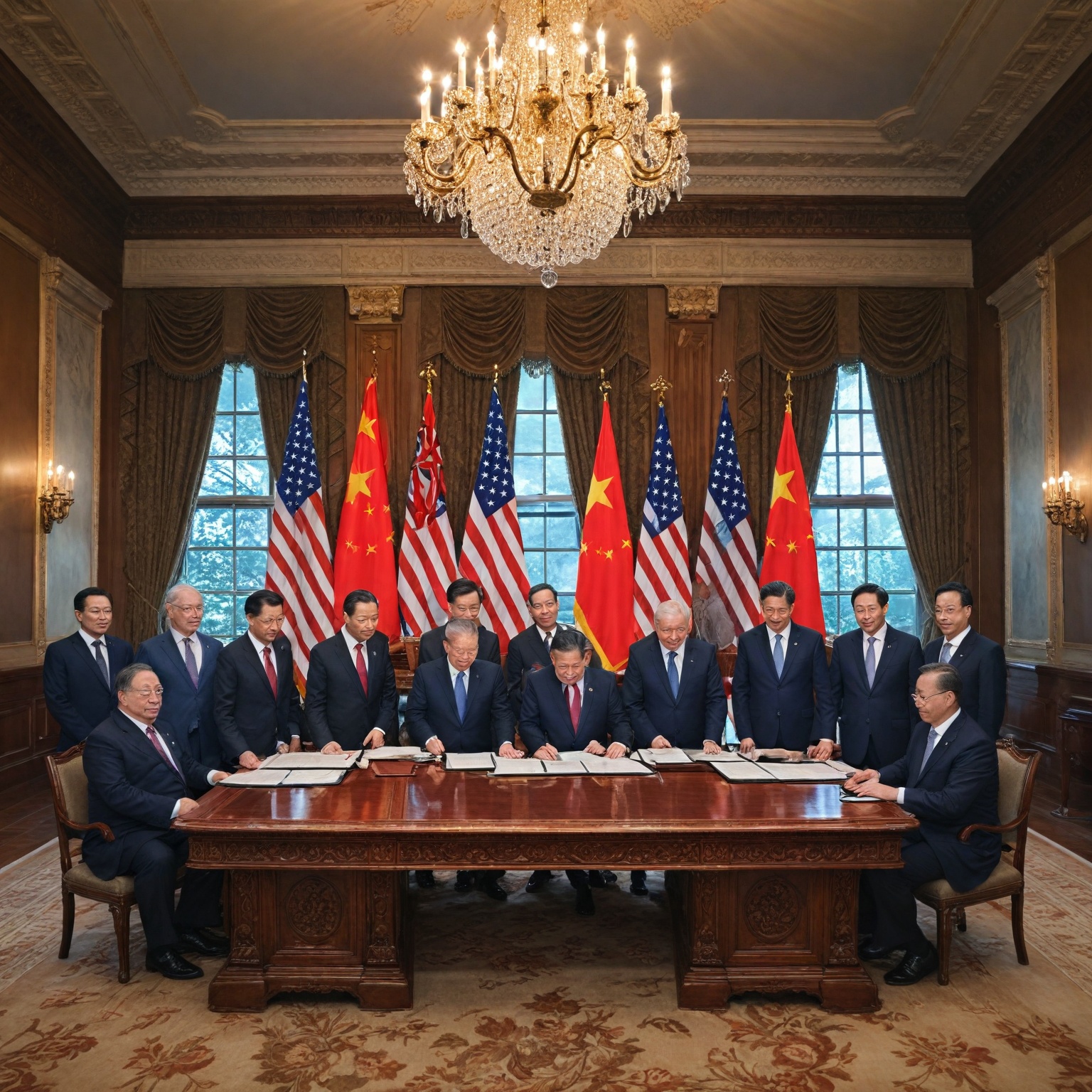
The trade deal between the United States and China, formally known as the “Economic and Trade Agreement between the United States of America and the People’s Republic of China,” marked a pivotal moment in one of the world’s most consequential bilateral economic relationships. Signed in February 2020 after protracted negotiations amid a damaging trade war, the agreement sought to address longstanding disputes over tariffs, intellectual property rights, technology transfer, and market access. It was widely regarded as an attempt to de-escalate tensions, stabilize supply chains, and establish mechanisms for ongoing dialogue on trade and economic issues.
From the Chinese perspective, the deal represented a diplomatic victory that allowed Beijing to roll back some of the steep tariffs imposed by the Trump administration while emphasizing China’s commitment to responsible global trade and mutual respect. Chinese officials highlighted the agreement as a foundation for future cooperation, balancing market-opening commitments with protections for domestic interests amid concerns about social and economic challenges. Meanwhile, U.S. officials framed the deal as a pragmatic step toward resolving core national security concerns and reducing the sizable trade deficit with China, although many tariffs remained in place, reflecting ongoing tensions and compromises.
Despite the positive rhetoric surrounding the agreement, experts and analysts have expressed skepticism about its long-term impact. Some studies suggest that U.S. tariff increases may paradoxically lead to increased Chinese exports over time, while critiques note that the deal exposed deeper geopolitical and economic complexities, including limitations on China’s ambitions for global power and the persistent challenges in achieving comprehensive trade reform. Furthermore, ongoing regulatory restrictions on Chinese firms and unresolved disputes within international bodies like the World Trade Organization have continued to complicate the bilateral relationship.
Looking ahead, the trade deal established a bilateral consultation mechanism aimed at maintaining high-level dialogue, reflecting mutual recognition of economic interdependence despite persistent conflicts. While the agreement tempered immediate trade hostilities, both sides face significant challenges in implementing commitments and managing broader geopolitical tensions, leaving the future of U.S.-China trade relations cautiously optimistic but uncertain.
Background
The economic relationship between the United States and China is one of the most significant and complex bilateral ties globally, marked by decades of both cooperation and tension since 1949. Over recent decades, trade between the two nations has expanded substantially, with China becoming one of the largest export markets for U.S. goods and services—second only to Mexico—while the United States remains China’s top export destination. Despite this interdependence, the relationship has been frequently strained by disputes over trade practices, intellectual property rights, and market access.
During the administration of President Donald Trump, tensions escalated into a full-scale trade war initiated by the imposition of tariffs aimed at reducing the U.S. trade deficit with China and encouraging the repatriation of manufacturing jobs to the United States. The administration alleged unfair trade practices by China, including forced technology transfer and intellectual property theft. In response, China retaliated with its own tariffs on American goods and implemented export controls on critical minerals vital to global manufacturing sectors such as automobiles, semiconductors, and military equipment.
The trade conflict led to extensive negotiations culminating in the “Economic and Trade Agreement between the United States of America and the People’s Republic of China,” known as the Phase One deal, which took effect in February 2020. This agreement addressed key issues like intellectual property rights, technology transfer, agricultural purchases, financial services, and transparency measures, while establishing bilateral evaluation and dispute resolution mechanisms. Despite the agreement, many of the initial promises—such as substantial increases in Chinese purchases of U.S. goods—were not fully realized.
Throughout the trade war, U.S. policy also included placing Chinese firms on export restriction lists citing national security and human rights concerns, further complicating economic relations. Meanwhile, international bodies like the World Trade Organization (WTO) found some U.S. tariffs inconsistent with global trade rules, although subsequent U.S. administrations have maintained many of these duties. Analysts have noted that while tariffs may initially disrupt trade, over the mid- to long-term, exports from China to the U.S. could increase due to shifting global supply chains.
Overview of the Trade Deal
The trade negotiations between the United States and China culminated in an agreement that both sides portrayed as a significant step toward de-escalating tensions and fostering more balanced trade relations. U.S. Treasury Secretary Scott Bessent described the talks as “candid, in-depth and constructive,” emphasizing that neither side desired a decoupling but sought to promote trade through cooperation. A key outcome of the discussions was the establishment of a “consultation mechanism” aimed at maintaining ongoing dialogue on economic and trade issues, with representatives from both countries committed to continuing consultations.
The resulting “Economic and Trade Agreement between the United States of America and the People’s Republic of China,” which took effect on February 14, 2020, focused on multiple sectors including intellectual property rights, technology transfer, agricultural products, financial services, exchange rate transparency, and expanded trade. China committed to purchasing up to $50 billion in American farm products and to opening its financial services market to U.S. companies, while the U.S. agreed to suspend certain planned tariff increases and roll back some of the previously imposed tariffs.
Despite these developments, some tariffs remained in place, with the agreement stipulating that both countries would reduce tariffs by about 15% but retain an additional 10% tariff on certain goods, reflecting a compromise aimed at addressing U.S. concerns over unfair trade practices and the trade deficit with China. In return, China pledged to roll back most of its countertariffs, signaling a mutual effort to ease the trade conflict.
The deal was framed by U.S. officials as addressing national security concerns linked to China’s trade practices, while Beijing portrayed the agreement as a victory, emphasizing China’s role as a responsible major power resisting hegemonic pressures. Social media response in China was notably positive, with widespread discussion of the suspension and reduction of tariffs. Nevertheless, experts have noted that the long-term impact of tariff adjustments might be complex, with some analyses suggesting that U.S. tariff hikes could eventually lead to increased Chinese exports.
China’s Perspective on the Trade Deal
China framed the trade agreement with the United States as a significant victory and a demonstration of its role as a responsible global trading partner. After intense negotiations lasting two days, China secured the rollback of the Trump administration’s steep tariffs, including the temporary removal of 145% levies that had nearly halted bilateral trade. This outcome allowed Beijing to present itself as committed to cooperation and mutual respect, despite previous tensions and frustrations expressed by the international business community regarding China’s negotiating tactics.
Chinese officials emphasized that the agreement marked a new chapter in U.S.-China economic relations, underscoring principles of equality and accommodation of each other’s core concerns. They viewed the deal not only as a resolution to immediate trade frictions but also as a foundation for future growth in bilateral trade and economic ties. This sentiment was reinforced by Chinese remarks citing proverbs to highlight the significance of the agreement’s beginning as a step toward longer-term success.
While the trade deal involved China suspending retaliatory tariffs imposed earlier in 2025, the Chinese government retained a 10% tariff during the temporary pause period, signaling a careful balance between concession and protection of domestic interests. Additionally, China communicated that the trade war was initiated by the United States, positioning itself as standing against hegemony and defending both national and international interests.
Beyond the immediate tariff relief, China recognized the strategic dilemma posed by the agreement’s market-opening commitments. Although the deal requires China to open its vast market to U.S. products and services in unprecedented ways, Chinese leaders were aware that increased competition could trigger social and economic challenges, such as temporary unemployment and demands for greater freedoms. Nevertheless, Beijing acknowledged that without opening its markets to global competition, China’s economic modernization and attraction of foreign investment would be hindered.
Impact on US–China Relations
The signing of the U.S.-China Relations Act of 2000 marked a significant milestone in bilateral relations by granting China permanent normal trade relations with the United States and facilitating its accession to the World Trade Organization in 2001. This development catalyzed a dramatic increase in trade between the two nations, with trade volume expanding from $5 billion in 1980 to $231 billion by 2004. Over the decades, the relationship between the United States and China has been marked by alternating periods of cooperation and tension, addressing complex issues such as trade, climate change, and Taiwan.
Following recent trade tensions and tariff escalations under the Trump administration, the two sides expressed a shared interest in pursuing balanced trade and enhancing economic cooperation. The “Economic and Trade Agreement between the United States of America and the People’s Republic of China,” which took effect on February 14, 2020, focused on multiple critical areas including intellectual property rights, technology transfer, agricultural products, financial services, and exchange rate transparency. It also established mechanisms for ongoing bilateral evaluation and dispute resolution. Despite these efforts, the continuation of tariffs—such as the base 10% tariff alongside the additional 20% imposed earlier—reflected the persistent challenges in the relationship.
Chinese officials emphasized the importance of fair treatment for Chinese companies and supported collaborative ventures between enterprises, research institutes, and educational institutions as means to foster mutual trust and strengthen cooperation. However, the transition from dialogue to implementation required earnest efforts from both sides to maintain the healthy and steady growth of their relations.
The trade dispute also revealed deeper geopolitical undercurrents. While some economists projected that U.S. tariff hikes might, paradoxically, lead to increased Chinese exports to the U.S. in the medium to long term, scholars like Minxin Pei argued that the ongoing trade tensions exposed limitations in China’s ambition to reassert itself as a global power. Additionally, China’s diplomatic efforts to avoid a full-scale trade war—through establishing high-level communication channels—contrasted with the hardening stance from the U.S. side during this period.
Looking forward, both countries committed to establishing a high-level mechanism for continuing discussions on economic and trade relations, with Chinese Vice Premier He Lifeng named as the key representative in these talks. This commitment reflects a recognition of the importance of sustained dialogue in managing one of the world’s most vital and complex bilateral relationships.
In the broader context, goods from China remain deeply embedded in the daily lives of Americans, spanning numerous categories such as footwear, clothing, appliances, microchips, and more, underscoring the economic interdependence between the two countries. U.S. officials also highlighted areas of cooperation beyond trade, including combating fentanyl smuggling, indicating that despite tensions, pragmatic collaboration continues in areas of mutual concern.
International Reactions and Context
The U.S.-China trade deal announced in Geneva sparked varied international reactions and was seen within a broader context of ongoing economic tensions. Beijing portrayed the agreement as a significant diplomatic victory and an opportunity to reaffirm its position as a responsible global trading partner. Chinese officials emphasized the candid and constructive nature of the negotiations, with Vice Premier He describing the atmosphere as “candid, in-depth, and constructive” and highlighting the achievement of “substantial progress and reached important consensus” between the two largest economies in the world. China also viewed the deal as a platform to counter criticism of its negotiating tactics, which have frequently frustrated international businesses and trade partners.
From the U.S. perspective, the White House characterized the agreement as a “deal we struck with our Chinese partners” aimed at reducing the $1.2 trillion trade deficit and stabilizing supply chains disrupted by the trade war. U.S. officials, including Ambassador Greer and Secretary Bessent, stressed the respectful nature of the negotiations and underscored priorities such as curbing fentanyl precursors from China. However, the deal maintained certain tariffs, including a 10% base tariff on all imports in addition to the existing 20% tariff imposed earlier to address concerns over fentanyl-related chemicals.
Despite the positive rhetoric from negotiators, several experts warned about the broader economic implications of tariffs, noting that they tend to reduce overall trade and adversely affect U.S. consumers. Analysts from the Carnegie Endowment for International Peace highlighted the deep interdependence of the U.S. and Chinese economies, suggesting that any efforts toward economic decoupling would face significant limits in the coming decade. They argued that both countries have a vested interest in preserving much of their economic relationship. Further complicating the context, China filed a complaint with the World Trade Organization (WTO) in early 2025, accusing the United States of violating the most favored nation clause by failing to provide equal regulatory treatment to all WTO members.
Meanwhile, political tensions surrounding trade continued within the U.S. In November, White House National Trade Council director Peter Navarro accused a group of Wall Street billionaires of undermining the U.S. negotiating position by favoring China, while President Trump signed the revised U.S.–Mexico–Canada Agreement to bolster trade relations elsewhere. Additionally, the WTO ruled in December that the Trump administration’s tariffs on steel and aluminum violated global trade rules, though the Biden administration disputed this ruling and chose to maintain the duties.
The establishment of a bilateral consultation mechanism to continue addressing economic and trade issues was seen as a key outcome of the Geneva deal, signaling ongoing dialogue despite underlying tensions. This mechanism reflects both countries’ acknowledgment of the complex and interwoven nature of their economic relationship and their shared interest in managing it through structured negotiations.
Analysis and Commentary
The trade deal between the United States and China has sparked a range of analyses and commentaries reflecting divergent perspectives on its significance and implications. From the U.S. side, officials expressed cautious optimism, emphasizing the swift negotiation process as indicative of less profound differences than initially perceived. Jamieson Greer, the U.S. trade representative involved in the talks, highlighted the agreement as a step toward resolving national security concerns linked to China’s trade practices, suggesting a practical, if tentative, resolution to some of the Trump administration’s core issues.
Conversely, Chinese responses conveyed a more measured and strategic tone. While official Chinese announcements acknowledged reaching a shared understanding with the U.S., they stopped short of enthusiastic endorsement. Instead, Chinese officials called for continued fair treatment of Chinese companies and emphasized the importance of cooperation in trade, investment, and academic exchanges to strengthen mutual trust. The cautious stance reflected underlying uncertainties about the long-term effects of the agreement, especially amid domestic challenges such as China’s slowest GDP growth in nearly 30 years and recent policies to phase out foreign technology in government agencies.
Economic experts have offered varied interpretations of the deal’s potential impact. Economists Knut Blind and Moritz Böhmecke-Schwafert analyzed trade data and posited that, contrary to expectations, U.S. tariff increases might ultimately lead to an increase in Chinese exports to the U.S. over the medium and long term. Meanwhile, political analyst Minxin Pei critiqued the trade dispute as exposing the limitations of Xi Jinping’s ambition for China’s global resurgence, suggesting the ongoing tensions undermine Beijing’s narrative of an inevitable rise.
The broader geopolitical context also shaped the discourse. China’s outreach to other countries, urging a multipolar response to U.S. trade policies and encouraging solidarity against American pressure, illustrated Beijing’s strategy to counterbalance U.S. influence internationally. This diplomatic maneuvering coincided with signs of disruption within U.S.-China trade flows, as illustrated by declining shipping volumes and cautious industry reactions, such as Maersk’s support for temporary tariff reprieves aimed at stabilizing market predictability.
Future Outlook
Experts suggest that while tariffs have negatively impacted overall trade and harmed U.S. consumers, the economic interdependence between China and the United States is likely to limit any full decoupling in the near future. Both nations have a shared interest in maintaining much of their economic relationship despite ongoing tensions. Although recent discussions hint at progress toward a trade deal, a comprehensive solution remains elusive given the complexity and breadth of traded goods and services.
The U.S. continues to negotiate with China for increased purchases of American goods, reminiscent of previous trade agreements, although past commitments have not always translated into actual transactions[5
The content is provided by Harper Eastwood, Know Heaven