
Summary
India’s recent pivot toward Russia for the development of a fertilizer manufacturing plant reflects a strategic response to growing vulnerabilities in the global fertilizer supply chain. Historically, India and Russia have maintained a robust bilateral relationship, encompassing economic, defense, and energy cooperation, which now extends to securing critical agricultural inputs. This shift is driven largely by India’s heavy dependence on imported raw materials like ammonia and natural gas, and by disruptions stemming from China’s stringent export controls imposed in mid-2024, which curtailed its urea exports by 83 percent year-on-year and destabilized global fertilizer markets.
China’s export restrictions have exposed the risks of overreliance on a single supplier for fertilizers, compelling India to diversify its sources to protect agricultural productivity and food security. The planned fertilizer plant in Russia aims to leverage Russia’s abundant natural gas and ammonia resources to produce essential fertilizers such as diammonium phosphate (DAP) and urea for the Indian market. Despite logistical and financial challenges—including transportation hurdles from northern Russian production sites and high capital investment requirements—India is exploring joint ventures involving state-run companies to mitigate risks and enhance supply chain resilience.
This initiative also unfolds amid complex geopolitical dynamics, including Western sanctions on Russia following the Ukraine conflict, which paradoxically present India with opportunities to secure fertilizers and energy resources at competitive prices. The move has attracted criticism from some quarters, highlighting concerns over geopolitical alignments and the operational difficulties of large-scale cross-border fertilizer projects. Nevertheless, the partnership underscores India’s broader strategic objective of achieving greater fertilizer self-reliance and safeguarding its agricultural sector from future global market shocks.
Informed by lessons from China’s export curbs, India’s engagement with Russia signifies an effort to establish more stable, diversified fertilizer supply chains while advancing sustainable agriculture goals. The evolving Indo-Russian cooperation is poised to influence global fertilizer trade patterns and may serve as a model for other import-dependent countries navigating similar challenges in an increasingly volatile international market.
Background
India has historically maintained a close and multifaceted relationship with Russia, rooted in decades of diplomatic, economic, and military cooperation. Since establishing bilateral relations in 1991, India and Russia have nurtured a “strategic partnership” that builds upon their Cold War-era ties when the Soviet Union was a critical ally in supporting India’s economic self-sufficiency, heavy industry, and defense capabilities. This enduring partnership has been reinforced through collaborations in sectors such as aerospace, commercial nuclear energy, defense manufacturing, and large-scale infrastructure projects like the Delhi-Mumbai Industrial Corridor (DMIC), a $100 billion initiative aimed at connecting key urban and industrial centers via railways, highways, and ports.
In recent years, India’s fertilizer sector has become increasingly reliant on imports for key raw materials such as potassium, nitrogen, and phosphates, despite domestic production meeting most urea requirements. This dependence exposes the sector to global market volatility, geopolitical tensions, and disruptions in international supply chains, which can lead to fluctuating prices and shortages that adversely affect agricultural productivity and food security. To mitigate these risks, India has turned toward Russia as a strategic partner for fertilizer supply and manufacturing cooperation. However, logistical challenges persist, as many Russian fertilizer production sites are located in northern regions far from Indian ports, complicating transportation and supply chain efficiency.
The global fertilizer market itself has been destabilized by recent policy shifts, notably from China, the world’s largest fertilizer producer and consumer. In mid-2024, China imposed stringent export restrictions on fertilizers, reducing urea exports by 83 percent year-on-year to stabilize domestic supply, control food inflation, and meet environmental targets related to emissions and energy consumption. These export controls have significantly disrupted global fertilizer availability, prompting import-dependent countries like India to seek alternative sources and safeguard their agricultural inputs. India’s growing demand for advanced fertilizer products such as water-soluble variants, micronutrients, nano-fertilizers, and biostimulants further underscores the need for diversified and secure supply chains.
Amid these dynamics, India’s focus on enhancing soil nutrient balance and sustainable agriculture—evidenced by improvements in the nitrogen-phosphorus-potassium-sulfur (NPKS) fertilizer ratios in recent crop seasons—highlights the critical importance of reliable fertilizer access. The geopolitical landscape, coupled with trade challenges such as Western sanctions on Russia and related payment mechanism constraints, adds complexity to this scenario but also solidifies the rationale for deeper Indo-Russian cooperation in fertilizer production and supply.
Against this backdrop, India’s pursuit of establishing fertilizer manufacturing projects in Russia emerges as a strategic response to global market uncertainties, leveraging the historic bilateral relationship and aiming to protect its agricultural sector from future supply shocks.
Factors Driving India’s Shift Toward Russia
India’s move to invest in a fertilizer plant project in Russia is driven by a confluence of geopolitical, economic, and supply chain considerations that aim to enhance its energy and food security while mitigating vulnerabilities exposed by recent global disruptions. A primary factor is the sharp reduction in China’s fertilizer exports following stringent government-imposed export controls introduced in June 2024. These controls curtailed urea exports by 83 percent compared to the previous year, a move designed to stabilize domestic prices and safeguard food security within China but which significantly disrupted global fertilizer supplies. This disruption has prompted India, along with other countries such as South Korea, to actively seek alternative fertilizer suppliers to secure its agricultural input needs.
India’s dependency on imports of raw materials like ammonia and natural gas for its domestic fertilizer production adds urgency to diversifying supply sources. Negotiations surrounding land allocation, natural gas pricing, ammonia supply, and transportation logistics are ongoing to establish a robust fertilizer production base in Russia that can shield India from future price shocks and supply interruptions. The collaboration aligns with broader Indo-Russian economic ties, which encompass energy, defense, and agribusiness sectors and benefit from longstanding strategic partnerships and bilateral cooperation frameworks.
Another critical driver is the vulnerability of India’s specialty fertilizer segment, which includes advanced products such as water-soluble fertilizers, micronutrients, nano-fertilizers, and biostimulants. These fertilizers, mostly non-subsidized and imported in quantities of approximately 150,000–160,000 tonnes between June and December annually, are essential for improving soil health and crop productivity, especially for high-value crops like fruits and vegetables. This reliance on global markets makes India susceptible to price volatility and supply uncertainties arising from geopolitical tensions, export restrictions, and disruptions in shipping routes. The establishment of a domestic fertilizer plant in Russia is expected to stabilize access to these critical inputs.
Moreover, the global geopolitical landscape, including Western sanctions on Russia due to the Ukraine conflict, has paradoxically opened opportunities for India to procure cheaper fertilizers and energy resources from Russia, thus bolstering its energy and food security priorities despite international pressures. The initiative also reflects India’s strategic intent to balance its relations between major powers while ensuring uninterrupted supply chains for critical agricultural inputs.
Finally, investment challenges related to fertilizer production in Russia, such as high project valuations and logistical hurdles in transporting materials from northern Russian regions, necessitate innovative financial and operational arrangements. India is considering forming consortia of state-run companies to collectively share risks and partner with Russian counterparts, thereby enhancing feasibility and scalability of the project. This approach underscores India’s pragmatic response to global supply chain uncertainties, the imperative of sustainable agriculture, and the need for resilience against future shocks in fertilizer availability and pricing.
In sum, India’s shift toward Russia for fertilizer plant development is shaped by the interplay of China’s export restrictions, geopolitical dynamics, economic imperatives, and a strategic vision to safeguard its agricultural productivity and food security in an increasingly unstable global market environment.
The Fertilizer Plant Project
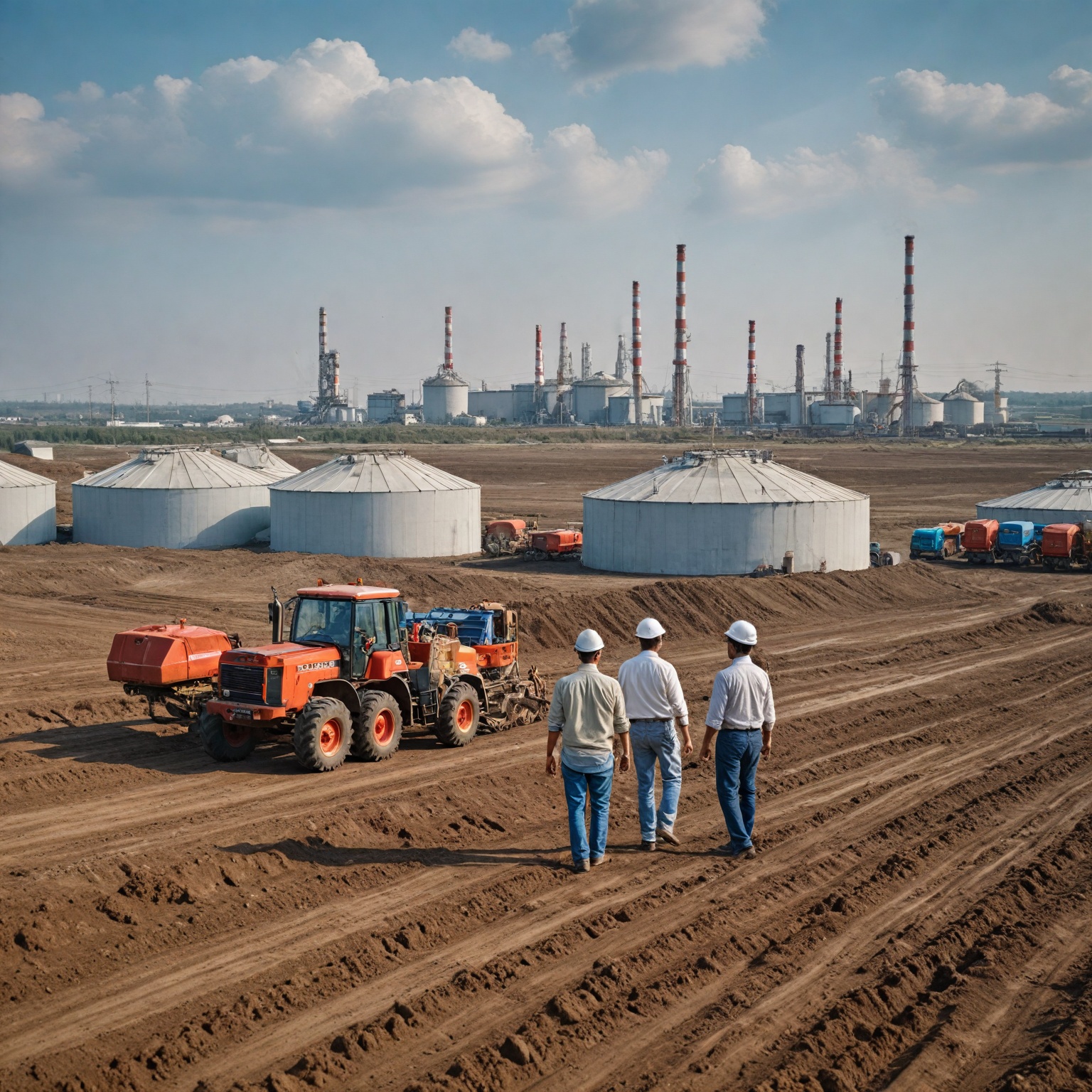
India is actively pursuing the establishment of a fertilizer manufacturing facility in Russia as a strategic measure to safeguard its agricultural input supply chain from future price shocks and geopolitical disruptions. This initiative comes amid India’s heavy dependence on imports of raw materials such as ammonia and natural gas, which are critical for domestic fertilizer production. Despite record domestic urea production of 31.4 million tonnes in FY24, India remains the second-largest consumer and third-largest producer of fertilizers globally, with significant reliance on imported inputs.
The project aims to leverage Russia’s abundant reserves of natural gas and ammonia to ensure a stable and affordable supply of key raw materials. Indian fertilizer companies are preparing to announce plans for this facility during Russian President Vladimir Putin’s visit to India, signaling a deepening of economic and strategic ties between the two nations, which already collaborate extensively in energy, defense, and agribusiness sectors.
However, the project faces notable challenges, especially concerning logistics. The fertilizer blocks offered by Russian companies such as Acron are located in northern Russia, complicating transportation to India. Additionally, the current low prices of di-ammonium phosphate (DAP) combined with high capital investment requirements pose financial hurdles for Indian companies. To mitigate these risks, Indian firms are considering forming a consortium of primarily state-run companies to jointly invest and operate the plant alongside Russian counterparts.
The Indian government’s support will be crucial to advance the project, as state-run fertilizer firms may require assistance to commit to large-scale investments. One proposed solution involves processing raw materials within Russia to produce finished products like DAP, which can then be shipped to India, thereby easing logistical difficulties. Negotiations between Indian and Russian stakeholders continue to outline the broad framework and specific modalities of the project, with announcements expected as bilateral cooperation deepens.
This move also reflects lessons learned from China’s recent export restrictions on fertilizers, which highlighted the vulnerability of relying on volatile international markets. By securing production capacity within Russia, India aims to protect itself from similar supply shocks and ensure fertilizer availability at reasonable costs, thus stabilizing agricultural productivity and food security.
Lessons from China’s Export Controls
China’s recent tightening of fertilizer export controls has had profound impacts on global fertilizer markets, revealing critical lessons for import-reliant countries such as India. As the world’s largest fertilizer producer and consumer, China’s policies directly influence global supply chains, pricing, and trade dynamics, especially for key fertilizers like urea, phosphate-based products (DAP, MAP), and NPK blends. In June 2024, China sharply curtailed urea exports by 83 percent compared to the previous year to stabilize domestic prices and ensure food security amid rising global costs. This move disrupted global supplies and intensified competition among countries dependent on Chinese fertilizer exports, notably India and South Korea.
One important lesson from China’s export restrictions is the vulnerability of countries heavily reliant on a single supplier. India, Bangladesh, Pakistan, and Southeast Asian countries such as Vietnam, Thailand, and Indonesia depend significantly on Chinese fertilizers, including DAP and urea. The reduction in exports has created supply shortages and price volatility, exposing the risks of dependency on one major exporter in a market already affected by geopolitical tensions and logistical disruptions. This scenario has pushed countries to seek alternative sources to secure fertilizer supplies and protect agricultural productivity.
China’s policy also illustrates the balancing act between domestic needs and global market influence. While export restrictions protect China’s internal supply and help contain food price inflation, they have a ripple effect on import-dependent regions, especially in Africa, South Asia, and Southeast Asia. The Chinese government’s prioritization of domestic supply security, price stabilization, and environmental goals has led to export curbs during periods of heightened local demand or market volatility, demonstrating how internal policy shifts can have widespread international consequences.
Furthermore, China’s approach highlights the importance of strategic diversification and investment beyond national borders. Alongside export restrictions, China has increased overseas investments in fertilizer production facilities in countries like India and Zambia, aiming to diversify supply sources and mitigate environmental impacts while ensuring long-term fertilizer availability. This strategic move underscores the need for countries dependent on imports to engage in international partnerships and build resilient supply chains.
The tightening of Chinese exports has also underscored the necessity for timely procurement and supply chain adaptation. Market experts have noted that even if China eases restrictions, limited inventory may delay meaningful exports, compelling importers like U.S. farmers and others to adjust seasonal purchasing strategies to secure supplies earlier than usual. This shift points to the broader implication that countries must develop flexible procurement policies and enhance domestic capabilities to buffer against external shocks.
In sum, China’s export controls have illuminated the global fertilizer market’s interconnectedness and fragility. They have underscored the critical need for importers to reduce overreliance on a single source, pursue diversified and strategic supply arrangements, and enhance domestic production and storage capabilities. India’s pivot toward Russia for long-term fertilizer supply agreements can be seen as a direct response to these lessons, reflecting efforts to hedge against geopolitical instability and secure more stable fertilizer access in a volatile global market.
Implications for Global Agriculture and Trade
The recent shifts in fertilizer export policies, particularly China’s drastic reduction of urea exports by 83 percent in June 2024, have significant repercussions for global agriculture and trade. China’s move, aimed at stabilizing domestic fertilizer prices and ensuring food security, has disrupted global supply chains and intensified the already strained fertilizer market. This disruption has compelled countries such as India and South Korea to seek alternative suppliers, thereby reshaping international trade dynamics in the fertilizer sector.
These export restrictions exacerbate challenges created by existing geopolitical tensions, including sanctions on Russia and Belarus, which had already limited fertilizer exports by nearly 15 percent until mid-2022. The compounded effect of these disruptions has increased dependency on global trade for fertilizer inputs, contributing to greater price volatility influenced by factors such as global demand, population growth, transportation costs, and currency fluctuations. This volatility affects the affordability and availability of fertilizers, particularly in poorer countries, thereby threatening food security and farmer incomes.
The vulnerability of agriculture to these global market fluctuations highlights the critical role of international governance bodies like the World Trade Organization (WTO) in overseeing trade policies that impact fertilizer affordability and accessibility. At the same time, countries heavily reliant on imports face setbacks when subsidies are withdrawn and global competition intensifies, especially in the absence of alternative technologies or indigenous agricultural methods.
In response to the disruptions caused by export restrictions and geopolitical tensions, there is a notable shift towards diversifying fertilizer production and supply sources. Regions such as Africa, West Asia, and Russia are expected to increase fertilizer output, contributing to greater resilience in global agricultural supply chains. Furthermore, strategic overseas investments by countries like China in fertilizer production facilities abroad—such as in India and Zambia—reflect attempts to secure supply chains while reducing environmental impacts.
Criticisms and Challenges
India’s growing engagement with Russia for fertilizer production has faced notable criticisms and logistical challenges. One significant point of contention stems from the perception of double standards by Western countries. Indian officials have condemned what they describe as the West’s doublespeak regarding doing business with Russia, highlighting that Europe continues to purchase crude oil and natural gas from Moscow despite imposing sanctions. This contradiction was brought into sharp relief during Indian Prime Minister Narendra Modi’s visit to Russia, where his warm embrace with President Vladimir Putin was criticized by Ukrainian President Volodymyr Zelenskyy, especially as it coincided with Russian missile strikes on a children’s hospital in Kyiv.
On the operational front, there are several practical obstacles to the development and success of fertilizer projects involving India and Russia. High valuations of new fertilizer projects combined with currently low prices for diammonium phosphate (DAP) create financial hurdles for investment. Indian officials have indicated that to mitigate risks, a consortium of mainly state-run companies might be formed to collaborate with Russian counterparts, but no fertilizer company is presently in a position to invest in large-scale ventures independently. Further, ongoing negotiations on critical issues such as land allocation, natural gas supply, ammonia pricing, and transportation logistics remain unresolved, adding complexity to project execution.
India’s domestic fertilizer sector also faces vulnerabilities linked to its heavy dependence on imports of raw materials like ammonia and natural gas, which exposes the industry to global market fluctuations. Geopolitical conflicts, including the Russia-Ukraine war, have disrupted fertilizer supplies and elevated costs, directly affecting farmers who may find it challenging to access affordable fertilizers. This in turn risks impacting agricultural productivity and income security for farmers. The recent acute fertilizer shortages during India’s kharif season, exacerbated by China’s temporary export
Future Outlook
India’s strategic engagement with Russia in the fertilizer sector is expected to intensify in the coming years, driven by geopolitical shifts and the need to secure stable supplies amid global market uncertainties. Ongoing government-to-government negotiations aim to establish long-term supply agreements, which will help India hedge against fluctuating prices and geopolitical instability affecting fertilizer availability. With China imposing fresh restrictions on fertilizer exports in 2024 to prioritize its domestic needs, India has increasingly turned to Russia as a reliable alternative supplier, particularly for potassium-, nitrogen-, and phosphate-based fertilizers that domestic production cannot fully meet.
The Indian government’s support to state-run fertilizer companies is anticipated to encourage significant investments in this sector, facilitating enhanced production capabilities and long-term partnerships with Russian entities. Additionally, Indian fertilizer firms are exploring investments in local manufacturing of specialty fertilizers, reflecting a shift towards more efficient and targeted products that align with evolving agricultural practices and sustainability goals. This shift is also complemented by India’s efforts to diversify its fertilizer sources and reduce dependence on single-country suppliers, a strategy mirrored globally as other regions such as Africa and West Asia ramp up production capacities in response to market disruptions.
Beyond securing imports, the collaboration between India and Russia extends to broader industrial and infrastructure projects, such as participation in India’s “Make in India” initiative and the Delhi-Mumbai Industrial Corridor (DMIC), which are expected to boost overall manufacturing and technological capabilities, including in the fertilizer and chemical sectors. These developments could foster greater integration and co-production opportunities, further strengthening bilateral ties and enhancing India’s fertilizer self-reliance.
While environmental sustainability remains a priority, the transition from highly chemical-based fertilizers to more sustainable practices, including organic manure and precision agriculture, will require careful balancing to protect farmers’ incomes and maintain output levels in the short run. The continued modernization of the fertilizer industry, supported by government initiatives and strategic international cooperation, positions India to better meet its agricultural demands while adapting to the evolving global supply landscape.
The content is provided by Jordan Fields, Know Heaven