
Summary
The India-United Kingdom Free Trade Agreement (FTA), announced on 6 May 2025, marks a significant milestone in the economic partnership between the two countries, aiming to deepen bilateral trade and investment flows while safeguarding domestic industries. As one of the most ambitious trade deals negotiated by the UK post-Brexit and the most comprehensive agreement India has ever entered, the FTA seeks to reduce tariffs on a wide range of goods, enhance market access, and establish robust provisions on services, digital trade, labor, and environmental standards. The agreement envisions phased tariff reductions over a decade, with up to 85% of tariff lines becoming eligible for tariff-free entry, benefitting key sectors such as advanced manufacturing, agri-food, and life sciences in both countries.
Negotiations for the FTA reflected a balance between trade liberalization and protective measures, incorporating a bilateral safeguard mechanism to address concerns over sudden import surges or unfair trade practices. The deal also includes a modern dispute settlement system, transparency provisions allowing stakeholder engagement, and a Double Contributions Convention (DCC) to facilitate workforce mobility between India and the UK. These features aim to foster a fair, enforceable trade environment while preserving regulatory autonomy, especially regarding environmental and labor policies.
While the FTA is projected to boost the UK’s GDP by approximately £4.8 billion and India’s by £5.1 billion annually by 2040, and to expand trade opportunities for small and medium-sized enterprises, it has attracted criticism. Concerns center on India’s historical protectionism, the complexity of rules of origin, potential sectoral job displacements, and doubts about the practical effectiveness of safeguard provisions. Environmental and regulatory flexibilities embedded in the agreement have also sparked debate over their possible use to justify protectionist measures.
Overall, the India-UK Free Trade Agreement represents a strategic effort to strengthen bilateral economic ties amid shifting global trade dynamics. It reflects both countries’ ambitions for sustainable growth, innovation, and cooperation in emerging sectors, while navigating complex challenges inherent in aligning diverse economic and regulatory frameworks.
Background
The India-United Kingdom trade relationship has evolved significantly over time, transitioning from colonial trade dynamics to a more balanced and mutually beneficial partnership following India’s independence in 1947. Today, this relationship is characterized by mutual respect and shared economic objectives aimed at enhancing bilateral trade and cooperation.
In response to changing global trade environments and the imposition of tariffs by other major economies, such as the United States under the Trump administration, both India and the UK sought new strategies to strengthen their economic ties. This led to the negotiation and conclusion of a comprehensive Free Trade Agreement (FTA) aimed at boosting trade and investment flows between the two nations.
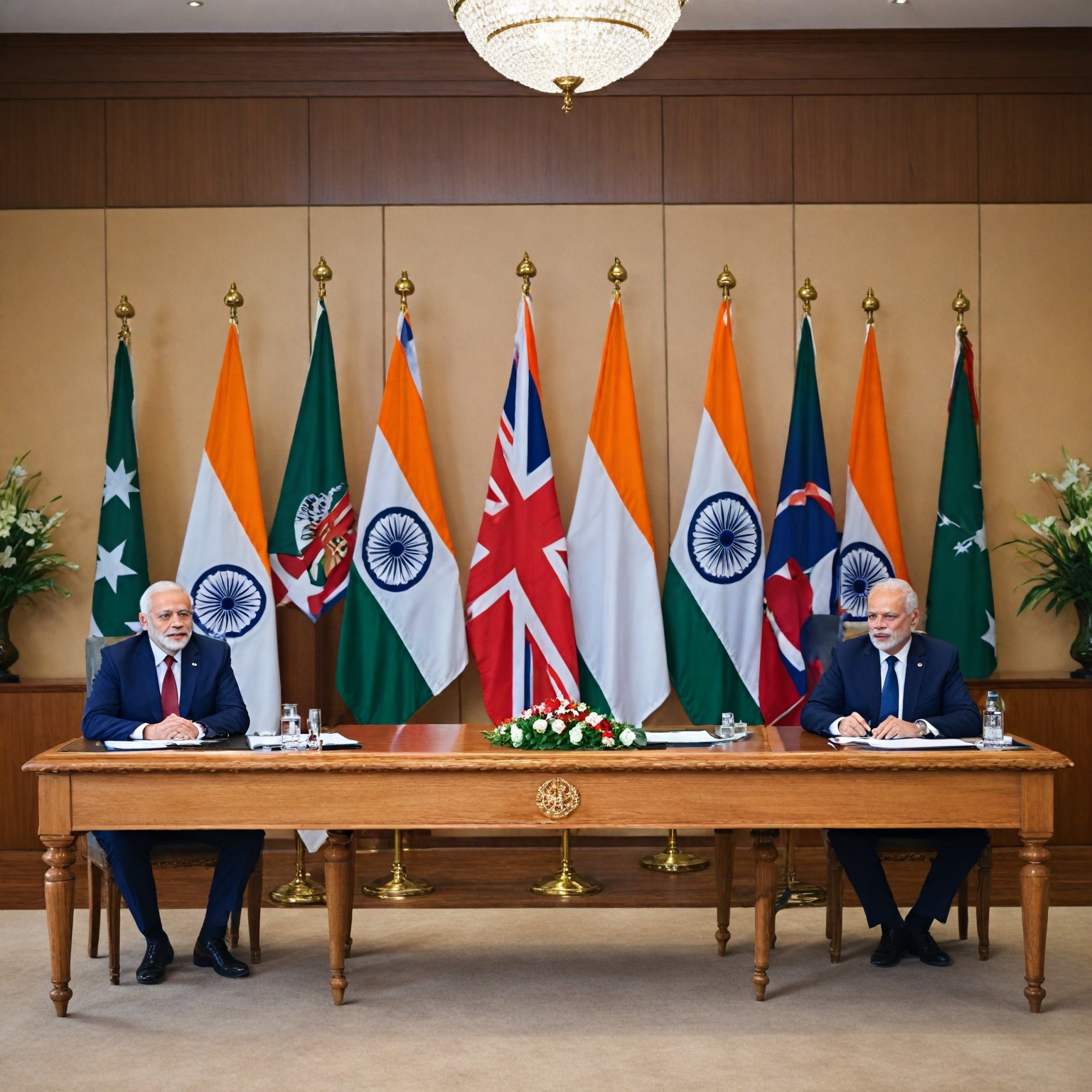
The FTA negotiations culminated in an agreement announced on 6 May 2025 between the Prime Minister of the United Kingdom and Prime Minister Narendra Modi of India. This agreement was finalized following talks in London between the UK’s Business and Trade Secretary and India’s Minister of Commerce and Industry. Alongside the trade deal, the two countries agreed to negotiate a Double Contributions Convention (DCC), designed to come into force concurrently with the FTA.
The trade deal itself is structured to lower India’s relatively high tariffs, enhance market access, and provide greater certainty to traders. By reducing tariff and non-tariff barriers, the FTA is expected to support a significant increase in bilateral trade in goods and services. This is expected to benefit key UK sectors, including advanced manufacturing and agri-food products, by providing tariff-free or reduced tariff access to the rapidly growing Indian market, particularly targeting India’s expanding middle-class population projected to reach 60 million by 2030.
The agreement envisages phased tariff reductions over a period of 10 years, beginning with 64% of tariff lines becoming eligible for tariff-free exports to India. By the end of this period, 85% of tariff lines and 66% of existing Indian imports from the UK are expected to be eligible for tariff-free entry. This structure aims to offer British businesses valuable competitive advantages and market certainty in India while protecting domestic industries.
Negotiation Process
Negotiations for the India–UK Free Trade Agreement (FTA) commenced in February and involved intensive efforts from negotiators on both sides to finalize what has been described as the biggest and most economically significant bilateral trade deal the UK has pursued since leaving the European Union, as well as the best deal India has ever agreed to. Throughout the discussions, negotiators worked around the clock to address complex trade issues, balancing ambition with political and economic constraints faced by both countries.
However, the talks experienced a temporary pause in mid-March, when it was announced that negotiations would be “put on ice” until the conclusion of India’s general election. This hiatus reflected the need to await the formation of a new government before resuming final discussions. Following the election, the Indian Ministry of Commerce and Industry prioritized completion of the India–UK FTA within its 100-day agenda, signaling renewed momentum for the deal.
Key elements of the agreement, including a robust dispute settlement mechanism, were negotiated to ensure enforceability of commitments under the treaty. This mechanism was designed to provide transparency by allowing businesses, non-governmental organizations, and other interested parties to engage in dispute proceedings, while also safeguarding confidential information. Additionally, the parties agreed to negotiate a Double Contributions Convention (DCC) to come into effect alongside the broader trade deal.
To address concerns over potential adverse impacts on domestic industries, the FTA incorporated a dedicated trade remedies chapter. This includes a bilateral safeguard mechanism aimed at protecting domestic sectors from sudden import surges or unfair trading practices, reflecting the pragmatic need to balance free trade ambitions with protective measures. The culmination of these negotiations was marked by the agreement reached on 6 May 2025 between the UK Prime Minister and Prime Minister Modi, following final talks held in London between the respective trade ministers.
Key Objectives and Goals
The India-UK Free Trade Agreement (FTA) is designed to reflect the ambitions set out in the UK government’s “Strategic Approach” document, emphasizing broad tariff liberalization, ambitious commitments on services and digital trade, and strong provisions on labor and environmental standards. A particular focus is placed on supporting small and medium-sized enterprises (SMEs) and fostering innovation across both economies.
A core objective of the agreement is to recognize the sovereign rights of both the UK and India to regulate in pursuit of ambitious climate and environmental goals, including the UK’s target of net zero emissions by 2050. The environment chapter of the FTA reaffirms mutual commitments to global environmental agreements such as the Paris Agreement and its 1.5°C temperature goal. It also commits both countries to facilitating and promoting trade in environmental goods and services, encouraging the transition to clean energy, and strengthening cooperation in emerging technologies with low global warming potential, sustainable forestry management, marine wild capture fisheries, and the development of a resource-efficient and circular economy.
The agreement incorporates commitments on issues that India has not previously included in its FTAs, such as gender equality, development, and regulations concerning State-Owned Enterprises (SOEs). It also introduces bilateral safeguard measures aimed at protecting domestic industries while enabling greater participation in global value chains. This balance is reflected in mechanisms like the Double Contribution Convention (DCC), which exempts Indian workers in the UK and UK workers in India from national insurance payments for up to three years, promoting mobility and cooperation in the workforce.
Services trade forms a significant component of the FTA, facilitating the movement of a diverse range of professionals, including independent practitioners such as yoga instructors, musicians, chefs, business visitors, investors, and intra-corporate transferees, along with their partners and dependents who are granted work rights. This element seeks to build upon the existing strong bilateral trade relationship, where sectors such as India’s IT services have considerable influence on the UK economy.
Main Provisions of the Agreement
The India-UK Free Trade Agreement (FTA) incorporates several key provisions designed to facilitate trade liberalisation while safeguarding domestic industries from potential adverse effects of increased imports. Central to the agreement are substantial tariff reductions, with India committing to reduce or eliminate tariffs on 90% of product lines for UK exports, 85% of which will become fully tariff-free within a decade. Notably, tariff cuts will benefit sectors such as automotive, beverages (including whisky and gin), life sciences, manufacturing, textiles, and agri-food.
To ensure balanced market access, the agreement includes carefully crafted rules of origin that require products to be wholly obtained or significantly transformed in either the UK or India to qualify for reduced tariffs. These provisions address concerns about the indirect entry of non-UK goods through third-country components. Furthermore, certain sensitive sectors are excluded from tariff reductions to protect domestic markets: the UK has excluded sugar, milled rice, pork, chicken, and eggs from its tariff cuts, while India has safeguarded sectors such as dairy, cereals, pulses, gold, jewellery, smartphones, and strategic products linked to its Make in India and production-linked incentive schemes.
A notable feature of the FTA is the inclusion of a bilateral safeguard mechanism. This allows either country to temporarily increase tariffs or suspend tariff concessions if a surge in imports resulting from tariff liberalisation causes or threatens to cause serious injury to domestic industries. Provisional safeguard measures can be enacted in critical or emergency situations to prevent irreparable harm, enforceable for up to 200 days based on preliminary findings, and must be followed by a comprehensive investigation. If a bilateral safeguard measure is applied for up to two years, no retaliation is permitted; however, extensions up to four years may allow the affected party to retaliate.
The agreement also contains robust trade remedies designed to protect against unfair trading practices, including dumping and subsidised imports, thereby offering a safety net to domestic producers. These provisions reinforce the commitment to fair competition and transparent regulatory practices, ensuring that competition laws are applied in a non-discriminatory manner by independent authorities in both countries.
In addition to goods, the FTA addresses services, digital trade, environment, labour, sanitary and phytosanitary measures, and small business provisions. It promotes good regulatory cooperation, transparency, and streamlined customs facilitation to reduce barriers and enhance trade efficiency. The agreement incorporates the General Exceptions of the WTO’s General Agreement on Tariffs and Trade (GATT) and General Agreement on Trade in Services (GATS), as well as a dedicated exception related to national security, preserving the policy space for both countries to regulate in the public interest.
Finally, a modern, state-to-state dispute settlement mechanism is included to ensure that commitments under the FTA are enforced fairly and transparently, with opportunities for engagement by businesses, NGOs, and other stakeholders while safeguarding confidential information. This mechanism aims to provide certainty for investors and traders, helping to sustain trade liberalisation and economic cooperation between India and the UK over the lifetime of the agreement.
Impact on Domestic Industries
The India-UK Free Trade Agreement (FTA) has a multifaceted impact on domestic industries in both countries, balancing increased market access with protections for sensitive sectors. Direct impacts of the FTA include lower tariffs that facilitate export growth and trade flow adjustments, thereby increasing output for businesses directly involved in exporting activities. Indirectly, these effects extend through sector interlinkages, as growth in one industry can stimulate activity in related domestic sectors along the supply chain. This interconnected dynamic promotes productivity gains and can create higher labor demand, leading to potential efficiency improvements at the firm level.
For India, the market remains highly protected, with a trade-weighted average tariff of 12% in 2023 and considerably higher tariffs on specific products such as textiles (379%), clothing (239%), and beverages and tobacco (150%). The FTA locks in tariff reductions on 90% of tariff lines, with 85% becoming fully tariff-free within a decade, benefiting sectors like British alcohol and automobiles. For example, tariffs on whisky and gin will be halved from 150% to 75% initially and further reduced to 40% by the tenth year of the deal. Additionally, duty-free entry into the UK market is secured for a wide range of Indian products, including minerals, chemicals, gems and jewellery, textiles, mechanical and electrical machinery, and processed foods.
However, the agreement ensures tariff protection for sensitive sectors critical to domestic interests. India has excluded products such as dairy, cereals, pulses, vegetables, gold, jewellery, lab-grown diamonds, critical energy fuels, marine vessels, smartphones, and polymers from tariff cuts. Some strategically important industries involved in government initiatives like Make in India and production-linked incentive schemes will receive phased concessions over five, seven, or ten years. These safeguards prevent irreparable harm to domestic industries by allowing provisional measures for up to 200 days during emergencies.
On the UK side, the FTA offers tariff-free access and reduced tariffs for advanced manufacturing goods such as aircraft parts and scientific instruments, alongside agri-food products including fresh and frozen salmon, cod, and lamb. Over ten years, 85% of tariff lines and 66% of Indian imports from the UK will be eligible for tariff-free entry, providing British businesses with competitive advantages and expanded access to India’s growing middle-class consumer base, projected to reach 60 million by 2030. The agreement also opens opportunities in emerging sectors like clean energy, life sciences, and creative industries through improved market access, reduced tariffs, and strengthened intellectual property protections.
Economic Implications
The India-UK Free Trade Agreement (FTA) is projected to generate significant economic benefits for both countries, while also including safeguards to protect domestic industries. The agreement is expected to increase the UK’s gross domestic product (GDP) by 0.13%, equivalent to £4.8 billion annually by 2040, and India’s GDP by 0.06%, or approximately £5.1 billion per year in the long run. These gains reflect enhanced export opportunities across multiple UK sectors, particularly in the manufacture of machinery and equipment, chemicals, rubber, and plastic products, which include items such as pumps, engines, cosmetics, and pharmaceuticals.
While there may be a small negative impact on some economies from higher import prices—estimated at less than £0.1 billion relative to a no-FTA baseline—this does not imply an overall economic decline. Mechanisms like the Developing Countries Trading Scheme (DCTS) are designed to maintain competitiveness for goods from countries such as Nepal by applying lower tariffs, thus mitigating adverse effects. Additionally, increased economic activity, especially in the industrial sector, may lead to a rise in UK greenhouse gas emissions relative to the baseline.
The FTA is anticipated to stimulate productivity gains and employment growth through several channels. Increased export demand can boost firm-level efficiency and create higher labor demand, leading to upward wage pressure in expanding sectors. However, structural shifts may also lead to job declines and wage pressures in sectors facing import competition or outsourcing. Real wages for UK workers are expected to increase by 0.19%, equivalent to £2.2 billion per year compared with 2024 levels absent the agreement.
Trade liberalization under the agreement includes significant tariff reductions and streamlined customs procedures, benefiting exporters and importers in key sectors such as automotive, beverages, life sciences, manufacturing, textiles, and agri-food. Service providers gain enhanced market access and regulatory certainty, while small and medium enterprises (SMEs) receive improved information access and support mechanisms. Investors are provided with greater legal certainty, transparency, and protections for cross-border investments.
Key tariff reductions apply to a broad range of products including British exports such as cosmetics, medical devices, aerospace parts, lamb, salmon, chocolate, and biscuits. India has committed to eliminating import duties on 99% of its exports to the UK under the deal, which Trade Minister Piyush Goyal described as a step toward India’s emergence as a global economic powerhouse while safeguarding core national interests.
To qualify for reduced tariffs, products must meet specific rules of origin, requiring goods to be wholly obtained or significantly transformed in either the UK or India. Robust compliance mechanisms are incorporated to ensure adherence to these rules. Moreover, the agreement’s Trade Remedies chapter provides a safety net for
Dispute Resolution and Compliance
The India-UK Free Trade Agreement incorporates a robust dispute settlement mechanism designed to ensure compliance with the agreement and to resolve trade disputes in a consistent, fair, and timely manner. This mechanism serves as a strong deterrent against violations and helps avoid costly disputes that could significantly impact key sectors of both economies.
The dispute settlement proceedings are structured to be suitably transparent, allowing participation from interested businesses, non-governmental organisations (NGOs), and other entities while safeguarding confidential information. This transparency aims to foster trust and cooperation among stakeholders throughout the dispute resolution process.
A dedicated Committee plays a central role in monitoring and reporting on the implementation and operation of the agreement. Its responsibilities include reviewing members’ notifications, assessing compliance with procedural provisions related to safeguard measures, assisting with consultations, and evaluating proposed retaliations.
Bilateral safeguard measures are a key feature of the agreement, allowing temporary protection for domestic industries facing serious injury from increased imports. Provisional measures can be implemented in critical or emergency situations to prevent irreparable harm, enforceable for up to 200 days based on preliminary findings, pending a comprehensive investigation. If a bilateral safeguard measure is imposed for only two years, neither party may retaliate; however, if extended to four years, both countries gain the right to retaliate under the agreement’s terms.
Compliance with World Trade Organization (WTO) Rules
The India-UK Free Trade Agreement (FTA) incorporates key provisions to ensure compliance with World Trade Organization (WTO) rules, particularly those outlined in the General Agreement on Tariffs and Trade (GATT) and the General Agreement on Trade in Services (GATS). The agreement embeds General Exceptions from these WTO frameworks, alongside a dedicated exception related to national security, thereby safeguarding the policy-making discretion of both countries in areas such as taxation, macroeconomic management, and public health, including specific exclusions applicable to the National Health Service.
A central feature of the FTA is the establishment of a ‘bilateral safeguard’ mechanism, which allows either country to temporarily increase tariffs or suspend tariff concessions if the liberalisation of tariffs leads to a surge in imports that causes or threatens serious injury to domestic industries. This mechanism is designed to be proportionate and transparent, providing a safety net against unfair trading practices such as dumping or subsidised imports. The bilateral safeguards can be applied provisionally for up to 200 days based on preliminary findings to prevent irreparable harm, with a comprehensive investigation to follow. If these measures are implemented for a period of two years, no retaliation is permitted; however, if extended up to four years, the affected country gains the right to retaliate.
Additionally, the agreement maintains both countries’ rights and obligations under the WTO to apply trade remedies, ensuring that these actions are taken in a non-discriminatory manner by independent authorities. This commitment supports a transparent regulatory environment and preserves domestic policy space to regulate in the public interest while sustaining healthy competition and fostering economic growth. The inclusion of robust rules of origin and compliance mechanisms further reinforces adherence to WTO standards throughout the FTA’s implementation.
Criticisms and Controversies
The UK-India Free Trade Agreement (FTA) has faced several criticisms and concerns from various stakeholders, particularly regarding India’s trade policies and the potential economic impacts on domestic industries. The House of Lords International Agreements Committee, in its July 2022 report, highlighted apprehensions about India’s historical protectionism and relatively limited experience with comprehensive free trade agreements. The committee cautioned that India’s “relatively thin FTAs” and differing regulatory approaches could complicate the implementation and effectiveness of the deal.
One major point of contention involves the rules of origin provisions, which allow UK exporters to incorporate components from third countries. This has raised concerns in India about the possibility of non-UK goods entering the Indian market indirectly through the UK. To address this, the agreement includes a dedicated trade remedies chapter featuring a bilateral safeguard mechanism intended to protect domestic industries on both sides from sudden import surges or unfair trading practices. Despite these safeguards, the differences in regulatory frameworks and economic structures have prompted debates on how well these measures will function in practice, reflecting the complex nature of balancing ambition with political and economic constraints.
Critics also point to the potential structural shifts in both economies caused by the FTA. While increased export opportunities can enhance productivity and labour demand in some sectors, others may experience negative effects such as job losses or wage pressures due to heightened import competition. These dynamics could lead to sectoral imbalances, with some industries benefiting while others face decline, thereby raising concerns about the broader social and economic implications of the agreement.
Moreover, the negotiation process and broader geopolitical context have introduced additional layers of controversy. Observers have noted the need for a balanced and reciprocal approach, especially considering India’s position as a historically protectionist economy and its ongoing trade discussions with other major partners like the United States and the European Union. Statements from Indian officials emphasize a partnership based on fairness and mutual benefit, yet some critics remain skeptical about the ability of the FTA to fully deliver on these principles given the differing trade philosophies involved.
Environmental and regulatory flexibilities embedded in the agreement have also sparked debate. While the FTA acknowledges the rights of both countries to regulate in pursuit of ambitious climate goals and incorporates general exceptions to protect domestic policy space, some stakeholders worry that these provisions could be used to justify protectionist measures or undermine commitments to global environmental standards.
Implementation and Monitoring
The implementation and monitoring of safeguard measures under the India-UK Free Trade Agreement are structured to ensure that domestic industries are adequately protected while maintaining compliance with international trade rules. A dedicated Committee plays a central role in overseeing the application of the Agreement. This Committee is responsible for monitoring and reporting to the Council for Trade in Goods on the implementation and operation of the Agreement. It reviews Members’ notifications, assesses compliance with procedural provisions concerning safeguard measures, assists with consultations, and examines proposed retaliations.
The safeguard provisions within the Agreement build on the framework established by the WTO Agreement on Safeguards (SG Agreement). This framework clarifies and reinforces the disciplines of GATT Article XIX, restores multilateral control over safeguard measures, and encourages structural adjustment in industries adversely affected by increased imports to enhance international market competition. The safeguard rules are divided into four main components: general provisions, rules for new safeguard measures (post-WTO Agreement entry into force), rules for pre-existing measures, and multilateral surveillance and institutional mechanisms.
Provisional safeguard measures are permitted in urgent or critical situations to prevent irreparable harm to domestic industries. These provisional measures can be applied for up to 200 days based on preliminary findings but must be followed by a comprehensive investigation to confirm the necessity of the measures. This approach ensures a balance between rapid response to threats and due process.
The Agreement also incorporates bilateral safeguard measures tailored specifically to the India-UK trade relationship, allowing flexibility beyond multilateral arrangements. Furthermore, the chapter on General Provisions and Exceptions protects the domestic policy space of both countries by including the General Exceptions from WTO’s GATT and GATS agreements, alongside a dedicated national security exception. These provisions allow India and the UK to implement measures serving legitimate public policy objectives that might otherwise conflict with the Agreement’s commitments.
To guarantee that the commitments are upheld, the Agreement includes a robust dispute settlement mechanism. This mechanism ensures that enforcement of safeguard measures and other obligations occurs transparently while safeguarding confidential information. It also provides opportunities for stakeholder engagement, including businesses and non-governmental organizations, ensuring accountability and responsiveness in the monitoring process.
Future Prospects
The India-UK Free Trade Agreement (FTA) is anticipated to significantly enhance bilateral trade, with projections estimating an increase of up to $34 billion annually by 2040. This expected growth underlines the strategic importance both nations place on deepening economic ties and reflects a shared commitment to mutual economic expansion and technological collaboration. The deal forms a crucial part of the UK’s broader Plan for Change and aligns with the Department for Business and Trade’s objective of fostering long-term sustainable, inclusive, and resilient economic growth through trade.
Looking ahead, the FTA represents a foundational step toward strengthening the Comprehensive Strategic Partnership between India and the UK, centering on economic growth, technological innovation, and addressing global challenges such as climate change. The agreement is also set to complement ongoing initiatives like the UK-India Technology Security Initiative, reinforcing collaboration in emerging sectors including defence, cyber security, and artificial intelligence.
While the deal is expected to yield substantial economic benefits, some analyses foresee minor negative impacts on certain sectors due to higher import prices from India, with GDP reductions projected to be less than £0.1 billion relative to a no-FTA baseline in 2040. Nevertheless, mechanisms such as the Developing Countries Trading Scheme (DCTS) aim to mitigate adverse effects by maintaining competitiveness for goods from other developing countries within the UK market. Additionally, indirect impacts from sector interlinkages may amplify benefits across domestic industries connected to increased exports.
The agreement’s implementation will require ratification processes by both countries after finalizing the legal text, with discussions on a complementary bilateral investment treaty still ongoing to further protect and promote cross-border investments. The broader international context—marked by countries adjusting their trade strategies following tariff impositions in other markets—positions the India-UK FTA as a timely and strategic initiative to secure economic opportunities for both nations.
The content is provided by Harper Eastwood, Know Heaven