
Summary
**Putin Declares 3-Day Ceasefire in May to Commemorate 80th Anniversary of WWII Triumph**
In May 2024, Russian President Vladimir Putin declared a three-day ceasefire to coincide with the 80th anniversary of Victory Day, commemorating the Soviet Union’s defeat of Nazi Germany in World War II. This annual holiday, celebrated on May 9, holds profound historical and national significance in Russia, serving as a symbol of sacrifice, patriotism, and resilience. The 2025 celebrations were planned to be particularly elaborate, with extensive military parades and public events designed to reinforce national unity and the Kremlin’s narrative of Russian strength.
The ceasefire, announced on May 7 and set to begin at midnight on May 8, was framed by the Kremlin as a humanitarian gesture intended to preserve the solemnity of the Victory Day commemorations. However, the truce was unilaterally declared by Russia without Ukraine’s consent, and hostilities persisted during the period, casting doubt on its effectiveness. Both sides accused each other of violations, and ongoing military actions—including drone strikes—undermined the ceasefire’s credibility.
International reactions to the ceasefire were mixed and largely skeptical. Western governments, including the European Union and the United States, viewed the declaration as a strategic and symbolic move by Russia rather than a genuine step toward peace. Ukrainian officials similarly expressed doubts, highlighting the absence of mutual agreement and the Kremlin’s conditions linking any truce to the lifting of sanctions and political concessions. Analysts suggest that the ceasefire served dual purposes: to bolster domestic propaganda tied to the historic Victory Day and to prevent Ukrainian military operations during the holiday, thereby safeguarding the Kremlin’s image.
The ceasefire’s limited impact and the failure to address critical issues such as sanctions, security guarantees, and prisoner exchanges underscored the broader challenges in resolving the ongoing conflict in Ukraine. The event exemplified how Victory Day continues to be a focal point of Russian national identity and geopolitical messaging, while also highlighting the fragile and contested nature of peace efforts amid continuing hostilities.
Background
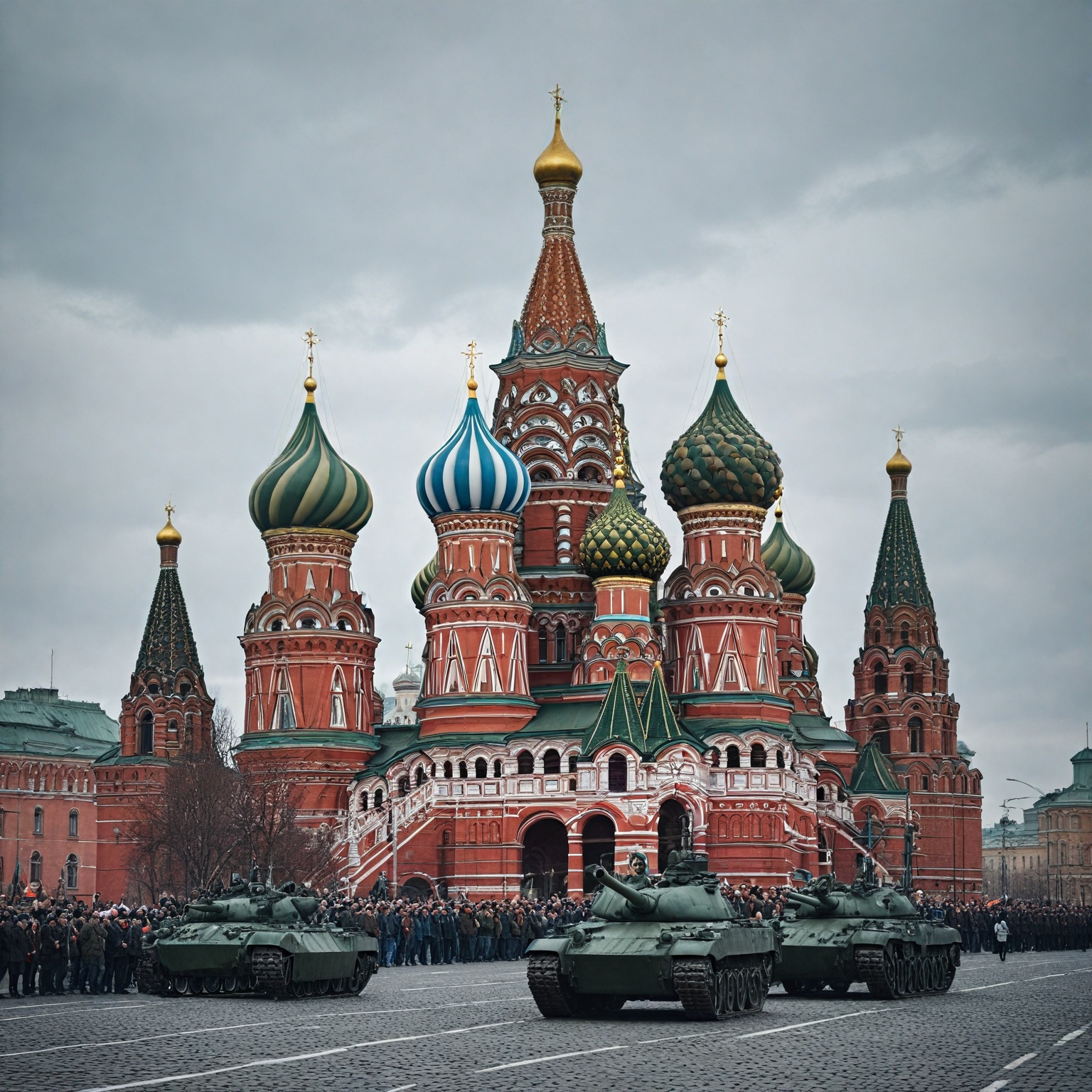
Victory Day on May 9 marks the anniversary of the Soviet Union’s defeat of Nazi Germany in World War II, a day of immense historical significance for Russia. The 2025 celebrations will commemorate the 80th anniversary of this victory, prompting Russia to plan extensive and elaborate events beyond the usual annual ceremonies. These plans include the participation of the Great Don, Kuban, and Terek Cossack voiskas in the parade on Red Square, alongside military-themed competitions and propaganda initiatives aimed at reinforcing a narrative of Russian resilience and patriotism.
The importance of Victory Day has been deeply ingrained in Russian society, with the annual commemoration established by the Bishops’ Council of the Russian Orthodox Church in 1994 to honor those who sacrificed their lives during the Great Patriotic War of 1941–1945. Patriarch Kirill of Moscow further endorsed this tradition in 2010 by encouraging prayer services in memory of the deliverance of the Russian people from their historic enemies. Large-scale public participation is a hallmark of the day, exemplified by the “Immortal Regiment” march where hundreds of thousands carry portraits of relatives who fought in the war, a practice endorsed and participated in by President Vladimir Putin himself.
In recent years, the Victory Day celebrations have taken on additional political significance. Western leaders largely boycotted the 2015 event due to Russia’s military intervention in Ukraine, viewing it as a demonstration of Russia’s aggressive posture. Meanwhile, the Kremlin has increasingly used the memory of the Second World War to legitimize its actions in Ukraine, framing the conflict as part of an existential struggle against a Western bloc it sees as hostile and expansionist, particularly in light of NATO’s post-Cold War enlargement. This narrative underpins Russia’s refusal to accept an unconditional ceasefire and its framing of the ongoing war as a defense of the fatherland and its historical legacy.
Efforts to secure a ceasefire, such as the United States’ proposed 30-day truce, have repeatedly stalled amid mutual accusations of violations by both Russia and Ukraine. Russian President Putin’s responses to ceasefire proposals have been cautious and conditional, emphasizing humanitarian concerns like prisoner exchanges and the release of detainees, but sidestepping broader issues such as sanctions or security guarantees for Ukraine. This complex backdrop sets the stage for Putin’s declaration of a three-day ceasefire in May 2025 to coincide with the Victory Day commemorations, blending historical remembrance with ongoing geopolitical realities.
Announcement of the Ceasefire
On May 7, 2024, the Kremlin announced a ceasefire to commence at midnight on May 8 (2100 GMT May 7) and last through the end of May 10. This three-day truce was declared by Russian President Vladimir Putin to mark the May 9 holiday, which commemorates the 80th anniversary of the victory over Nazi Germany in the Great Patriotic War. The ceasefire was ordered on “humanitarian grounds” to preserve the significance of the Victory Day celebrations.
Putin’s announcement came after a period of heightened diplomatic activity involving the United States and other international actors attempting to negotiate a pause in hostilities. The Kremlin emphasized its readiness for peace talks without preconditions, aimed at addressing the root causes of the Ukrainian crisis. However, the declaration did not reflect a bilateral agreement; Ukraine did not immediately respond, and there were reports of ongoing Russian attacks using Shahed drones, casting doubt on the ceasefire’s durability.
The ceasefire announcement was also viewed by some analysts as a strategic move by Putin to ensure that the Victory Day holiday would not be marred by active military operations. Ukrainian officials expressed skepticism, noting that the declaration lacked legal standing as a true ceasefire without mutual consent from both sides. Moreover, the announcement did not include specific measures related to sanctions on Russia, security guarantees for Ukraine, or the status of Ukrainian prisoners of war, which remain contentious issues in the broader peace process.
Implementation of the Ceasefire
The three-day ceasefire declared by Russian President Vladimir Putin was set to begin at 6 p.m., intended to commemorate the 80th anniversary of the Soviet Union’s and its allies’ victory in World War Two. Despite the official announcement, signs of continued hostilities quickly cast doubt on the ceasefire’s durability, as both sides engaged in military actions shortly before and during the ceasefire period.
Just prior to the ceasefire declaration, Ukraine and Russia exchanged long-range strikes. The Russian Defense Ministry reported having downed 119 Ukrainian drones overnight, predominantly over Russia’s Bryansk border region, while air raid sirens sounded across Ukraine on the morning the ceasefire was to commence. This mutual targeting indicated the fragile nature of the ceasefire’s implementation.
Throughout the ceasefire period, isolated incidents of shelling and clashes persisted, particularly in eastern Ukraine, where separatist forces backed by Russia reportedly shelled Ukrainian government positions, resulting in casualties among Ukrainian servicemen. Such violations underscored the tenuous hold of the truce despite official intentions.
In addition to the ceasefire itself, emphasis was placed on humanitarian measures, including the exchange of prisoners of war, the release of civilian detainees, and the return of forcibly transferred Ukrainian children during the ceasefire period. However, the ceasefire agreement did not address critical issues such as sanctions on Russia, security guarantees for Ukraine, or the status of Ukrainian soldiers detained in Russia, reflecting unresolved challenges in the broader peace process.
International Reactions
The announcement of a three-day ceasefire by Vladimir Putin to commemorate the 80th anniversary of the World War II victory was met with a complex mixture of skepticism, diplomatic caution, and political considerations from the international community. Many Western countries viewed the ceasefire with suspicion, interpreting it largely as a propaganda move by the Kremlin rather than a genuine step towards peace.
European Union officials explicitly warned against any participation in the May 9 Victory Day parades or celebrations in Moscow, emphasizing that engagement in these events would be scrutinized heavily due to Russia’s ongoing full-scale war in Ukraine. European ministers expressed concern that participation might be perceived as tacit approval or normalization of Russia’s military actions. This stance reflected the broader Western policy of isolating Russia diplomatically over its invasion of Ukraine.
Several analysts noted that Putin’s ceasefire declaration served dual purposes: on the one hand, it aimed to bolster domestic and international propaganda surrounding the significance of the 80th anniversary of the WWII victory, which is a central element of Russian national identity and legitimacy for the Kremlin. On the other hand, it appeared to be an attempt to prevent Ukrainian military operations coinciding with the commemorations, thereby ensuring that the celebrations would proceed without disruption or embarrassment for Russia.
The United States and Ukraine, while engaging in diplomatic dialogue regarding ceasefire proposals, remained cautious about the conditions attached to the Russian offer. The U.S. had initially proposed a 30-day ceasefire to facilitate humanitarian relief and negotiations, but Moscow’s insistence on lifting sanctions and other political demands led to stalled progress. U.S. officials continued to engage both parties in talks but underscored that any ceasefire must be unconditional and include verifiable commitments.
Ukraine itself responded to the ceasefire proposal with guarded openness, reaffirming its commitment to end attacks on civilian targets and willingness to discuss terms for a ceasefire, though it remained wary of Russian motives and conditionalities. Ukrainian President Volodymyr Zelenskyy stressed that any frozen conflict with Russia would ultimately reignite and that Ukraine would not succumb to pressure from its allies to accept a ceasefire that did not guarantee its security and sovereignty.
Motivations and Diplomatic Messages
Russian President Vladimir Putin’s declaration of a three-day ceasefire in May 2024 to commemorate the 80th anniversary of Victory Day, marking the defeat of Nazi Germany, was motivated by a combination of propagandistic and strategic considerations. Analysts suggest that the truce serves primarily as a propaganda tool, aimed at reinforcing the significance of Victory Day as a major national celebration in Russia, which has been heavily promoted since Putin’s rise to power as a symbol of national pride and resilience. The timing of the ceasefire aligns with efforts to prevent any Ukrainian military actions that might overshadow or disrupt the solemnity of the holiday, reflecting Kremlin concerns about preserving the narrative of an unblemished celebration.
From a diplomatic perspective, the ceasefire announcement was framed by the Kremlin as a humanitarian gesture, intended to temporarily halt hostilities in honor of the historic victory. However, this gesture was accompanied by significant caveats. The Kremlin explicitly conditioned any ceasefire in the Black Sea on the lifting of Western sanctions against Russian banks and financial institutions and their reconnection to the SWIFT international payments system, signaling an attempt to leverage the ceasefire for economic and political concessions. This move complicated negotiations, as the United States and Ukraine continued engagement to reach a detailed agreement on suspending attacks, but Russia introduced new conditions that underscored its strategic interests rather than purely humanitarian concerns.
Ukrainian officials have expressed skepticism about the ceasefire, noting that it does not constitute a legally binding truce due to the lack of bilateral agreement and perceiving it as a tactic to impose a one-sided pause in fighting that favors Russian interests. Ukrainian President Volodymyr Zelenskyy emphasized that any frozen conflict with Russia risks eventual reignition, and he stated that Ukraine does not feel pressured by allies to accept the ceasefire under the Kremlin’s terms. The broader diplomatic context reveals a complex interplay between symbolic commemoration, strategic military calculations, and ongoing geopolitical tensions surrounding the conflict in Ukraine.
Impact and Aftermath
The ceasefire declared by Putin to mark the 80th anniversary of the Second World War’s end had a limited and temporary impact on hostilities. Although the truce was officially set to begin at 6 p.m. and last for three days, through May 10, 2024, signs of continued fighting quickly cast doubt on the ceasefire’s durability. Both Ukraine and Russia accused each other of violating the pause, mirroring similar accusations during an earlier Easter ceasefire.
The Kremlin emphasized that the ceasefire aimed to facilitate humanitarian goals such as the exchange of prisoners of war, the release of civilian detainees, and the return of forcibly transferred Ukrainian children. However, the ceasefire agreement did not address critical political issues like sanctions on Russia, security guarantees for Ukraine, or the fate of Ukrainian soldiers held in Russia’s Kursk region. This omission contributed to skepticism about the ceasefire’s potential to lead to a lasting peace.
Efforts to negotiate a more comprehensive and unconditional 30-day ceasefire have also faltered. The United States initially proposed such a ceasefire, and ongoing diplomatic engagement has focused on suspending attacks on energy infrastructure and establishing a maritime ceasefire in the Black Sea. However, Russia attached conditions, including demands for lifting some sanctions, complicating progress. Ukrainian President Volodymyr Zelenskiy criticized Moscow’s approach, asserting that Russia imposed conditions to prevent any meaningful ceasefire from taking effect, reflecting the broader stalemate in peace negotiations.
Analysts have noted the complexity of resolving geopolitical security issues while simultaneously addressing immediate peace concerns such as ceasefires and humanitarian corridors. Some experts argue that attempts to solve all issues at once were overly ambitious, while others caution against accepting the Russian narrative in peace talks, citing the fundamental disagreements over borders, disarmament, and security guarantees as primary obstacles to agreement.
Criticism, Controversies, and Analysis
The announcement of the three-day ceasefire by President Vladimir Putin to mark the 80th anniversary of World War II Victory Day drew significant criticism and skepticism from multiple quarters. Ukrainian officials and analysts questioned both the sincerity and effectiveness of the ceasefire, highlighting ongoing hostilities that contradicted the Kremlin’s stated intentions. Andriy Yermak, chief of staff to Ukrainian President Volodymyr Zelenskiy, pointed out that Russian forces continued attacks using Iranian-made Shahed drones even before the ceasefire was declared, indicating a disconnect between Russia’s rhetoric and actions on the ground.
Observers noted that the ceasefire lacked the legal and technical foundations that typically define such agreements, particularly the necessity of a bilateral consensus. Ukrainian analyst Mr. Merezhko emphasized that the so-called truce was not a genuine ceasefire because it was unilaterally declared by Russia without mutual agreement from Ukraine. He argued that the ceasefire served two primary purposes: propaganda to amplify the significance of Russia’s Victory Day celebrations, and to preempt Ukrainian military operations during the commemorative period to avoid spoiling the holiday.
The durability and genuineness of the ceasefire were further questioned as signs of continued hostilities quickly emerged following its announcement. These doubts were compounded by mixed reactions from international actors. While some, like former U.S. President Donald Trump, oscillated between expressing optimism about Putin’s commitment to peace and threatening Russia with sanctions should it fail to adhere to the ceasefire, others viewed the move as a strategic and symbolic gesture rather than a substantive step towards peace.
Broader analyses of the conflict and peace efforts noted that attempts to resolve geopolitical security issues without addressing immediate and concrete peace measures, such as establishing humanitarian corridors, enforcing ceasefires, and arranging military withdrawals, were overly ambitious. Experts Anton Charap and Jeremy Radchenko criticized approaches that aimed “too high, too soon” by prioritizing long-term security guarantees over practical short-term conflict de-escalation. However, Polish diplomat Jakub Kumoch challenged their perspective, accusing them of accepting the Russian narrative and pointing out that fundamental disagreements over borders, disarmament, and security guarantees continued to obstruct any meaningful peace agreement.
In June 2024, the New York Times published drafts of the proposed peace treaty and provided an analysis based on extensive interviews with participants from Ukraine, Russia, and Western countries, underscoring the complexity and fragility of the negotiations in the context of ongoing hostilities and political distrust.
Legacy
Victory Day, commemorated on May 9, holds profound significance in Russia and beyond as a symbol of sacrifice and national pride marking the defeat of Nazi Germany in World War II. Established by the Bishops’ Council of the
The content is provided by Sierra Knightley, Know Heaven