
Summary
The Trump Declares Total Closure of Airspace Over and Around Venezuela refers to a controversial announcement made by former U.S. President Donald Trump on November 23, 2025, in which he declared the complete closure of Venezuelan airspace to all flights. Made via his Truth Social platform, the declaration warned airlines, pilots, drug traffickers, and human smugglers to consider Venezuelan airspace off-limits, citing concerns over security risks and illicit activities. This unprecedented unilateral statement escalated existing tensions between the United States and Venezuela amid a backdrop of increasing military activity, drug interdiction efforts, and geopolitical rivalry in the region.
The closure announcement followed a series of warnings issued by the U.S. Federal Aviation Administration (FAA) about a “worsening security situation” involving Venezuelan military mobilization, GPS interference, and enhanced air-defense capabilities that jeopardized the safety of commercial flights in the Venezuelan Flight Information Regions (FIRs). In response, multiple international airlines suspended or rerouted flights to avoid Venezuelan airspace, while Venezuela retaliated by revoking the operating permits of several foreign carriers, further complicating civil aviation in the region. The U.S. government framed the closure as a measure to disrupt drug trafficking networks allegedly supported by the Maduro administration and to protect aviation safety, though no formal military enforcement of the no-fly zone was confirmed.
The declaration sparked strong condemnation from the Venezuelan government, which denounced it as an illegal and “colonialist threat” violating Venezuelan sovereignty and international law. Regional and international actors echoed concerns over the unilateral nature of the move and its implications for global aviation safety and diplomatic norms. Within the United States, the announcement drew criticism regarding its legality and constitutional authority, with some officials expressing surprise and emphasizing that war powers reside with Congress. Military analysts also questioned the feasibility and strategic intent behind imposing a total airspace closure without clear enforcement mechanisms.
Since the announcement, heightened military presence in the Caribbean, ongoing FAA advisories, and airline operational restrictions have sustained the tense atmosphere surrounding Venezuelan airspace. The situation remains fluid, with continued diplomatic disputes, evolving flight regulations, and uncertainty about the scope and duration of U.S. actions in the region. The episode underscores broader geopolitical conflicts between the United States and Venezuela and highlights the complexities of aviation security amid international political confrontations.
Background
Tensions in the airspace over Venezuela and the surrounding southern Caribbean region have escalated due to increased military activity and security concerns. The Federal Aviation Administration (FAA) issued warnings about a “worsening security situation and heightened military activity in or around” Venezuelan airspace, advising airlines to exercise extreme caution when flying over the area. This included new advisories for both the San Juan Flight Information Region (TJZS) and the Maiquetia Flight Information Region (SVZM), with particular concern over the latter due to increased Venezuelan military mobilization, GPS interference, and the presence of air-defense capabilities that raised risks for overflights. As a result, several airlines suspended flights to Venezuela and rerouted their flights to avoid the SVZM FIR via neighboring regions.
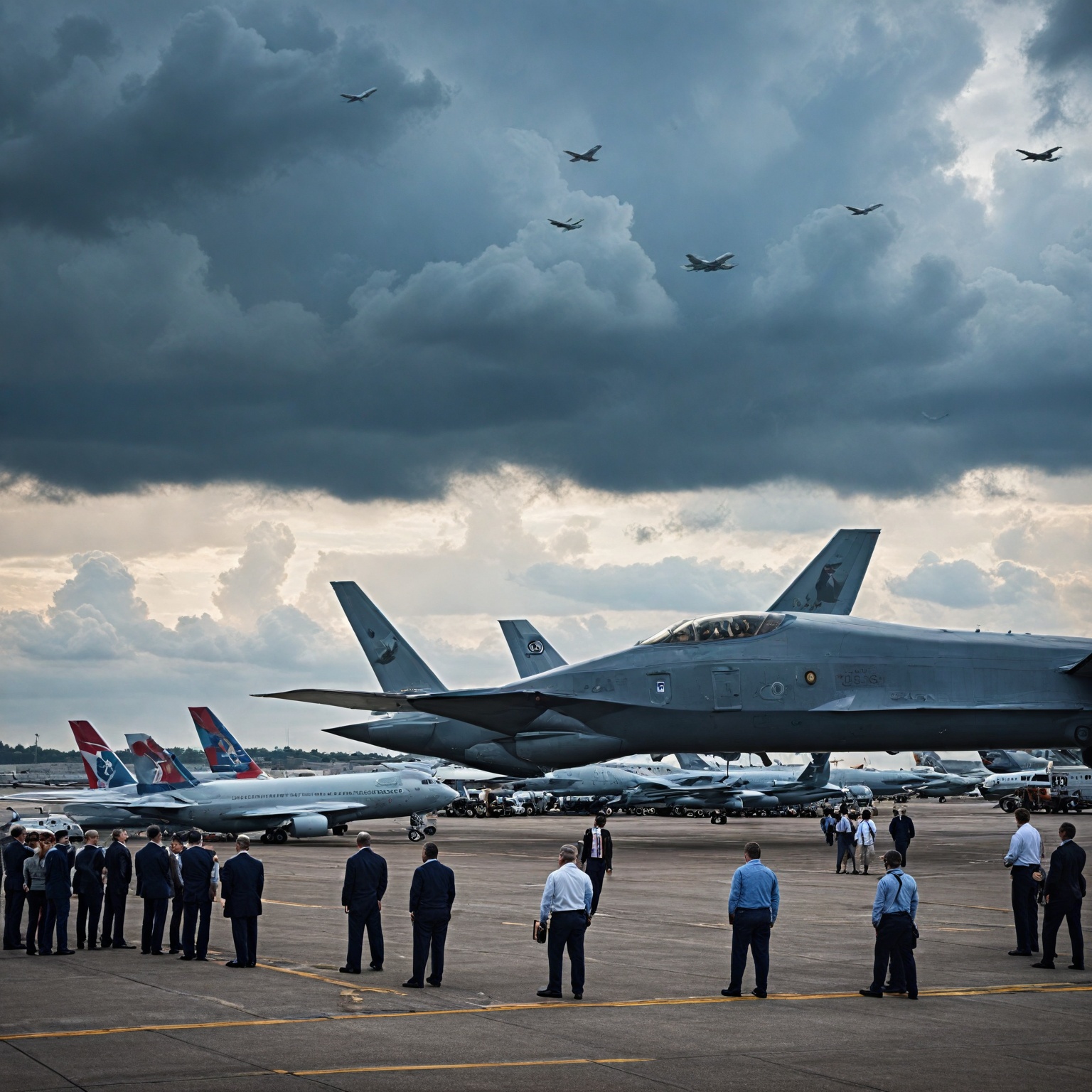
Amid these developments, a substantial military buildup has been observed in the region, involving spy aircraft, F-35 fighter jets, warships, and the deployment of the USS Gerald R. Ford, the world’s largest aircraft carrier, to Latin American waters. This buildup has intensified the security situation and contributed to the heightened alerts issued by aviation authorities.
The situation further deteriorated following U.S. President Donald Trump’s announcement via his social media platform instructing all airlines, pilots, drug dealers, and human traffickers to consider Venezuelan airspace and its surroundings as entirely closed. This declaration surprised U.S. officials, who indicated no known military operations were in progress to enforce such a closure. The Pentagon and White House did not provide additional explanations for the statement.
The Venezuelan government strongly condemned Trump’s announcement, characterizing it as a “colonialist threat” and an illegal, unjustified aggression against Venezuelan sovereignty. The Ministry of Foreign Affairs issued multiple statements denouncing the closure as a violation of international law and an affront to the Venezuelan people.
In response to the heightened risks, the FAA implemented new operational requirements, including a rule mandating 72 hours’ advance notice for U.S. carriers intending to enter the affected airspace. Airlines, charter operators, and regulators continue to monitor the evolving situation for potential changes to overflight restrictions and possible extensions of Notices to Airmen (NOTAM) coverage beyond the current FIRs.
Announcement of Total Airspace Closure
On November 23, former U.S. President Donald Trump declared the total closure of the airspace above and surrounding Venezuela. The announcement was made through a post on his Truth Social platform, in which he addressed airlines, pilots, drug dealers, and human traffickers, warning them to consider the Venezuelan airspace closed in its entirety. This declaration followed a series of warnings from the U.S. Federal Aviation Administration (FAA) concerning a “worsening security situation” and increased military activity in and around Venezuelan airspace, which posed potential hazards to commercial flights.
The FAA had already issued advisories urging operators to exercise caution when flying over the region due to reports of global navigation satellite system (GNSS) interference, including jamming and spoofing, affecting aircraft transiting Venezuelan airspace and areas up to 250 nautical miles away. These disruptions, combined with increased Venezuelan military mobilization and enhanced air-defense capabilities, raised significant safety concerns. Consequently, several airlines canceled or rerouted flights to avoid the airspace, with traffic through the region dropping sharply as flights were rerouted around Venezuelan airspace via Colombia and neighboring flight information regions (FIRs).
Trump’s unilateral declaration marked a significant escalation beyond the FAA’s advisory, indicating that the U.S. now regarded Venezuelan airspace as an active security threat rather than merely a risky transit zone. The Venezuelan government condemned the move, describing it as a hostile, unilateral, and arbitrary act incompatible with international law. Military and aviation experts also questioned the feasibility and implications of imposing a no-fly zone over Venezuela, noting that such an action would require substantial resources and planning depending on the intended objectives of the closure.
The announcement occurred amid escalating tensions between the U.S. government and Venezuelan President Nicolás Maduro’s administration, reflecting a broader standoff marked by heightened rhetoric and military posturing on both sides. The FAA continues to monitor the situation closely, adjusting operational advisories and overflight restrictions as necessary to ensure the safety of civil aviation in the region.
Official Reasons and Justifications
The announcement by former U.S. President Donald Trump declaring the total closure of airspace over and around Venezuela was officially framed as a measure to combat drug trafficking and protect aviation safety. The White House and U.S. officials indicated that this step was intended to disrupt narcotics smuggling operations allegedly facilitated by the Venezuelan government under Nicolás Maduro, whom the U.S. administration accused of collaborating with narco-terrorist organizations. Trump explicitly addressed airlines, pilots, and traffickers, warning them to consider Venezuelan airspace closed, signaling a zero-tolerance policy toward illicit activities in the region.
The U.S. Federal Aviation Administration (FAA) had issued advisories prior to Trump’s announcement, citing a “worsening security situation,” increased military activity, and potential GPS interference in Venezuelan airspace as significant risks to commercial flights. These security concerns included reports of global navigation satellite system (GNSS) jamming and spoofing, which affected aircraft navigation up to 250 nautical miles from Venezuela’s territory. The FAA’s warnings led several airlines to reroute or cancel flights over Venezuelan airspace, reflecting growing apprehension about operational safety.
Moreover, U.S. officials highlighted a broader strategic context, pointing to a substantial military buildup in the Caribbean aimed at pressuring the Maduro regime and curbing drug trafficking routes. The announcement was also linked to planned or ongoing military operations, including strikes on suspected drug boats and covert CIA activities targeting the Venezuelan government. While no specific military enforcement of the no-fly zone was confirmed, retired military experts noted that imposing and maintaining such a closure would require considerable resources and strategic planning.
From the U.S. perspective, the closure of Venezuelan airspace was part of a wider effort to restore regional security and uphold international norms by countering what Washington characterized as illegal and hostile actions by the Maduro government. The move was also aligned with broader U.S. policy goals to challenge Maduro’s legitimacy and support regime change, reflecting longstanding tensions over Venezuela’s political trajectory and the alleged undermining of democratic processes in the country.
In sum, the official justifications for the airspace closure centered on combating drug trafficking, ensuring aviation safety amid increasing military activity and electronic interference, and exerting pressure on the Maduro government to end activities deemed threatening to regional and international security.
Legal and Operational Framework
The declaration of total closure of airspace over and around Venezuela by former President Trump sparked significant legal and operational challenges. Legally, the United States lacks the authority to unilaterally close another sovereign nation’s airspace. The Venezuelan government asserted that no external entity has the power to interfere with or restrict the use of its national airspace, citing International Civil Aviation Organization (ICAO) rules to support their position. Furthermore, Venezuela condemned the U.S. action as a “colonialist threat” and described it as a “hostile, unilateral and arbitrary act” that violates principles of international law.
Operationally, the Federal Aviation Administration (FAA) issued new airspace warnings for the Venezuelan Flight Information Region (FIR) SVZM/Maiquetia and the TJZS/San Juan FIR, highlighting a deteriorating security environment characterized by increased Venezuelan military activity, GPS interference, and air defense mobilization that elevated overflight risks. In response, several airlines including Iberia, TAP Air Portugal, Avianca, LATAM Airlines Colombia, Turkish Airlines, and GOL suspended flights to Venezuela, while most overflights now avoid the SVZM FIR entirely, rerouting through Colombian or neighboring FIRs. The Venezuelan civil aviation authority, INAC, revoked operating permits for six foreign airlines in late November 2025 as part of the ongoing aviation restrictions.
The FAA’s jurisdiction primarily covers the United States and its territories, but it regularly issues warnings to international operators concerning conflicts or military activity globally. In this case, it urged civilian aircraft to exercise caution in Venezuelan airspace due to the heightened security situation and military presence. Despite these warnings and operational adjustments, the implementation of an effective no-fly zone or airspace closure over Venezuela would require considerable resources and strategic planning, raising questions about feasibility and enforcement.
Implementation and Enforcement
Following the Federal Aviation Administration’s (FAA) warning about the deteriorating security situation in Venezuelan airspace, the United States escalated its measures by declaring a total closure of airspace over and around Venezuela. The FAA had initially issued a Notice to Airmen (NOTAM) advising pilots to exercise caution due to heightened military activity, GPS interference, and potential threats to civil aircraft operating at all altitudes within the region. This advisory led multiple airlines to suspend or reroute flights to avoid Venezuelan airspace altogether, significantly reducing air traffic through the area.
In response to the suspension of services by at least six major international carriers—including Iberia, TAP Air Portugal, Avianca, LATAM Airlines Colombia, Turkish Airlines, and GOL—the Venezuelan civil aviation authority (INAC) revoked their operating permits on November 26, 2025, effectively barring them from continuing flights to or over Venezuela. Turkish Airlines also temporarily suspended operations between November 24 and 28, reflecting the growing impact of these restrictions on commercial aviation.
The Venezuelan government condemned the U.S. actions as an infringement on national sovereignty, asserting that no external authority holds the power to block or condition the use of its airspace, citing International Civil Aviation Organization (ICAO) rules to support its stance. Caracas described the suspensions and overflight restrictions as elements of a broader campaign of “state terrorism” promoted by the United States, framing the measures as a form of illegal and unjustified aggression against the Venezuelan people. Venezuelan officials further emphasized that these coercive measures have inflicted significant economic harm and disrupted trade for over a decade.
Despite Venezuela’s rejection, most airlines and overflights have adapted by routing flights around Venezuelan Flight Information Regions (FIRs), typically diverting through neighboring Colombian airspace or other adjacent FIRs to avoid the affected zones entirely. This operational shift reflects heightened caution among international carriers amid ongoing geopolitical tensions and security concerns.
The enforcement of the closure has thus combined formal regulatory actions—such as the revocation of operating permits—with informal operational changes driven by the FAA’s advisories and the practical need for airlines to maintain safety and continuity. The total closure declaration represents a significant escalation from the FAA’s initial cautionary notice, signaling intensified U.S. pressure on the Venezuelan government amid the broader geopolitical standoff.
International and Regional Responses
Following former President Donald Trump’s announcement of a total closure of airspace over and around Venezuela, the international and regional reactions were swift and largely critical. Venezuelan authorities strongly condemned the declaration, describing it as a “colonialist threat” and an illegal act that violates the country’s sovereignty and international law. The Venezuelan Ministry of Foreign Affairs labeled the announcement a “new, extravagant, illegal, and unjustified act of aggression against the people of Venezuela,” urging the international community, including the United Nations and other multilateral organizations, to reject what it deemed an immoral act of aggression.
The Venezuelan government also responded by suspending operating rights of several major airlines that had halted flights to Venezuela in response to warnings from the U.S. Federal Aviation Administration (FAA) about a “potentially hazardous situation” caused by heightened military activity in and around Venezuelan airspace. Airlines affected included Iberia, TAP Air Portugal, Avianca, LATAM Airlines Colombia, Turkish Airlines, and GOL, among others. Venezuela’s civil aviation authority, INAC, revoked permits for six foreign airlines, demanding they resume flights within 48 hours or face permanent suspension of their operating rights.
The FAA had issued warnings advising airlines to exercise caution due to the worsening security situation and military activity in Venezuelan airspace, which prompted several carriers to suspend flights or avoid Venezuelan airspace altogether by rerouting over neighboring countries such as Colombia. This precautionary stance was consistent with FAA policy to alert pilots about potential risks in conflict zones worldwide, though the agency’s jurisdiction primarily covers the United States and its territories.
U.S. officials expressed surprise at Trump’s announcement, with some Pentagon representatives and administration officials reportedly unaware of any active military operations to enforce the airspace closure. Military experts highlighted the complexity and resource requirements of imposing a no-fly zone over Venezuela, noting that such an operation would require extensive planning depending on its objectives.
Within the United States, the announcement drew criticism from some political figures who emphasized that the power to declare war rests solely with Congress, underscoring concerns about executive overreach. Republican Representative Marjorie Taylor Greene, once an ally of Trump, publicly reminded that Congress holds the constitutional authority to declare war.
The U.S. military presence in the Caribbean had already been increasing as part of efforts to deter drug smuggling and apply pressure on the Venezuelan government, contributing to heightened tensions in the region. The buildup has led to increased surveillance and security measures within Venezuela’s northeastern state of Sucre, as well as disruptions to GPS signals, further exacerbating the security concerns cited by the FAA and airlines.
Impact and Consequences
Following former President Donald Trump’s announcement declaring the airspace over and surrounding Venezuela as “closed in its entirety,” there were significant diplomatic, operational, and security repercussions. The declaration led to a unilateral suspension of migrant deportation flights, which had been carrying nearly 14,000 Venezuelans back to their home country from the United States in recent months. These flights, conducted twice weekly amid the Trump administration’s immigration crackdown, were abruptly halted as a direct consequence of the closure order.
The U.S. Federal Aviation Administration (FAA) had previously issued warnings to major airlines about a “potentially hazardous situation
Controversies and Criticism
Former U.S. President Donald Trump’s declaration on his Truth Social platform, calling for the total closure of the airspace above and surrounding Venezuela, sparked significant controversy and drew sharp criticism both domestically and internationally. Trump’s announcement, issued amid escalating tensions with Venezuelan President Nicolás Maduro’s government, was viewed by many as an aggressive and unilateral act lacking legal basis and coordination with relevant authorities.
Venezuela’s government strongly condemned Trump’s statement, labeling it a “colonialist threat” and an “extravagant, illegal and unjustified act of aggression” against its sovereignty and people. Venezuelan Foreign Minister Yvan Gill characterized the post as a hostile and arbitrary action prohibited by the United Nations Charter, emphasizing that it violated principles of international law. The Venezuelan government also accused the United States of demonstrating colonial ambitions in Latin America and called on the international community to reject what it described as an immoral act of aggression.
International allies of Venezuela echoed similar sentiments. Iran, which has a strategic alliance with Venezuela, condemned the announcement as “a serious breach of international law and a threat to global aviation safety”. The statement underscored concerns about the implications of unilateral measures on international norms and the safety of civil aviation.
Within the United States, the announcement provoked confusion and criticism from various quarters. Republican Representative Marjorie Taylor Greene reminded that “Congress has the sole power to declare war,” implicitly questioning the legality of Trump’s declaration without formal legislative authorization. Additionally, U.S. officials contacted by Reuters expressed surprise at the post and indicated they were unaware of any ongoing military operations aimed at enforcing the airspace closure. The Pentagon and White House declined to provide further comment or clarification, leaving many questions unanswered.
Aviation experts also weighed in on the practical challenges and implications of imposing such a no-fly zone. Retired Lieutenant General David Deptula noted that enforcing a total closure of Venezuelan airspace would require significant resources and careful planning, highlighting the complexities involved in such an undertaking. In the meantime, several airlines had already suspended flights over Venezuelan airspace following warnings by the U.S. Federal Aviation Administration (FAA) about heightened military activity and worsening security in the region. Venezuela’s civil aviation authority responded by revoking operating permits for six foreign airlines, further escalating the dispute.
Subsequent Developments and Current Status
Following the announcement of a total closure of airspace over and around Venezuela, several developments have unfolded that reflect the complex and escalating nature of the situation. The United States has maintained a significant military presence in the Caribbean region, combining both overt and covert operations, including drone, air, and maritime assets, as part of its broader strategy to exert pressure on the Venezuelan government. This buildup has coincided with increased military activity in the area, leading to heightened security concerns for civilian aviation.
The U.S. Federal Aviation Administration (FAA) has issued multiple warnings to airlines about the potential hazards of flying over Venezuelan airspace, citing a “worsening security situation and heightened military activity”. These advisories have prompted at least six airlines serving South America to suspend flights to Venezuela, and several U.S. carriers have confirmed they have avoided Venezuelan airspace for some time. The FAA has also introduced new operational requirements, such as a 72-hour advance notice rule for U.S. carriers intending to enter the affected airspace.
Despite the increased military presence and restrictions, Venezuelan civil aviation operations continue, although airspace has become more congested and complex, particularly near Puerto Rico’s FIR (Flight Information Region), where state traffic and non-standard air traffic control coordination have increased. Spain and Portugal have issued similar warnings, recommending that crews avoid Venezuelan airspace due to active air-defense systems and poor coordination among involved parties, which further underscores the elevated risk for overflights.
The Venezuelan government has strongly condemned the U.S. actions and announcements, labeling them as a “colonialist threat” and a violation of international law. Officials in Venezuela have mobilized their forces in response, reflecting the tense standoff between the two countries. Meanwhile, uncertainty remains regarding the exact scope and duration of U.S. military operations in the region, with some U.S. officials reportedly caught off guard by public statements on the matter and no confirmed ongoing operations to enforce a no-fly zone.
The content is provided by Blake Sterling, Know Heaven