Supreme Court Allows Trump to Revoke Temporary Status for Venezuelan Migrants: What This Means for Thousands

Summary
The Supreme Court’s recent ruling allowing the Trump administration to revoke Temporary Protected Status (TPS) for Venezuelan migrants marks a pivotal moment in U.S. immigration policy. TPS is a humanitarian program established in 1990 to protect nationals from countries experiencing armed conflict, natural disasters, or other extraordinary conditions that temporarily prevent safe return. Venezuela was designated for TPS in 2021 due to its ongoing political and humanitarian crisis, providing protection and work authorization to hundreds of thousands of Venezuelan migrants residing in the United States.
The Trump administration sought to terminate Venezuela’s TPS designation in 2023, arguing that the country no longer met the criteria for TPS and that the program had been improperly expanded beyond its temporary intent. Secretary of Homeland Security Kristi Noem recommended ending TPS protections, a decision that sparked extensive legal challenges from migrants and advocacy groups citing procedural violations and the ongoing unsafe conditions in Venezuela. Lower courts repeatedly blocked attempts to revoke TPS, finding the administration’s termination efforts likely unlawful.
In response, the Supreme Court granted emergency relief allowing the government to proceed with revoking TPS for approximately 300,000 Venezuelan nationals despite ongoing litigation. The Court’s unsigned order upheld the administration’s position, emphasizing continuity with prior decisions. However, the ruling drew strong dissents from liberal justices, particularly Justice Ketanji Brown Jackson, who condemned the Court’s intervention as premature and harmful to vulnerable migrants facing potential deportation to a country still engulfed in crisis.
The decision carries profound implications for Venezuelan migrants in the U.S., stripping legal protections that have enabled them to work and live safely for several years. Advocates warn that the revocation risks exposing TPS holders to deportation amid political persecution and human rights abuses in Venezuela, while the Department of Homeland Security maintains that restoring TPS’s temporary scope serves national interests and immigration law enforcement. Ongoing litigation and future administrative actions will continue to shape the status and legal options of Venezuelan migrants affected by this ruling.
Background
Temporary Protected Status (TPS) is a humanitarian immigration program established by the U.S. Congress in 1990 under the Immigration Act. It provides temporary relief from deportation and work authorization to nationals of countries experiencing armed conflict, environmental disasters, or other extraordinary and temporary conditions that make it unsafe for their return. TPS beneficiaries do not receive lawful permanent resident status but are protected from removal and allowed to work legally in the United States during the designated period. The Secretary of Homeland Security has the authority to designate and terminate TPS for specific countries based on an assessment of country conditions and U.S. national interests.
Venezuela was first designated for TPS on March 9, 2021, by then-Secretary of Homeland Security Alejandro Mayorkas. This designation was based on a determination that the country faced extraordinary and temporary conditions preventing the safe return of Venezuelan nationals, and that allowing them to remain temporarily in the U.S. was not contrary to national interest. The 2021 designation provided TPS beneficiaries with employment authorization documents (EADs) valid through various dates into 2024 and 2025.
In October 2023, Venezuela was newly re-designated for TPS amid ongoing political and humanitarian crises, allowing Venezuelan nationals—including those who had entered the U.S. illegally or as parolees—to obtain TPS and associated work permits, provided they met continuous residence and presence requirements. The program served as a critical protection for tens of thousands of Venezuelans living in the U.S. without other lawful immigration status, many of whom had resided in the country for extended periods.
However, the TPS designation for Venezuela has been controversial. The Trump administration, citing strains on local resources and concerns about the number of beneficiaries without legal immigration paths, sought to terminate Venezuela’s TPS status. Following a review, Secretary of Homeland Security Kristi Noem concluded that Venezuela no longer met the conditions for TPS designation and recommended termination in 2023, deeming continued TPS for Venezuelans contrary to the national interest. This decision led to legal challenges and uncertainty for Venezuelan TPS holders, who face the risk of deportation despite ongoing human rights abuses and political persecution in their home country.
Supreme Court Decision
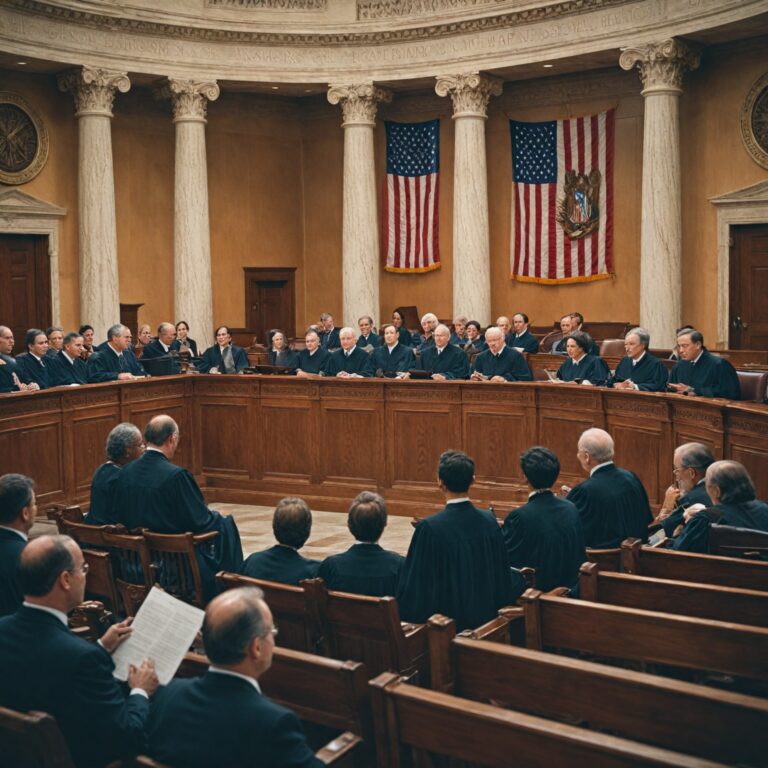
The Supreme Court ruled in favor of the Trump administration’s effort to revoke Temporary Protected Status (TPS) for Venezuelan migrants, allowing Homeland Security Secretary Kristi Noem to end the protections despite ongoing legal challenges. This marked the second time the Court granted emergency relief to the administration in this case, initially lifting a temporary order that had halted the TPS termination while lower courts evaluated the matter.
In a brief unsigned order, the Court emphasized that the circumstances surrounding the case remained largely unchanged from their May decision, justifying the continuation of the stay against lower court rulings that sought to maintain TPS protections for approximately 300,000 Venezuelan nationals. The majority’s decision effectively permitted the administration to proceed with revoking the migrants’ right to live and work legally in the United States, a move that has stirred considerable controversy given Venezuela’s ongoing economic and political turmoil.
The ruling drew a sharp dissent from the Court’s three liberal justices, with Justice Ketanji Brown Jackson issuing a solitary and pointed dissent. Jackson criticized the majority for sidestepping reasoned determinations made by multiple lower courts, which had found the abrupt termination of TPS likely unlawful and had repeatedly blocked the administration’s attempts to end the program prematurely. She condemned the Court’s use of its emergency docket as a “grave misuse,” arguing that it privileged an expansive and unchecked executive power at the expense of vulnerable individuals facing potential job loss, family separation, and deportation.
Jackson further argued that the Court’s intervention lacked a demonstrated “time-sensitive need” that would justify bypassing the ongoing lower court proceedings. She lamented the Court’s refusal to engage with the detailed legal reasoning provided by the lower courts, stating that the question before the Court was whether the government’s interest in terminating TPS immediately warranted Supreme Court involvement rather than allowing the lower courts to resolve the issue. The dissent emphasized the harmful consequences of disrupting the lives of TPS holders during the pendency of litigation.
The plaintiffs, including the National TPS Alliance and affected Venezuelan migrants, challenged Secretary Noem’s decision on grounds that it violated the Administrative Procedure Act by failing to follow required procedural steps. They argued that the termination was executed with unprecedented haste and in a manner designed to expedite the revocation, disregarding the protections afforded by the statute and undermining the migrants’ rights.
The Department of Homeland Security hailed the decision as a victory for “commonsense,” asserting that TPS was intended as a temporary measure and criticizing previous administrations for allegedly expanding it into a de facto amnesty program. DHS framed the Court’s ruling as a restoration of the statute’s original intent to limit TPS designations to genuinely temporary situations.
The Supreme Court’s decision has significant implications for hundreds of thousands of Venezuelan migrants who have been legally residing and working in the United States under TPS due to the ongoing crisis in their home country. Advocates for the migrants have expressed concern that the ruling prioritizes political expediency over legal norms and humanitarian considerations, and they vow to continue fighting for the rights and protections of TPS holders.
Implications of the Decision
The Supreme Court’s ruling allowing the Trump administration to revoke Temporary Protected Status (TPS) for Venezuelan migrants carries significant consequences for hundreds of thousands of individuals currently residing in the United States. The decision effectively permits the termination of legal protections that have allowed over 300,000 Venezuelan nationals to live and work in the U.S. temporarily, placing many at risk of deportation to a country where conditions remain unsafe.
TPS has historically served as a humanitarian measure, providing relief to migrants from countries experiencing crises that make safe return impossible. The program offers protection from deportation and authorization to work, and in some cases, eligibility for travel permits known as advance parole. The Trump administration’s renewed effort to curtail TPS reflects a broader policy goal to restore the program to its original temporary intent and reduce what officials described as its exploitation as a de facto amnesty program. The Department of Homeland Security hailed the ruling as a “win for the American people and commonsense,” emphasizing that TPS was “always supposed to be just that: Temporary”.
The termination of TPS for Venezuelan migrants is expected to lead to the loss of work permits and deportation protections for many individuals, forcing some into removal proceedings and creating significant uncertainty for families. Legal advocates warn that the revocation could have devastating effects, exposing migrants to deportation to Venezuela—a country marked by political persecution and systemic human rights violations. The ruling also underscores ongoing tensions within the judiciary, as dissenting justices criticized the Supreme Court’s use of its emergency docket and expressed concern over the impact on migrants’ lives.
In practical terms, Venezuelan TPS holders now face the immediate challenge of navigating complex immigration procedures without the safeguard of TPS, potentially forcing many to seek asylum or other forms of legal relief before facing removal. Legal experts advise affected individuals to consult with qualified attorneys or accredited representatives promptly to explore available options. The decision marks a pivotal moment in U.S. immigration policy, highlighting the continuing debate over the balance between enforcing immigration laws and providing humanitarian protection.
Response and Future Developments
The Supreme Court’s decision to temporarily lift protections for Venezuelan migrants under Temporary Protected Status (TPS) has elicited strong reactions and significant legal uncertainty. The ruling, which allows the Trump administration to move forward with revoking TPS for up to 600,000 Venezuelan nationals, has been met with both approval and dissent. Supporters, including the Department of Homeland Security (DHS), characterized the decision as a victory for enforcing immigration laws and restoring the temporary nature of TPS, which they argue had been misused by previous administrations as a de facto amnesty program. DHS described the order as “a win for the American people and commonsense,” emphasizing the importance of consistent enforcement of immigration policies aligned with national security and public safety objectives.
Conversely, critics of the ruling, including several Supreme Court justices and immigration advocates, expressed deep concern over the potential humanitarian impact. Justice Ketanji Brown Jackson issued a pointed dissent, condemning the court’s repeated intervention in ongoing lower court cases and warning about the harmful consequences of abruptly terminating TPS protections for Venezuelan migrants. She highlighted that multiple lower courts had already found the termination likely unlawful and argued that the Supreme Court lacked a pressing, time-sensitive justification to intervene so abruptly. Justices Elena Kagan and Sonia Sotomayor also dissented, indicating their opposition to the administration’s emergency request.
The legal battle surrounding TPS for Venezuelans is ongoing. Although the Supreme Court’s ruling permits the revocation process to proceed, it does not mark the end of litigation. Lower courts continue to examine the merits of challenges brought by TPS holders and advocacy groups such as the National TPS Alliance, who argue that the administration’s decision violates administrative procedures and fails to account for the severe humanitarian crisis in Venezuela. This continued legal scrutiny introduces uncertainty for the thousands of Venezuelans currently benefiting from TPS, many of whom have lived in the United States for extended periods.
Looking ahead, the Department of Homeland Security is expected to make further announcements regarding the extension or termination of the 2021 TPS designation and the 2023 redesignation for Venezuelans. The administration has committed to ending certain parole programs for migrants from Venezuela and other countries, adding complexity to the immigration status of affected populations. The outcome of ongoing court challenges and administrative decisions will significantly influence the future of hundreds of thousands of Venezuelan migrants in the United States, balancing enforcement priorities with humanitarian considerations.
Alternative Legal Pathways for Affected Migrants
Migrants who lose Temporary Protected Status (TPS) due to the Supreme Court’s decision may still have other legal options to remain in the United States. One such pathway is applying for asylum, which remains available even if the migrant has been in the country for more than one year—a typical deadline for asylum filings. An important exception to this deadline applies to individuals who previously held a lawful status, such as TPS. Therefore, Venezuelan migrants who had TPS but lost it recently may still qualify for asylum and are advised to consult experienced immigration attorneys or accredited representatives promptly to explore this option.
Additionally, individuals authorized under TPS receive temporary protection from deportation and authorization to work in the United States. TPS beneficiaries have also been eligible for advance parole, which allows them to travel abroad and re-enter the U.S., though this requires a separate application. Migrants can prove their work authorization through TPS-related Employment Authorization Documents (EADs) with valid expiration dates, which employers and government agencies recognize as evidence of lawful status.
To ensure access to proper legal assistance, migrants are encouraged to seek advice only from authorized attorneys or accredited representatives recognized by the Department of Justice. The U.S. Citizenship and Immigration Services (USCIS) provides a list of accredited representatives and low-cost or free legal service providers to help prevent exploitation or scams. In cities like New York, local offices such as The Mayor’s Office of Immigrant Affairs (MOIA) offer free immigration legal support via hotlines and online resources, including guidance on rights when encountering Immigration and Customs Enforcement (ICE).
Moreover, applicants for TPS must comply with biometric requirements, which include submitting fingerprints, photographs, and signatures at designated Application Support Centers. These biometrics serve for identity verification, background checks, and EAD production if requested. Given the complexity of immigration law and ongoing litigation surrounding TPS, affected migrants are advised to stay informed and seek timely legal counsel to understand all available relief options.
Timeline of TPS Designation and Revocation for Venezuelan Migrants
The Temporary Protected Status (TPS) designation for Venezuelan migrants in the United States has undergone several significant developments, marked by legal challenges, administrative decisions, and Supreme Court rulings.
In 2021, the Biden administration designated Venezuela for TPS, granting protections and employment authorization to eligible Venezuelan nationals residing in the U.S. This designation was followed by a 2023 TPS designation aimed at Venezuelan nationals who had been continuously residing in the United States since July 31, 2023, and continuously present since October 3, 2023. These designations allowed hundreds of thousands of Venezuelans—many without lawful immigration status—to settle in the U.S., although local communities faced resource strains due to the increased population.
However, the Trump administration sought to end the 2023 TPS designation. The Department of Homeland Security (DHS) announced that the 2023 TPS protections would expire on April 7, 2024, and that those beneficiaries would lose their legal status and work permits at that time. This move prompted legal challenges, leading to multiple court rulings that found the abrupt termination unlawful or likely unlawful.
Despite these rulings, the Supreme Court granted the administration’s emergency request to stay lower court decisions preventing the termination, effectively allowing the Trump administration to proceed with revoking the 2023 TPS designation. The Court’s order was unsigned, with Justices Elena Kagan and Sonia Sotomayor dissenting, and Justice Ketanji Brown Jackson filing a solo dissent emphasizing the absence of urgent government need to intervene. This marked the second time the Supreme Court allowed the Department of Homeland Security to strip Venezuelans of TPS protections.
Meanwhile, the 2021 TPS designation was set to expire or be extended by September 10, 2025. As of 2023, DHS had not announced whether it would extend the 2021 designation, which covers approximately 243,000 Venezuelan beneficiaries. The law requires DHS to make such a decision at least 60 days before the expiration date. Automatic extensions of Employment Authorization Documents (EADs) under the 2021 TPS designation were provided through November 7, 2025, for certain expiration dates.
The Supreme Court also permitted the administration to revoke other temporary legal statuses related to Venezuelan migrants, such as humanitarian parole, affecting over 500,000 individuals alongside migrants from other countries.
Related Cases and Legal Precedents
Several legal battles and precedents contextualize the Supreme Court’s decision to allow the Trump administration to revoke Temporary Protected Status (TPS) for Venezuelan migrants. The courts have repeatedly grappled with the abrupt termination of TPS designations, particularly emphasizing the legal standards governing such actions.
In a notable dissent, Justice Ketanji Brown Jackson criticized the Supreme Court’s intervention in ongoing lower court cases, highlighting that multiple judges had previously ruled the termination of TPS for Venezuelans unlawful or likely unlawful. She argued that the Supreme Court should only intervene if the government demonstrated a “time-sensitive need,” which, according to her, was not present in this instance. Jackson expressed concern over the Court’s repeated interference in lower court proceedings where “lives hang in the balance”.
Lower courts had also dismissed the Trump administration’s contention that recent rulings were in defiance of earlier Supreme Court emergency decisions, noting that the high court had not provided explanations for such rulings. This lack of clarity led appellate courts to emphasize that the rationale behind the Supreme Court’s emergency interventions remained speculative without explicit reasoning.
On May 30, the Supreme Court allowed the Trump administration to revoke TPS protections granted to hundreds of thousands of migrants from Venezuela, Cuba, Haiti, and Nicaragua. This decision underscored the Court’s conservative majority approach and coincided with heightened geopolitical tensions between the United States and Venezuela.
The legal authority to designate and revoke TPS stems from the Homeland Security Secretary’s power to respond to temporary conditions in foreign countries that prevent safe return of nationals, such as natural disasters or civil unrest. Created by Congress in 1990, TPS offers temporary relief from deportation without conferring permanent immigration status. Courts have scrutinized the Department of Homeland Security’s procedures in terminating TPS, with some judges characterizing the agency’s actions as hastened and preordained to expedite termination, raising questions about the procedural fairness of such decisions.
These cases collectively illustrate the ongoing legal tension between executive immigration policy prerogatives and judicial oversight, with significant implications for thousands of migrants relying on TPS protections.
The content is provided by Harper Eastwood, Know Heaven