
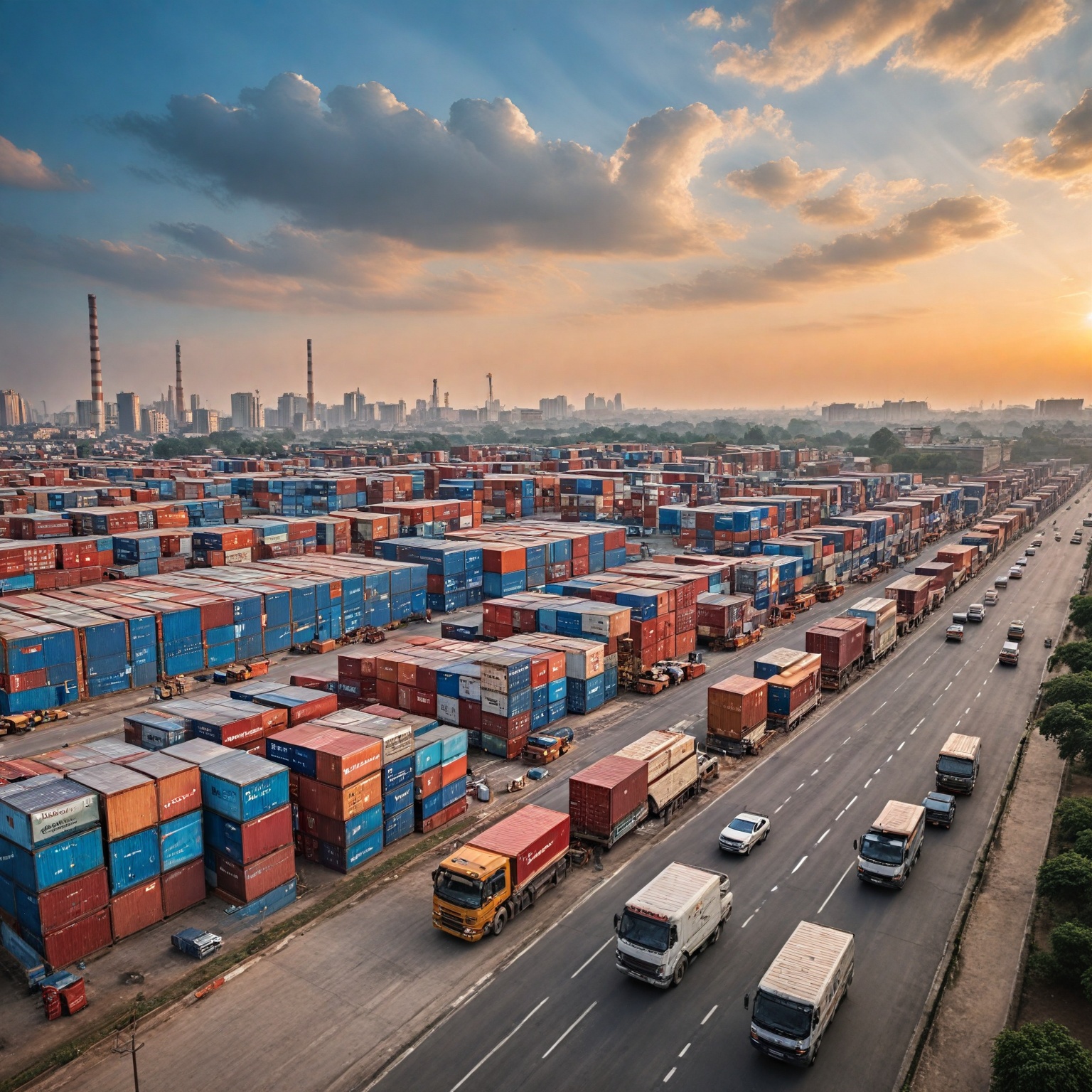
Summary
India’s industrial and logistics (I&L) real estate sector has experienced a remarkable surge in leasing activity, with the top eight cities—including Delhi-NCR, Bengaluru, Mumbai, Hyderabad, Chennai, Pune, Kolkata, and Ahmedabad—reporting a 28 per cent year-on-year growth in the first nine months of 2025. This expansion reflects a broader trend driven by the rapid growth of e-commerce, quick-commerce, and third-party logistics (3PL) sectors, alongside supportive government policies and infrastructure enhancements that have collectively transformed India’s industrial landscape. Delhi-NCR, in particular, stands out as the dominant hub, accounting for nearly half of the leasing volume due to its strategic location, robust infrastructure, and thriving logistics ecosystem.
The leasing surge is fueled by multiple interlinked factors: a rising demand for modern warehousing to support evolving supply chains, significant government initiatives such as the National Logistics Policy 2022, and increased participation from both domestic corporations and international investors. Cities like Bengaluru and Mumbai have also recorded substantial growth rates, reflecting the nationwide spread of industrial real estate demand. Meanwhile, emerging Tier-II and Tier-III cities are gaining prominence as complementary hubs, contributing to a diversified and resilient industrial real estate market.
Despite challenges such as rising interest rates and regulatory complexities—including land use regulations and evolving building codes—the sector has maintained stable rental levels and continued momentum, underscoring its resilience amid global economic uncertainties. The ongoing infrastructural upgrades, coupled with financial incentives and a focus on future-ready warehousing solutions, position India’s I&L sector for sustained growth in the coming years.
This industrial leasing boom has significant economic and societal implications, fostering supply chain efficiencies, employment growth, and urban development. However, concerns remain over equitable benefits distribution and environmental impacts, highlighting the need for balanced and inclusive policy frameworks. Overall, India’s industrial leasing surge illustrates a critical phase in the country’s industrial transformation, driven by a dynamic interplay of market demand, policy support, and infrastructural progress.
Overview of Industrial Leasing in India
India’s industrial and logistics (I&L) real estate sector has witnessed significant growth in leasing activity, marked by a 28 per cent year-on-year increase in the first nine months of 2025 across the top eight cities, including Delhi-NCR, Bengaluru, Mumbai, Hyderabad, Chennai, Pune, and Kolkata. This surge reflects a continuation of a robust upward trend that began in the second half of 2023, driven by a combination of favorable policy incentives, enhanced infrastructure, and the expanding penetration of online retail platforms.
Leasing volumes have been particularly strong, with the sector recording a nearly 40 per cent year-on-year increase in the first quarter of 2025 alone, totaling approximately 12.1 million square feet of space leased across major markets such as Delhi-NCR, Bengaluru, Mumbai, Hyderabad, Chennai, Pune, Kolkata, and Ahmedabad. This rise in demand is supported by increased manufacturing activity and higher capacity utilization, which pushed industrial leasing to reach 16 million square feet in 2023.
Delhi-NCR remains a pivotal hub within the industrial and logistics landscape due to its strategic location, robust infrastructure, and the thriving e-commerce sector, which together accounted for 40-50 per cent of the sector’s leasing activity from 2021 to 2024, and over 30 per cent in the first half of 2025. While the major metropolitan areas continue to lead growth, Tier-II and Tier-III cities are emerging as new centers of expansion, diversifying the industrial leasing ecosystem across the country.
Despite challenges such as rising interest rates, rental levels in most major cities have remained stable, indicating a balanced supply-demand dynamic as new warehousing capacities come online. The sustained momentum in leasing activity underscores the resilience of India’s industrial and logistics sector amid global uncertainties and highlights the country’s ongoing industrial transformation supported by evolving policies and infrastructure development.
Key Drivers of Industrial Leasing Growth
The remarkable 28 per cent year-on-year growth in industrial and logistics (I&L) real estate leasing across India’s top eight cities, led by Delhi-NCR, can be attributed to several interlinked factors. Chief among these is the strong resurgence of demand from the e-commerce sector, which has accelerated the need for modern warehousing and distribution facilities. The rise of quick-commerce operators further amplified this trend, compelling logistics companies to expand rapidly to keep pace with evolving consumer expectations.
Delhi-NCR has emerged as the largest third-party logistics (3PL) hub in the country, accounting for 25 per cent of the total leasing activity in the I&L sector since 2021. This leadership position is largely driven by the 3PL model’s flexibility, which allows players to respond swiftly to demand fluctuations caused by e-commerce and quick-commerce growth, while leveraging government infrastructure initiatives to scale efficiently. The government’s infrastructure push, including improvements in transport networks and logistics corridors, has played a pivotal role in enhancing the region’s connectivity and reducing overall logistics costs, making it an attractive destination for industrial leasing.
Domestic corporations have been the primary drivers of leasing demand, securing the majority share and signaling robust internal growth and supply chain strengthening among Indian companies. This trend is complemented by increased participation from international players, with firms from the Asia-Pacific, Europe, West Asia, and Africa regions also expanding their footprint in Indian markets. Additionally, policy support in the form of industrial reforms and incentives aimed at fostering manufacturing and logistics infrastructure has helped create a conducive environment for industrial expansion. The National Logistics Policy 2022, for instance, outlines strategic measures to reduce logistics costs and integrate digital logistics systems, further underpinning leasing growth.
Moreover, the shift in warehouse design to accommodate diverse operational needs driven by e-commerce is encouraging developers to build future-ready and scalable warehousing spaces. This evolution aligns with the overall increase in warehouse completions and new supply across major cities, supporting the rapid expansion of industrial leasing activity. Together, these factors form a comprehensive ecosystem that continues to fuel the unprecedented growth in India’s industrial and logistics real estate sector.
Detailed Analysis of the Top 8 Cities Leading the Surge
The industrial and logistics (I&L) real estate sector in India has witnessed a remarkable surge in leasing activity, with the top eight cities—Delhi-NCR, Bengaluru, Mumbai, Hyderabad, Chennai, Pune, Kolkata, and Ahmedabad—leading this growth. In the first nine months of 2025, leasing in these cities increased by 28% year-on-year, underscoring the robust demand for industrial and warehouse spaces driven by evolving supply chain needs and e-commerce expansion.
Delhi-NCR has emerged as the dominant player in this landscape, accounting for the largest share of leasing activity with 11.7 million square feet, which alone represents a significant portion of the total 28.8 million square feet leased across all eight cities in the first half of 2024. Key sub-markets such as Gurgaon, Farrukhnagar, and Ghaziabad have been pivotal, with Gurgaon capturing a 47% share of warehouse leasing, followed by Farrukhnagar at 27% and Ghaziabad at 19%. The strategic location of Delhi-NCR within the National Capital Region, combined with its superior infrastructure and vibrant e-commerce sector, has made it an attractive hub for third-party logistics (3PL) providers and fast-moving consumer goods (FMCG) companies, which collectively drive around 40-50% of leasing activity in the sector.
Bengaluru and Mumbai have also recorded significant year-on-year growth, with Bengaluru leading with a 132% increase and Mumbai following at 71% growth in leasing volumes. Bengaluru leased 5.7 million square feet, making it the second-largest market after Delhi-NCR, while Mumbai continues to bolster its office and industrial supply, supported by new developments in office-SEZs and logistics infrastructure. Hyderabad, with 4.6 million square feet leased, and Kolkata with 2.4 million square feet, have also played crucial roles in expanding the industrial real estate market, with both cities witnessing rising demand due to their growing warehousing capacities and improving logistics networks.
Chennai, Pune, and Ahmedabad round out the top eight cities, contributing significantly to the expanding supply of industrial space. Chennai, in particular, is expected to be one of the largest contributors to new developments, alongside Mumbai and Bengaluru, with these cities collectively accounting for over half of the new completions in 2024. Emerging Tier-II and Tier-III cities such as Chandigarh, Hosur, Jaipur, Lucknow, and Vizag are also gaining attention as future warehousing hubs, driven by efforts to extend distribution networks and optimize operational costs across India.
The growth in leasing activity is fueled by multiple factors including the rapid expansion of e-commerce and quick commerce, increased adoption of advanced logistics solutions, and government initiatives such as the National Logistics Policy and industrial corridor schemes like Bharatmala, which enhance infrastructure and reduce logistics costs. These developments have spurred the construction of modern warehouses with global standards, often through partnerships between foreign investors and local players, further elevating the quality and scale of available industrial real estate.
Sector-wise Distribution of Industrial Leasing
The industrial and logistics (I&L) real estate sector in India has witnessed significant diversification in leasing activity across various industries, driven primarily by evolving market demands and the expansion of key economic segments. E-commerce and third-party logistics (3PL) players have been the dominant contributors, accounting for 40-50% of the sector’s total leasing activity between 2021 and 2024, with a notable share of more than 30% in the first half of 2025. This surge is attributed to the agility required by 3PL players to quickly respond to shifts in consumer demand fueled by e-commerce and quick-commerce growth, supported further by government infrastructure initiatives.
Beyond e-commerce, technology companies also form a substantial part of the leasing landscape, comprising approximately 23% of leasing activity during the July-September 2023 quarter. This segment is followed by engineering and manufacturing companies and life sciences firms, each contributing around 10%, flexible space operators with 8%, and research, consulting, and analytics firms at 7%. American and domestic firms have led absorption in this period equally, each holding a 42% share, indicating a balanced mix of international and local investment interest.
Other sectors such as automotive and ancillary businesses contributed 8% to the quarterly leasing, while fast-moving consumer goods (FMCG) occupiers represented 5%. The FMCG sector, along with 3PL companies, has been part of a broader trend where businesses are expanding and upgrading warehousing facilities to strengthen their supply chains amidst growing demand for organized and technology-enabled infrastructure.
The robust leasing activity in these sectors has been supported by significant new supply additions, with landlords adding 12.4 million square feet of new inventory in the first quarter of 2023 alone—a 57% increase year-on-year. Institutional investor-backed developers have been the primary drivers of this new supply, with Mumbai, Bengaluru, and Chennai together contributing 69% of the new inventory, thus reinforcing their positions as core industrial and logistics nodes alongside Delhi-NCR.
Economic and Societal Impact of Industrial Leasing Growth
The significant growth in industrial leasing across India’s top cities, especially the 28 per cent year-on-year increase reported in the first nine months of 2025, has had profound economic and societal implications. This surge, driven largely by the expansion of e-commerce, quick-commerce, 3PL, and FMCG sectors, is reflective of a broader structural transformation in the country’s economy.
Economically, the increase in leasing activity indicates a strengthening and diversification of supply chains, which has been critical for both global and domestic companies aiming to enhance operational efficiency and market reach. For instance, leasing in Delhi-NCR alone grew by 6 per cent to 7.3 million square feet in 2022, contributing significantly to the overall 8 per cent growth in industrial and logistics space leasing across eight major cities that year. This growth aligns with India’s evolving industrial policies aimed at infrastructure development, land use optimization, and industrial area redevelopment, which collectively foster a more conducive environment for industrial expansion and investment.
From a societal perspective, this industrial growth is linked to shifts in employment patterns and urban development. While manufacturing’s contribution to GDP remains around 16 per cent, its share of employment has increased from 15 per cent in 1991 to 25 per cent in 2021, highlighting an ongoing transition from agriculture-dominated labor markets toward more industrial and service-oriented employment. The expansion of logistics and warehousing infrastructure also supports the growth of e-commerce, which has accelerated due to changing consumer behaviors amplified by the COVID-19 pandemic. However, the benefits of such growth have been unevenly distributed, with higher income urban populations capturing most welfare gains, underscoring the need for inclusive policies to bridge the gap between different socio-economic groups.
Furthermore, infrastructure improvements such as enhanced roads, metro lines, airports, and expressways in cities like Delhi-NCR have not only driven up property values but have also stimulated broader economic activity by improving connectivity and reducing logistical costs. The government’s focus on measures like land parcel consolidation and drone surveys to identify optimal industrial locations demonstrates a strategic approach to sustainable urban and industrial development, aimed at maximizing the benefits of this leasing surge while managing urban sprawl and industrial relocation challenges.
Regulatory Environment and Challenges
India’s industrial leasing surge, particularly in the top eight cities led by the Delhi-NCR region, has been significantly influenced by the regulatory environment and the challenges it presents. The government has introduced various policies aimed at fostering industrial growth while attempting to streamline regulations to create a more business-friendly atmosphere.
The Government of Delhi has been actively working to create a progressive business environment through policies such as the Industrial Policy 2010-21, which targeted knowledge-based and hi-tech IT/ITeS industries. This policy has contributed to the state’s robust economic performance, with a compound annual growth rate (CAGR) of 9.12% in the Gross State Domestic Product (GSDP) between 2015-16 and 2023-24. Additionally, recent initiatives have included the approval of 12 major projects with investments totaling INR 286.02 billion (US$3.38 billion), underscoring the commitment to industrial expansion.
Special Economic Zones (SEZs) have played a pivotal role by offering incentives such as tax breaks, simplified regulations, and enhanced infrastructure to attract businesses. These zones are geographically demarcated with economic laws distinct from the rest of the country, helping facilitate rapid industrial growth. Furthermore, the draft industrial policies propose the development of plug-and-play IT parks via public-private partnerships and the establishment of low-cost industrial parks and SME zones, with attractive tax incentives to encourage businesses to relocate from central Delhi to peripheral areas.
However, regulatory complexities remain a challenge. For instance, land use and zoning regulations, such as those allowing motels in rural zones, green belts, and commercial zones along national highways, are tightly controlled under the Master Plan of Delhi (2001) and subsequent amendments. Moreover, construction and building regulations have recently been updated with the introduction of the Unified Building Bye-Laws 2023 (UBBL 2023), which supersede older bye-laws and cap building heights at four floors plus a stilt in most areas, thereby impacting industrial infrastructure development.
Environmental clearances continue to be a critical factor, as seen in recent approvals for group housing and commercial developments in industrial hubs like Rohini, Delhi. The judicial scrutiny of government ordinances also poses a potential hurdle; for example, the 2023 Ordinance related to industrial policies could face challenges in the Supreme Court, requiring the government to justify its urgency and necessity.
Land acquisition and consolidation for industrial use are further complicated by the urbanization of villages in Delhi, which no longer fall under the Delhi Land Reforms Act, leading to redundancy in certain land-related legal cases. To address these issues, the Delhi government is focusing on improved land use, parcel consolidation, infrastructure upgrades, and drone surveys to identify land suitable for industrial relocation, as part of a
Financial Incentives and Government Support
India offers a range of financial incentives and government support mechanisms aimed at fostering industrial growth and boosting leasing activities across various sectors. These incentives vary based on factors such as economic activity, industry type, location, and the size of the business. To avail of most tax benefits, investors must register with the Ministry of Corporate Affairs, while some incentives tied to specific conditions—such as hiring over 50 Indian employees—require additional approvals from relevant ministries. However, it is important to note that benefiting from one incentive may disqualify eligibility for others, necessitating careful strategic planning by businesses entering the Indian market.
Micro, Small, and Medium Enterprises (MSMEs) enjoy continued access to non-tax benefits for up to three years after their growth transitions them into higher categories. From April 1, 2023, new manufacturing cooperative societies benefit from a concessional tax rate of 15 percent (plus surcharge and cess), further stimulating manufacturing activities. Incentives are available at both central and state government levels, with special economic zones (SEZs) providing comprehensive tax relief tailored to attract investment and promote export-oriented growth.
Government policies have also facilitated significant tax benefits for developers and investors engaged in affordable housing projects, while the expansion of e-commerce and online shopping has accelerated growth in the logistics and warehousing sector. This sector benefits from government support aimed at improving infrastructure and supply chain efficiency, which is crucial for commercial space leasing demand.
Under the National Logistics Policy (NLP) and associated industrial corridor initiatives such as Bharatmala, there has been an increased focus on cargo terminal development and logistics infrastructure enhancement. These efforts have reduced logistics costs and created efficient supply chains, thereby increasing demand for warehousing leases. The collaboration between foreign investors and local players has introduced global best practices in warehouse design and operations, raising industry standards and making warehouse leasing an attractive option for businesses seeking to optimize their supply chains.
The active involvement of large developers backed by institutional funds, contributing approximately 40% to completed projects, underscores the sector’s growth potential. This participation is also reflected in the expected supply additions, with CBRE forecasting an increase to 35–37 million square feet of warehousing space by the end of 2023, driven by previously delayed projects coming to completion. This growth in supply, coupled with rising rents in select micro-markets for new, technologically advanced, and strategically located assets, highlights the positive impact of government support and financial incentives on India’s industrial leasing landscape.
Future Outlook and Emerging Trends
The industrial and logistics leasing sector in India is poised for sustained growth, driven by a combination of policy support, infrastructural advancements, and shifting market dynamics. The forthcoming New Industrial Policy 2023 (NIP’23) is expected to play a pivotal role in shaping the future landscape by emphasizing new industries, carbon neutrality, and positioning India as a global manufacturing hub, building on the transformative reforms initiated by the 1991 Industrial Policy. This policy focus aligns with increasing manufacturing activity and higher capacity utilization witnessed recently, which have underpinned robust leasing growth and sector stability despite global uncertainties.
Emerging trends highlight the rising prominence of Tier-II and Tier-III cities as new growth hubs beyond the traditional centers such as Delhi-NCR, Bengaluru, and Mumbai. While Delhi-NCR continues to dominate, accounting for 30 to 50 per cent of total leasing activity from 2021 through early 2025, expanding e-commerce penetration and supply chain strengthening initiatives are stimulating demand in secondary cities. Additionally, the expansion of new warehousing capacities and upgrades in logistics infrastructure are critical factors expected to influence rental and vacancy dynamics, with market participants closely monitoring these indicators for balance between supply and demand.
The surge in leasing activity has also been notably driven by e-commerce companies, quick-commerce operators, and third-party logistics (3PL) and FMCG sectors, which have been expanding their footprint aggressively. The industrial and corporate zones of Gurugram, particularly Udyog Vihar and Manesar, serve as a model for attracting multinational corporations and fostering modern infrastructure and housing, which contribute to sustained economic and real estate growth in the region.
The content is provided by Blake Sterling, Know Heaven