Summary
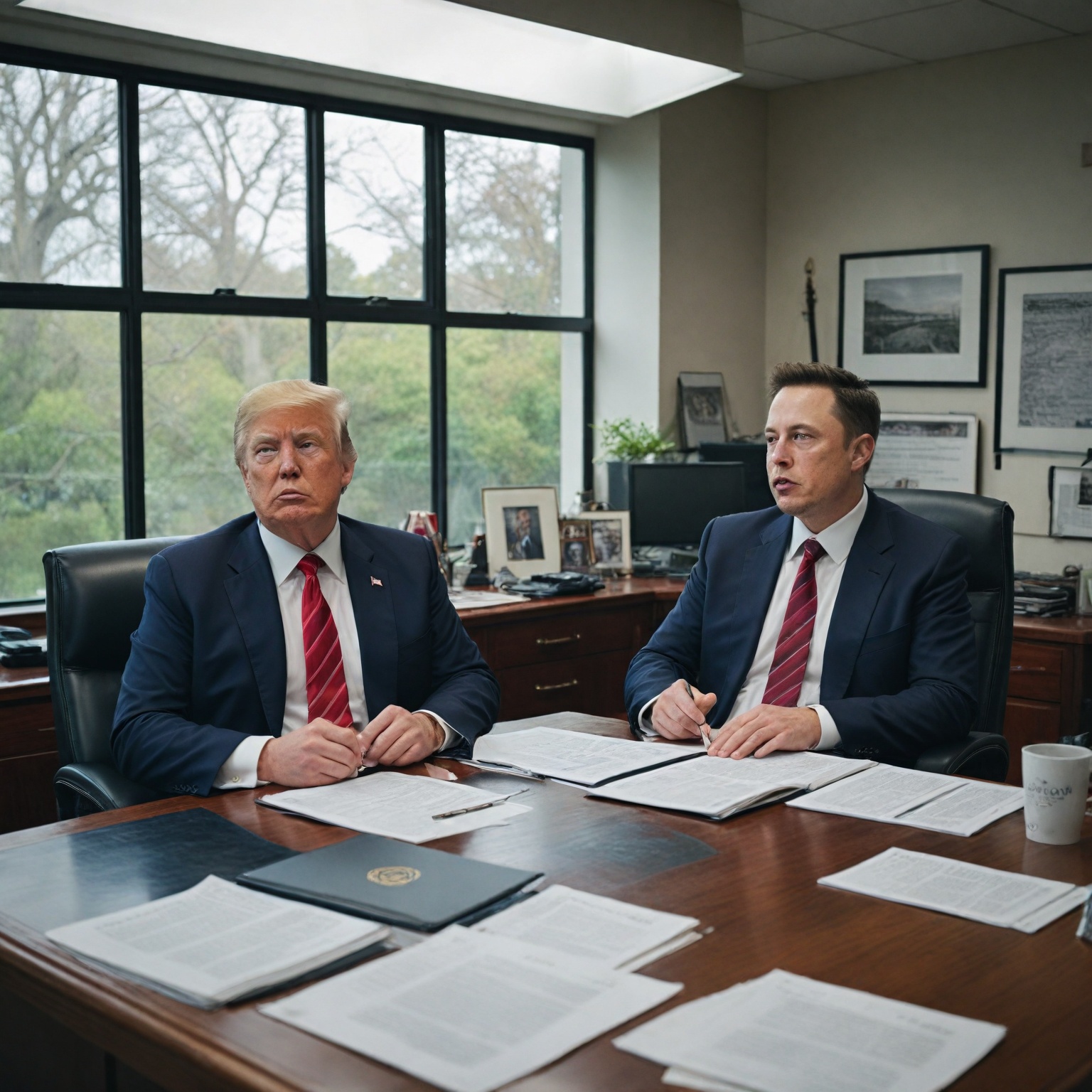
The relationship between former President Donald Trump and entrepreneur Elon Musk, CEO of Tesla and SpaceX, has undergone significant shifts marked by initial collaboration followed by a notable public falling out. Once seen as allies aligned on various political and business interests, their rapport deteriorated amid legislative disputes and conflicting policy priorities during Trump’s administration. Musk’s role as a special government employee and informal advisor brought him into close contact with the White House, but growing tensions culminated in the White House revealing that Trump declined to take a scheduled call with Musk, signaling a breakdown in their relationship.
This decline in cooperation was influenced by Musk’s outspoken criticisms of key Republican legislation, including Trump’s tax bill, and disagreements over government contracts and regulatory proposals such as the FAA’s rejection of Musk’s Starlink air traffic control initiative. The rift deepened when Trump withdrew the nomination of Musk’s ally Jared Isaacman for NASA administrator, further straining their ties. Musk’s increasing public critiques on social media and his failure to fulfill financial commitments to Trump’s political efforts exacerbated the discord, prompting the White House to manage the fallout carefully amidst ongoing political challenges.
The discord between the two high-profile figures attracted widespread media attention and elicited reactions from mutual allies attempting to mediate the conflict, underscoring the broader implications for party unity and governance. Their feud has highlighted the complexities and risks of intertwining private sector influence with political leadership, particularly in an era where social media amplifies personal and policy disagreements. The breakdown also raised questions about the role of billionaires in shaping public policy and the limits of informal advisory roles within government structures.
Overall, the declining relationship between Trump and Musk reflects the volatile intersection of business interests, political agendas, and personal dynamics at the highest levels of American public life. It serves as a notable case study of how shifting alliances and public controversies can influence policymaking and political cohesion within the Trump administration’s orbit.
Background
The relationship between former President Donald Trump and Elon Musk, CEO of Tesla and SpaceX, has been marked by both collaboration and conflict. Initially characterized by a strong personal rapport, the two were seen as allies supporting many overlapping political and business interests. However, this alliance deteriorated notably in the lead-up to legislative negotiations surrounding a significant Republican mega-bill that encapsulated much of Trump’s domestic policy agenda, including tax cuts and immigration enforcement.
Their public interactions escalated into a highly visible feud, with both parties exchanging personal attacks through their respective social media platforms. This discord drew considerable attention given the high stakes of the legislation and the broader implications for Trump’s political agenda. The intensity of the conflict prompted intervention from mutual allies, such as hedge fund manager Bill Ackman, who publicly called for reconciliation between Trump and Musk for the country’s benefit.
This breakdown in relations occurred amid a politically turbulent period for the White House, as Trump’s administration faced mounting challenges that threatened to undermine its agenda. Against this backdrop, preparations for significant diplomatic engagements, including visits and meetings involving key political figures, were underway to navigate the evolving political landscape.
Scheduling of the Call
The scheduling of calls involving high-profile individuals such as the President and prominent figures like Elon Musk is a coordinated effort managed by the White House staff. Typically, the President, in collaboration with White House personnel, arranges meetings with foreign chiefs of state and heads of government, with coordination often involving the country’s Ambassador in Washington, D.C., and the President’s National Security Advisor and their team to finalize dates. Although this process is primarily for formal diplomatic engagements, similar protocols apply to scheduling advisory or special government employee meetings.
Elon Musk, while serving as a “special government employee” at the White House, had discussions about extending his unpaid advisory role beyond the statutory 130-day limit. The arrangement of any calls or meetings with the President would involve coordination through White House channels to ensure proper timing and agenda-setting.
In preparation for such engagements, White House press teams compile detailed background information on visiting figures or advisors, including previous interactions with top administration officials, their schedules, agenda items, and objectives during meetings or calls. This preparation aims to provide a comprehensive understanding of the participants and facilitate productive discussions.
Despite Musk’s close relationship with the President, internal tensions within the White House and external political considerations sometimes impact the scheduling and confirmation of calls or meetings. For instance, senior officials have at times had to intervene to manage political messaging around engagements, reflecting the complexities of coordinating high-level communications.
Declined Call
Multiple administration officials attempted to reach out to Elon Musk and his representatives personally, but their calls and texts were reportedly not returned. This lack of response contributed to growing tensions between Musk and the White House. The situation was further complicated by Musk’s desire for the Federal Aviation Administration (FAA) to utilize his Starlink satellite system for national air traffic control, a proposal that the administration ultimately rejected due to concerns over a conflict of interest and technological feasibility.
The final impetus for Musk’s diminishing role appeared to coincide with President Donald Trump’s sudden withdrawal of the nomination of Jared Isaacman, a Musk ally, to be NASA administrator. Despite Musk’s previously close relationship with the president, his standing within the administration had steadily declined amid clashes over government processes and policy directions. These developments culminated in the White House’s decision that Musk could no longer continue serving in his capacity, effectively marking the end of direct collaboration at that level.
Reactions and Responses
The relationship between President Donald Trump and Elon Musk, once marked by close collaboration and mutual support, experienced a notable decline that drew significant attention within political and media circles. Musk’s abrupt departure from Washington was seen as a reflection of growing philosophical differences and mounting tensions between the two figures, despite their earlier public displays of camaraderie, including Musk standing beside Trump in the Oval Office.
Musk’s criticisms of Trump’s domestic policy, particularly the tax bill which he claimed would exacerbate the national deficit, alongside complaints about a lucrative AI data center contract awarded to a rival company, contributed to the erosion of his standing in the administration. Additionally, Musk had yet to fulfill a $100 million pledge to Trump’s political operation, further straining their relationship. This shift was underscored by Musk’s late-night posts on X, which marked an abrupt change in tone after a day of tweets both criticizing Trump’s tax legislation and claiming credit for his 2024 election victory.
Senior White House officials, including Deputy Chief of Staff Stephen Miller, reacted strongly to Musk’s comments, prompting the administration to reach out to Republican senators to reaffirm Trump’s support for the tax package. Meanwhile, White House aides advised the President to concentrate on passing the bill rather than engaging in the conflict with Musk. Reflecting this stance, Trump posted on his social media that he did not mind Musk turning against him but wished it had happened months earlier.
The discord between Trump and Musk also caused disruption among their mutual allies, who attempted to mediate the fallout but found their efforts undermined by Musk’s public statements on social media. Observers noted that the two men’s sizable egos and willingness to use social media as a battleground made a falling out somewhat inevitable, despite their previous alignment and Musk’s significant financial support exceeding $250 million for Trump’s 2024 campaign.
Broader Political Implications
The interactions and public exchanges between former President Donald Trump and Elon Musk have highlighted significant tensions within the current political landscape, reflecting broader challenges in governance and party dynamics. Their feud, notably centered around legislation incorporating Trump’s presidential agenda—including tax cuts and immigration enforcement—has drawn widespread attention for its intensity and potential impact on political unity. Despite the sharp public rhetoric, efforts from aides and allies such as hedge fund manager Bill Ackman have sought to mediate and encourage reconciliation, underscoring the high stakes involved for both figures and their supporters.
Within Trump’s circle, opinions on Musk vary considerably. While Trump has publicly expressed admiration for Musk and acknowledged his financial support during elections, some allies view Musk as an unpredictable and difficult figure to manage. Concerns have been raised about Musk’s communication style and his tendency to bypass traditional White House channels, causing disruption among Cabinet members and Chief of Staff Susie Wiles. Additionally, some view Musk as a political liability, particularly among Democrats who have rallied opposition against him, as seen in states like Wisconsin where Musk’s significant judicial race spending became a focal point of controversy.
Musk’s political involvement has also had repercussions for his private ventures. His association with the Trump administration, including his role as a special government employee, has negatively affected public perception and investor confidence in his electric vehicle company, Tesla. Critics have voiced concerns about potential conflicts of interest, highlighting opportunities Musk may have had to leverage his governmental access to benefit his aerospace and satellite companies, SpaceX and Starlink. These factors contribute to Musk’s apparent interest in redirecting focus away from politics and back toward his business enterprises.
Moreover, internal friction became evident when complaints about Musk’s activities reached lawmakers and cabinet officials, culminating in strains within the administration. A turning point reportedly occurred when President Trump learned of critical media reports regarding Musk’s operations, which challenged the previously favorable dynamic between the two men. Collectively, these developments illustrate the complexities and risks inherent in the intertwining of high-profile private sector figures with political leadership, revealing how personal relationships and public perception can influence policy-making and governance stability.
Historical and Procedural Context
The scheduling of meetings between the President of the United States and foreign leaders follows a well-established protocol involving coordination among multiple officials. Typically, the President works closely with White House staff to arrange such meetings, while the country’s Ambassador in Washington, D.C. collaborates with the President’s National Security Advisor and their team to set a suitable date. This process ensures that diplomatic engagements are carefully planned and aligned with broader national security and foreign policy objectives.
Historically, the management of the President’s time and public interactions has evolved significantly. George Washington, for instance, established important precedents regarding the President’s social and official life. Concerned about his predecessors being overwhelmed by visitors, Washington dedicated his daytime hours to conducting government business and reserved late afternoons for public meetings and evenings for dinner parties with selected guests. These practices helped shape the balance between accessibility and the demands of executive responsibilities that continue to inform the White House’s operations today.
In addition to procedural aspects, background preparation for foreign visits is a critical component of diplomatic engagements. When a foreign leader plans a visit to Washington, advance teams compile comprehensive briefing materials that include the leader’s previous interactions with U.S. officials, anticipated schedule, key agenda items, and objectives for meetings such as working breakfasts or bilateral talks with the President or Vice President. This groundwork supports effective communication and negotiation during high-level meetings.
Together, these historical precedents and procedural mechanisms form the foundation for how the White House manages presidential engagements with foreign dignitaries, providing context to recent developments such as the declined call between former President Trump and Elon Musk.
Analysis and Commentary
The interactions between Donald Trump and Elon Musk have been characterized by a complex and often volatile relationship, marked by both collaboration and public disputes. Earlier in Musk’s tenure of influence within government circles, he embraced a bold, sometimes theatrical approach, exemplified by his symbolic use of a chainsaw to represent aggressive cuts in government operations. This period reflected Musk’s confidence and a sense of purpose in shaping policy, even as it drew sharp attention to his unorthodox style.
However, this alliance has since shown signs of strain and political vulnerability. Musk’s shifting positions, such as his reversal on political endorsements, suggest a more cautious or unsettled posture amid the turbulent dynamics of Trump’s second term. While Trump’s core Republican base remains steadfast, the ongoing factional tensions within the party and responses from Democrats indicate a fragile political environment that affects both figures.
Despite moments of public disagreement, there have also been efforts to mend fences for strategic purposes. High-profile figures, including hedge fund manager Bill Ackman, have publicly called for reconciliation between Trump and Musk, underscoring the perceived potential benefits of a united front. These calls highlight the recognition among allies that cooperation between two influential billionaires could significantly impact the country’s political direction.
The juxtaposition of Musk’s past exuberance and his current distance from government affairs points to an evolving role that remains closely watched by political analysts. Musk’s presence at the White House with his son and his initial promise to influence policy underscore the uniqueness of this alliance, while subsequent developments illustrate the challenges of maintaining such partnerships amid shifting political tides. Overall, the relationship between Trump and Musk continues to be a focal point for understanding the intersection of business influence and political power in contemporary America.
The content is provided by Blake Sterling, Know Heaven