
Summary
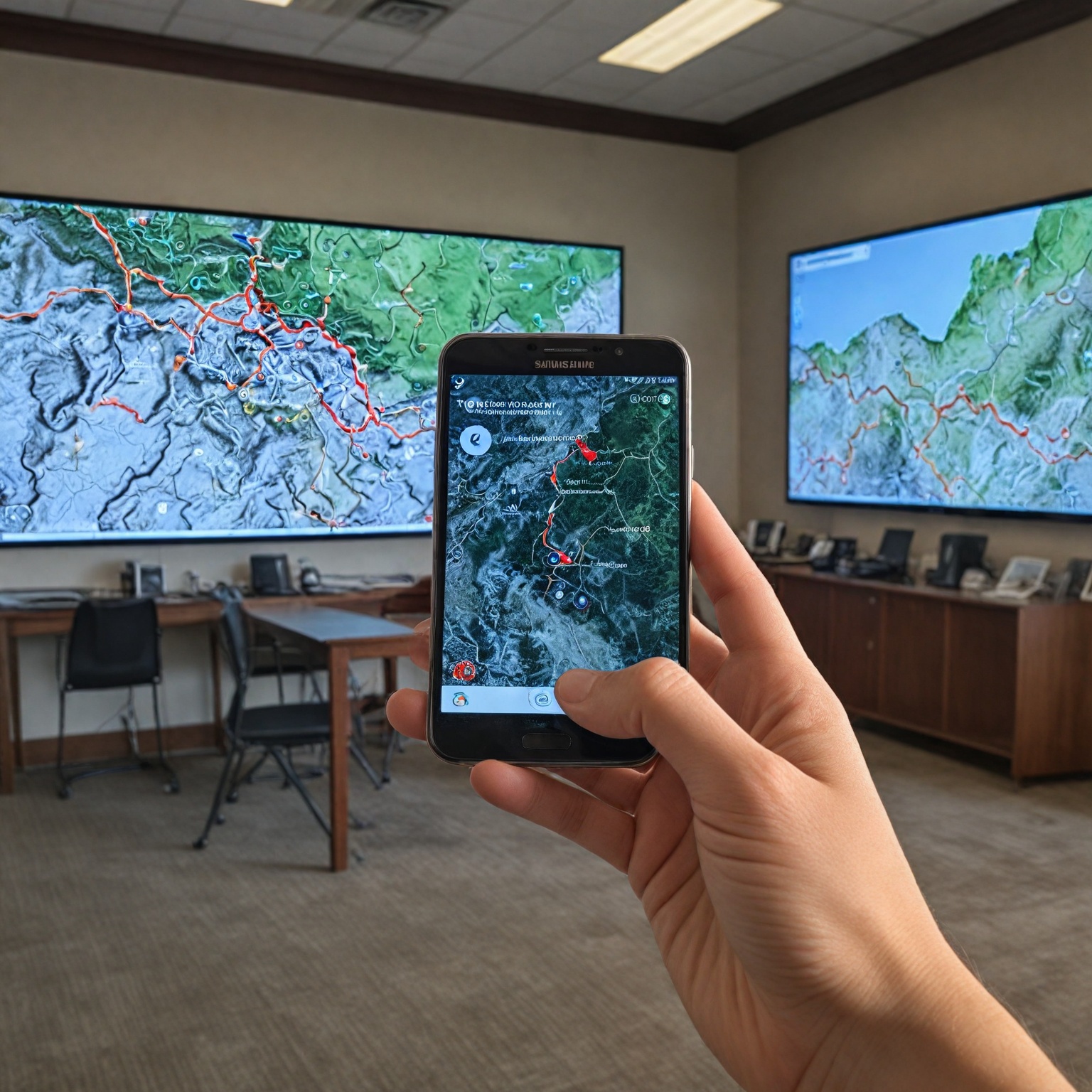
Google’s early-warning system for Android is an innovative platform that detects and issues alerts for critical events such as earthquakes and security vulnerabilities, leveraging the widespread use of smartphones to enhance public safety and device protection. By utilizing accelerometers embedded in millions of Android devices worldwide, the system functions as a dense, global seismic sensor network that can rapidly identify earthquake events and provide timely notifications to users. These alerts include actionable safety instructions and detailed information about the earthquake’s estimated location and magnitude, significantly improving earthquake preparedness in affected regions.
In addition to earthquake detection, Google’s system incorporates comprehensive security measures to identify and address vulnerabilities within the Android ecosystem. This includes proactive patch management, hardware-based protections such as Memory Tagging Extension (MTE), and continuous monitoring to mitigate exploits like privilege escalation vulnerabilities (e.g., CVE-2024-43093). Security updates are delivered efficiently through over-the-air updates and app updates via Google Play, ensuring that devices remain protected against emerging threats.
The platform’s effectiveness is bolstered by collaborations with academic institutions, government agencies—including the United States Geological Survey (USGS) and the California Governor’s Office of Emergency Services—and industry partners. Together, they integrate data from smartphone sensors with traditional seismic networks such as ShakeAlert®, expanding early-warning coverage to millions globally. Despite notable successes, including alerts issued before major earthquakes like the 2023 Turkey-Syria event, the system faces challenges such as minimizing false alarms, processing sensor data rapidly, and maintaining security amid evolving threats.
Looking forward, Google aims to enhance the system’s capabilities by improving detection algorithms, expanding global reach, and providing post-earthquake information to emergency responders. Ongoing developments focus on refining alert accuracy and leveraging crowdsourced seismic data to advance earthquake forecasting and emergency response strategies. This multidisciplinary approach underscores Google’s commitment to combining technological innovation with public safety on a global scale.
Overview
Google’s early-warning system is designed to detect and differentiate critical events such as earthquakes and security vulnerabilities within the Android ecosystem. The system issues alerts that not only notify users promptly but also provide essential information to help mitigate risks. For example, tapping on earthquake alerts presents users with safety instructions and a detailed map estimating the earthquake’s location and magnitude, thereby enhancing public preparedness. In terms of security, Google’s approach incorporates proactive measures to address vulnerabilities within Android. One notable example is the management of privilege escalation vulnerabilities, which can allow attackers to gain unauthorized access to system components. The system simplifies patch management by ensuring that critical updates and security patches are applied swiftly across devices, minimizing exposure to known exploits such as CVE-2024-43093.
System Architecture
Google’s early-warning system for earthquake detection and Android security integrates multiple layers of hardware, software, and data analysis to deliver timely alerts and safeguard devices. Central to the earthquake detection component is the use of accelerometers embedded in smartphones, which serve as dense, global-scale sensors capable of capturing unique seismic data that traditional underground seismometers cannot. These sensors detect ground vibrations that may indicate an earthquake, and this information is transmitted with rough location data to Google’s servers while preserving user privacy.
On the server side, specialized software performs positional and seismic wave analyses to determine if the detected vibrations correspond to an actual earthquake event. If confirmed, the system estimates the earthquake’s magnitude and epicenter, as well as projected ground motion in various locations. Based on these calculations, the Android Earthquake Alerts System (AEA) issues one of two alerts to users: “be aware” or “take action”. In regions such as California, Washington, and Oregon, Google partners with the ShakeAlert® network—a system that utilizes a network of 1,675 seismic sensors—to supplement smartphone data, enhancing the accuracy and timeliness of alerts.
Regarding device security, Google has incorporated hardware-based protections such as Memory Tagging Extension (MTE) into its Pixel line of smartphones and other processors. MTE helps prevent exploitation of memory vulnerabilities like buffer overflows by causing affected processes to fail immediately, thereby thwarting attacks before they can execute. Additionally, Google actively monitors and addresses security vulnerabilities in the Android Open Source Project (AOSP) and apps distributed via Google Play. Security patches and updates are disseminated through over-the-air (OTA) updates to devices, often guided by severity ratings that assess the potential impact of each vulnerability. Anti-exploitation features, including Apple’s System Integrity Protection (SIP) and Gatekeeper™ analogs, are recommended for enterprise environments to further mitigate risks.
Together, this architecture leverages a combination of consumer device sensors, cloud-based analytics, and hardware-level security features to provide a comprehensive approach to earthquake early warning and Android device protection. The collected seismic data also contribute to ongoing research aimed at improving earthquake prediction models and emergency response strategies.
Detection Process
Google’s early-warning system for earthquakes leverages the accelerometers built into nearly all smartphones, which function similarly to traditional seismic sensors. These accelerometers detect ground motion, capturing data on the P and S waves generated by earthquakes. When a phone remains stationary for a period, it continuously monitors acceleration data to identify motion patterns consistent with seismic activity. If such data matches earthquake wave signatures, the phone forwards anonymized and coarse location information to Google servers to preserve user privacy.
Once the data reaches the servers, software analyzes the incoming signals from multiple devices to determine whether the seismic waves are widespread enough to confirm an earthquake event. The system then estimates the earthquake’s location and magnitude by aggregating this crowdsourced data, enabling a rapid and accurate assessment that traditional seismic networks alone might not provide. This distributed approach benefits from millions of data points, including diverse local conditions such as rock structure and building responses, which help refine modeling and predictions.
Following confirmation of an earthquake, Google’s system issues alerts to users in affected areas. Two types of alerts are sent depending on proximity to the epicenter: a “be aware” notification resembling a standard Android alert but with a distinctive sound for those farther away, and a more urgent “take action” warning displayed to nearby users instructing them to “Protect yourself” or “Drop, cover, and hold on” in their language. If the alert arrives after the seismic waves have already reached the device, it notifies the user that an earthquake occurred and offers further information about the event.
To receive these alerts, users must have their Android Earthquake Alerts and location settings enabled, as well as active Wi-Fi or cellular connectivity. The system prioritizes user privacy by using only approximate location data for alert distribution and by anonymizing information sent to servers. Over time, continuous software improvements have reduced errors in magnitude estimates and enhanced the system’s overall reliability. As of the latest data, the system covers 98 countries and can alert approximately 2.5 billion people, sending around 60 alerts monthly to roughly 18 million recipients.
Beyond alerts, Google integrates earthquake data into its search platform, enabling users to view detailed maps, safety information, and early estimates of earthquake characteristics directly through Google Search queries such as “earthquake” or “earthquake near me”. This integration supports both public awareness and emergency response efforts, with potential future capabilities to provide rapid post-earthquake information to responders based on crowdsourced data.
Alert System and User Notifications
Google’s early-warning system for earthquakes relies on a sophisticated alert mechanism designed to provide timely and actionable notifications to Android users. To receive these alerts, users must have Wi-Fi and/or cellular data connectivity enabled, along with both the Android Earthquake Alerts (AEA) feature and location settings turned on. Alerts are based on a privacy-preserving, coarse location of the device, ensuring user privacy while delivering critical information.
The system primarily issues warnings for earthquakes of magnitude 4.5 or greater. It sends two types of alerts: a “be aware” notification for users farther from the epicenter, which resembles a standard Android notification but features a distinctive sound, and a “take action” warning for those nearby. The latter displays urgent messages such as “Protect yourself” or “Drop, cover, and hold on” in the appropriate language to prompt immediate safety measures.
Alerts originate from ShakeAlert® Messages issued by the United States Geological Survey (USGS) but are disseminated through various public and private channels, including internet platforms, radio, television, cellular networks, and Wireless Emergency Alerts (WEA) via FEMA’s Integrated Public Alert and Warning System (IPAWS). Users can sign up for ShakeAlert®-powered alerts through various mobile apps and system integrations, such as MyShake and Alert San Diego, available in select states.
To manage notification preferences, Android users can group notifications by category within apps and customize alerts accordingly. For example, users of Slack can choose to receive all notifications from an “Announcements” channel but limit alerts to mentions only from a “Break time” channel. This management is accessible by long-pressing an app icon, selecting the notifications menu, and toggling notification groups on or off. However, users should also verify in-app notification settings, as these can sometimes override system-wide preferences.
Despite its capabilities, the system faces challenges. For instance, during the 2023 Turkey-Syria earthquake, the alert system underestimated the event’s magnitude, resulting in some users receiving warnings only after shaking had begun, while others did not receive any alerts at all. On average, the system sends around 60 alerts per month to approximately 18 million users.
Google emphasizes security and resilience in the alert system. Beyond preventing attacks by hardening the system, the platform incorporates Intrusion Logging, which uses end-to-end encryption to securely and immutably store logs in the cloud. These logs can only be accessed by the user, ensuring transparency and enabling corrective actions if the device is compromised. This level of monitoring, common in enterprise environments, is relatively rare in consumer mobile devices.
Users are advised to keep their devices updated with patches provided by Google, avoid visiting untrusted websites, and exercise caution when interacting with hyperlinks from unknown sources to minimize risks associated with software exploits. The system also incorporates capabilities to detect and block potential exploit conditions.
System Updates and Maintenance
Google employs a comprehensive approach to system updates and maintenance to safeguard Android devices from security vulnerabilities and exploits. Central to this effort is the timely application of patches through the Enterprise Security Operations Framework (ESOF), which streamlines the deployment of critical updates and security fixes across organizational systems. This proactive patch management minimizes risks from vulnerabilities such as privilege escalation and other exploits, including those identified by CVE identifiers like CVE-2024-43093.
Updates addressing security flaws are delivered primarily via over-the-air (OTA) update packages, ensuring that devices receive fixes efficiently. When vulnerabilities are discovered in the Android Open Source Project (AOSP) or related components such as Gmail, Google Play Services, or WebView, Google notifies its partners with detailed issue information and distributes patches accordingly. Additionally, some bug fixes and security updates can be disseminated directly through Google Play as app or library updates, providing another channel for rapid mitigation of threats.
To complement patching efforts, Google emphasizes the importance of user education and awareness. Users are advised to apply updates promptly after appropriate testing and to exercise caution by avoiding untrusted websites and links, which may lead to exploitation attempts. Enhanced detection capabilities are also recommended to identify and block conditions indicative of software exploits.
Furthermore, Google Play Protect, Android’s built-in security system, receives continuous enhancements such as live threat detection, which monitors app behavior in real time to alert users about potentially harmful applications. This feature represents an additional layer of defense alongside regular system updates.
By integrating automated vulnerability scanning, risk prioritization, and robust patch management, Google’s update and maintenance processes form a critical line of defense, maintaining device security and mitigating emerging threats effectively.
Collaboration and Partnerships
Google’s early-warning system for earthquake detection and alert distribution has been developed through extensive collaboration with academic institutions, government agencies, and industry partners. Key contributors include seismologists from the University of California, Berkeley, such as Drs. Richard Allen and Qingkai Kong, who brought pioneering expertise in phone-based earthquake detection by working part-time with Google through the University Relations Visiting Research Program.
The system’s development also involved close cooperation with the United States Geological Survey (USGS) and the California Governor’s Office of Emergency Services (Cal OES). Together, they implemented the ShakeAlert® earthquake early warning system, which relies on a network of more than 700 seismometers installed across California by USGS, Cal OES, UC Berkeley, and the California Institute of Technology. ShakeAlert’s network extends beyond California to include Oregon and Washington, using a total of 1,675 seismic sensors to detect shaking and analyze earthquake magnitude and location.
Beyond earthquake detection, Google has partnered with a broad consortium of technology companies, including the Open Handset Alliance, which launched in 2007 to create an open platform for mobile devices. Members include device manufacturers such as HTC, Motorola, and Samsung, wireless carriers like Sprint and T-Mobile, and chipset makers Qualcomm and Texas Instruments. This alliance facilitated the development and launch of the Android operating system, a foundational platform for delivering these early-warning alerts.
Through these collaborations, Google has integrated critical alert systems into Android devices, enabling real-time delivery of earthquake warnings and improving public safety in high-risk regions. The partnerships demonstrate a multi-disciplinary approach, combining academic research, government infrastructure, and private sector innovation to enhance Android’s capabilities in emergency response.
Impact and Effectiveness
Google’s early-warning system for earthquakes has significantly expanded global coverage and improved alert dissemination, now serving 98 countries and reaching approximately 2.5 billion people. Since its inception, the system has been responsible for sending out about 60 alerts per month on average, with roughly 18 million individuals receiving notifications regularly. This widespread reach is particularly notable given that the system leverages sensors embedded in smartphones, which users obtain at no extra cost when purchasing their devices.
The system’s effectiveness is underscored by its practical applications during major seismic events. For example, on February 6, 2023, more than half a million people in Turkey and Syria received timely warnings just before a magnitude 7.8 earthquake struck, demonstrating the system’s capability to provide critical seconds of advance notice in high-risk areas. This proactive alerting not only aids individuals in taking immediate safety measures but also exemplifies the system’s scalability and adaptability to diverse geographic and infrastructural contexts.
Maximizing the effectiveness of the early-warning system involves a multidisciplinary approach combining earthquake physics, sensor network limitations, and user-centered social science to optimize alert delivery and reception. Due to the inherent constraints of earthquake physics, warnings of strong shaking (Modified Mercalli Intensity greater than 5) can generally be issued only seconds before the event onset, making rapid and accurate data processing essential. Google’s system addresses these challenges by integrating real-time data from both phone sensors and ground seismometers where available, facilitating fast and accurate alerts across multiple regions.
Moreover, the system incorporates enhancements to minimize false alarms and technical disruptions, such as disabling phone vibrations during alert delivery to avoid interfering with data collection needed for refining location and magnitude estimates. This balance between alert reliability and data integrity contributes to continuous improvement in the system’s predictive capabilities and user trust.
Challenges and Limitations
Google’s early-warning system for Android faces several significant challenges and limitations, primarily due to the complexity of accurately detecting and responding to threats in real time. One major difficulty lies in the technical challenge of translating raw data from sensors, such as accelerometers, into reliable early warnings within seconds. This rapid processing is essential to alert thousands of users promptly but demands high precision to avoid false alarms or missed detections.
The deployment of underground seismic sensors remains another limitation. These sensors are expensive to install and maintain, and many earthquake-prone regions around the world lack such infrastructure entirely. Google’s approach to leveraging the global Android smartphone network helps mitigate this gap but does not completely eliminate reliance on physical sensor networks.
From a security perspective, the
Future Developments and Prospects
Google’s earthquake early warning system (AEA) has demonstrated significant progress since its inception, with millions of alerts sent to users across 98 countries between 2021 and 2024, including a critical warning issued to over half a million people in Turkey and Syria just before the February 6, 2023, magnitude 7.8 earthquake. Looking ahead, the system aims to expand its capabilities beyond initial alerts by providing rapid post-earthquake information to emergency responders, enabling faster and more accurate assessments of affected areas.
Currently, the system prioritizes regions such as California, where a robust seismometer-based network already exists, to integrate smartphone data with traditional seismic monitoring. This approach highlights the potential for wider adoption in countries lacking expensive underground sensors, as the Android-based detection system can provide early warning capabilities even in areas without established infrastructure.
One of the key technical challenges remains the rapid and accurate translation of raw sensor data from millions of smartphones into reliable alerts within seconds. Efforts to improve detection algorithms continue, including refining classifiers to reduce false alarms caused by non-earthquake seismic events such as thunderstorms. By learning from these events, Google has expanded the range of parameters and increased confidence thresholds to ensure alerts are trustworthy.
Furthermore, the aggregated data collected from user devices contributes to better understanding seismic activity and improving prediction models over time. This data-driven insight may pave the way for enhanced earthquake forecasting and more personalized safety information delivered directly to users via their devices.
The content is provided by Harper Eastwood, Know Heaven