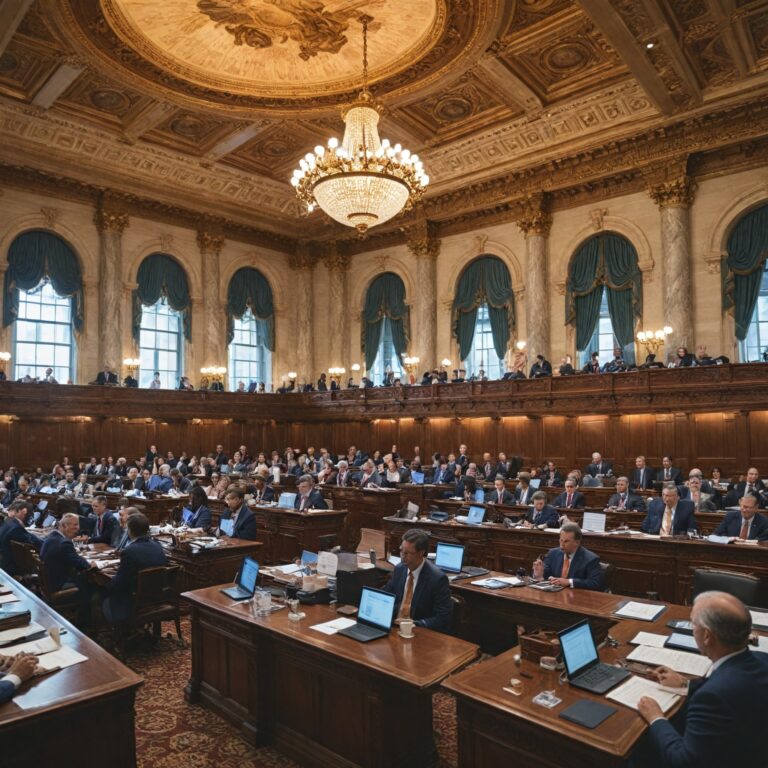
Dems Condemn GOP Redistricting Tactics as Cheating While Texas Gov. Abbott Issues Warning
Summary
The redistricting process in Texas has become a highly contentious political battle, drawing national attention for its implications on electoral fairness and minority representation. Following the 2020 census, Texas gained two additional congressional seats, prompting Republican lawmakers, led by Governor Greg Abbott, to propose new district maps that critics say are designed to entrench GOP power through partisan gerrymandering. These efforts have sparked fierce opposition from Texas Democrats, who accuse the Republican majority of diluting the voting power of Black and Latino communities in violation of the Voting Rights Act.
In response to the Republican-led redistricting plans, Texas Democrats staged dramatic walkouts, leaving the state to deny quorum and stall legislative approval. Governor Abbott condemned these tactics, threatening repeated special sessions and the arrest of absent lawmakers to force their return. The standoff has escalated tensions within Texas and attracted support and condemnation from political leaders nationwide, with Democratic governors from states like California and New York pledging solidarity and proposing retaliatory measures.
The legal battle over Texas’s redistricting maps remains unresolved amid multiple federal lawsuits alleging racial and partisan gerrymandering. The U.S. Department of Justice and civil rights groups argue that the new maps unlawfully weaken minority voting strength, while Texas Republicans maintain the maps reflect political realities and comply with constitutional requirements. The controversy reflects broader national debates over redistricting, electoral integrity, and the balance between partisan advantage and fair representation.
As Texas prepares for upcoming elections under the disputed maps, the redistricting conflict continues to highlight the profound impact of electoral map drawing on democratic governance. With ongoing legislative sessions, court rulings, and political maneuvering, the outcome of this struggle will likely shape the political landscape in Texas and influence redistricting battles across the United States for years to come.
Background
Redistricting in Texas is governed by the Texas Constitution, which requires that any redistricting plan be passed by both houses of the Texas Legislature and signed by the governor, unless the legislature can override a gubernatorial veto. Historically, this process has been contentious, with legislators from different regions and political factions vying for maps that increase their representation or political influence. For example, legislators from West Texas and prohibitionist factions have previously sought redistricting to bolster their power, while governors like Oscar Branch Colquitt have threatened vetoes against perceived gerrymandering efforts.
Texas has also experienced mid-decade redistricting, notably in 2003, a move that faced legal challenges but was ultimately upheld by the U.S. Supreme Court. The Court ruled in 2006 that nothing in the U.S. Constitution prohibits mid-decade redistricting, and later decisions have given states broad latitude to gerrymander for partisan advantage, so long as they do not dilute minority voting power or explicitly segregate voters by race. This has allowed Texas Republicans to pursue aggressive redistricting strategies to reshape congressional and legislative districts in their favor.
The practice of mid-decade redistricting by Texas has drawn criticism from other states, especially Democratic-controlled ones, which view these tactics as unfair. Some blue-state governors have threatened retaliatory redistricting measures, although they face their own procedural and constitutional hurdles. Meanwhile, Texas Governor Greg Abbott has defended his state’s approach, highlighting what he perceives as disproportionate gerrymandering by Democratic-led states like California and New York.
Amid these tensions, Democratic legislators in Texas have actively resisted the Republican-led redistricting efforts. Several Democrats have left the state to break quorum and stall the legislative process, a move Abbott has condemned, warning that lawmakers who flee could face consequences including forfeiture of their seats or legal charges such as bribery. This standoff has intensified the political struggle over redistricting in Texas, reflecting the broader national debate over partisan control of electoral maps.
GOP Redistricting Tactics in Texas
The Republican-led redistricting effort in Texas has been a contentious and highly politicized process. Spearheaded by Texas Governor Greg Abbott and supported by Republican lawmakers, the proposed redistricting plan aims to redraw congressional boundaries in a way that could potentially add five new districts favoring the GOP. According to Republican state lawmaker Todd Hunter, these new districts are designed based on “political performance,” intending to maximize Republican representation while protecting incumbent seats. Abbott has defended the redistricting, stating that the new districts align with the outcomes of the most recent presidential election, noting that “all these districts that are being added are districts that were won by Trump,” and asserting that political gerrymandering is legal.
However, the GOP redistricting tactics have drawn severe criticism and accusations of voter suppression, particularly from Democrats and civil rights advocates. Critics argue that the proposed maps use racial lines to divide communities of color, thereby diluting their voting power and potentially violating provisions of the 1965 Voting Rights Act. The changes to districts such as the 35th Congressional District—originally created by court order to protect minority voters—have been cited as evidence of this dilution. Democrats describe the GOP effort as a partisan power grab designed to “silence voters” and “hijack our democracy,” accusing Governor Abbott of acting under pressure from former President Donald Trump to entrench Republican dominance.
In response to the redistricting push, Texas Democratic legislators staged a notable walkout, leaving the state to break quorum and delay the legislative process. During a press conference, Representative John Bucy expressed that this action was necessary to uphold democratic principles, stating, “I didn’t run for office to stand by while democracy is stolen in broad daylight”. The GOP has retaliated by initiating legal measures to remove absent Democrats from office, with Attorney General Ken Paxton and Governor Abbott pursuing motions to vacate their seats, despite limited legal precedent for such actions.
The redistricting dispute in Texas has also reverberated beyond state borders. Democratic governors from other states, including California’s Gavin Newsom and Massachusetts’ Maura Healey, have publicly condemned the Texas plan, calling it a partisan effort that threatens minority voting rights nationwide. Newsom has even proposed retaliatory redistricting efforts in California, aiming to neutralize Texas’s influence by redrawing the Golden State’s congressional map in a special election. These reactions highlight the broader national implications of Texas’s redistricting, as it may set precedents affecting electoral fairness in other states.
Despite these controversies, the Texas Constitution mandates that redistricting must follow the regular legislative process—requiring approval from both chambers of the Texas Legislature and the governor’s signature, unless overridden by a veto. Historically, redistricting has been used to adjust representation for growing regions within the state, though concerns about gerrymandering and racial vote dilution have persisted. As the legal challenges to the current maps continue, there remains uncertainty about the long-term effects on Texas’s political landscape and minority representation.
Democratic Party Response
The Democratic Party has strongly condemned the Republican-led redistricting efforts in Texas, characterizing them as attempts to undermine democratic processes and suppress minority voting rights. Texas Democrats argue that the GOP’s redistricting plan not only violates longstanding norms but may also contravene provisions of the 1965 Voting Rights Act designed to prevent minority vote dilution. They warn that if Texas succeeds in reducing the ability of African American and Latino voters to elect candidates of their choice, similar efforts could spread to other states like Florida and Missouri.
In response to the GOP’s redistricting push, many Texas Democrats resorted to legislative walkouts, leaving the state to prevent the quorum needed for passing the redistricting bill. This drastic measure was framed as a necessary defense of democracy against what they described as a “rigged game.” Texas state Rep. John Bucy emphasized that the walkout was a last resort to uphold their oaths amid what they perceive as a theft of democratic representation.
National Democratic figures and organizations have rallied behind Texas Democrats, offering financial and logistical support for their efforts to stall the redistricting process. For example, Beto O’Rourke’s organization has raised substantial funds to assist with transportation and lodging for lawmakers involved in the walkout. Additionally, groups such as Texas Majority PAC, supported by major donors including George Soros, coordinate fundraising to back these resistance efforts.
Beyond Texas, Democratic leaders in states like New York, California, and Illinois have expressed solidarity with Texas Democrats, indicating their willingness to undertake mid-cycle redistricting efforts of their own as a countermeasure, even if such actions take years to materialize. Democrats have consistently advocated for a national redistricting system designed to remove partisan influence from the process. However, efforts to pass such legislation have been repeatedly obstructed by Republican opposition.
Democrats have also openly accused Republicans of “cheating” through their redistricting tactics. They argue that the GOP’s maps are racial gerrymanders intended to divide and weaken the political power of minority communities. Texas Governor Greg Abbott’s threats to arrest absent Democratic lawmakers and replace them were met with fierce criticism, with Democrats asserting that such tactics further erode democratic norms.
Texas Governor Greg Abbott’s Position and Actions
Texas Governor Greg Abbott has taken a firm stance in response to Democratic lawmakers fleeing the state to block GOP-led redistricting legislation. Abbott vowed to call “special session after special session after special session” until the redistricting plan is passed, emphasizing that Democrats would have to stay out of Texas for years to prevent it from becoming law. In an interview, Abbott stated, “We are in the process as we speak right now of searching for, preparing to arrest Democrats who may be in Texas, may be elsewhere,” signaling his intent to compel absent lawmakers to return and participate in the legislative process.
To enforce attendance, Abbott issued civil arrest warrants for the absent Democratic members and directed the Texas Department of Public Safety to assist the House in locating them. This effort included instructing the Texas Rangers to investigate any potential solicitation or receipt of funds by lawmakers to evade their duties, with findings to be forwarded to prosecutors. Abbott’s hardline approach reflects a continuation of tactics employed in prior redistricting conflicts, including the 2003 walkout by House Democrats who left Texas to stall a similar Republican-backed plan.
Abbott added redistricting to the agenda for a special session that began on July 21, despite some Democrats’ apprehension due to new House rules imposing fines of $500 per day for unauthorized absences. His actions, along with those of Texas Attorney General Ken Paxton, have sparked significant legal debate given the limited precedent for forcibly removing elected officials from office in such circumstances. Nevertheless, Abbott remains resolute, warning that any returning lawmakers “will be arrested and taken to the Capitol” to resume legislative business.
Republican leaders, including Abbott, argue that redrawing congressional districts is necessary to reflect demographic changes and maintain effective representation, with some GOP lawmakers suggesting the new maps could help Republicans gain up to five congressional seats. However, Democrats and critics contend that the proposed redistricting maps are designed to dilute the voting power of Black and Latino communities, accusing Abbott and other Republicans of orchestrating a partisan power grab under pressure from national figures like former President Donald Trump.
Legal Challenges and Court Proceedings
The redistricting efforts in Texas have sparked numerous legal challenges and court proceedings, primarily centered around allegations of racial and partisan gerrymandering violating federal law. In December 2021, the U.S. Department of Justice filed a lawsuit under Section 2 of the Voting Rights Act against the State of Texas and the Texas Secretary of State, contesting the redistricting plans for the Texas congressional delegation and the Texas House of Representatives, claiming these plans dilute minority voting strength. This lawsuit, known as United States v. Texas, was consolidated with several other related cases, including Wilson v. Texas and LULAC v. Abbott, reflecting the broad legal contest over the state’s maps.
The federal courts have had to navigate complex questions about the scope of judicial authority in redistricting disputes. While some lawsuits have been dismissed or dropped—such as a 2021 federal lawsuit brought by Texas legislators that was dismissed after plaintiffs failed to pursue it—the courts have yet to definitively rule on several pivotal issues. Legal experts note that courts may need to determine whether judges even possess the power to intervene in such deeply political questions, especially given the lack of clear legal precedent cited by state officials defending the redistricting plans.
The U.S. Supreme Court’s 2019 decision significantly shaped the landscape of these challenges by ruling that federal courts cannot adjudicate claims of extreme partisan gerrymandering under the Constitution, effectively barring a key avenue for challenging partisan maps at the federal level. Chief Justice John Roberts, writing for the narrow majority, emphasized that partisan gerrymandering claims do not fall within the courts’ purview, limiting federal judicial oversight. However, the Court preserved the ability for such claims to be litigated in state courts, where protections and enforcement vary widely by jurisdiction. This ruling has complicated efforts to challenge Texas’s partisan maps but left intact the federal Voting Rights Act as a tool against racial discrimination in redistricting.
In ongoing litigation, some courts have considered whether Texas must seek federal preclearance of redistricting plans following findings of intentional vote dilution and racial discrimination in prior redistricting cycles, referencing the 2011 maps. Additionally, lawsuits such as Gutierrez v. Abbott have alleged malapportionment violating the “one-person, one-vote” principle of the Fourteenth Amendment, adding further legal scrutiny to Texas’s redistricting process.
The State of Texas has vigorously contested accusations that race was a factor in drawing the maps, arguing that the lines were drawn without racial intent and based instead on political considerations, as reflected in statements from Republican lawmakers championing the plans. This defense, however, remains under examination in court. Meanwhile, political tensions have escalated, with Democratic lawmakers leaving the state in protest to block the redistricting legislation and urging support from other states, underscoring the contentious and protracted nature of the legal and political battle over redistricting in Texas.
Finally, procedural aspects of redistricting have also come under judicial review, as courts have indicated they may step in to impose redistricting plans if the legislature and the Legislative Redistricting Board fail to adopt new maps, including during special sessions. This judicial oversight reflects the high stakes involved in redistricting and the courts’ potential role in resolving legislative impasses.
Timeline of Major Events in the Texas Redistricting Conflict
In response to the 2020 federal census, Texas was apportioned 38 congressional districts, an increase from 36 districts following the 2010 census. The 87th Texas Legislature, during its 3rd Called Session, passed Senate Bill 6 (S.B. 6), the United States House of Representatives redistricting plan (PLANC2193), on October 19, 2021. The bill was subsequently signed into law by Governor Greg Abbott on October 25, 2021. According to Article III of the Texas Constitution, redistricting must occur during the first legislative session following the publication of new census data.
Shortly after the passage of the redistricting plan, multiple lawsuits were consolidated under LULAC v. Abbott in November 2021. These cases challenged the redistricting maps under Section 2 of the Voting Rights Act and the Fourteenth Amendment, reflecting widespread contention over the maps’ fairness and legality. The redistricting process faced additional delays due to procedural irregularities, including the late release of apportionment data on April 26, 2021, rather than the federally mandated January 1 date. As a result, the Texas Legislative Redistricting Board (LRB) held no authority over redistricting in 2021, necessitating legislative action in special sessions.
Tensions escalated
Impact on Voter Representation and Elections
The redistricting efforts in Texas have sparked significant debate regarding their impact on voter representation and electoral outcomes. Republican lawmakers contend that redrawing congressional boundaries could enable GOP candidates to gain up to five additional seats in Congress, though they acknowledge that these changes do not guarantee electoral victories. Conversely, Democrats argue that the proposed maps diminish the voting power of Black and Latino communities by fragmenting local neighborhoods and incorporating voters into districts that span distant regions.
Legal and civil rights experts have raised concerns that such redistricting efforts may violate provisions of the 1965 Voting Rights Act, particularly those designed to prevent minority vote dilution. The U.S. Department of Justice previously flagged Texas’ 18th District as an unconstitutional racial gerrymander due to its majority-minority composition, a charge Texas Republicans have both denied and used to justify mid-decade map changes. Critics argue that reducing the electoral influence of African American and Latino voters in Texas could set a precedent for similar actions in other states, potentially undermining minority representation nationwide.
Furthermore, the redistricting process in Texas has faced legal challenges, with congressional and state legislative maps being contested in federal court since 2021. Despite ongoing litigation, the GOP-led effort faces a fixed timeline requiring new maps to be adopted by early December 2025 to take effect for the 2026 midterm elections. This schedule has intensified political maneuvers, including the calling of special legislative sessions and debates over quorum breaks.
Democrats have expressed concern that these tactics, which include accusations of “cheating” by manipulating district boundaries to unfairly favor Republicans, undermine democratic norms and the principle of fair representation. They hope that sustained opposition and legal pressure will compel Republicans to revise the redistricting process to allow more input and produce maps that better reflect Texas’ diverse electorate. Meanwhile, some Democratic leaders in other states have indicated willingness to support Texas Democrats’ cause, potentially leading to counter-redistricting efforts elsewhere.
Broader Political and Public Reactions
The GOP-led redistricting efforts, particularly in Texas, sparked a nationwide political backlash and galvanized Democratic opposition across multiple states. Democratic leaders from New York, California, and Illinois openly supported the Texas Democrats who fled the state to prevent quorum, signaling a readiness to counteract with mid-cycle redistricting initiatives of their own, even if such measures could take years to implement. This broad coalition framed the Republican maneuvers as a partisan power grab aimed at consolidating political advantage rather than reflecting fair representation.
Prominent Democratic figures vocally condemned the redistricting push. Massachusetts Attorney General Maura Healey characterized the effort as a “partisan, craven political power grab” driven by President Trump, Texas Governor Greg Abbott, and Attorney General Ken Paxton, intended primarily to protect their own power bases. Similarly, Texas Congressman Greg Casar likened the GOP’s tactics to anti-democratic actions typically seen in authoritarian regimes, asserting that democracy in the United States was under significant threat due to these efforts. Casar and other Texas Democrats staged protests and engaged in high-profile public demonstrations to resist the redistricting plans and to call attention to their implications for voting rights.
National Democratic organizations played a crucial role in supporting these resistance efforts by providing substantial financial backing and logistical support. Beto O’Rourke’s organization, with a war chest of $3.5 million, helped cover expenses such as transportation and lodging for the lawmakers who fled Texas, while Texas Majority PAC, supported by Democratic megadonor George Soros, coordinated fundraising campaigns to counter the GOP’s initiatives. These efforts were part of a larger strategy to mitigate what Democrats viewed as a coordinated nationwide attempt by Republicans to redraw electoral maps in their favor ahead of the 2026 midterms.
Republican defenders of the redistricting argued that the new maps could enable GOP candidates to gain up to five additional congressional seats, although they acknowledged this did not guarantee electoral victories. Democrats countered that the proposed redistricting diluted the influence of Black and Latino voters, thereby undermining equitable representation. The political contest over redistricting also illuminated broader debates over the purpose of redistricting itself, including the balance between maximizing partisan seats and protecting incumbents, with the latter being more common in practice.
Beyond political leaders, public committee hearings associated with redistricting provided a forum for citizens to express concerns about existing districts, local voting patterns, and community interests. These hearings aimed to increase transparency and public awareness of the redistricting process, especially once census population data became available. The public engagement underscored the importance of redistricting in shaping political power and representation at both state and national levels.
Historical Context of Texas Redistricting Battles
Texas has a long and contentious history of redistricting battles that reflect the political and demographic shifts within the state. Over several decades, the redistricting process has often been marked by intense partisan conflict, legal challenges, and strategic maneuvering by both major parties.
In the early 20th century, legislators from regions such as West Texas sought redistricting reforms to enhance their representation, while prohibitionist legislators aimed to increase their influence in the state legislature. These efforts were met with resistance from governors like Oscar Branch Colquitt, who threatened vetoes against maps perceived as overtly gerrymandered for either faction.
Throughout the 1980s, 1990s, 2000s, and 2010s, the redistricting process in Texas followed a complex path shaped by evolving procedural and legal requirements. Although the basic framework remained consistent, each decade introduced new challenges as demographic changes and political calculations influenced the drawing of district boundaries.
More recently, the redistricting following the 2020 federal census intensified these long-standing conflicts. Texas gained two additional congressional seats, increasing from 36 to 38 districts, which heightened the stakes for both Republicans and Democrats. The Republican-controlled legislature, under leaders like Todd Hunter, pursued a redistricting plan designed to capitalize on political performance and expand GOP representation. This move triggered significant opposition from Democrats, who staged a dramatic walkout to deny quorum and protested what they viewed as a partisan and unfair power grab.
These historic disputes reveal a pattern of partisan struggle over redistricting in Texas, where demographic growth, political ambitions, and legal constraints continuously collide. The repeated clashes underscore the broader national debate over redistricting fairness and the integrity of representative democracy in rapidly changing states like Texas.
Future Outlook and Continuing Debates
The future of the Texas redistricting battle remains uncertain as the state approaches critical legislative and judicial milestones. Texas Republicans have put forward a redistricting plan that could potentially eliminate five Democratic U.S. House seats, intensifying partisan tensions ahead of the 2026 midterms when the GOP holds a slim majority. The legislature passed HB 1000 on May 19, 2023, which Governor Greg Abbott signed on June 12, with the new maps set to take effect on September 1. However, these maps have been challenged in federal court since 2021, resulting in a protracted legal process that included a trial held from May 21 to June 11, 2025.
In response to concerns raised by the Department of Justice in July 2025, Governor Abbott called a special legislative session beginning July 21, 2025, to address congressional re-redistricting, signaling ongoing efforts to finalize district boundaries amid controversy. Should the legislature and the Legislative Redistricting Board (LRB) fail to approve new state senate or house plans, the courts are likely to intervene by imposing a redistricting plan, reflecting the procedural safeguards embedded in Texas law.
Legal constraints such as the Voting Rights Act continue to influence how districts can be drawn, though recent Supreme Court decisions have indicated a possible weakening of protections for minority voters, adding complexity to the redistricting process. Critics argue that Texas could soon find itself conducting elections under maps that may later be ruled discriminatory, extending the uncertainty into future election cycles.
The political climate surrounding redistricting remains highly charged. Democratic lawmakers, including U.S. Representative Marc Veasey, have vowed to oppose what they call “rigged” congressional maps, with some suggesting coordinated efforts across Democratic-led states to counterbalance the GOP’s plans. Notably, California Governor Gavin Newsom has threatened to neutralize Texas’s redistricting efforts by proposing a new congressional map in California through a special election, illustrating how the controversy has national repercussions.
This ongoing redistricting conflict is part of a broader national pattern, with other states experiencing similar battles over map drawing and partisan advantage. Examples include New York, where mid-decade redistricting is constitutionally restricted, and Missouri, where Republican efforts aim to secure additional seats. The stakes are high as both parties employ a range of tactics—including legislative maneuvers and public protests—to influence the outcomes in their favor.
As legal challenges continue and special sessions convene, the Texas redistricting saga is poised to remain a contentious and pivotal issue shaping the state’s political landscape for years to come.
The content is provided by Jordan Fields, Know Heaven