
Summary
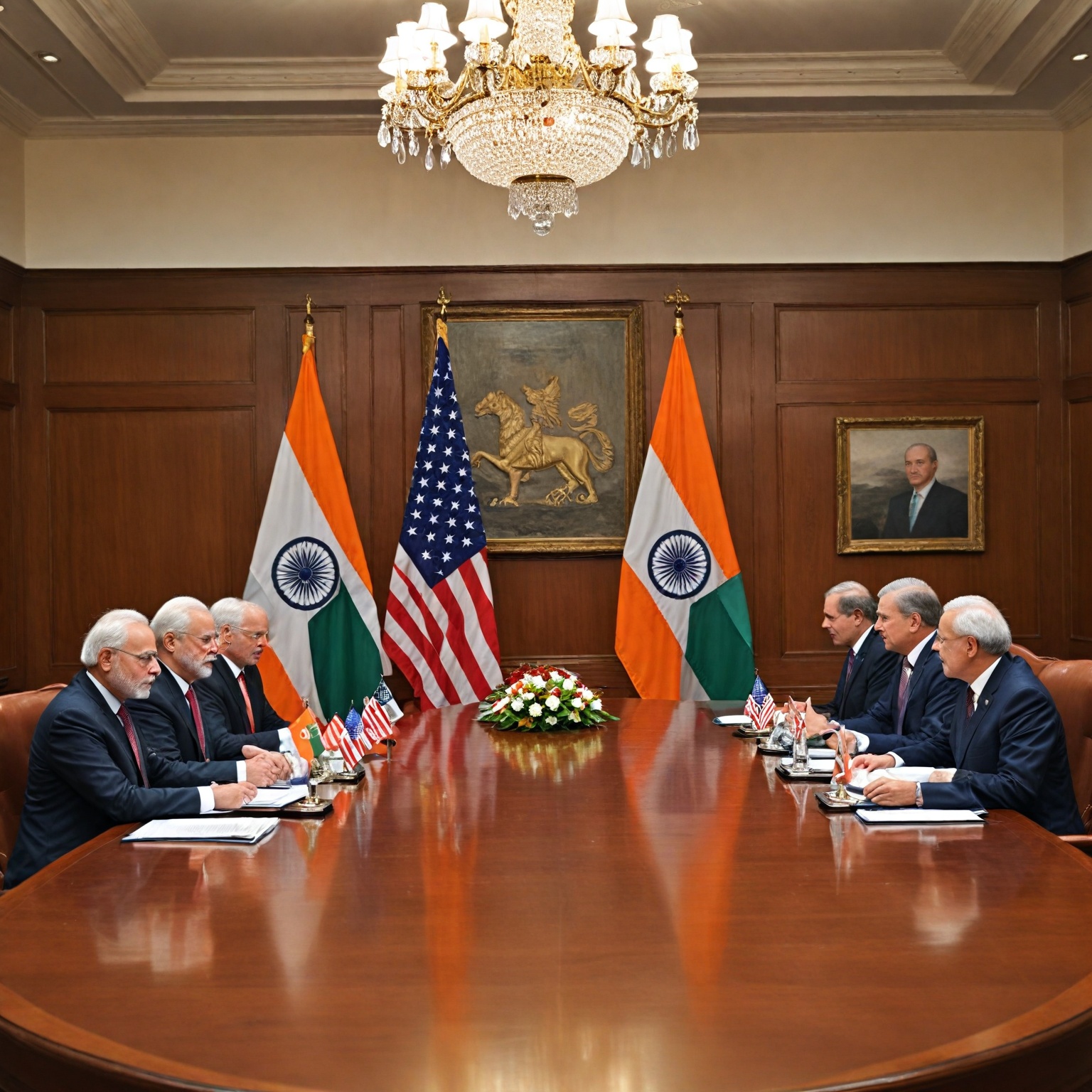
India is positioned as a front-runner to secure a groundbreaking bilateral trade agreement with the United States, marking a significant milestone in the evolving Comprehensive Global Strategic Partnership between the two nations. This prospective trade deal aims to deepen and diversify economic ties by addressing longstanding trade disputes, enhancing market access, and promoting cooperation in emerging sectors such as digital trade, clean energy, and labor mobility. The negotiations follow intensified diplomatic engagements, notably Indian Prime Minister Narendra Modi’s historic state visit to the U.S. in June 2023, which set the stage for a renewed and ambitious trade agenda.
The United States views the agreement as a strategic opportunity to advance its “America First Trade Policy,” seeking reciprocal trade arrangements that reduce its $45.7 billion goods trade deficit with India and strengthen supply chain resilience amid global geopolitical shifts. U.S. Treasury Secretary Scott Bessent has articulated a vision of a coalition involving India and other key Indo-Pacific partners to counterbalance China’s growing economic influence, highlighting the broader geopolitical importance of the trade talks. For India, the agreement aligns with domestic priorities to bolster manufacturing, pharmaceuticals, and e-commerce exports while securing preferential access to critical inputs necessary for sustainable economic growth.
Despite optimism about concluding the agreement within a near-term timeframe, the negotiations face challenges including balancing the need for speed with the necessity of thorough and durable commitments. Critics caution against rushed deals that may lack long-term effectiveness, and ongoing trade imbalances and tariff disputes continue to complicate the dialogue. Furthermore, the distinct composition of India’s export economy—heavily weighted toward services exempt from tariffs—adds complexity to harmonizing trade terms acceptable to both parties.
Overall, the prospective U.S.-India trade agreement represents not only an economic partnership but also a strategic alignment with implications for global trade dynamics and regional security architecture. By fostering greater economic cooperation alongside initiatives in clean energy, climate finance, and technological innovation, the deal is positioned as a landmark in bilateral relations and a potential model for future U.S. trade diplomacy.
Background
The United States and India have been engaged in ongoing efforts to strengthen their bilateral trade relationship, with both sides emphasizing the importance of sustained dialogue and cooperation to address shared economic priorities. The collaboration gained momentum following the historic state visit of Indian Prime Minister Narendra Modi to the United States in June 2023, which culminated in the settlement of seven longstanding trade disputes at the World Trade Organization (WTO) and improved understandings on market access for key products. These developments laid a strong foundation for further negotiations aimed at deepening and diversifying trade ties between the two countries.
India’s trade relationship with the United States is characterized by a significant goods trade deficit on the U.S. side, which stood at $45.7 billion in 2024, reflecting a 5.1% increase compared to the previous year. Despite this, India’s consumer-led economy provides it with a stronger position in trade talks compared to other export-reliant Asian economies. Exports, including services that are largely exempt from tariffs, constitute about one-fifth of India’s economy, and the U.S. accounts for only 18% of India’s merchandise exports. This diversification reduces India’s dependence on any single export market and shapes the nature of the bilateral trade relationship.
India actively pursues regional and bilateral trade agreements to expand its export markets and secure necessary inputs for domestic manufacturing, maintaining preferential access through agreements with over 50 countries. Against this backdrop, U.S. officials have expressed optimism about negotiating a new and modern trade agreement focused on job creation and citizen well-being in both nations. Initial rounds of bilateral trade discussions concluded in New Delhi, with further sector-specific talks anticipated, underscoring the shared commitment to advance the trade agenda following high-level political engagements earlier in 2023.
These ongoing negotiations occur in a broader geopolitical context, with the U.S. contrasting India’s openness to cooperation with China’s more isolationist trade posture, reflecting strategic economic considerations in the Indo-Pacific region. The sustained commercial dialogue, including planned mid-year reviews led by senior officials, aims to maintain momentum and achieve a breakthrough agreement by the end of 2023.
Current Trade Negotiation Developments
India and the United States have made significant progress toward finalizing a comprehensive Bilateral Trade Agreement (BTA) that aims to deepen and diversify their economic relationship. Following the historic state visit of Indian Prime Minister Narendra Modi to the U.S. in June 2023, both countries committed to launching formal negotiations with an emphasis on promoting job creation, citizen well-being, and modern trade issues such as digital trade, goods, and labor mobility.
In early 2025, the two nations officially announced the Terms of Reference for the BTA negotiations, establishing a clear roadmap for multi-sectoral discussions. This announcement followed continued high-level engagements, including the February 2025 meeting between Prime Minister Modi and then-President Trump, which also launched the U.S.-India COMPACT initiative aimed at catalyzing cooperation in military partnership, commerce, and technology. The Terms of Reference serve as a foundational framework outlining mutual goals and procedural guidelines to facilitate productive negotiations.
The negotiations have involved detailed dialogues addressing various economic and trade issues. Key topics include bilateral government procurement practices with a focus on transparency and fairness, resolving longstanding trade disputes at the World Trade Organization (WTO), and improving market access for products critical to both economies. Additionally, discussions have incorporated broader economic cooperation such as clean energy transition, climate finance mobilization, and enhancements to cross-border payment systems, reflecting the evolving scope of the bilateral partnership.
Officials from both sides continue to underscore the importance of these talks in strengthening the Comprehensive Global Strategic Partnership between India and the United States. Regular Commercial Dialogue sessions and initiatives like the U.S.-India Standards and Conformance Cooperation Program (SCCP) further support efforts to build inclusive trade policies and expand private sector opportunities.
While there is optimism about concluding a mutually beneficial trade agreement within the near term—potentially within 90 days as suggested by Indian trade officials—experts caution that negotiations should balance speed with thoroughness to ensure durable and meaningful outcomes. The emphasis remains on crafting an agreement that not only addresses immediate trade barriers but also establishes a sustainable framework for ongoing economic collaboration.
Key Objectives and Strategic Importance
The United States aims to advance the “America First Trade Policy,” which prioritizes unleashing investment, jobs, and growth domestically while addressing significant bilateral trade barriers with strategic partners like India. Central to this policy is the effort to achieve reciprocal trade agreements that reflect fair market access and mutual economic benefits. Negotiations with India focus on reducing trade deficits and overcoming obstacles that have historically limited bilateral commerce, as evidenced by the $45.7 billion U.S. goods trade deficit with India in 2024.
From the U.S. perspective, trade agreements are also viewed as geopolitical tools designed to restructure global supply chains and reduce dependency on China. Treasury Secretary Scott Bessent has articulated a vision of a strategic coalition involving India, Japan, Vietnam, and South Korea to economically isolate Beijing and create a U.S.-led economic sphere. This approach highlights the strategic importance of India not only as an economic partner but also as a key player in the U.S.’s broader efforts to counterbalance China’s influence in global trade.
For India, the objectives include positioning itself as a leading player in manufacturing, pharmaceuticals, and e-commerce through comprehensive foreign trade policies that promote export growth and streamline regulatory frameworks. India’s engagement in regional and bilateral trade negotiations seeks to diversify export markets and secure preferential access to critical raw materials and capital goods, which are essential for stimulating domestic manufacturing. India’s export portfolio is notably diversified, with the U.S. accounting for only 18% of its merchandise exports, underscoring the importance of expanding trade ties beyond traditional partners.
The partnership between the U.S. and India is further reinforced through dialogues and collaborative efforts aimed at strengthening the Comprehensive Global Strategic Partnership. These initiatives focus on inclusive trade policies, advancing clean energy transitions, mobilizing climate finance, and developing innovative investment platforms to accelerate renewable energy deployment. The formalization of negotiation roadmaps and ongoing ministerial-level meetings underline the commitment to deepen and diversify trade relations, creating a foundation for sustained economic growth and strategic alignment.
Economic Implications
India’s evolving trade policies and strategic economic engagements have significant implications for both its domestic economy and international trade relations. The country’s foreign trade policy of 2023 exemplifies this dynamic, aiming to enhance India’s global competitiveness by focusing on emerging sectors such as e-commerce exports and streamlining policies related to Special Chemicals, Organisms, Materials, Equipment, and Technologies (SCOMET). These efforts are supported by a range of incentives including duty refunds, export growth capital equipment plans, and free trade agreements, which collectively aim to bolster export promotion and simplify trade procedures.
Despite global disruptions such as the imposition of tariffs by the United States under the Trump administration, India’s economic outlook remains robust. The country is projected to achieve a gross domestic product growth rate of 6.3% to 6.8% for the fiscal year 2025-26, underscoring its resilience amid trade tensions. This growth is supported by a diversified export portfolio; notably, the United States accounted for only 18% of India’s merchandise exports in 2023-2024, reflecting India’s strategic efforts to expand into multiple markets and reduce dependency on any single economy.
However, certain sectors within India face challenges. Growth rates in manufacturing, construction, and services have shown a decline in late 2024 compared to the previous year, highlighting underlying stresses that could impact long-term economic sustainability. Furthermore, trade tensions have had immediate effects; for instance, India was subject to a 26% reciprocal tariff by the U.S. in early April 2024, which was later adjusted to a 10% baseline tariff after diplomatic engagement. Negotiations between the U.S. Trade Representative and India’s Ministry of Commerce and Industry have since progressed, aiming to establish a roadmap for reducing trade barriers and enhancing bilateral cooperation.
The trade relationship between India and the United States is marked by significant imbalances and ongoing efforts to address them. Both countries have expressed commitments to tariff reductions and market access improvements, facilitated by high-level meetings and historic settlements of longstanding disputes at the World Trade Organization. These developments underscore a mutual interest in resolving trade frictions to foster a more balanced and strategic economic partnership.
Strategically, the United States views trade agreements not merely as economic tools but as instruments of geopolitical realignment, aiming to reduce global supply chain dependencies on China by strengthening economic ties with key partners like India. Consequently, India’s positioning to secure a groundbreaking trade agreement aligns with both its domestic economic ambitions and the geopolitical interests of its international partners.
Political and Diplomatic Significance
The prospective trade agreement between the United States and India represents a pivotal advancement in the Comprehensive Global Strategic Partnership shared by the two nations. It underscores a mutual commitment to fostering inclusive and fair trade and investment policies while leveraging private sector interests to open new market opportunities that benefit both countries economically. The agreement has been described as opening a “new chapter of bilateral cooperation,” aimed at deepening and diversifying the trade relationship in alignment with broader strategic objectives highlighted during Prime Minister Modi’s Official State Visit to the United States in June 2023.
Politically, the dialogue and negotiations symbolize a shift towards a more balanced and reciprocal international trade system, addressing longstanding concerns of trade misalignment that the U.S. has experienced over recent decades. The engagement reflects a recognition by both governments of the importance of sustained momentum on shared economic priorities, with commitments to conduct mid-year reviews and ongoing collaboration at senior levels to ensure durable and meaningful outcomes.
Diplomatically, the trade discussions have bolstered cooperation beyond trade alone, extending into areas such as climate finance, clean energy transitions, and financial technologies, including innovations in cross-border payments systems like India’s Unified Payments Interface and the U.S. FedNow system. This broader collaboration underscores the multifaceted nature of the U.S.-India partnership, linking economic policy with strategic and technological initiatives.
The negotiations also highlight India’s active role in regional and bilateral trade frameworks, as it seeks to diversify export markets and secure access to critical materials and capital goods essential for its domestic manufacturing ambitions. The trade agreement is thus positioned not merely as a transactional deal but as a strategic alignment that enhances geopolitical ties while advancing economic development goals on both sides.
Furthermore, the diplomatic significance is accentuated by the U.S. administration’s openness to engaging with over 50 countries in the wake of recent tariff policies, with India emerging as a frontrunner in securing a groundbreaking deal amidst this global reshuffling of trade relations. This positions the agreement as a flagship example of the new direction in U.S. trade diplomacy, emphasizing thorough, durable, and mutually beneficial arrangements over hastened or transactional deals.
In sum, the political and diplomatic importance of the U.S.-India trade agreement lies in its capacity to solidify a strategic partnership that advances economic prosperity, addresses systemic trade imbalances, and reinforces collaboration across a broad spectrum of shared priorities in an evolving global landscape.
Challenges and Controversies
The pursuit of a groundbreaking trade agreement between the United States and India faces several challenges and controversies that complicate the negotiation process. One significant concern is the balance between speed and thoroughness in negotiations. Wendy Cutler, a former U.S. trade negotiator, cautioned that rapid negotiations might lead to agreements that lack depth and durability, potentially resulting in transactional deals rather than lasting frameworks governing trade and investment relations. This highlights the risk that haste could undermine the long-term effectiveness of any deal reached.
Additionally, the tight timeframe imposed for reaching the first phase of the agreement—targeted for the fall—places considerable pressure on both sides. For India, this deadline represents a critical test of its negotiating capabilities, with high stakes involved in securing a favorable outcome. The United States, meanwhile, is engaged in a broader strategic effort to counter China’s growing global influence, viewing India as a central partner in this endeavor. Treasury Secretary Scott Bessent envisions a coalition including India, Japan, Vietnam, and South Korea aimed at economically isolating Beijing. This geopolitical context adds complexity to the trade talks, as they intertwine with wider regional and global power dynamics.
Economic considerations also factor into the controversies surrounding the agreement. There is a perception that previous decades of largely unconstrained trade have not adequately compensated the United States despite its role as a massive demand source and global peace arbiter. This backdrop informs U.S. policymakers’ cautious approach to new trade deals, seeking agreements that ensure reciprocal benefits. Furthermore, the structure of trade between India and the United States differs notably from other major trade relationships, such as with China, due to the substantial services component in India’s exports. This difference poses additional challenges in harmonizing trade terms that satisfy both countries’ economic interests.
Finally, while the U.S. government emphasizes the opportunity for job creation and citizen well-being through the agreement, domestic and international skepticism remains regarding the feasibility and fairness of the deal. The “impatience” observed in financial markets following tariff announcements reflects uncertainty about the negotiation’s outcome and duration. To sustain momentum, both sides have committed to ongoing dialogue, including a mid-year review by senior officials before the end of 2023, underscoring the complex and evolving nature of the trade discussions.
Future Prospects and Long-Term Cooperation
The future prospects of U.S.-India trade relations appear promising, with both countries actively pursuing a comprehensive and durable trade agreement aimed at significantly expanding bilateral commerce. India and the United States agreed in early 2023 to work on the first phase of a trade deal expected to be concluded by the end of the year, targeting a bilateral trade volume of $500 billion by 2030. This ambitious goal underscores the strategic importance both nations place on strengthening economic ties, as reflected in the ongoing efforts under the U.S.-India Comprehensive Global Strategic Partnership.
The dialogue between the two countries has emphasized not only speed in negotiations but also the importance of crafting agreements
The content is provided by Harper Eastwood, Know Heaven