China Hits Back: Unveiling Truth Behind Alleged Geneva Trade Deal Violations by Trump Administration
Summary
The China Hits Back: Unveiling Truth Behind Alleged Geneva Trade Deal Violations by Trump Administration centers on the escalating trade conflict between China and the United States during and following high-level negotiations held in Geneva in May 2025. This conflict traces its roots to the Trump administration’s initiation of tariffs and trade barriers in 2018, aimed at addressing alleged unfair trade practices by China, which sparked a prolonged trade war disrupting global supply chains and bilateral economic relations. The Geneva talks marked a notable attempt to de-escalate tensions, resulting in an agreement to reduce tariffs and establish a framework for continued economic dialogue.
Despite initial optimism from both sides, the accord’s implementation became a point of contention. The Trump administration accused China of “totally violating” the Geneva agreement by failing to remove certain tariffs and non-tariff measures, particularly concerning critical minerals and technology exports. In response, China’s Ministry of Commerce denied these allegations, asserting full compliance and condemning unilateral U.S. actions such as intensified export restrictions and visa revocations for Chinese students as provocations that undermined the deal and bilateral trust. The dispute highlighted broader challenges in sustaining trade cooperation amid strategic rivalry and competing economic interests.
International trade bodies further complicated the dispute; a World Trade Organization panel ruled that U.S. tariffs on China violated global trade rules by targeting Chinese goods disproportionately and exceeding agreed limits. However, enforcement was hindered by the paralysis of the WTO appellate body, prolonging uncertainty. Meanwhile, diplomatic efforts continued with designated officials from both countries committed to ongoing negotiations, though retaliatory measures and mutual distrust persisted, keeping the trade relationship tense and fragile.
The controversy over alleged Geneva deal violations exemplifies the complexities of U.S.-China economic relations in the 2020s, marked by competing narratives, strategic economic controls, and diplomatic maneuvering. It underscores the difficulties in resolving deep-rooted trade disputes amid broader geopolitical tensions, affecting global markets and international relations.
Background
The economic conflict between China and the United States escalated significantly beginning in January 2018, when then-President Donald Trump imposed tariffs and various trade barriers on Chinese goods with the intention of addressing what the U.S. described as longstanding unfair trade practices by China. These measures led to a prolonged trade war that disrupted global supply chains, increased wholesale prices, and resulted in economic damage on both sides. The trade tensions were further intensified by the Trump administration’s implementation of export restrictions on sensitive technologies such as semiconductor design software and chemicals, as well as visa revocations for Chinese students, which drew strong condemnation from Beijing.
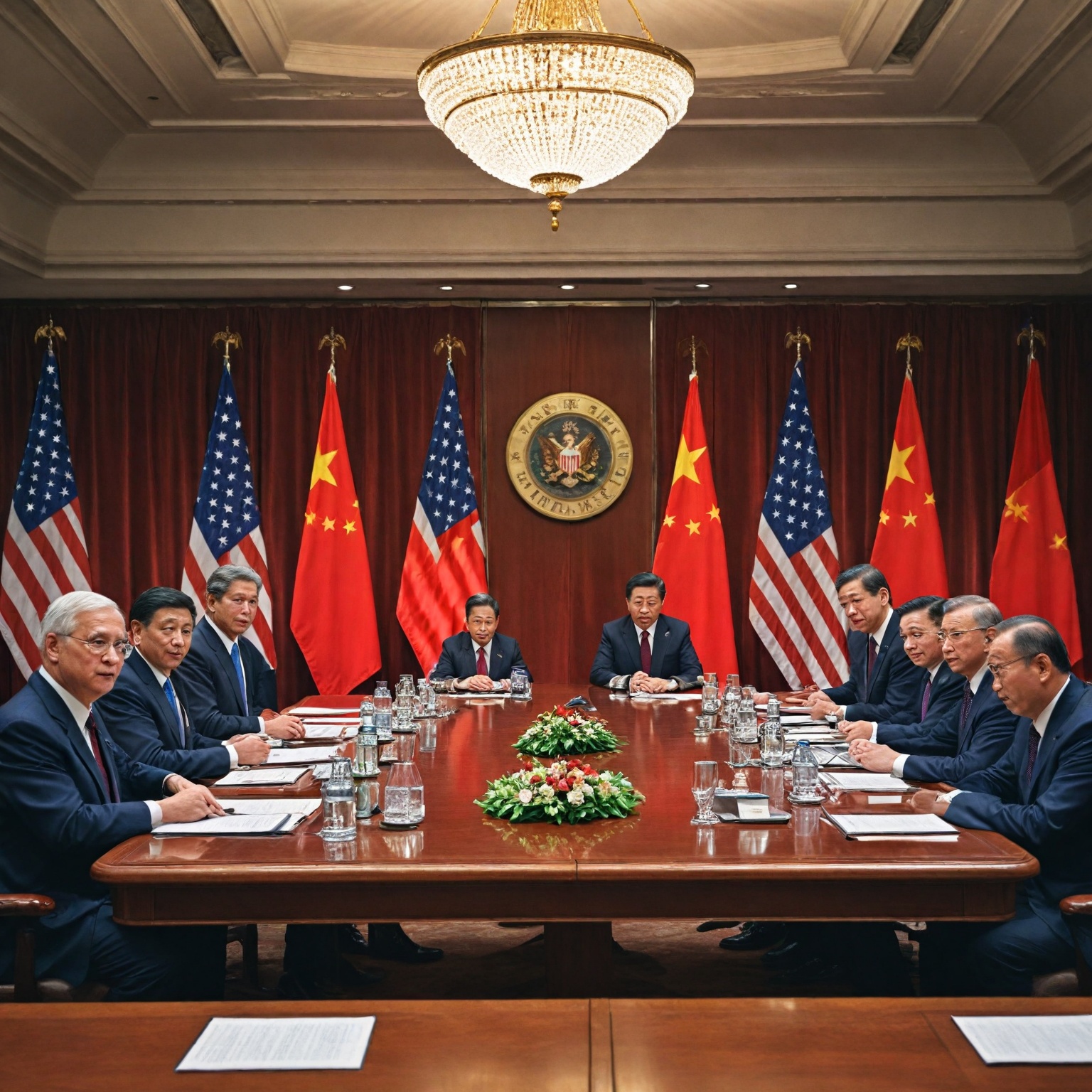
In May 2025, high-level talks were held in Geneva between U.S. Treasury Secretary Scott Bessent and Chinese Vice Premier He Lifeng, aimed at defusing the ongoing trade war and rebalancing economic relations. The two-day discussions concluded on a positive note, with both sides reporting “substantial progress” and reaching an “important consensus” to launch a new economic dialogue forum. Despite the announcement of a deal intended to reduce the U.S. trade deficit, details were initially scarce and a joint statement was promised for release the following day. The talks were viewed as a significant step given the complexity of issues and the magnitude of the $1.2 trillion trade imbalance cited by U.S. officials as the impetus for the negotiations.
However, the positive momentum was fragile. Shortly after the Geneva talks, U.S. officials indicated that progress had somewhat stalled, with Treasury Secretary Bessent acknowledging that further high-level engagement between the two countries’ leaders would be necessary to sustain dialogue. Meanwhile, Beijing criticized subsequent unilateral actions by the U.S. that undermined the deal, warning that such steps “seriously undermine” the agreement and threatening to take measures to protect its interests. The disputes extended to World Trade Organization rulings, with the WTO panel finding that certain U.S. tariffs exceeded agreed limits and were discriminatory towards China, though enforcement remained complicated by the paralysis of the WTO appellate body due to U.S. actions.
Following the Geneva talks, both countries agreed to establish a mechanism for continued discussions on economic and trade relations, with Vice Premier He Lifeng representing China and U.S. officials designated to continue negotiations. Despite this framework, ongoing retaliatory measures and policy moves by the Trump administration kept trade frictions high, contributing to a tense and uncertain bilateral economic relationship.
Allegations of Violations
The trade tensions between the United States and China escalated after U.S. President Donald Trump accused China of “TOTALLY VIOLATING” the agreement reached during the Geneva trade talks in May 2025, which aimed to mutually roll back tariffs and trade restrictions. Trump claimed that China had failed to uphold its commitments under the deal, particularly regarding the reduction of tariffs on critical minerals and other goods. The Trump administration further intensified export restrictions on semiconductor design software and chemicals to China and announced plans to revoke visas for approximately 280,000 Chinese students studying in the U.S., actions that Beijing criticized as undermining the Geneva agreement.
In response, the Chinese Ministry of Commerce categorically denied the accusations, calling the U.S. claims “groundless” and asserting that China had “strictly implemented and actively upheld” the terms of the agreement. China emphasized that it had canceled or suspended certain tariff and non-tariff measures imposed in April 2025, which were retaliatory responses to previous U.S. “reciprocal tariffs,” and pledged to take “forceful” measures to safeguard its rights and benefits if the United States continued unilateral provocations. The ministry accused the U.S. of unilaterally provoking new economic and trade frictions, exacerbating uncertainty and instability in bilateral relations, while China maintained its commitments under the deal.
The terms of the Geneva agreement included the United States suspending 24 percentage points of its additional ad valorem tariff rates on certain Chinese articles for an initial period of 90 days, retaining a remaining 10 percent tariff rate, and removing additional modified ad valorem rates imposed in early April 2025. Correspondingly, China agreed to suspend or remove non-tariff countermeasures against U.S. products enacted since April 2, 2025. However, despite these measures, China noted that tariffs on products such as electric vehicles, steel, and aluminum would remain due to earlier trade disputes.
The disagreement over compliance with the Geneva deal highlighted broader concerns about the sustainability of the trade relationship. Analysts and officials observed that the ongoing imposition of two-way tariffs effectively resembled an embargo, undermining negotiations and complicating prospects for de-escalation. The Chinese government warned the U.S. about the negative impact of unilateral tariff actions on both countries and the global economy and reiterated its refusal to be coerced or blackmailed under the guise of trade talks.
The trade dispute has also had measurable impacts on trade flows, with shifts in import patterns from China to other countries such as Mexico, Japan, Korea, and Canada, although overall U.S. imports remained broadly stable. These patterns suggest that beyond tariff measures, other factors like inventory adjustments have influenced bilateral trade dynamics. Moreover, a WTO panel later found that the U.S. tariffs imposed on China violated global trade rules by targeting China specifically and exceeding agreed maximum rates without adequate justification.
China’s Response
Beijing has firmly rejected allegations from the Trump administration that it violated the Geneva trade agreement reached during high-level talks in May 2025. China’s Ministry of Commerce (MOFCOM) issued a statement describing the U.S. accusations as “groundless” and “seriously contrary to the facts,” asserting that China has “strictly implemented and actively upheld” the terms of the agreement. The ministry emphasized that it had canceled or suspended certain tariffs and non-tariff measures imposed since April 2025 in response to U.S. reciprocal tariffs, underscoring China’s commitment to the deal despite ongoing provocations from the U.S.
China accused the United States of unilaterally provoking new economic and trade frictions that have exacerbated instability and uncertainty in bilateral relations. Beijing warned that if Washington continues with measures damaging China’s interests—such as increased tech export restrictions and visa pressures on Chinese students—it will respond with resolute and forceful actions to safeguard its rights and benefits.
Specific retaliatory measures taken by China in April 2025 included adding rare earth minerals to its controlled export list, launching an anti-dumping investigation against U.S. chemical firm DuPont’s China operations, and blacklisting several U.S. defense and technology companies. However, under the Geneva agreement, China committed to removing these non-tariff countermeasures, including suspending or withdrawing these restrictions, although the exact timeline and implementation details remained unclear.
Chinese officials stressed the importance of maintaining stable economic relations and called on the U.S. to engage in equal and constructive consultations. Vice Premier He Lifeng was designated as China’s lead representative in ongoing discussions alongside U.S. Treasury Secretary Scott Bessent and U.S. Trade Representative Jamieson Greer, with talks expected to continue alternately in China, the U.S., or a mutually agreed third country.
Beyond trade, China condemned Washington’s broader strategic moves, including intensified tech export controls and diplomatic pressure, as actions that “seriously undermine” the Geneva agreement. Beijing highlighted its nationwide efforts to regulate rare earth mining and exports as evidence of its commitment to responsible trade practices. Chinese officials urged the U.S. to halt discriminatory restrictions and jointly uphold the Geneva consensus to defuse tensions and restore cooperation.
US Official Statements and Positions
During the trade negotiations held in Geneva, Switzerland, U.S. officials expressed optimism about the progress made in resolving trade tensions with China. Treasury Secretary Scott Bessent reported that substantial progress was achieved, describing the talks as “very important” and thanking the Swiss government for providing a productive venue. U.S. Trade Representative Ambassador Jamieson Greer highlighted the speed at which agreements were reached, suggesting that the differences between the two sides might not have been as significant as previously assumed. At the Geneva meeting, Bessent met with Chinese Deputy Minister of Finance Liao Min, signaling high-level engagement in the discussions.
Despite these positive comments, U.S. officials have maintained the position that certain Chinese practices warranted the imposition of tariffs. The administration justified tariffs as a response to economic harm caused by alleged intellectual property theft and foreign-ownership restrictions that compel technology transfer from foreign companies. Secretary Robert Lighthizer emphasized that the tariff values corresponded to estimated economic damages resulting from these practices. The Trump administration viewed trade measures, including tariffs on steel and aluminum, as necessary tools to counteract unfair trade policies, with former President Trump famously stating that “trade wars are good, and easy to win,” although he later acknowledged the challenges involved.
In media statements following the Geneva talks, Secretary Bessent characterized the ongoing tariff conflict as unsustainable, likening the two-way tariffs to an embargo and expressing that future discussions would focus more on “de-escalation” than on securing a comprehensive trade deal. The administration also reportedly took additional measures such as restricting U.S. firms from providing semiconductor design software to Chinese entities, reflecting a broader strategic approach beyond tariff negotiations.
Diplomatic and Trade Actions Post-Geneva Talks
Following the Geneva trade talks, both the United States and China engaged in a series of diplomatic and trade actions that reflected escalating tensions despite the announcement of a trade deal. The White House initially heralded the agreement in Geneva through statements by Treasury Secretary Scott Bessent and other officials, though details of the deal remained sparse. However, the Trump administration soon took measures that Beijing regarded as violations of the accord.
The U.S. government imposed increased restrictions on technology exports to China, specifically targeting semiconductor design software and certain chemicals. Additionally, it moved to revoke visas for Chinese students, intensifying strain beyond trade issues into broader geopolitical friction. These steps were publicly criticized by Chinese authorities, who declared that such actions “seriously undermine” the Geneva agreement and vowed to protect China’s rights and interests should the U.S. continue down this path. China, for its part, maintained a firm control over its rare earth elements exports, despite Washington’s expectations that the deal would ease such restrictions. Chinese state media highlighted nationwide efforts to monitor and restrict illicit mining and exports of critical minerals, signaling Beijing’s commitment to safeguarding its resource leverage.
Trade patterns during this period underscored the challenges in bilateral economic relations. U.S. exports to China weakened amidst retaliatory tariffs imposed by Beijing, while overall U.S. imports from China saw minimal net changes due to compensatory increases in imports from other countries like Mexico. The fluctuations suggested a complex adjustment in trade flows influenced by both tariff actions and inventory management rather than a straightforward reduction in trade volume.
A key element of the Geneva agreement involved China’s commitment to lift trade countermeasures that hindered exports of critical metals essential for the U.S. semiconductor, electronics, and defense sectors. Nonetheless, U.S. officials publicly expressed dissatisfaction, accusing China of slow compliance and failure to fulfill its Geneva obligations.
In the diplomatic arena, the two sides agreed to establish a mechanism for ongoing economic and trade dialogue. China designated Vice Premier He Lifeng as its representative for these discussions, with U.S. counterparts also participating in efforts to stabilize the relationship. Despite this, calls from Chinese officials for equal consultations and for the U.S. to cease interference in China’s internal affairs highlighted persistent distrust. Concurrently, the Biden administration faced demands to lift sanctions and reduce restrictions on people-to-people contacts to improve bilateral ties. These diplomatic exchanges occurred against a backdrop of sustained tariffs, including the Trump-era 20 percent duties on Chinese goods, which remained a core point of contention in trade negotiations.
Investigation and Dispute Settlement
The trade tensions between the United States and China, particularly under the Trump administration, have prompted significant investigations and rulings by international bodies such as the World Trade Organization (WTO). In response to the tariffs imposed by the U.S., China has repeatedly stated that it upheld its commitments under the Geneva agreement by canceling or suspending retaliatory tariffs, while accusing the United States of unilaterally provoking new economic frictions that undermine the deal’s consensus.
A key development in the dispute was the WTO’s findings that the Trump administration’s tariffs on Chinese goods violated global trade rules. Specifically, a three-person WTO panel ruled that the tariffs, which were applied selectively to China and exceeded the U.S.’s agreed maximum rates without adequate justification, were inconsistent with WTO obligations. The WTO further confirmed that former President Trump’s tariffs on steel and aluminum breached global trade regulations. However, despite these rulings, the Biden administration chose to maintain these duties, disputing the panel’s decisions and refraining from removing the tariffs.
The WTO appellate body, responsible for hearing appeals in trade disputes, has been effectively paralyzed due to procedural blockages involving the U.S., which has stalled the final resolution of these cases. This impasse has prevented a conclusive ruling on the legitimacy of the tariffs, prolonging uncertainty in the trade relationship.
Efforts to resolve the trade disputes have involved high-level diplomatic engagements. Meetings such as those in Anchorage, Alaska, sought to address not only trade issues but also broader geopolitical disagreements, emphasizing the mutual interest in maintaining a stable economic relationship. China has urged the U.S. to engage in equal consultations to resolve disputes amicably and called for the lifting of sanctions and interference in its internal affairs as part of creating a conducive environment for dialogue.
Impact on International Relations
The ongoing economic and trade tensions between China and the United States have significantly affected international relations between the two nations, as well as the broader global economic landscape. The trade conflict, which began in January 2018 with the imposition of tariffs by the Trump administration aimed at correcting what the U.S. described as unfair trade practices by China, has led to heightened diplomatic strains and economic uncertainty.
Despite multiple rounds of negotiations, including high-level talks in Anchorage, Alaska, and a notable meeting in Geneva in May 2025, the bilateral relationship has remained fragile. Chinese officials have accused the U
Media Coverage and Public Perception
The media coverage surrounding the alleged violations of the Geneva trade deal by the Trump administration has been extensive and often polarized. Following the May 2025 trade talks in Geneva, U.S. officials, including Treasury Secretary Scott Bessent and Trade Representative Jamieson Greer, expressed cautious optimism about the progress made, highlighting substantial advancements and the productive environment provided by the Swiss hosts. However, details of the agreements were deliberately withheld until a formal joint statement was scheduled for release, fueling speculation and anticipation among global observers.
Chinese state media and government statements adopted a more critical tone, emphasizing China’s commitment to the agreement while accusing the U.S. of unilateral provocations and violations that jeopardize bilateral trade relations. China’s Ministry of Commerce (MOFCOM) explicitly warned that any attempt by the U.S. to coerce or blackmail under the guise of negotiations would be unacceptable, underscoring the serious negative impact of U.S. tariff measures on both countries and the global economy. Chinese officials also highlighted ongoing domestic efforts to regulate critical mineral exports and combat illicit mining, signaling a firm stance on protecting their economic interests despite U.S. pressures.
Public perception in the United States was shaped significantly by statements from the Trump administration, which accused China of totally violating the Geneva agreement and failing to meet its commitments on lifting trade countermeasures, especially regarding critical metals essential for U.S. semiconductor and defense industries. Conversely, some analysts pointed to deeper structural economic factors underlying the persistent U.S. trade deficit with China, such as differing saving rates and economic system architectures, suggesting that the trade tensions were symptomatic of broader systemic issues rather than isolated policy breaches.
The divergent narratives presented by the media on both sides reflect the complexities of the trade dispute and contribute to a public discourse marked by skepticism, strategic posturing, and cautious hope for de-escalation rather than a definitive resolution. U.S. officials have indicated that the meetings aimed more at reducing tensions than at finalizing a comprehensive trade deal, a perspective that tempers expectations amidst ongoing economic and political challenges.
The content is provided by Avery Redwood, Know Heaven