
Summary
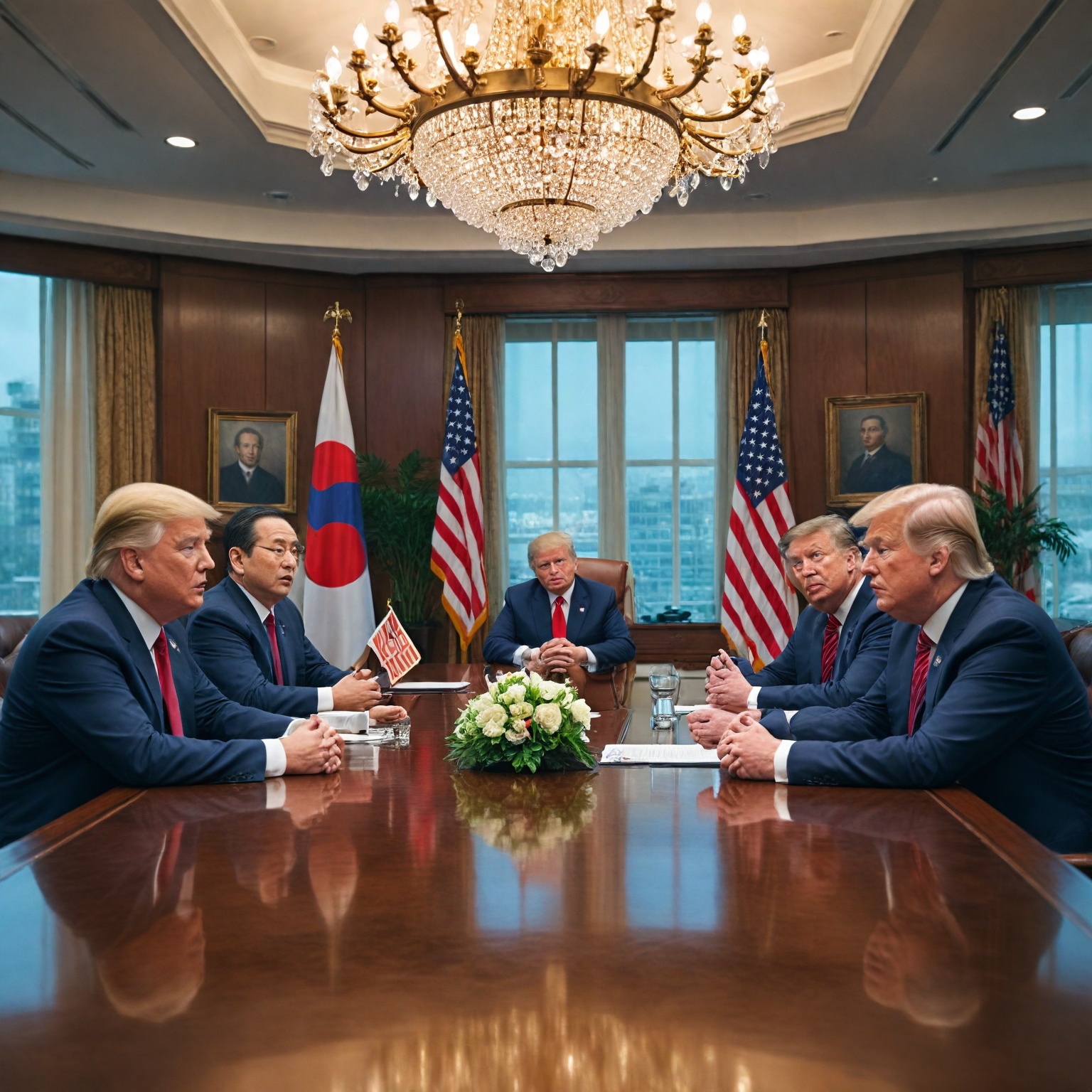
The discussions between South Korean President Lee Jae-myung and former U.S. President Donald Trump in 2023 focused on the financial arrangements for the nearly 28,500 U.S. troops stationed in South Korea, a cornerstone of the long-standing security alliance established after the Korean War. Central to these talks was the issue of cost-sharing, with South Korea agreeing to increase its financial contributions toward the expenses associated with hosting American forces. These negotiations occurred against a backdrop of shifting regional security dynamics, particularly the rise of China as a strategic competitor and the persistent threat posed by North Korea’s nuclear program.
The U.S.-South Korea alliance, originally framed by the 1966 Status of Forces Agreement and evolving through the introduction of cost-sharing mechanisms in 1991, has transitioned from a donor-recipient relationship to a more balanced partnership. South Korea’s growing economic capacity has allowed it to shoulder a larger share of the financial burden, which supports not only military logistics but also domestic economic benefits, such as job creation and industrial support. However, U.S. demands for increased contributions have been met with some caution in Seoul, particularly given concerns about the reliability of American security commitments amid fluctuating U.S. policy approaches.
China’s expanding military capabilities and diplomatic influence have been a critical factor shaping the discourse. Both countries recognized the need to adapt the alliance to address broader regional challenges, including China’s assertiveness and the evolving U.S.-China rivalry. Nonetheless, South Korea seeks to balance its security partnership with the United States while managing complex relations with Beijing, cautious about being drawn into potential conflicts such as a Taiwan contingency. The strategic role of U.S. forces in South Korea thus remains a subject of careful negotiation, reflecting broader concerns about maintaining regional stability and deterrence.
These discussions underscore ongoing tensions and recalibrations within the alliance, highlighting the interplay between economic considerations, strategic priorities, and geopolitical shifts in East Asia. While reaffirming the U.S. commitment to South Korea’s defense, the negotiations also reveal the delicate position Seoul occupies between its major security partner and the rising influence of China. The outcome of these talks carries significant implications for the future of regional security architecture, alliance modernization, and the balance of power in Northeast Asia.
Background
The security alliance between the United States and South Korea dates back to the aftermath of the Korean War (1950–1953), when the two countries signed a mutual defense treaty to provide collective self-defense in the Pacific region. This treaty laid the foundation for the stationing of U.S. forces in South Korea, which currently number approximately 28,500 troops as a deterrent against North Korean aggression. In 1966, the Status of Forces Agreement (SOFA) was established to govern the legal status and protections of American troops stationed in South Korea.
Cost sharing between the two countries became a significant feature of the alliance beginning in 1991. As South Korea’s economy grew rapidly from the 1960s onward, Seoul agreed to shoulder a portion of the financial burden associated with hosting U.S. forces. This includes expenses related to logistics, local labor, and military construction. The arrangement marked a shift from a simple aid-recipient relationship to a more balanced partnership, benefiting South Korea’s economy by creating jobs and supporting domestic industries. Recently, South Korea agreed to increase its contributions toward these costs as part of ongoing negotiations with the United States.
Beyond the North Korean threat, the alliance now faces evolving strategic challenges, particularly the rise of China as a regional power. U.S. officials have expressed interest in broadening the scope of the alliance to address this shifting security landscape, including discussions on how U.S. forces in South Korea could be used to counterbalance China’s influence in the region. However, much of this depends on South Korea’s willingness to deepen cooperation within this context.
The presence of U.S. troops in South Korea also contributes to regional stability by reinforcing security commitments with other allies, such as Japan. This military presence has helped mitigate historical tensions between South Korea and Japan while deterring aggression from regional adversaries including China, Russia, and North Korea. Nonetheless, some uncertainty remains about the future of cost-sharing agreements and alliance dynamics, especially in light of potential political changes in the United States.
Overview of the 2023 Discussions
In 2023, South Korean President Lee Jae Myung and U.S. President Donald Trump engaged in high-level talks centered on the future of the South Korea–U.S. alliance, with particular emphasis on the financial burden-sharing for the nearly 28,500 American troops stationed on the Korean Peninsula. These discussions took place amid growing geopolitical complexities in East Asia, notably China’s expanding regional influence and North Korea’s ongoing nuclear threat.
The dialogue marked a continuation of negotiations that had resumed in early 2021 following a period of stagnation during the Trump administration. That year, South Korea agreed to increase its contribution to the cost of stationing U.S. forces by 13.9%, formalized in a new five-year agreement. This agreement built on earlier arrangements established in 1991, when Seoul first began sharing logistical, labor, and military construction costs as part of a broader shift away from a donor-recipient relationship towards a more balanced strategic partnership. The cost-sharing mechanism has also been recognized for generating domestic economic benefits in South Korea, including job creation and support for local industries.
The 2023 summit discussions were framed by the challenges of evolving regional security dynamics. Trump’s administration had emphasized bundling defense cost-sharing with trade and tariff negotiations as part of a comprehensive strategy, a tactic that continued to influence the talks. Lee’s presidency prioritized stabilizing the alliance while addressing the economic pressures resulting from U.S. tariff policies and the broader trade environment.
China’s role loomed large in these deliberations. The increased militarization and diplomatic engagement by Beijing in the region, including high-profile visits by Chinese leaders to key multilateral forums, underscored the shifting balance of power and heightened the stakes for the U.S.-South Korea partnership. Analysts noted that inconsistent U.S. policy signals during Trump’s second term had raised concerns about Washington’s reliability, prompting both Seoul and Washington to seek a reaffirmed and comprehensive strategic alliance in response to the security challenges posed by China and North Korea.
Beyond bilateral concerns, the presence of U.S. troops in South Korea was widely viewed by experts as a critical element for maintaining regional stability and deterring aggression from adversaries such as China, Russia, and North Korea. This strategic imperative informed the persistence of negotiations over cost-sharing, reflecting the intertwined nature of security and economic considerations in U.S.-South Korea relations.
Troop Cost-Sharing Negotiations
Cost-sharing between South Korea and the United States for the stationing of U.S. troops on the Korean Peninsula has been a significant aspect of their military alliance since 1991. Prior to that, South Korea was not required to contribute financially under the original 1966 Status of Forces Agreement. The introduction of cost-sharing reflected South Korea’s rapid economic growth and the desire of both countries to move beyond a simple aid-provider and recipient relationship. The contributions from South Korea benefit not only the alliance but also the local economy by creating jobs and supporting domestic industries.
South Korea currently hosts approximately 28,500 U.S. troops, known collectively as U.S. Forces Korea (USFK). The financial burden of their stationing has been a recurring topic in bilateral negotiations, with South Korea historically covering roughly half the total costs. Under the most recent agreements, South Korea has agreed to incrementally increase its contributions. For example, the 2019 one-year agreement raised Seoul’s share to nearly 1.04 trillion won (approximately $921.5 million), marking an 8.2% increase from the previous year. More recently, a five-year Special Measures Agreement (SMA), effective from 2026, requires South Korea to boost its contribution by 8.3% to $1.47 billion in the first year.
The U.S. military’s expenditures in South Korea have remained substantial and steady. Between 2016 and 2019, the U.S. obligated $13.4 billion in military spending, with the Army accounting for the majority, primarily at Camp Humphreys, and the Air Force supporting bases such as Osan and Kunsan. These costs underscore the strategic importance the United States places on its presence in the region.
Negotiations on cost-sharing have been influenced by broader political and security considerations. U.S. administrations, particularly under President Donald Trump, have emphasized increasing South Korea’s financial contributions, often linking these discussions with broader trade and tariff negotiations. Trump notably pursued a comprehensive approach, bundling defense cost-sharing talks with trade and tariff negotiations, a strategy some analysts warned could strain long-term alliances and potentially diminish perceptions of U.S. commitment to its allies.
South Korean leaders have shown openness to discussing defense cost-sharing, with presidential candidates Lee Jae-myung and Kim Moon-soo signaling willingness to engage in such talks. However, there is caution within South Korea regarding the implications of these negotiations, especially in light of regional security dynamics involving China. Seoul aims to modernize its alliance with the United States to better address the evolving security environment shaped by U.S.-China rivalry while maintaining a balanced diplomatic stance between Washington and Beijing.
U.S. officials have indicated that discussions will not only focus on financial contributions but also on strategic aspects of the alliance, including how U.S. forces in South Korea might be leveraged to counter China’s growing influence in the region. However, U.S. military commanders, such as General Xavier Brunson of USFK, have cautioned against assuming South Korean involvement in potential conflicts, such as a contingency over Taiwan.
South Korea’s government continues to prepare for various scenarios amid these negotiations. While formal renegotiations of the SMA have not been initiated by Washington, Seoul remains engaged in ongoing discussions, balancing defense spending commitments with broader diplomatic considerations. Some officials emphasize keeping defense costs distinct from trade issues, reflecting sensitivities in trilateral relations involving Japan and other regional partners. The future trajectory of troop cost-sharing negotiations will likely hinge on Seoul’s willingness to increase defense spending in line with evolving geopolitical challenges and the strategic priorities of both nations.
Regional Security Context and China’s Role
The regional security environment in East Asia has become increasingly complex, driven largely by the strategic competition between the United States and China. Chinese advancements in military capabilities, coupled with inconsistent U.S. signaling during President Donald Trump’s second term, have raised concerns among U.S. allies and partners about Washington’s reliability as a security guarantor. This perception has contributed to heightened militarization across the region, a trend that is expected to intensify unless countered by diplomatic or strategic efforts.
China’s growing influence is reflected not only in military terms but also through its diplomatic and economic engagements with regional countries. For instance, China normalized relations with South Korea in the early 1990s, dropping its opposition to South Korean UN membership and using neighboring states as a hedge against Western-imposed isolation. This strategy also served as a bridge for China to improve relations with the West. However, tensions remain high in certain areas, such as the South China Sea, where despite efforts toward diplomatic dialogue, incidents of Chinese assertiveness—particularly toward the Philippines—have continued to strain relations.
The United States continues to maintain a significant military presence in the region, particularly in South Korea, which remains a critical pillar of its security architecture. The U.S. and South Korea have sought to recalibrate their alliance to better address emerging threats, especially those posed by China. While discussions about the role of U.S. forces in South Korea regarding potential conflicts, including over Taiwan, remain sensitive, U.S. military leadership has emphasized the importance of recognizing the interconnected nature of regional security challenges.
Simultaneously, South Korea is actively seeking to modernize and adapt its alliance with the United States to the evolving geopolitical landscape shaped by U.S.-China rivalry. This includes considerations of increased defense spending and revisiting cost-sharing arrangements for the stationing of U.S. troops—a practice initiated in 1991 but currently under renewed negotiation amid shifting security dynamics. Moreover, trilateral cooperation between South Korea, the U.S., and Japan is viewed as essential to deterring North Korean aggression and maintaining regional stability.
In this broader context, China’s role extends beyond East Asia into other regions, such as Latin America and the Caribbean, where it has employed economic assistance and diplomatic engagement as tools of influence. These efforts, part of China’s broader South-South cooperation strategy, have resulted in some countries switching diplomatic recognition from Taiwan to China, though the impact on these nations’ foreign policy alignments appears limited.
Strategic and Security Concerns Influencing Negotiations
The negotiations between South Korea and the United States over the cost-sharing of U.S. troops stationed on the Korean Peninsula have been heavily influenced by broader strategic and security considerations, particularly in the context of rising tensions involving China and North Korea. One central issue is the evolving nature of the U.S.-South Korea alliance amid shifting regional dynamics, including the intensifying military competition between the United States and China in Asia.
South Korea’s position has been complicated by its desire to maintain a balanced approach between Washington and Beijing. While President Lee has expressed full support for the U.S. alliance, Seoul is cautious about being drawn into potential conflicts such as those involving Taiwan, which China claims as its own. U.S. officials have indicated interest in discussing how the alliance and U.S. forces in South Korea might be leveraged to counter China’s influence, though South Korea’s willingness to engage in such strategic roles remains a key variable.
The presence of approximately 28,500 U.S. troops in South Korea is a cornerstone of the regional security architecture aimed at deterring North Korean aggression. However, the cost of maintaining these forces has become a contentious issue. Historically, under the 1966 Status of Forces Agreement (SOFA), the United States bore most of the costs related to its troops, with South Korea responsible for certain facilities and logistical support. In recent years, there have been growing demands from the U.S. administration for increased financial contributions from Seoul, which has raised concerns about the credibility of U.S. security commitments if troop deployments are used as leverage in broader negotiations.
From a security perspective, experts emphasize the importance of sustaining the combined defense posture of South Korea and the United States to deter North Korean military actions effectively. This includes cooperation with trilateral partners such as Japan to present a unified front against potential aggression. Maintaining stability in the region and deterring adversaries such as China, Russia, and North Korea remains a strategic priority for both countries.
Furthermore, South Korea aims to modernize the alliance to better reflect the current geopolitical landscape marked by U.S.-China rivalry. This involves discussions about increasing defense spending and potentially adapting force structures to meet emerging security challenges. Despite uncertainties over troop involvement in broader regional conflicts, such as over Taiwan, the continued U.S. military presence is viewed as a critical deterrent and stabilizing factor in Northeast Asia.
Reactions and Official Statements
South Korean officials and analysts have expressed concerns about the implications of the U.S. approach to cost-sharing for troops stationed in South Korea, particularly under the Trump administration’s transactional view of international relationships. Nam, a security expert, highlighted that using the deployment of U.S. forces as leverage in trade negotiations risks undermining the credibility of U.S. commitments among close allies. This could potentially reframe the U.S. as an isolated superpower in the long term. Nam also noted that South Korea was not required to make any financial contributions under the original 1966 Status of Forces Agreement (SOFA) with the U.S., emphasizing the shift in expectations.
Despite these tensions, during negotiations South Korea’s Foreign Ministry reaffirmed that the United States reconfirmed its commitment to South Korea’s defense and clarified that there were no plans to reduce the American military presence on the peninsula. South Korea’s top security advisor, Wi Sung-lac, indicated that Seoul is actively seeking to modernize the U.S.-South Korea alliance to better address the evolving security environment shaped by U.S.-China rivalry. Discussions about higher defense spending and the exact figures of cost-sharing remain ongoing between the two governments.
The broader regional context also influences these dynamics. China’s expanding influence, particularly through economic assistance and diplomatic efforts in the Caribbean and Central
Implications and Analysis
The evolving security dynamics on the Korean Peninsula and broader East Asia region have significant implications shaped by U.S.-South Korea defense arrangements and China’s growing regional influence. The longstanding U.S.-South Korea alliance, anchored by the stationing of approximately 28,500 U.S. troops, continues to serve as a critical deterrent against North Korean aggression. However, discussions around cost-sharing and potential troop reductions reveal underlying tensions and recalibrations within the alliance in response to shifting geopolitical realities.
The increased demands by the U.S. for Seoul to shoulder a greater portion of the financial burden of hosting American forces reflect a broader U.S. strategy to modernize and rebalance its military posture in the face of China’s rising assertiveness. This approach aims to re-focus the alliance towards countering China’s growing influence, signaling a pivot from the traditional emphasis solely on North Korea to a more comprehensive regional security framework. Nevertheless, these shifts have generated concerns in South Korea regarding the potential for U.S. troop reductions and the reliability of American security guarantees, especially given the fluctuating U.S. foreign policy under recent administrations.
China’s advancements and its expanding economic and diplomatic ties in the region compound these complexities. Beijing’s increasing militarization and economic leverage have heightened regional insecurity, prompting allies and partners to reconsider their strategic postures. The ambiguity surrounding U.S. commitments, coupled with Beijing’s coercive tactics, risks eroding trust in Washington’s role as a security guarantor, thereby fueling further militarization and alliance recalibration across Asia.
Within this context, South Korea’s intent to modernize the alliance by increasing defense spending and adapting to the U.S.-China rivalry illustrates Seoul’s pragmatic approach to maintaining deterrence while managing relations with both powers. The ongoing negotiations over defense costs and force presence underscore the delicate balance South Korea seeks to maintain between preserving the deterrent against North Korea and navigating the strategic competition between the United States and China.
Furthermore, trilateral cooperation involving the U.S., South Korea, and Japan remains vital in deterring North Korean aggression and managing regional security risks. Experts emphasize the need for coordinated strategies to signal unequivocal resolve against potential military threats, highlighting the importance of sustained military presence and alliance solidarity in the face of shifting geopolitical landscapes.
In sum, the discussions between South Korea and the United States on troop costs and alliance modernization reflect broader regional security challenges driven by China’s rise and North Korea’s unpredictability. The outcomes of these deliberations will significantly influence the strategic stability of Northeast Asia and the future shape of U.S. engagement in the region.
The content is provided by Sierra Knightley, Know Heaven