Discover Huaweis Groundbreaking Pangu AI Models and Advanced Reasoning Technology Now Made Open Source!
Summary
Huawei’s Pangu AI models constitute a groundbreaking family of large-scale artificial intelligence systems designed to tackle complex industrial and real-world challenges through innovative architecture, advanced reasoning capabilities, and extensive scalability. Named after the mythological figure Pangu, symbolizing creation and transformation, these models range from embedded versions with one billion parameters to trillion-parameter giants such as PanGu-Σ and PanGu S Series. Since their initial release, the Pangu models have evolved rapidly, incorporating a hierarchical “5+N+X” architecture that supports flexible adaptation across natural language processing, computer vision, multimodal learning, and scientific computing.
Notably, Huawei’s Pangu Model 5.0, unveiled in June 2024, exemplifies advanced reasoning technology by integrating multi-style modeling and a continuous “learning through using” cycle, enabling dynamic adaptation to diverse industrial environments. This approach addresses common challenges in sectors like coal mining, manufacturing, and meteorology by facilitating predictive analytics, anomaly detection, and real-time edge computing. Huawei’s deployment of Pangu models has led to significant improvements in production efficiency, safety, and cost reduction, underscoring their practical impact in traditional industries.
A defining feature of the Pangu platform is its open-source initiative launched in July 2023, which released key models and advanced reasoning technologies to the global community. This strategic move aims to accelerate AI innovation, foster customization, and expand adoption across multiple industries worldwide. The open-source effort is part of Huawei’s broader Ascend ecosystem strategy, which integrates Pangu models with its proprietary AI hardware, software frameworks, and cloud services, positioning Huawei as a competitive player amid geopolitical and technological challenges.
While generally well-received for their technical innovation and industrial applicability, the Pangu models also face scrutiny due to geopolitical tensions affecting Huawei’s global market access. Nonetheless, their scalable architecture, industry-specific customization, and advanced training techniques have drawn positive attention from analysts and customers alike, highlighting the models’ role in driving AI-powered digital transformation and reshaping traditional sectors.
Background
Huawei’s Pangu AI models represent a significant advancement in large-scale artificial intelligence, designed to address complex industrial and real-world challenges through innovative architecture and extensive parameter scales. The Pangu series draws its name from Pangu, a primordial figure in Chinese mythology associated with the creation of the world, symbolizing the foundational and transformative nature of these models.
The development of Pangu models has been marked by continuous evolution and enhancement. In July 2023, Huawei introduced the PanGu U Series and PanGu S Series, featuring models with parameters ranging from 135 billion to over a trillion, tailored to handle complex tasks and cross-domain applications. Earlier that year, Huawei also released PanGu-Σ, a colossal language model with 1.085 trillion parameters, underscoring the company’s commitment to pushing the limits of AI scalability and capability.
The Pangu models adopt a hierarchical and decoupled “5+N+X” architecture, first highlighted in the launch of Pangu Models 3.0 at the Huawei Developer Conference (HDC.Cloud) in July 2023. This architecture consists of foundational models in natural language processing (NLP), computer vision (CV), multimodal learning, prediction, and scientific computing at its core layer. These foundation models provide versatile skills that enable rapid adaptation to a wide array of industry-specific applications through pre-trained, scenario-tailored models at higher layers.
On June 21, 2024, Huawei unveiled Pangu Model 5.0, which further expands the model’s capabilities with diverse functions including visual, prediction, natural language, multi-style, and scientific computing models. Pangu Model 5.0 addresses typical challenges in large-scale industrial AI applications, such as complex environments, diverse data types, and high technical thresholds, by employing a novel “learning through using” cycle. This cycle involves edge inference to identify abnormal data, which is then fed back to central systems for continuous learning and optimization, enabling the model to adapt dynamically to new production environments and exceptions.
Huawei emphasizes the role of Pangu models in reshaping traditional industries, particularly in sectors such as energy and manufacturing, by enhancing production efficiency, improving product quality, and reducing operational costs through predictive analytics and process optimization. The deployment of AI models at the edge and group levels allows enterprises to capture and respond to real-time abnormalities, thus facilitating more reliable and intelligent industrial operations.
Overview of Pangu AI Models
Huawei’s Pangu AI models represent a scalable and versatile family of large language models designed to cater to a wide range of developers, businesses, and industry applications. The architecture and design of Pangu models emphasize adaptability, multi-style modeling, and advanced intelligence to meet diverse industry requirements.
The Pangu model platform is organized into four main series, each defined by different parameter scales and optimized for specific use cases. These include the PanGu E Series with 1 billion parameters, tailored for embedded smart applications on devices like phones and PCs; the PanGu P Series featuring 10 billion parameters, suitable for professional scenarios requiring low-latency and cost-efficient reasoning; the PanGu U Series available in variants of 135 billion and 230 billion parameters, designed to handle complex tasks and serve as a foundation for large models; and the PanGu S Series, which boasts trillion-level parameters to support advanced AI applications such as cross-domain and multi-tasking environments.
The development of Pangu models incorporates cutting-edge technologies such as the Random Routed Experts (RRE) mechanism and the Transformer decoder architecture, as seen in PanGu-Σ. This model, trained on over 329 billion tokens across more than 40 natural and programming languages, achieves significantly faster training throughput and excels in multiple natural language processing tasks, including few-shot understanding, open-domain dialogue, question answering, machine translation, and code generation. PanGu-Σ features a trillion-parameter scale and was developed using Huawei’s MindSpore 5 framework on a cluster equipped with 512 Ascend 910 AI accelerators, undergoing over 100 days of training.
Huawei introduced Pangu Models 3.0 with a distinctive “5+N+X” three-tier decoupling architecture that supports layered AI capabilities for extensive model and application coverage. This architecture facilitates rapid adaptation to a wide variety of downstream tasks by allowing customers to upgrade foundation models or capability sets independently. Additionally, it supports training of custom models using proprietary datasets, thus accelerating AI adoption across sectors such as government, finance, manufacturing, mining, and meteorology via Huawei Cloud solutions.
The models are integrated into Huawei Cloud products to enhance productivity and include pre-trained, industry-specific models readily deployable for tasks such as intelligent government hotlines, branch assistance, lead compound screening, foreign object detection on conveyor belts, and typhoon trajectory prediction. These industry models form part of a layered system where L0 and L1 represent foundational capabilities, and L2 delivers task-optimized models for direct deployment or further customization.
Advanced Reasoning Technology
Huawei’s Pangu AI models incorporate advanced reasoning technology that significantly enhances their adaptability and intelligence across various domains and applications. A key innovation lies in the integration of the Random Routed Experts (RRE) mechanism within the Transformer decoder architecture, which facilitates efficient sub-model extraction tailored for specific tasks such as conversation, machine translation, code generation, and natural language understanding. This design not only improves performance but also achieves a training throughput 6.3 times faster than traditional mixture-of-experts (MoE) models with comparable hyperparameters.
The latest iteration, Huawei Pangu Model 5.0, embodies three core features crucial to advanced reasoning capabilities: adaptability to diverse business scenarios, multi-style modeling, and powerful cognitive functions. These features enable the model to handle a wide array of industry-specific challenges by optimizing distinct models for different application requirements. For example, in industrial contexts like coal mining and smart factories, Pangu Model 5.0 demonstrates robust generalization, overcoming previous limitations where models failed to scale or integrate effectively into production environments. Its continuous learning cycle captures and analyzes abnormal data from edge devices, enabling ongoing model refinement and adaptation to new conditions.
Furthermore, Pangu-Σ and PanGu-α models illustrate the application of advanced reasoning in natural language processing tasks. PanGu-Σ, trained on extensive multilingual and domain-diverse datasets, excels in few-shot learning scenarios across 16 Chinese-language tasks without additional fine-tuning, showcasing strong zero-shot capabilities. PanGu-α, a large-scale autoregressive model with up to 200 billion parameters, employs a comprehensive training parallelism strategy via MindSpore Auto-parallel, facilitating efficient scaling and enhanced generalization in tasks such as text summarization, dialogue generation, and question answering.
The combination of large-scale training, architectural innovations, and multi-domain adaptability underpins Huawei’s advanced reasoning technology, enabling practical and scalable AI solutions across traditional industries and beyond. This technology not only accelerates training and inference but also supports sophisticated reasoning processes vital for complex problem-solving and intelligent decision-making in real-world applications.
Industry Applications and Use Cases
Huawei’s Pangu AI models have been widely applied across various industries, demonstrating significant advancements in operational efficiency, predictive analytics, and intelligent automation. These models have been particularly impactful in traditional sectors such as mining, manufacturing, meteorology, and government services, showcasing the broad adaptability and scalability of the Pangu framework.
Mining Industry
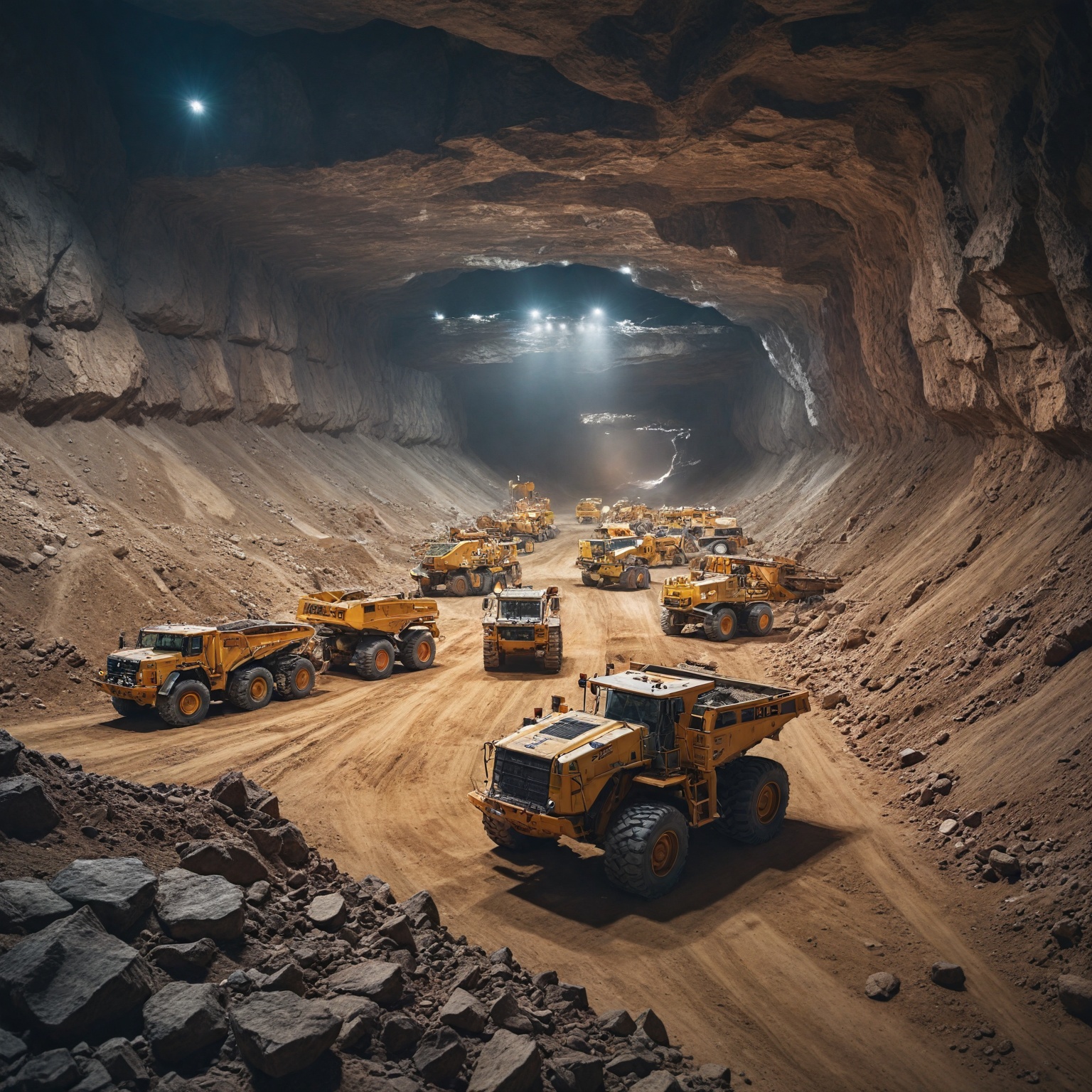
In the coal mining sector, Huawei’s Pangu Model 5.0 has been instrumental in enhancing production processes by learning from historical data to predict outcomes associated with new production inputs. This predictive capability allows enterprises to detect potential issues early, optimize workflows, and improve both efficiency and equipment reliability. By expanding computer vision and predictive large models to meet specific customer needs, Huawei has enabled intelligent mining solutions that improve safety and operational intelligence, allowing more miners to work above ground under safer conditions. Collaborative pilot projects with Shandong Energy Group and Yunding Technology have explored six innovative intelligent services and eight application scenarios, marking substantial progress in the digital transformation of mining operations.
Manufacturing and Traditional Industries
The Pangu models address the challenges of scaling AI applications in traditional industries by overcoming limitations typical of conventional AI development modes. Through a generalized model approach, Pangu facilitates large-scale industrial applications, enabling enterprises to deploy AI solutions that improve production quality and process optimization. Huawei Cloud offers a hierarchical model architecture that provides pre-trained models tailored to specific industry tasks, such as conveyor belt foreign object detection, which can be quickly deployed and customized with customer datasets. This modular design allows for rapid adaptation across a wide range of downstream manufacturing tasks and scenarios, supporting both model upgrades and capability expansions.
Meteorology and Weather Forecasting
Pangu-Weather represents a pioneering application of AI in global weather forecasting. The model has been integrated into the European Centre for Medium-Range Weather Forecasts (ECMWF) platform, offering free access to 10-day global weather forecasts. It produces detailed meteorological data, including mean sea level pressure, wind speeds at various altitudes, geopotential heights, and temperature profiles, which are critical for predicting weather patterns, storm trajectories, and air quality. ECMWF’s technical report highlights Pangu-Weather’s competitive performance compared to the established Integrated Forecast System (IFS), emphasizing the model’s capacity for accurate medium-range forecasts through data-driven approaches.
Government and Public Services
Huawei Cloud’s Pangu models also extend to intelligent government applications, such as intelligent hotlines and branch assistants, providing automated and enhanced citizen services. These models support multiple deployment modes, including public cloud, dedicated large model zones, and hybrid cloud, allowing governments and public institutions to rapidly implement AI-driven services that improve responsiveness and operational efficiency.
Development Ecosystem and AI Integration
Beyond direct industrial applications, Huawei integrates Pangu models with its Cloud Astro low-code platform, enabling developers to create data dashboards, workflow automations, and intelligent coding assistants through natural language interactions. This facilitates faster AI adoption in various enterprise scenarios, including construction sites and manufacturing workshops, where Huawei has actively deployed expert teams to operationalize AI technologies on the ground. The ecosystem approach promotes collaboration with developers and partners to continuously evolve the Pangu models and their application capabilities.
Open Source Initiative
Huawei has taken a significant step in expanding its artificial intelligence ecosystem by open-sourcing two of its prominent AI models from the Pangu series, along with some of its advanced model reasoning technologies. Announced in July 2023, this move aims to accelerate AI adoption across a vast range of industries and enable developers and businesses worldwide to test, customize, and build upon these models according to their specific needs.
This open-source initiative is a key component of Huawei’s “Ascend ecosystem strategy,” which revolves around its Ascend AI chip series, regarded as one of China’s leading AI hardware platforms and a strong competitor to American counterparts like Nvidia, which faces sales restrictions in China. By making the Pangu models accessible in an open-source manner, Huawei facilitates broader participation in AI development, fostering innovation and enabling rapid adaptation across diverse industry applications.
Huawei’s open-source approach also integrates tightly with its broader AI infrastructure, including the Kunpeng and Ascend compute platforms, CANN heterogeneous computing architecture, MindSpore AI framework, and ModelArts AI development pipeline. This full-stack innovation supports faster training and efficient execution of large AI models, positioning Huawei’s offerings competitively in the global AI landscape.
By opening up the Pangu models and related technologies, Huawei not only enhances collaboration with the global AI community but also strengthens its foothold in international markets despite geopolitical challenges. This initiative supports the company’s vision to foster AI advancements and industrial digital transformation worldwide.
Impact and Reception
Huawei’s Pangu AI models have demonstrated significant potential in transforming traditional industries, particularly by optimizing production processes, enhancing product quality, and reducing operational costs. Despite the complexities of industrial environments—characterized by diverse data types and high technical barriers—Huawei’s commitment to innovation has enabled practical applications that address these challenges effectively. For example, in the energy sector, the Pangu Mining Model employs a layered, decoupled architecture that supports intelligent supervision tasks such as monitoring proper personal protective equipment (PPE) usage, ensuring personnel safety in hazardous zones, and overseeing compliance during substation patrols.
The scalability and adaptability of the Pangu series also contribute to its wide-ranging impact. PanGu-Σ, leveraging Random Routed Experts (RRE) and Transformer decoder architectures, achieves faster training throughput and supports various applications including natural language conversation, translation, and code generation. The hierarchical system design allows users to customize models by loading specific datasets or upgrading particular capabilities, facilitating rapid deployment across diverse industry scenarios. Huawei Cloud’s initiative to deploy 200 PhDs directly to customer sites further underscores the company’s dedication to bridging the gap between AI technology and industry-specific needs, accelerating digital transformation and intelligence adoption across enterprises.
Reception among industry analysts and customers has been positive, with notable achievements such as a 50% increase in success rates for pharmaceutical innovation, signaling Pangu’s role in accelerating therapeutic breakthroughs. Huawei’s strategic focus on making these advanced reasoning technologies accessible and practical aligns with its vision of reshaping industries and reimagining work and life for businesses and individuals alike. Overall, Pangu’s open-source availability is poised to catalyze further AI-driven advancements and foster a collaborative ecosystem for continued innovation.
Comparison with Other AI Models
Huawei’s Pangu AI model platform distinguishes itself through a multi-tiered architecture and a wide range of parameter scales tailored for diverse applications. The platform is divided into four series, including the PanGu E Series with a 1-billion-parameter embedded version designed for smart devices such as phones, tablets, and PCs, and the PanGu Large Model 3.0, which employs a 5+N+X three-tier architecture optimized for industry use.
A significant advantage of Pangu models lies in their comprehensive capability sets that cover knowledge-based question answering, copywriting, code generation, as well as image generation and understanding in its multimodal models. These capabilities remain consistent regardless of the model size, ensuring broad applicability across sectors. Furthermore, the platform supports industry-specific models tailored to government, finance, manufacturing, mining, and meteorology, trained on open datasets to improve practical deployment.
In terms of technological innovation, Huawei integrates full-stack enhancements such as distributed parallel acceleration, operator and compilation optimizations, and cluster communications optimization. These improvements contribute to training speeds up to 1.1 times faster than
Future Developments and Roadmap
Huawei’s Pangu AI models are poised to significantly advance in both capability and industry adoption, driven by ongoing innovations and strategic initiatives. A key focus is on improving computational efficiency and accuracy in complex forecasting tasks. For example, Pangu models are expected to revolutionize weather prediction by delivering forecasts that require much lower computational costs while achieving accuracy on par with or exceeding traditional Numerical Weather Prediction (NWP) systems, which historically have only improved execution by about one day per decade.
The future roadmap includes enhancing the generalization and scalability of the Pangu Model 5.0 to further address challenges in large-scale industrial applications. By leveraging model generalization, Pangu 5.0 aims to establish robust associations between historical data and production outcomes, enabling enterprises to proactively detect potential problems, optimize processes, and improve device reliability across sectors such as coal mining and manufacturing. This aligns with China’s broader AI+ action plan launched in 2024, which positions artificial intelligence as a core driver for new productive forces in the economy.
Huawei continues to invest in full-stack innovations that support the rapid deployment and adaptation of Pangu models across diverse scenarios. This includes enhancements in distributed parallel acceleration, operator and compilation optimization, and cluster communication to boost AI training speeds beyond that of leading GPUs. The layered architecture of Pangu facilitates quick customization for various industry-specific applications, from intelligent government hotlines to typhoon trajectory prediction, allowing customers to fine-tune models using independent datasets.
Moreover, Huawei’s commitment to open-source development under the Ascend ecosystem strategy is set to accelerate AI adoption across thousands of industries. By making Pangu models openly available, developers and enterprises can experiment with and customize the models to meet their specific needs, thereby fostering innovation and expanding the ecosystem around the Ascend AI chip series—China’s leading competitor to Nvidia’s GPUs. This open approach is anticipated to catalyze further advancements and integration of Pangu AI technologies in both established and emerging markets.
The content is provided by Jordan Fields, Know Heaven