
Breaking News: UK Police Detain 20-Year-Old Woman and Three Teens in Ongoing Investigation
Summary
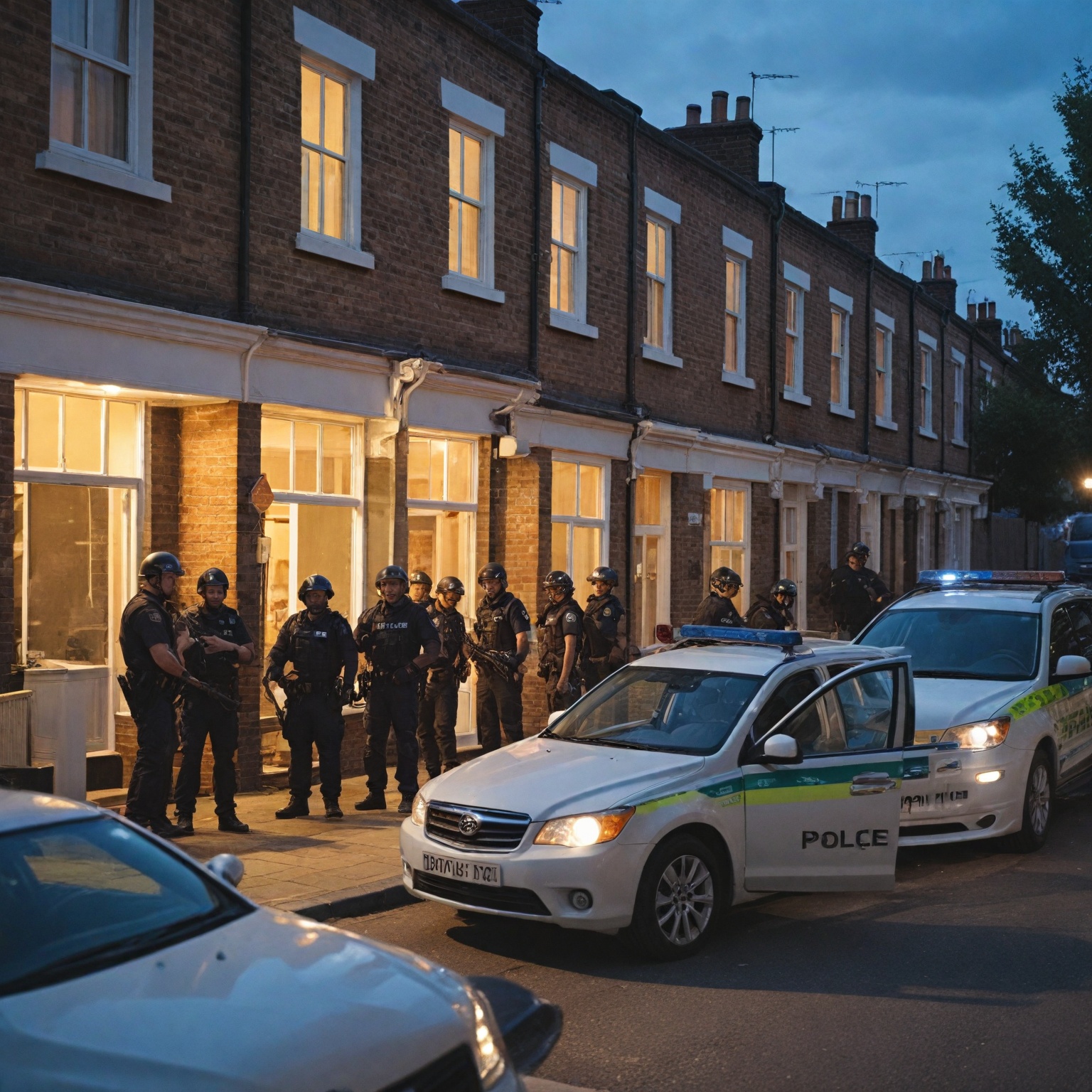
The ongoing investigation by the Metropolitan Police into suspected terrorism-related activities has resulted in the detention of a 20-year-old woman and three teenagers in north-west London. The operation, based on intelligence-led inquiries, involved armed officers and multiple coordinated arrests at a property on Harlesden Road, with the suspects held on suspicion of the commission, preparation, and instigation of terrorist acts. A 27-year-old man stopped separately was not arrested, while an additional 43-year-old woman was later taken into custody in Kent in connection with the case. The National Crime Agency (NCA) described these arrests as a “significant step” in its efforts to bring those responsible to justice and emphasized ongoing collaboration with domestic and international partners.
This investigation forms part of broader counter-terrorism operations in the United Kingdom, where complex legal and procedural frameworks govern detention and the protection of suspects’ rights under the Police and Criminal Evidence Act 1984 (PACE) and the Terrorism Act 2000. The police response, however, has faced criticism from media organizations and public figures over concerns of disproportionate use of force and potential infringement on civil liberties, particularly following a controversial police raid on journalist Asa Winstanley’s home as part of a related operation. Critics argue that such measures risk undermining press freedom and public confidence in law enforcement.
Legal safeguards in the detention process include judicial oversight for extending custody beyond initial limits and requirements for proportionality and adherence to human rights standards. Despite these protections, the operation has reignited debates over the balance between national security imperatives and individual rights, especially in cases involving young suspects and the use of administrative detention methods often employed in counter-terrorism contexts.
The investigation remains active, with police continuing to seek possible accomplices and gather evidence. The case underscores ongoing challenges faced by UK authorities in preventing terrorist threats while maintaining transparency and public trust in policing practices.
Background
The recent police operation involved the detention of a 20-year-old woman and three teenagers as part of an ongoing counter-terrorism investigation conducted by the Metropolitan Police. The woman, who was taken to hospital due to the seriousness of her condition, remains under police guard but has not been arrested. The arrests followed proactive police activity based on intelligence indicating that those detained were involved in conspiring to cause serious disruption.
This operation forms part of broader law enforcement efforts in England and Wales, where nearly 669,000 arrests were made in the year ending March 2023. Such investigations often involve complex coordination between police and prosecutorial authorities, with some countries allowing prosecutors to order arrests or detentions without prior judicial review, while others obtain such approval retrospectively. In the UK, pre-charge bail procedures include statutory safeguards and are subject to proportionality assessments in line with human rights considerations.
Public reaction to the police response in this and related incidents has been mixed. For instance, the Metropolitan Police faced criticism for breaking up a crowd and arresting attendees, leading to accusations of trampling on memorial flowers, which prompted public anger and statements of concern from political figures such as Labour leader Sir Keir Starmer and former Prime Minister Boris Johnson.
This case echoes past concerns over the handling of sensitive investigations, such as those relating to abuse reports dating back to the early 1990s, when allegations involving care home children were first brought to light and subsequently passed to police and local authorities. Furthermore, detention practices and time limits under relevant legislation have evolved over time, reflecting changing security contexts, including proposals to extend detention periods following significant events such as the 7 July 2005 London bombings.
Investigation Details
On a recent Thursday evening, the Metropolitan Police conducted a coordinated operation resulting in the detention of a 20-year-old woman along with three teenagers, including a 16-year-old boy, in north-west London as part of an ongoing counter-terrorism investigation. The operation involved armed officers and took place at a property on Harlesden Road, which had been under observation by counter-terrorism officers as part of an intelligence-led inquiry. A 27-year-old man was also stopped by armed officers in Parliament Street carrying multiple knives but was not arrested due to his calm demeanor and the circumstances of the search. The detainees are being held on suspicion of the commission, preparation, and instigation of terrorist acts at a south London police station.
Following the arrests, the woman was taken to hospital under police guard due to the seriousness of her condition, though she was not arrested at that time. Additionally, a 43-year-old woman was arrested later in Kent in connection with the investigation. The National Crime Agency (NCA) described the arrests as a “significant step” and emphasized their ongoing commitment to identifying and bringing to justice those responsible for such offenses. The agency encouraged future victims to seek support and engage with law enforcement, reinforcing that help is available through the NCA and the police.
The investigation remains active, with police continuing to explore any possible accomplices involved. This operation is distinct from an unrelated incident in Whitehall on the same day, as confirmed by Metropolitan Police statements. The coordinated efforts highlight a multi-agency approach involving counter-terrorism officers and the NCA in tackling serious threats to national security.
Public and Media Reaction
The police raid on journalist Asa Winstanley’s home in North London, conducted as part of ‘Operation Incessantness’, provoked significant condemnation from both media and journalist organizations. The International Federation of Journalists (IFJ), alongside its affiliate the National Union of Journalists (NUJ) in the UK and Ireland, criticized the use of counter-terrorism legislation against journalists, describing it as an intimidatory tactic that undermines public interest journalism and press freedom. Michelle Stanistreet, the NUJ general secretary, highlighted the serious implications of such actions, stating that the abuse and misuse of counter-terrorism laws damage public confidence in the police and threaten journalists’ safety. She also pointed out the inconsistency in the UK government’s stance of supporting media freedom while endorsing raids and seizures of journalistic material.
Furthermore, the police’s approach faced additional scrutiny regarding its impact on public perception. A review described the police response as a “public relations disaster” with a “materially adverse effect on public confidence in policing.” It suggested that a more conciliatory approach might have better served the police force’s interests, indicating concerns over how the operation was managed and communicated to the public.
Legal Proceedings
Under UK law, the detention of suspects during police investigations is governed by strict legal frameworks designed to balance effective law enforcement with individual rights. When a person is detained, the responsible Custody Officer must determine whether there is sufficient evidence to charge the individual or whether further detention without charge is justified. Detention without charge is only permitted if there are reasonable grounds to believe it is necessary to secure or preserve evidence or to obtain such evidence through questioning.
In cases related to terrorism, detention and treatment are regulated by Code H to the Police and Criminal Evidence Act 1984 (PACE), while other cases fall under Code C. The Custody Officer ensures compliance with these codes and the Act to safeguard the detainee’s rights.
Judicial oversight plays a critical role when extending detention beyond initial periods. Under paragraph 32 of Schedule 8, a judge must be satisfied that reasonable grounds exist to believe further detention is necessary to obtain relevant evidence, and that the police investigation is proceeding diligently and expeditiously. However, neither the suspect nor their legal representatives have the right to view all evidence presented to the judge for continued detention applications. Magistrates may authorize detention extensions up to a total of 96 hours if the necessity to obtain or preserve evidence is demonstrated and investigations are conducted promptly.
If a detainee is not charged within the permitted detention period, the police may release the individual under investigation, which allows for continued inquiries without immediate charges. Legal representation is typically involved in detention extension hearings, ensuring the suspect’s rights are protected during the process.
Statistics from the year ending March 2024 indicate that there were 901,758 detentions in police custody across participating forces, with children (aged 17 and under) accounting for 7% of these detentions.
Impact and Aftermath
The arrests marked a “significant step” in the National Crime Agency’s (NCA) ongoing investigation, which remains one of the agency’s highest priorities. Paul Foster, head of the NCA’s National Cybercrime Unit, emphasized that work continues in collaboration with domestic and international partners to ensure that all responsible individuals are identified and brought to justice. The NCA also highlighted the importance of encouraging future victims to seek support and engage with law enforcement, reaffirming that both the agency and police forces are committed to providing assistance.
In terms of procedural safeguards during detention, the treatment of suspects is regulated under Codes H and C of the Police and Criminal Evidence Act 1984, depending on whether terrorism is involved. A designated Custody Officer is responsible for ensuring these provisions are adhered to. Should a detainee’s condition change, healthcare professionals must reassess the individual to identify any risks to their physical or mental wellbeing and implement necessary safeguards throughout the interview process. Failure to do so may jeopardize subsequent legal proceedings.
The context of administrative detention also plays a role in understanding these events. Administrative detention, often employed as a counter-terrorism measure, allows for the arrest and detention of individuals without trial under the rationale that conventional criminal law is sometimes inadequate for addressing threats posed by terrorism. While controversial, proponents argue this approach is necessary to neutralize dangerous individuals when strict evidentiary rules and defendant rights limit traditional legal actions.
Related Cases and Contextual Information
Cases involving multiple suspects and victims, as well as those that span investigations abroad, are often classified as exceptionally complex and are assessed individually on a case-by-case basis. The complexity of such cases can influence the investigative procedures and the resources allocated.
Under the Police and Criminal Evidence Act 1984 (PACE), police have defined powers to detain individuals suspected of committing crimes, with specific provisions addressing terrorism-related offences under the Terrorism Act 2000. The detention process is governed by several Codes of Practice, including Code C, which outlines the requirements for the detention, treatment, and questioning of suspects not related to terrorism, and Code E, which deals with the audio recording of interviews with suspects. These codes place a duty on investigators to adhere strictly to established protocols to ensure fairness and legality during questioning.
Data on arrests in England and Wales reflect the ongoing scale of law enforcement activity. In the year ending March 2023, there were 668,979 arrests reported across 42 police forces and estimated figures for Devon and Cornwall. However, data comparisons with earlier years require caution due to changes in recording practices. This highlights the evolving nature of policing and the importance of maintaining accurate and consistent records to understand trends and operational outcomes.
The content is provided by Blake Sterling, Know Heaven