Highlights
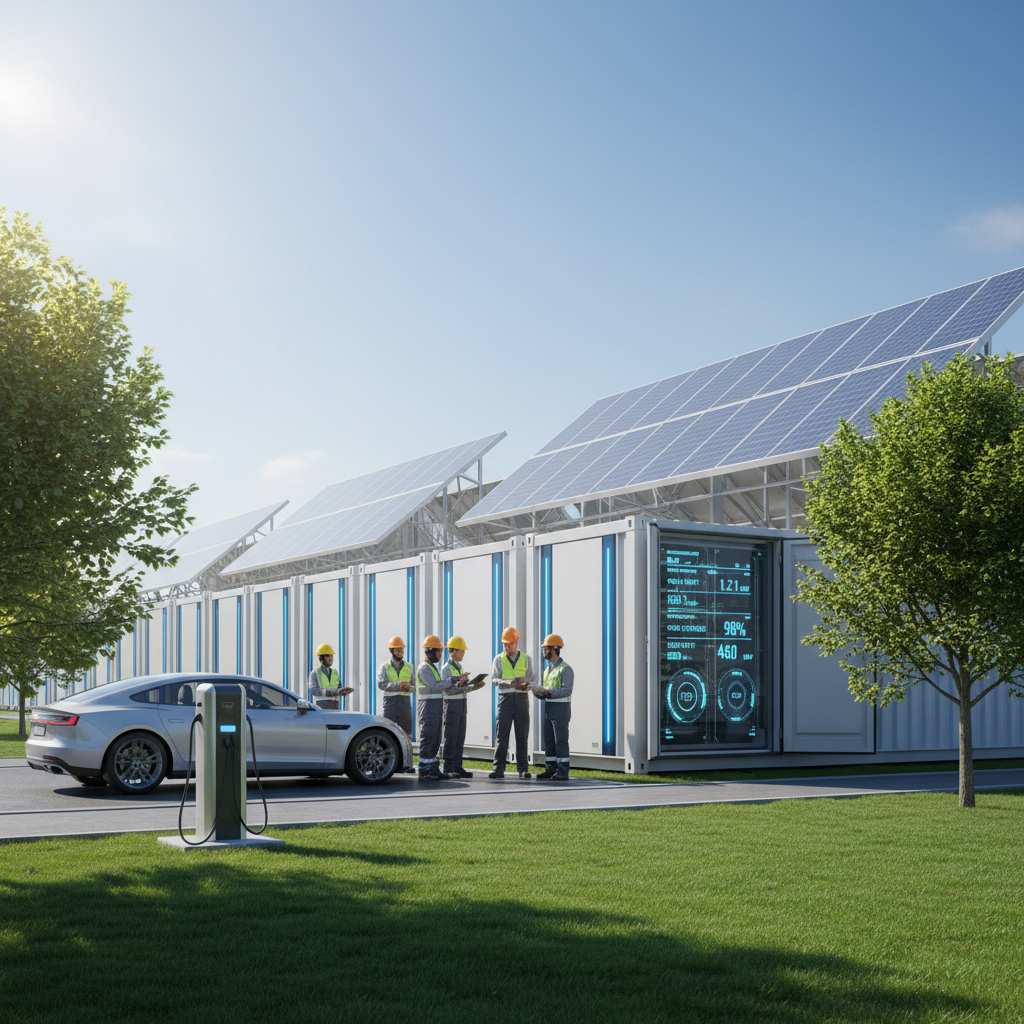
- Solar battery storage is essential for maximizing solar energy reliability and grid stability.
- Innovative battery technologies and supportive policies are driving increased accessibility and adoption rates.
Summary
By 2026, solar battery storage will be crucial for integrating the growing global solar energy capacity, with nearly 70 gigawatts of new projects anticipated. These systems store excess daytime electricity, which is essential for addressing solar energy’s intermittent nature, thereby enhancing grid reliability and energy access across various applications. Technological advancements in battery efficiency, safety, and cost-effectiveness are making these systems more appealing, driven by lithium iron phosphate (LiFePO4) batteries and emerging sodium-ion technologies.
Policy changes, including the phase-out of the federal solar investment tax credit, create both obstacles and opportunities, influencing market dynamics and financial incentives. However, challenges like rising project costs and regulatory uncertainties remain, stressing the need for innovation and adaptive policies to ensure effective integration of battery storage solutions in the clean energy landscape.
Solar Battery Storage Landscape
The growth of solar battery storage systems is closely tied to advancements in solar and storage technologies. Innovations such as bifacial solar panels increase energy generation efficiency significantly—up to 30% more than traditional panels. As the market for energy storage is projected to expand significantly, understanding the emerging technologies and their implications on efficiency and affordability is crucial for stakeholders considering investment.
Recent capacity additions in the U.S., amounting to a record 10.3 GW in 2024, demonstrate the urgency of integrating battery storage to ensure steady supply in line with rising solar generation. However, ongoing regulatory hurdles and geopolitical shifts continue to create uncertainties in the landscape that need to be navigated to accelerate development.
Drivers of Adoption in 2026
The pivotal role of solar battery storage in 2026 is reinforced by the substantial expected growth in solar power capacity and advancements in storage technologies. The anticipated installation of almost 70 GW of new solar projects signals a strong demand for solutions that stabilize solar output, particularly in regions facing unique energy challenges, like Texas.
Furthermore, government incentives and rising electricity costs enhance the appeal of solar-plus-storage solutions among consumers looking for resilience and economic benefits. Hybrid systems that combine solar generation with battery storage enable dispatchable energy, thereby accommodating fluctuating demand and enhancing grid reliability. These factors culminate in heightened market interest for innovative storage solutions as the grid evolves.
Technological Innovations in Solar Battery Storage
Technological advancements are set to revolutionize solar battery storage by 2026, particularly with the evolution of lithium iron phosphate (LiFePO4) batteries, which promise extended lifespans and reduced costs. Emerging sodium-ion batteries are positioned as cost-effective alternatives, leveraging low raw material costs while also showcasing performance adaptability in varying climates.
Innovations in battery technology and larger energy-dense storage systems will likely lead to further cost reductions, making solar battery storage more accessible to consumers. Enhanced energy management systems will optimize energy use, allowing for real-time adjustments to maximize efficiency, thereby addressing storage-related challenges effectively.
Government Incentives and Regulatory Changes
As the landscape of solar battery storage evolves, government policies are critical in shaping adoption. The scheduled phase-out of the residential solar investment tax credit in 2026 represents a significant shift for homeowners, impacting their financial decision-making regarding solar and storage investments. While commercial entities retain some incentives, the new manufacturing content requirements introduce complexities that necessitate strategic planning for compliance and financing.
State and utility-level incentives are increasingly important to fill gaps left by the federal phase-out, with many programs aimed at decreasing installation costs. This growing reliance on local incentives highlights the need for homeowners to consider available state and utility subsidies to serve their energy needs effectively.
Economic Landscape for Solar Battery Storage
The economic prospects for solar battery storage feature promising trends driven by declining costs and surging demand. The continued reduction in battery storage system prices is primarily attributed to advances in component efficiency, positioning these technologies favorably for broader market adoption. For instance, analysis forecasts significant decreases in costs for energy storage systems in major markets, thus enhancing the overall economic feasibility of residential and commercial installations.
The interplay of rising electricity prices and shifting consumer priorities encourages investment in energy storage solutions as a strategy for cost savings and improved reliability. Increasing interest in reducing carbon footprints furthers this transition, creating an environment ripe for adopting solar battery storage technologies.
Challenges in Adoption
Despite significant progress, the expansion of solar battery storage faces key obstacles, notably rising project costs and regulatory uncertainties. As utility-scale projects encounter increased financial pressures, stakeholders must navigate evolving policies that might affect the viability of new installations. Additionally, the need for rigorous safety standards across various battery chemistries poses further challenges to market acceptance and compliance.
The variability of state-level policies complicates the adoption rates of battery storage, revealing discrepancies in economic viability that can significantly influence decisions influenced by local regulations and incentives. Addressing supply chain complexities and maintaining focus on battery safety will be essential for navigating these challenges successfully.
Outlook for the Future
The future of solar battery storage in 2026 will be shaped by technological advancements and a dynamic policy landscape that favors industrial growth. As pricing trends continue to improve due to innovations in battery manufacturing, enhanced performance metrics will likely make stored energy solutions more appealing to consumers across different sectors.
The increasing global demand for reliable energy solutions that mitigate renewable energy intermittency strengthens the argument for expanded battery storage deployment. Moreover, understanding the regional variations in policy and market acceptance will be crucial for stakeholders looking to harness the full potential of solar battery storage technologies in the evolving energy ecosystem.
The content is provided by Blake Sterling, Know Heaven