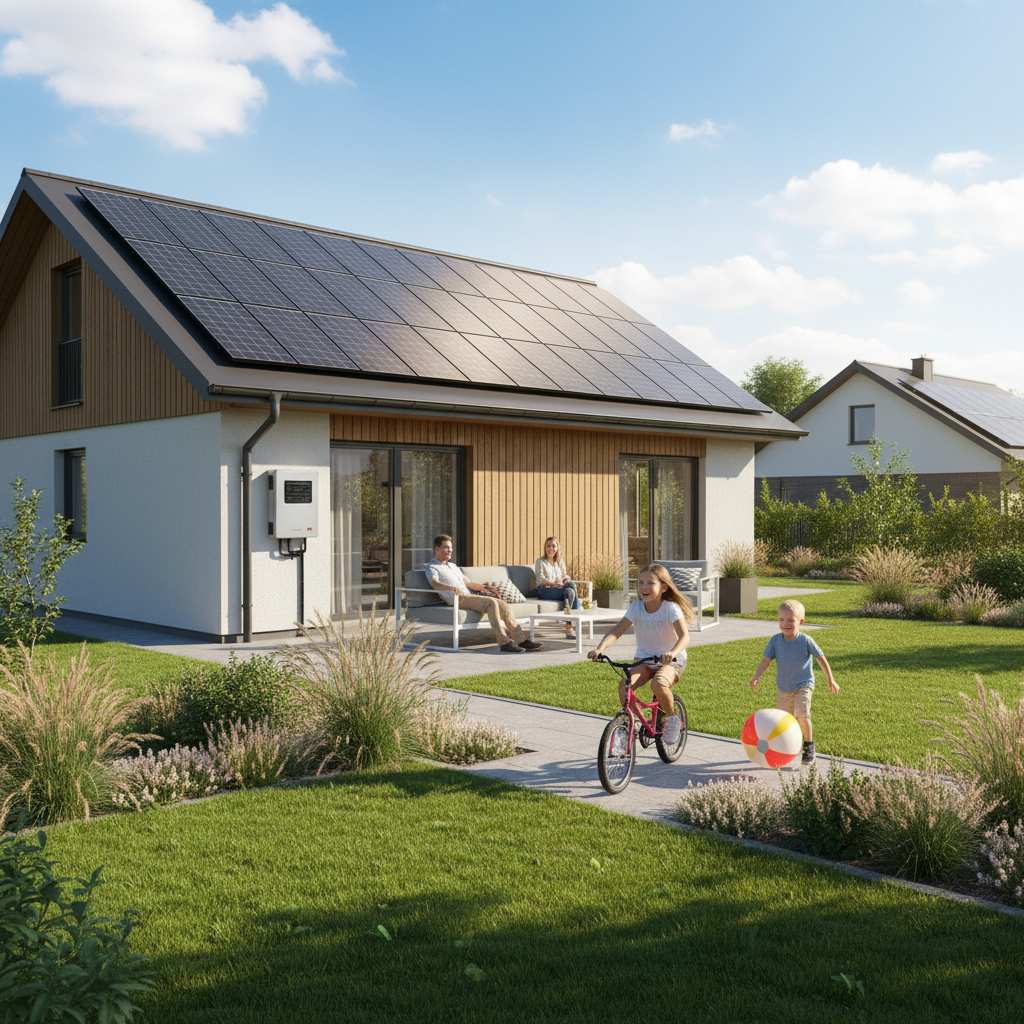
Highlights
- Solar energy lowers utility bills and carbon footprints while increasing energy independence.
- Government incentives make solar installations more accessible and financially attractive than ever.
Summary
Solar energy is an appealing option for homeowners aiming to lower energy bills and mitigate environmental impact. It offers benefits like reduced utility costs and increased energy independence, especially with advancements in technology and government incentives, including tax credits. Evaluating solar energy requires assessing roof orientation, shading, structural conditions, and local regulations. Different solar system types—grid-connected, off-grid, and hybrid—provide distinct advantages based on individual needs and locations, making professional design and installation essential for optimal performance.
Benefits of Solar Energy for Homes
Switching to solar energy presents numerous advantages. Chief among these is the significant reduction in carbon footprints, fostering environmental sustainability. Additionally, solar energy enhances financial savings over time, with federal tax credits reducing installation costs up to 30%. A direct purchase maximizes returns, but alternative options including leases and power purchase agreements are available, each affecting savings differently. Ultimately, whether driven by financial or environmental motivations, understanding the different benefits—like property value increases and energy independence—can guide homeowners in their decision-making process.
Assessing Solar Energy Suitability
To evaluate solar energy for your home effectively, it’s vital to assess site conditions carefully. Key factors include site orientation, shading, roof integrity, and adherence to local regulations. Ideally, roofs should have southern exposure with minimal obstruction to maximize sunlight access, while structural considerations ensure the roof can support solar installations. Additionally, understanding local installation rules and potential HOA restrictions is crucial to avoid future disputes.
Site and Location Factors
Your site’s orientation is pivotal for capturing optimal sunlight, with southern exposure being ideal. Seasonal variations must also be considered, as they affect potential shading from trees and buildings. Ensuring easy access for installation and considering local electrical infrastructure can improve setup feasibility.
Structural and Roof Considerations
Evaluating roof integrity is necessary to determine if it can support solar panels. Roof conditions, such as age, can necessitate repairs or replacement before installation. Proper angles of panel installation calculated based on your geographic latitude will enhance energy generation as well.
Shading and Accessibility Analysis
Using shading tools can significantly aid in identifying potential obstructions that hinder solar efficiency. Ensuring adequate space for installation and maintenance activities is vital, especially with ground-mounted solar systems that may face additional zoning or topographic challenges.
Financial and Incentive Factors
Exploring financing options can optimize financial benefits, including eligibility for tax credits and rebates. Engaging with local utility programs can provide further savings opportunities by allowing net metering to credit excess energy sent back to the grid.
Types of Residential Solar Energy Systems
Residential solar technologies primarily fall into three categories: grid-connected, stand-alone, and hybrid systems. Grid-connected systems are the most common, providing direct access to utility grids while allowing for the sale of excess energy. Stand-alone systems cater to locations without grid access, requiring energy storage solutions for reliability. Hybrid systems integrate both grid connectivity and battery storage, giving homeowners flexibility and added security against outages.
Components of a Residential Solar Energy System
Understanding essential components is crucial for effective solar energy systems. Solar panels consist of photovoltaic cells that convert sunlight into electricity, while inverters transform direct current into alternating current. Battery systems, though optional for grid-tied setups, enhance the ability to utilize stored energy during outages. Proper mounting hardware ensures security and optimal angle for energy capture, while monitoring tools assist homeowners in tracking system performance and diagnosing issues.
Installation Process
Engaging with an experienced installer streamlines the installation process, ensuring adherence to quality standards and local regulations. Initial site assessments determine the suitability of the roof and electrical systems, while a detailed permitting process confirms compliance with safety standards. Finally, professional installation ensures the system operates efficiently and meets homeowner needs.
Financial Considerations
Understanding the financial implications is key when considering solar. Installation costs can range widely, but incentives can significantly shorten payback periods. Evaluating various financing methods like cash purchases or third-party ownership can help in weighing long-term savings. It’s also beneficial to be aware of the federal tax credits currently available, which help mitigate upfront costs.
Maintenance and Performance Optimization
Routine maintenance is critical for long-term efficiency of solar systems. Regular inspections can identify minor issues before they escalate, while cleaning ensures that panels operate at peak efficiency. Beyond physical maintenance, electrical diagnostics can help sustain optimal functionality and prevent potential failures that may impact performance.
Factors Influencing System Efficiency and Energy Output
Several factors can affect the efficiency of a solar energy system. Panel positioning and angle critically influence sunlight capture, while shading from nearby structures can substantially hinder system output. Understanding solar panel technology and maintaining optimal conditions are essential steps for enhancing energy generation and achieving desired energy savings.
Potential Challenges and Limitations
Homeowners should be aware of potential challenges in solar installations. Issues can arise from site-specific regulations, HOA restrictions, and environmental conditions that affect performance. Therefore, choosing a reputable provider and understanding local laws can help mitigate these risks while ensuring an effective installation.
Future Trends in Residential Solar Energy
The solar energy landscape is evolving, with efficiency improvements allowing for design of smaller, yet high-output systems. Increased integration of energy storage capabilities is also a growing trend, enhancing reliability during disruptions. Homeowners should plan for future energy needs, allowing for flexibility as consumption patterns change over time, ensuring their solar investments continue to provide value.
The content is provided by Avery Redwood, Know Heaven